

Your bones are losing density right now. Most people have no idea until they break something.
Bone loss starts quietly in your 30s. It gets faster after 40. After menopause, it can speed up dramatically. By the time a doctor gives you a diagnosis, real damage has already happened.
Calcium pills help. But they are not enough on their own. And most people are still not doing enough to protect their bones every day.
You will learn exactly what each fruit does, how much to eat, and how to start today. No expensive supplements. No major diet changes.
Point One: Why Your Bones Are Slowly Breaking Down — And Why This Is Fixable
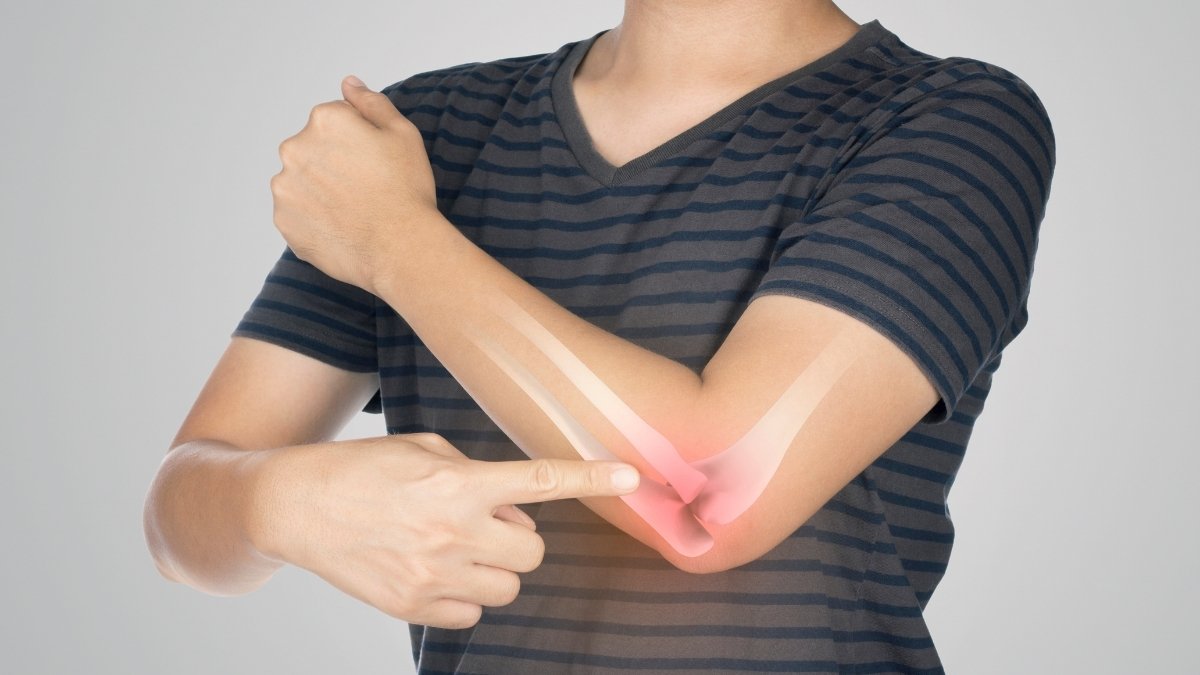
Your body breaks down old bone and builds new bone every single day. Cells called osteoclasts do the breaking. Cells called osteoblasts do the building. Before age 30, building wins. After 30, breakdown slowly takes over.
Chronic inflammation makes this worse. It speeds up bone destruction and slows down bone repair. This is the real reason so many people develop weak bones as they age.
The numbers are serious. Osteoporosis affects 10 million Americans. Another 44 million have low bone mass. By 2030, 13.6 million women over 50 are expected to have osteoporosis. Fractures from bone loss already cost the U.S. healthcare system $19 billion every year.
Fruits rich in polyphenols — natural plant compounds — fight that inflammation directly. Studies consistently show that people who eat more fruit have higher bone mineral density. And yet, 80% of Americans still do not meet basic daily fruit recommendations, according to Dr. Shirin Hooshmand of San Diego State University.
3 Tips to Apply Right Now:
- Ask your doctor for a DEXA scan to find out your current bone density
- Cut carbonated drinks and reduce coffee — both actively pull calcium from bones
- Start 30-minute walks three to four times a week alongside your diet changes
Point Two: Prunes — The Most Clinically Proven Fruit for Bone Density on Earth
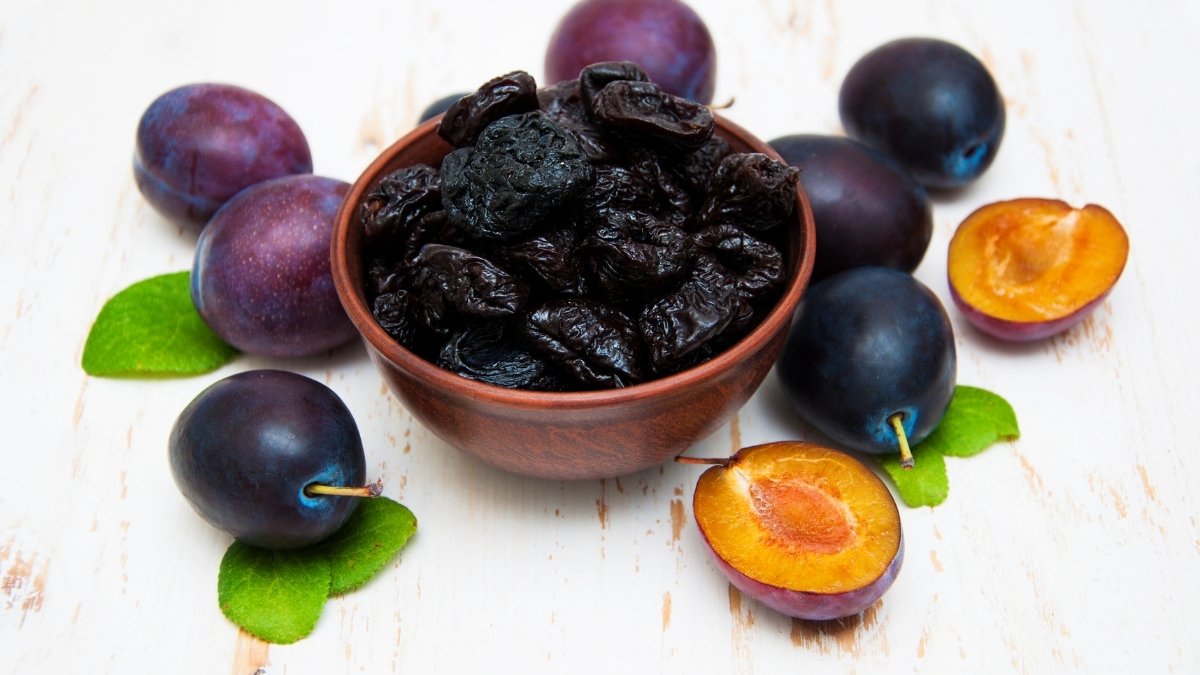
No food has more human trial evidence for bone health than the prune. That is a fact, not a claim.
Dr. Shirin Hooshmand, who has studied this for nearly 12 years, says prunes are “the most effective food for improving bone density in humans and animals.” Penn State University ran a 12-month clinical trial with 235 postmenopausal women aged 55 to 75.
Women who ate just 4 to 6 prunes daily stopped losing hip bone density at 6 months. That protection held for the full 12 months.
A 2024 follow-up study used advanced 3D bone imaging. Women who ate prunes daily kept their bone strength at the tibia — a key weight-bearing bone — while the control group saw measurable decline.
Prunes work three ways. They fight inflammation with 184 mg of phenolic compounds per 100 grams. They boost bone-building cells while slowing bone-destroying cells. And their fiber feeds gut bacteria that produce compounds supporting bone health.
3 Tips to Apply Right Now:
- Start with 2 to 3 prunes per day for the first two weeks to let your gut adjust
- Eat them at breakfast — mix into oatmeal or eat alongside eggs
- Buy California-grown dried prunes with no added sugar for the best quality
Point Three: Figs — The Ancient Fruit That Delivers Calcium and the Key to Actually Use It
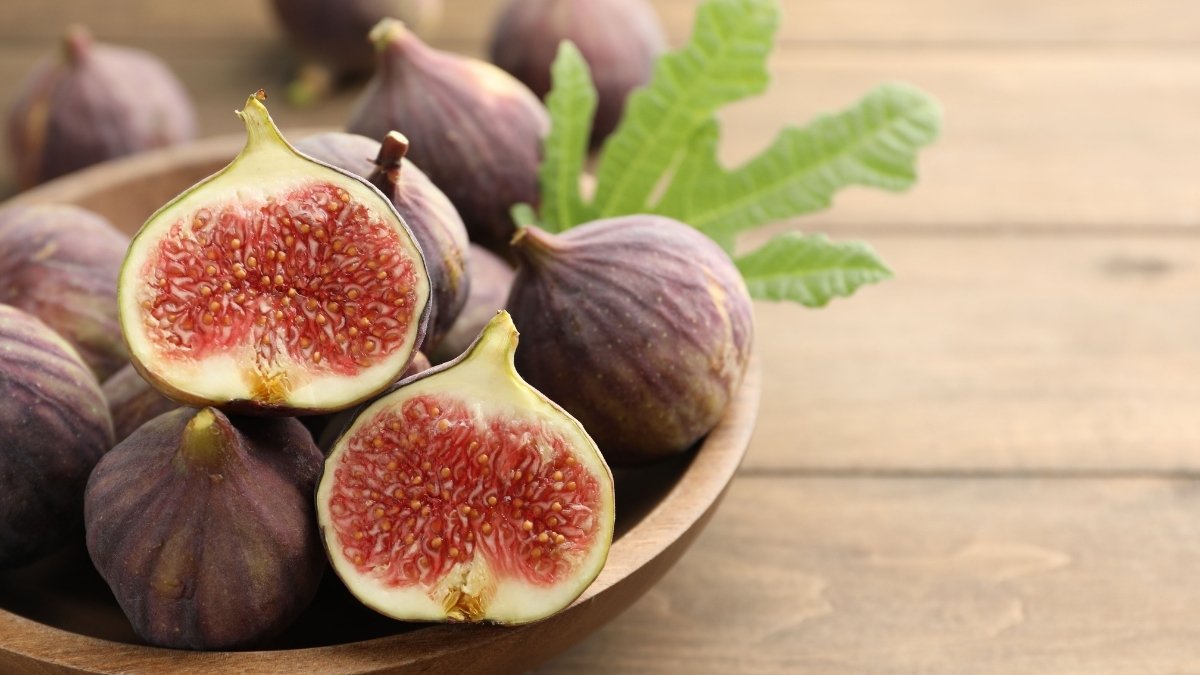
Most people focus on getting more calcium. But calcium alone cannot build strong bone. Your body needs vitamin K to move calcium from your blood into your bones. Without it, calcium does almost nothing for your skeleton.
Figs give you both calcium and vitamin K in one fruit. That is rare. And that is exactly why they belong on this list.
Five medium fresh figs contain around 90 mg of calcium. Half a cup of dried figs delivers 121 mg. Even two dried figs give you about 65 mg, according to Harvard Health Publishing. Vitamin K in figs activates a protein called osteocalcin, which physically locks calcium into your bone tissue.
Figs also contain potassium, which stops your kidneys from flushing calcium out through urine. And they provide magnesium, which helps your body use vitamin D properly. A clinical trial at Loma Linda University confirmed that eating dried figs daily significantly increased calcium and potassium intake.
3 Tips to Apply Right Now:
- Eat 2 to 4 dried figs daily — spread them through the day, not all at once
- Pair figs with yogurt or a small handful of almonds to balance the natural sugar
- Choose Mission or Black figs — they are widely available and packed with nutrients
Point Four: Kiwi — The Small Fruit That Builds the Collagen Frame That Holds Your Bones Together
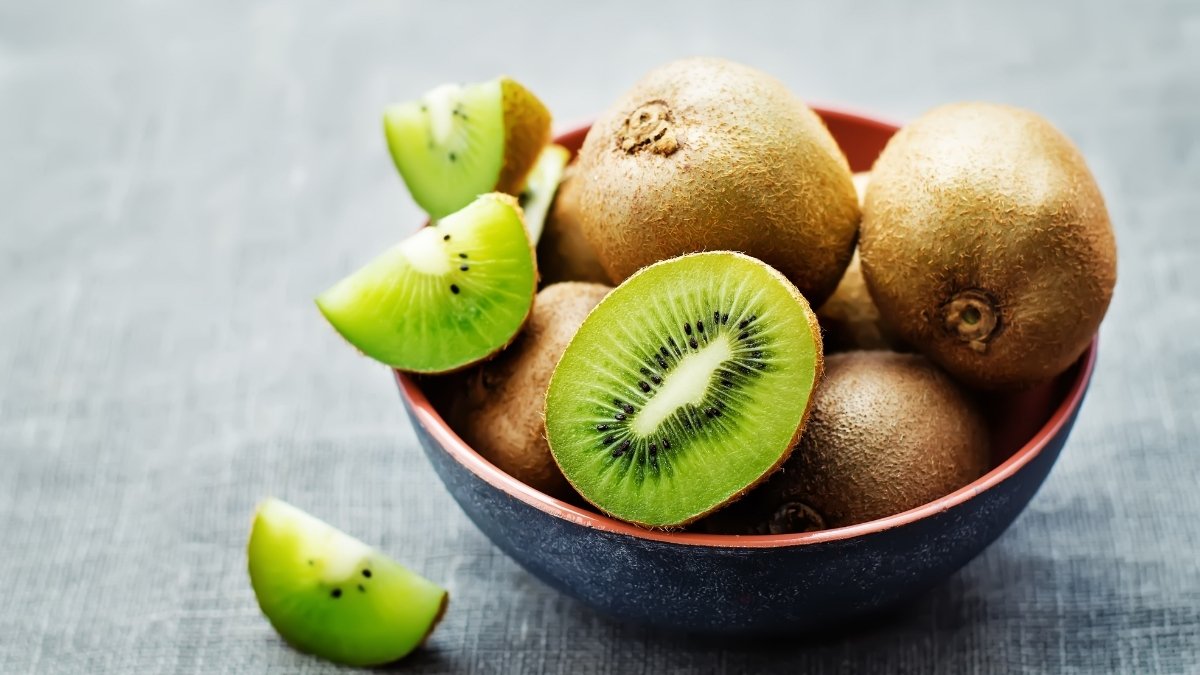
Bone is not just minerals. It also has a collagen framework — a flexible structure that calcium and other minerals attach to. Without strong collagen, bones become brittle. Vitamin C is what your body uses to make collagen. One medium kiwi gives you 64 to 92 mg of vitamin C — close to your full daily amount.
A 16-week clinical trial from Massey University in New Zealand found that women who ate 2 green kiwis per day saw a 15.5% drop in a bone breakdown marker called uncarboxylated osteocalcin. Lower levels of this marker are linked to better bone mineral density.
A separate animal study showed green kiwi reduced bone resorption markers in just 8 weeks. In menopausal women, green kiwi positively affected bone markers alongside other health benefits.
Kiwi also feeds good gut bacteria. Those bacteria produce compounds that reduce body-wide inflammation — and lower inflammation means slower bone breakdown.
3 Tips to Apply Right Now:
- Eat 1 to 2 green kiwis daily — green has stronger bone research than gold varieties
- Try eating kiwi with the skin on — it has extra fiber and vitamin E
- Have kiwi in the evening with yogurt or as a simple after-dinner snack
Point Five: Why All 3 Fruits Together Beat Any Single Supplement You Can Buy
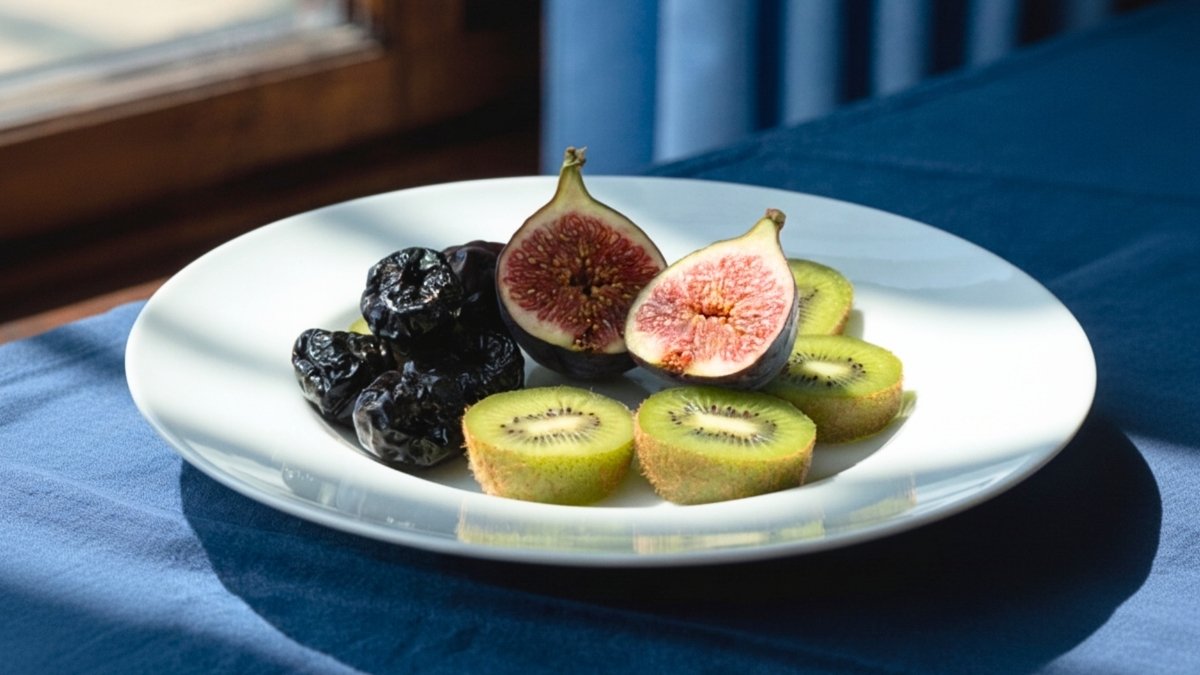
You can take a calcium pill. You can take a vitamin K capsule. But a pill cannot do what a whole fruit does inside your body.
Each fruit targets a different problem. Prunes fight the inflammation that destroys bone. Figs deliver calcium and activate the protein that locks it into bone tissue. Kiwi builds the collagen frame that holds the minerals in place and improves gut bacteria that support bone health.
This connection between your gut and your bones is called the gut-bone axis. A 2024 paper in Frontiers in Nutrition found that gut bacteria profiles were different in women who responded to prune treatment versus those who did not. Your gut health directly affects your bone health. Both prunes and kiwi improve it.
The 2024 Korean Society of Menopause Guidelines specifically recommend eating fresh fruits rich in vitamins C and K, plus potassium and magnesium, to manage bone loss. These three fruits cover every one of those nutrients.
3 Tips to Apply Right Now:
- Do not drop your calcium and vitamin D supplements — use these fruits to strengthen what you already take
- Eat all three fruits on the same day — they work well together with no conflict
- Give this at least 6 months before expecting measurable changes on a bone density scan
Point Six: The Exact Daily Amounts to Eat — Based on What Clinical Trials Actually Used

You do not need to guess. Here is exactly what the research used — and what works.
Prunes: Eat 4 to 6 per day (50 grams). The Penn State trial showed this prevented hip bone loss for 12 months with 90.2% compliance. The 100-gram group had a 41% dropout rate from digestive discomfort. Stick to the smaller amount.
Figs: Eat 2 to 4 dried figs per day. Spread them through the day. Pairing with a protein like yogurt or almonds slows sugar absorption and keeps blood sugar stable.
Kiwi: Eat 1 to 2 green kiwis per day. The clinical trial used 2 daily. Morning or evening both work.
A simple daily plan: 4 to 6 prunes with breakfast. Two dried figs as an afternoon snack. One or two kiwis in the evening with yogurt or on their own.
Keep taking calcium (1,000 to 1,200 mg/day) and vitamin D (600 to 800 IU minimum). All Penn State participants received both throughout the trial.
3 Tips to Apply Right Now:
- Write this on paper and stick it to your fridge: “4–6 prunes, 2 figs, 1–2 kiwi — every day”
- Prep your weekly fruit supply on Sunday so it is always ready to grab
- Track your intake for the first 30 days until the habit feels automatic
Point Seven: Your Simple 5-Step Action Plan to Start This Week in 2026

Here is what to do starting now. No guesswork. Just five steps.
Step 1 — Buy the three fruits this week. Dried prunes (no added sugar), dried figs (Mission or Black), and 4 to 6 kiwis. Total weekly cost is under $12 to $15 in most markets worldwide.
Step 2 — Spend the first 14 days on prunes only. Eat 4 to 6 each morning. Let your digestive system adjust. In week three, add 2 dried figs in the afternoon and 1 kiwi in the evening.
Step 3 — Walk 30 minutes and do bodyweight squats three to four days per week. The NIH confirms this is the minimum exercise needed to support bone health. Movement and food must work together.
Step 4 — Get a DEXA scan baseline if you are a woman over 50 or a man over 60. Retest at 12 months. Bone changes take 6 to 12 months to show up on scans. Be patient.
Step 5 — Keep your calcium and vitamin D. These fruits add to the foundation — they do not replace it.
3 Tips to Apply Right Now:
- Use a weekly pill organizer to track your calcium and vitamin D so you never miss a dose
- Ask your doctor to test your vitamin D blood levels — deficiency is common and makes bone protection harder
- Set a monthly phone reminder to restock your fruits so the habit never breaks
Conclusion:

Three fruits. Three different ways they protect your bones. Prunes slow bone breakdown — proven in major clinical trials.
Figs deliver calcium and the vitamin K that puts it to work. Kiwi builds collagen and feeds your gut bacteria. Start tomorrow. Be consistent for 12 months. Your bones will notice.