

Your liver has a fat burning window every single day, and most people eat straight through it without ever knowing it existed. Miss it often enough and the liver spends most of its time in storage mode instead of burn mode, no matter how clean the food on the plate is. There’s a specific stretch of hours when the liver’s fat burning genes actually take over, and it has almost nothing to do with what you eat and everything to do with when.
Before making any changes based on this article, talk to your doctor, especially if you are currently taking medication or have a diagnosed condition, since shifting when you eat can affect blood sugar and blood pressure medications.
The Liver’s Fat Burning Window, Explained
The liver doesn’t burn fat and sugar at the same time in equal amounts. It runs more like two separate shifts.
Right after a meal, genes that break down sugar switch on. During a fast, an entirely different set of genes, the ones responsible for breaking down fat, ramp up instead.
Genes that encode enzymes needed to break down sugars rise immediately after a meal, while the activity of genes encoding enzymes needed to break down fat is highest when we fast, so a clearly defined daily feeding schedule essentially puts the enzymes of metabolism into shift work.

That handoff is controlled by a set of internal clock genes inside liver cells themselves. These circadian clock genes can modulate liver lipid metabolism, and when their rhythms fall out of sync,
that desynchrony can worsen metabolic problems, while resynchronizing those rhythms can help correct them. PubMed Central
The brain has a master clock, but the liver’s own clock takes most of its cues from food. Master clock neurons in the brain’s suprachiasmatic nucleus integrate light and feeding signals and pass timing information to clock cells in peripheral tissues, including the liver, adipose tissue and muscle, where hundreds of genes involved in fat storage and fat burning are rhythmically switched on and off by clock proteins. Change the timing of meals and the liver clock adjusts to match. ScienceDirect
What Happens Hour By Hour After Your Last Bite
The shift from sugar burning to fat burning doesn’t happen the second you stop eating. It builds gradually, and there’s a fairly predictable hour by hour pattern behind it.
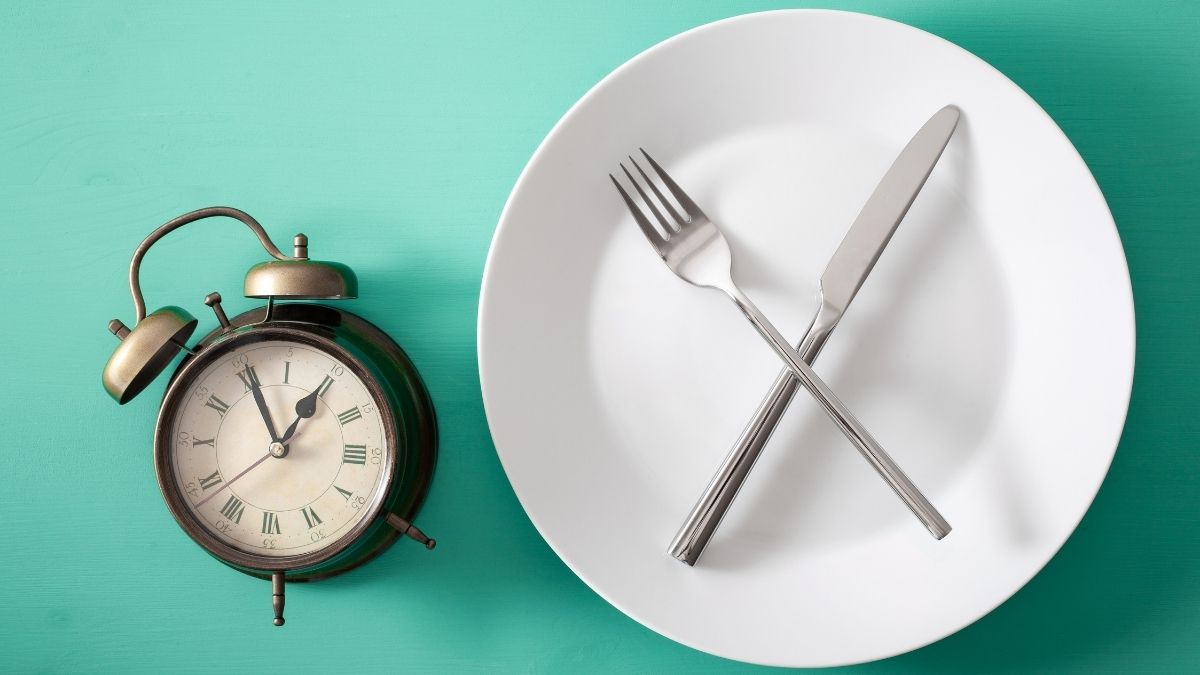
Liver glycogen begins to deplete around the ten hour mark of fasting, at which point adipose tissue starts releasing fatty acids into the blood and the production of ketone bodies begins to ramp up.
Around the same window, a cellular cleanup process called autophagy kicks into gear. Autophagy gene expression oscillates on a 24 hour pattern, and during the fasting phase, this gene expression is specifically activated in the liver.
Here’s roughly what that timeline looks like in practice.
Metabolic Timeline · Inside a Fast
What Your Liver Is Doing While You’re Not Eating
A slow, staged handoff from sugar to fat — here’s roughly when each shift happens.
0–2 Hours
In the Liver
Blood sugar rises, insulin directs glucose into storage, and the liver runs in “sugar-burning” mode.
You Might Notice
Full, alert, no hunger.
2–6 Hours
In the Liver
The liver taps its own glycogen stores to keep blood sugar steady.
You Might Notice
Steady energy, hunger slowly returning.
6–10 Hours
In the Liver
Glycogen reserves start thinning, and fat-burning enzymes begin ramping up.
You Might Notice
Mild hunger, sometimes a small energy dip.
10–12 Hours
In the Liver
Glycogen depletion accelerates, fat cells release fatty acids, and ketone production begins.
You Might Notice
Appetite often flattens out.
12+ Hours
In the Liver
Fat oxidation and liver cleanup genes are running at full activity.
You Might Notice
Fasting fat-burning fully switched on.
Every extra snack, sip of a sugary drink, or “just a bite” during that window resets the clock back to the sugar burning shift. That’s the part most people never realize they’re doing.
The Window Most People Eat Straight Through
If the liver’s fat burning shift starts to build somewhere in the ten to twelve hour range after eating, then the biggest obstacle for most people isn’t willpower. It’s a dinner plate that shows up too late.
A randomized crossover trial comparing dinner at 6pm to dinner at 10pm found that the later dinner increased blood glucose levels, delayed triglyceride peaks, reduced free fatty acid mobilization, and reduced how efficiently dietary fat was burned.

That same research found people eating dinner at 10pm metabolized fat from that meal about 10 percent slower than the same meal eaten earlier, which the study’s authors linked to an overnight state that favors storing fat rather than releasing it. Levelsclinicaltrials
The effect isn’t limited to what happens to that one meal either. A controlled trial measuring identical calorie intake at different times found that eating later in the day lowered daily energy expenditure by about 59 calories, roughly 5 percent less than the same food eaten earlier, and also increased hunger.
Everyone’s body responds differently, so check with your doctor before trying this if you have an existing condition, are pregnant, or take medication that needs to be taken with food.
Who Actually Studied This, And What They Found
This isn’t a fringe theory. Circadian biology labs, including researchers at the Salk Institute who have spent years mapping how feeding time reshapes the liver clock, have published on this repeatedly, and clinical trials have tested it directly in people.
A large review pooling multiple human trials found a real, measurable benefit to eating earlier. A meta-analysis of 13 randomized controlled trials covering 859 participants found that early time restricted eating, especially a 16 hour fast paired with an 8 hour eating window, significantly reduced body weight, fat mass, abdominal obesity and inflammation, without a meaningful drop in fat free mass. clinicaltrials
A separate clinical trial compared eating early in the day against eating over a longer stretch. In that randomized trial, eating early in the day was superior for losing weight, lowering blood pressure, and improving mood compared with eating spread across 12 or more hours. nih
One study made the protocol concrete. Participants followed a 16 hour fast running from 3pm to 7am, with all eating confined to a window between 7am and 3pm. A different three month trial layered this on top of calorie cutting.
Early time restricted eating combined with a calorie reduced diet led to better improvements in body fat, diastolic blood pressure, metabolic age and fasting glucose than the same calorie reduction paired with a later eating window or calorie reduction on its own. PubMednih
How To Actually Use This Without Overhauling Your Life
None of this requires fasting for days or cutting out entire food groups. It comes down to compressing when you eat into a window that ends earlier in the day, rather than changing what’s on the plate.
Research backs the earlier direction specifically, not just any shortened window. One study found that early time restricted feeding, from 8am to 2pm, increased fat oxidation compared with a control schedule of eating spread from 8am to 8pm, while simply delaying meal times later in the day reduced fat oxidation overall. Cell Press
Here’s how that plays out as an eating pattern.
Eating Timing · Liver Research
It’s Not Just What You Eat — It’s When
Three common eating windows, and what each one does to your metabolism.
Early Eating Window
WindowAbout 7am–3pm, roughly 8–10 hours
LiverFat-burning genes get a long, uninterrupted stretch to run
FindingReduced body weight, fat mass, and inflammation more than eating spread past 12 hours a day
Typical Grazing Pattern
WindowRoughly 12–15 hours, breakfast to late snack
LiverSugar-burning enzymes stay switched on for most of the day
FindingLinked with delayed triglyceride clearance and reduced fat burning
Late, Heavy Dinner
WindowMeals cluster in the evening, often within 3 hours of bed
LiverFat release slows — the liver leans toward storing rather than burning
FindingFat oxidation dropped roughly 10% versus the same meal eaten earlier, and daily calorie burn dropped too
Try This Today
The Daily Habit That Actually Works
- Set a firm “kitchen closes” time each evening, ideally three hours before bed.
- Move your first meal or coffee closer to your normal wake time instead of delaying it out of habit.
- Aim to fit all eating into roughly a 10 hour window, then narrow it by an hour every week or two if it feels manageable.
- Keep water, plain tea, or black coffee on hand during the fasting stretch so hunger doesn’t derail the plan.
- Track your actual last bite time for one week before changing anything. Most people are surprised by how late it really is.

A Few Habits Worth Sorting Out
| Do | Don’t |
|---|---|
| Eat your largest meal in a window that ends in the afternoon or early evening | Let dinner drift past 8 or 9pm on a regular basis |
| Keep your eating window roughly the same length and start time daily | Swing your first bite by three or four hours from one day to the next |
| Leave at least 12 hours between your last bite and your first bite | Snack right up until bedtime, which keeps insulin elevated overnight |
| Front load protein and fiber earlier in the day | Save most of your daily calories for after dark |
A Few Questions Before You Try This
What’s the most common mistake people make? Shifting breakfast earlier while still eating dinner late. That stretches the eating window instead of compressing it, which cancels out most of the benefit.
How long before there’s a measurable difference? A three month trial found measurable improvements in body fat, blood pressure and fasting glucose within that timeframe, and shorter trials have shown early shifts within a matter of weeks. nih
Who should be cautious with this? Anyone on insulin or blood sugar lowering medication, anyone pregnant or breastfeeding, anyone with a history of disordered eating, and anyone who is underweight should talk to a doctor before compressing their eating window. Individual medical needs vary too much for a one size fits all approach here.
Final Thoughts,
The liver isn’t asking for a stricter diet. It’s asking for a schedule it can actually predict, because that’s what flips its fat burning genes on in the first place. Move the eating window earlier, give the fasting stretch room to finish what it starts, and the shift most people have been missing becomes a lot harder to miss.