
Your sleep is lighter than it used to be, and you feel older than your birthday says.
That may not be stress or a bad mattress. Your brain’s biological clock sits inside a tiny region called the hypothalamus, and researchers have found that it may also help set the pace of aging throughout the body. sciencedaily
In mice, when certain hypothalamic signals drift, aging speeds up everywhere, from memory to lifespan. When those signals were protected, aging slowed. Brain Region May Hold Key to Aging +2
Three signals keep showing up in the science: inflammation, a fading hormone called GnRH, and a shrinking supply of hypothalamic stem cells.
These are animal studies, so nothing here is proven in people yet.
But one part of this story you can start nudging tonight, with no prescription needed.
Before making any changes based on this article, talk to your doctor, especially if you are currently taking medication or have a diagnosed condition.
Why Scientists Keep Pointing at the Hypothalamus
The hypothalamus sits deep in the brain and acts as a bridge between your nervous system and your hormone system. It works closely with the pituitary gland, which regulates much of the endocrine system.
It also houses the suprachiasmatic nucleus, or SCN. This is the area that sets sleep and wake cycles. That is your biological clock in the literal sense.
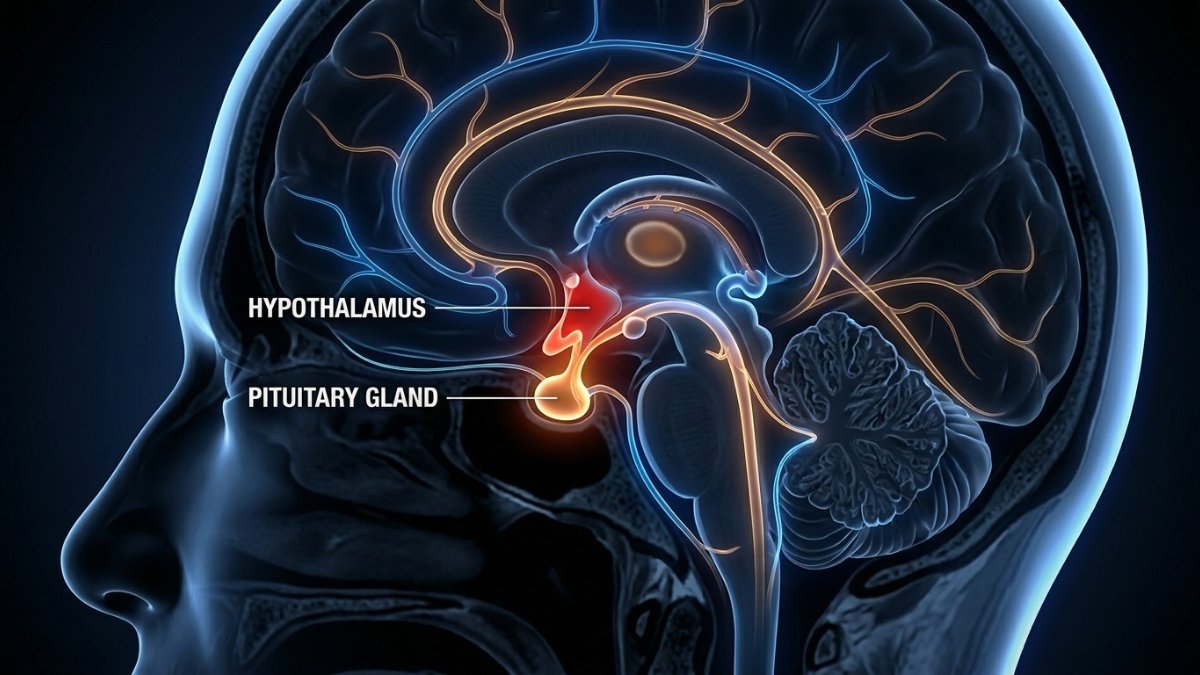
So the hypothalamus is a double agent. It keeps your daily rhythm, and a line of mouse research suggests it also helps set the pace of aging.
In 2013, a team at the Albert Einstein College of Medicine led by Dongsheng Cai published the first major findings. A second paper in Nature in 2017 identified the specific cells involved.
Here is the honest part. These are mouse studies. They do not prove your hypothalamus is aging you, and no proven human treatment has come out of them.
But they point to three signals worth understanding. Here they are in the order the research uncovered them.
The Hypothalamic Aging & Signaling Matrix
Scientific breakdown of central hypothalamic signaling pathways, how they degrade over time, and findings from longevity interventions.
Hypothalamic Inflammation (NF-κB)
Helps manage stress and immune responses in brain tissue.
Chronic, low-grade activation gradually builds up.
Mouse studies: Blocking NF-κB raised median lifespan by ~20%.
GnRH Hormone Signaling
Drives reproductive hormones & supports new neuron growth.
Hormone levels fall progressively as inflammation rises.
Mouse studies: Injections slowed cognitive decline (Human use unproven).
Stem Cells & Exosome Messages
Releases tiny packets of regulatory microRNA into brain fluid.
Stem cell numbers & exosomal messages decrease sharply.
Mouse studies: Replenishing stem cells & exosomes slowed systemic aging.
1. A Slow Burn of Inflammation Starts in the Hypothalamus
The signal: chronic inflammation driven by a protein complex called NF kappa B.
Cai’s team zeroed in on NF kappa B because it acts as a central hub for inflammatory signaling. Their work found that aging is marked by chronic activation of this immune pathway, mostly in the hypothalamus. nih
Then they tested what happens when they change it.
Switching it on in the hypothalamus of mice sped up aging on physical, mental, and behavioral tests, and shortened lifespan. Blocking it slowed aging and raised median lifespan by about 20 percent compared to controls.
The brain’s own immune cells appear to be part of the story. The researchers profiled microglia in the hypothalamus to understand this age related inflammation.
Why should you care if you are not a mouse? Because of what sits next to this finding.
Commentary on the study noted that obesity and type 2 diabetes, both of which shorten lifespan, are known to suppress GnRH production. That hints that metabolic health may be one of the few levers within your reach.
No one has shown in humans that lifestyle changes quiet hypothalamic NF kappa B. Still, steady blood sugar and a healthy weight are worth protecting for plenty of other reasons.
One specific step: if you have not had fasting glucose or A1C checked in the past year, ask your doctor about it at your next visit.
2. A Hormone Called GnRH Fades, and the Brain May Pay for It
The signal: falling levels of gonadotropin releasing hormone, or GnRH.
GnRH is made in the hypothalamus. It is usually associated with reproduction. sciencedaily
It turns out to have a second job in the brain. In the mouse studies, activating NF kappa B in the hypothalamus caused GnRH levels to drop.
That drop seems to matter for brain repair. GnRH stimulates adult neurogenesis (the growth of new neurons) in the hypothalamus and hippocampus, so less GnRH meant less neurogenesis.
The mice were then given GnRH directly. Injecting it into a hypothalamic ventricle protected aged mice from impaired neurogenesis, and long term daily injections slowed age related cognitive decline.

It sounds like a breakthrough, and it is an intriguing one. But scientists reviewing the work urged caution. One commentary said the idea that GnRH travels within the brain to promote neurogenesis is unproven, and that the causal link to NF kappa B remains unproven too.
So please do not go looking for GnRH shots. This is a lab finding, not a treatment.
What you can do is pay attention to the hormone cascade GnRH sets off. It signals the pituitary gland, which in turn signals the ovaries or testes.
One specific step: if you notice hot flashes, low libido, or unusual fatigue, mention them to your doctor, who can check hormone levels with a simple blood test.
3. The Hypothalamus Loses Stem Cells and the Messages They Send
The signal: a shrinking population of hypothalamic stem cells and the exosomes they release.
This is the 2017 discovery, and it is the most striking of the three. The research found that the number of hypothalamic neural stem cells naturally declines over an animal’s life, and that this decline speeds up aging.
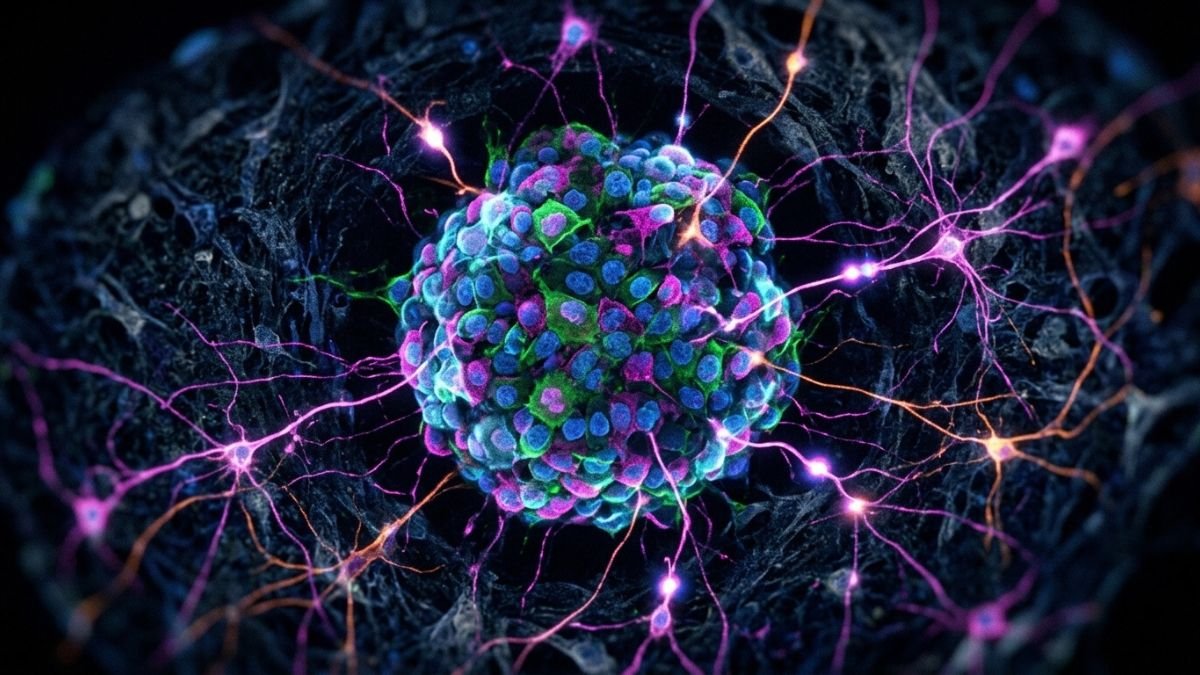
The team tested it by removing those cells. When they disrupted the stem cells in middle aged mice, aging greatly accelerated and the animals died earlier than normal. sci
Three months later, mice with depleted stem cells showed poorer memory and slower learning.
Then they tried the opposite. Mice that received a boost of healthy stem cells showed the reverse effect.
The “how” is what makes this interesting. The stem cells release exosomes carrying microRNAs into the cerebrospinal fluid, and those exosomal microRNAs decline with age.
When researchers isolated the exosomes and injected only those, the mice lived longer and showed better memory. In other words, the cells appear to age the body partly by what they say, not only by what they are.

This one is the furthest from your daily life. There is nothing to eat, take, or buy that has been shown to restore these cells in people.
That is worth remembering if you see clinics offering stem cell or exosome treatments for “anti aging.” The research behind them is still at the lab stage.
The Biological Clock Itself: Why Your SCN Gets Harder to Reset
The three signals above are the behind the scenes story. The actual clock, your SCN, has its own aging story, and this is where you have real influence.
Even in healthy people, aging is linked to fragmented sleep and wake patterns, and to weaker daily rhythms in eating and hormone release. nih
Researchers have been finding out why. A University of Kent team found that the aging SCN becomes much less sensitive to light, because a receptor that carries light signals loses effectiveness. kent
That matters because light is the main signal that resets your clock each day. A weaker response means weaker cues, and weaker cues mean a blurrier rhythm.
Another team at Leiden University Medical Center found that changes in individual SCN cells were more severe than changes at the network level. sleepreviewmag
There is a hopeful twist from Glasgow. Older mice without exercise wheels took longer to adjust to a light and dark shift than younger mice, but older mice with wheels adjusted about as well as the young ones. the-gist
Scientists have suggested that light therapy and melatonin might help older adults strengthen their rhythms. Melatonin is a supplement worth discussing with your doctor first, since it can interact with some medications. nih
Everyone’s body responds differently, so the timings below are starting points rather than prescriptions. Check with your doctor before trying them if you have an existing condition or take medication.
Try This Today: Give Your Clock Stronger Signals
- Get outside early. Aim for 15 to 30 minutes of daylight within a couple of hours of waking. Cloudy daylight still beats indoor lighting.
- Keep a steady wake time. Pick one time and keep it on weekends too.
- Move your body. A daily walk of 20 to 30 minutes is a reasonable start.
- Dim the lights in the last hour before bed. Lower lamps and fewer bright screens give the clock a clear “evening” signal.
- Book the blood test. Ask about fasting glucose or A1C if it has been over a year.
The Circadian Synchronization Matrix
Contrasting habits that reinforce your internal master clock against subtle routines that scramble SCN rhythm as you age.
Morning Daylight Alignment
Morning outdoor daylight exposure
Staying indoors under dim light all morning
An aging SCN responds less efficiently to light, so stronger morning cues are necessary to anchor the rhythm.
Wake Schedule Consistency
Same wake time every day
Big weekend swings in sleep schedule
Circadian rhythms naturally weaken with age, making daily schedule consistency far more critical.
Physical Movement Cues
Daily physical exercise & movement
Sitting sedentary for most of the day
Trials demonstrate that exercise helps older biological clocks reset just as effectively as young ones.
Evening Light Control
Dim, warm evening lighting
Bright screens & overhead lights late at night
Conflicting artificial evening signals blur the brain clock’s boundary between day and night.
When to See a Doctor
- Sudden confusion, trouble speaking, or memory loss that comes on quickly
- Loud snoring, gasping, or pauses in breathing during sleep, which can signal sleep apnea
- Insomnia that lasts more than a few weeks
- Unexplained weight change, extreme fatigue, or major mood changes
What This Means for Your Brain’s Biological Clock
The research suggests that aging may be partly steered from a tiny region in the brain. Inflammation, a fading hormone, and a shrinking supply of stem cells are the three signals scientists keep finding there.
None of it has been proven in people yet. But the clock inside the hypothalamus is the part you can influence, with light, movement, and a steady schedule.

Start with the morning walk. It costs nothing, and the science on the clock behind it is some of the strongest in this story.
This article is for informational purposes only and is not a substitute for professional medical advice, diagnosis, or treatment. Always consult your doctor or a qualified healthcare provider before making changes to your diet, exercise routine, sleep habits, or medications, especially if you have an existing health condition.