

Alzheimer’s brain changes may begin years before the scan doctors trust can see anything wrong.
A 2026 study in Nature Neuroscience found physical changes in brain structure at least seven years before amyloid plaques reached levels that show up on scans. That is seven quiet years when nothing feels off and nobody is looking. psypost
The twist is that the earliest sign was not shrinkage, and that is the part most headlines skip.
What Scientists Found Seven Years Before the Plaques
A team led by James Roe and Yunpeng Wang at the University of Oslo drew on three large, long running studies of cognitive aging. Everyone included had normal thinking and memory. (psypost)

The final sample held 4,570 MRI scans from 1,051 people. Of those, 691 also had amyloid PET scans, the test doctors use to see plaques.
The key group was 77 people whose amyloid started low and later crossed into the high range. The team compared their earlier MRI scans with those of 412 people whose amyloid never got high.
They only looked at scans taken between one and ten years before each person’s first positive PET scan. That setup let them ask a simple question: what did the brain look like before plaques could be detected at all?
The Surprise: A Thicker Cortex, Not a Thinner One
The cortex is the wrinkled outer layer of the brain that supports memory, thinking, and reasoning. It normally gets thinner with age.
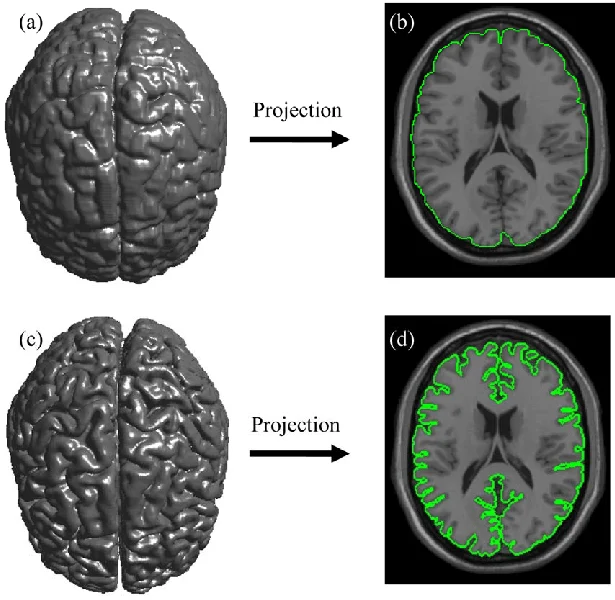
People who later developed high amyloid had a thicker cortex than those who did not, and their cortex thinned more slowly in the years before a positive scan. The differences were detectable at least seven years ahead and were especially strong in the frontal regions.
That cuts against a long standing model. A widely cited 2010 study proposed that plaques build up first and brain shrinkage follows later.
Here is how the two ideas stack up.
The Cortex Discovery (2026)
A paradigm-shifting study reveals that changes in the brain’s cortex appear years before traditional amyloid plaques, completely redefining early detection.
What comes first?
Amyloid plaques build up initially
Cortex changes appear at least 7 years earlier
What happens to the cortex?
It shrinks after plaques successfully form
It is actually thicker and thins more slowly beforehand
What drives the early changes?
Direct amyloid buildup
Differences persisted even after adjusting for early amyloid levels
The geography matched too. Regions that changed earliest tended to be the same regions where amyloid begins to deposit first. psypost
Why Alzheimer’s Brain Changes Show Up Before Plaques
Nobody knows for sure yet. Researchers see two main possibilities.
One is that the processes behind plaque buildup are already running before the clumps are visible on a PET scan. The other is that a separate process starts changing the brain before beta amyloid begins to cluster at all.
There is a plausible mechanism for the first idea. An expert who commented on the study pointed out that smaller, soluble forms of amyloid may damage delicate connections between brain cells before they ever form visible plaques.

A thicker cortex on MRI also does not mean new neurons. It could reflect an inflammatory response to early amyloid deposits, or changes in the brain’s supporting cells.
One more clue: many differences stayed in place even after the team adjusted for the exact amyloid levels measured on early scans. That suggests the structural changes are at least partly independent of early amyloid.
The study did not measure tau. Because tau usually builds up after amyloid, the authors consider it an unlikely driver this early.
What This Study Does Not Prove
Every study has limits, and this one is open about its own.
The participants were cognitively healthy older adults. People who volunteer for long term aging studies tend to be healthier and higher performing than the general population.
The findings describe group averages. They do not mean a doctor can read your MRI today and predict your future.
Researchers also do not yet know whether the early thickening is a protective response or the first step of the disease. And high amyloid raises risk, but it is not the same thing as a dementia diagnosis.
Which Tests Can Spot Alzheimer’s Today
Cortical thickness is a research measurement for now. Other tools already look for early signs.
Diagnostic Modalities Overview
A clear breakdown of how different tests detect neurological changes, what exactly they measure, and where they currently fit in clinical practice.
Amyloid PET Scan
Plaques, using a mildly radioactive tracer
The current gold standard for confirming plaques
Blood Test (pTau217 & Amyloid Ratio)
Two specific proteins directly linked to plaques
FDA cleared in May 2025 for adults 55 and older with symptoms
Spinal Fluid Test
Amyloid proteins in fluid extracted from a lumbar puncture
Invasive procedure, typically reserved for specialist care
MRI Scan
Brain structure, specifically including cortical thickness
Measured in recent studies, but not yet established as a primary screening tool
The blood test is the one to watch. In a clinical study of nearly 500 samples, 91.7% of positive results and 97.3% of negative results were confirmed as correct against PET or spinal fluid testing.
It is meant for people who already have symptoms, in a specialist setting. It is not a screening tool for healthy people.
Earlier work points the same way. In families with inherited Alzheimer’s, a drop in spinal fluid amyloid was detectable 25 years before the expected age of onset. More broadly, the brain changes of Alzheimer’s are thought to begin 15 to 20 years before obvious symptoms.
Why a Longer Window Matters
Commentary on the study noted that a disease unfolding over many years leaves more time to prevent or delay it. That is the real takeaway here.
The 2024 Lancet Commission identified 14 modifiable risk factors and estimated that addressing them could prevent or delay up to 45% of dementia cases. That number is theoretical, because it assumes the risk factors are causal and could be eliminated.

The list includes high blood pressure, hearing loss, diabetes, physical inactivity, high LDL cholesterol, social isolation, and vision loss. Most of these can be checked and managed.
The U.S. POINTER trial tested this in 2,111 older adults at risk of cognitive decline. Over two years, a structured program of exercise, the MIND diet, mental and social engagement, and health monitoring improved thinking scores more than a self guided version.
Both groups improved, and the gap between them was modest but statistically significant. That shows lifestyle can support cognition. It does not show that lifestyle stops Alzheimer’s.
Everyone’s body responds differently, so check with your doctor before starting a new exercise or eating plan, especially if you have a heart condition, diabetes, or take medication.
Try This Today
- Check your blood pressure and write the number down. Ask your doctor what your target should be.
- Book a hearing and vision check if it has been a couple of years. Both are on the Lancet risk list.
- Walk briskly for 30 minutes on most days. That adds up to the 150 minutes a week that U.S. activity guidelines recommend for adults.
- Ask for your LDL cholesterol and blood sugar numbers at your next visit.
- Keep a dated note of any memory slips you notice, and bring it to your appointment.
When To See A Doctor Soon
- Forgetting recently learned information or repeating the same questions again and again
- Getting lost in places you know well, or struggling with familiar tasks like paying bills
- Noticeable changes in mood, judgment, or personality that others have pointed out
- Sudden confusion, trouble speaking, or weakness on one side of the body (call emergency services right away)
Questions Readers Are Asking

Should I ask my doctor for an MRI or amyloid scan just in case?
Doctors generally do not order brain scans for people with no symptoms, and this study does not change that. The research compared groups of people over time. It was not built to diagnose one person.
If you have a family history or notice memory changes, raise it at your next visit. Your doctor can decide what testing, if any, makes sense.
Does a thicker cortex on my scan mean I will get Alzheimer’s?
No. Cortical thickness varies a lot from person to person. A single scan cannot tell you which direction your brain is heading.
If changes start this early, is it too late to do anything?
No. The longer timeline widens the window for action. The Lancet Commission describes risk factors that matter across the whole life course, and the POINTER trial saw cognitive benefits in older adults at risk.
The Bottom Line,
The 2026 Oslo study suggests that Alzheimer’s brain changes can be measured at least seven years before plaques reach levels a PET scan can see. The earliest signal looked like a thicker cortex and slower thinning, not shrinkage.

No scan can read your own future from this yet. But the practical message is clear: this disease builds quietly over many years, so the habits you start now have a long runway.
This article is for informational purposes only and is not a substitute for professional medical advice, diagnosis, or treatment. Please talk with your doctor or another qualified healthcare provider before changing your diet, exercise routine, or medications, and especially if you have an existing health condition or are worried about your memory.