
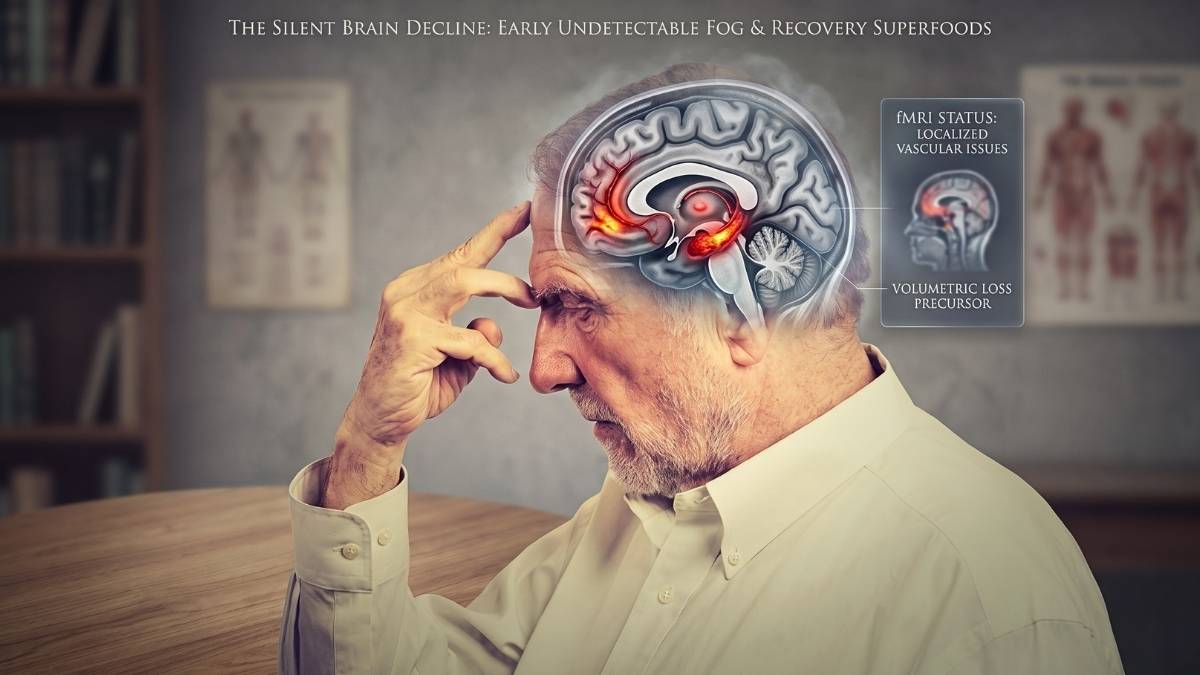
You walk into a room and forget why. You reread the same email line three times. You lose a word mid-sentence in a meeting, and it just won’t come.
You tell yourself it’s just a busy week. But these moments add up. Research now treats them as an early signal, not something to brush off.
This guide shows you the real early signs of brain fog. You’ll learn what causes them. And you’ll get a simple morning food routine you can start tomorrow. Brain superfoods won’t fix everything. But they’re one real tool that helps.
What Brain Fog Early Signs Actually Look Like
Brain fog isn’t a diagnosis. It’s a cluster of symptoms. Trouble focusing. Slow thinking. Forgetfulness. Losing the right word. Feeling mentally tired even after rest.

This doesn’t mean you’re getting less smart. It means your brain is reacting to sleep, stress, food, or your health right now.
The signs show up in small moments. Losing a word mid-sentence. Walking into a room and forgetting why. Rereading the same paragraph. Feeling foggy by 2pm every day.
One bad night of sleep causing fog is normal. The real warning sign is a pattern. Doctors call this subjective cognitive decline [when you notice your own memory or thinking slipping, even before any test shows it]. Studies show about 11 to 13% of adults ages 50 to 74 report this. That number climbs fast after 75.
Watch the pattern, not the single bad day.
Why “It’s Just Stress” Isn’t the Full Story
Stress plays a part. But it’s not the whole story.
Chronic work stress raises cortisol. That hormone messes with your sleep. Over time, it’s linked to inflammation in the brain. If you deal with constant job pressure, this connects directly to your brain fog.
Doctors point to four main causes: poor sleep, chronic stress, missing nutrients, and low-grade inflammation. Exercise helps with all four at once. It lowers inflammation, improves sleep, and boosts brain cell energy.

Here’s why waiting doesn’t work. Fog from one stressful week often clears up on its own. But fog from ongoing stress, bad sleep, or missing nutrients sticks around. It needs action, not patience.
Your brain runs on mitochondria [tiny energy factories inside brain cells that power your thinking]. When they slow down, so do you. That’s why fixing sleep, stress, and food together works better than fixing just one.
The Research Connecting Diet to Brain Fog
Food affects your brain fog in three ways. It changes inflammation. It shapes your gut bacteria. And it affects how well you sleep. A 2026 nutrition review confirmed this. Diets full of processed food, sugar, and fat make fog worse. Anti-inflammatory diets help.

One study measured brain fog directly. People who followed the MIND diet scored lower on brain fog severity. That’s a real, measured link.
Bigger picture: The 2024 Lancet Commission found 45% of dementia cases worldwide could be prevented or delayed. Diet is one piece of that. Not the whole answer.
An NIH-funded study found something important. Women who followed the MIND diet closely had an 8% lower risk of cognitive decline. Men in the same study saw no real difference. Being honest about this matters.
Even more honest: a 2023 clinical trial found the MIND diet did not significantly change brain scans or cognition compared to a control diet over three years. Food helps. It’s not a fix-all.
Brain Superfoods for Memory: What the Evidence Supports
These foods have real research behind them. Not hype.
5 Brain-Healthy
Core Foods
Leafy Greens
Spinach and kale are core parts of the MIND diet. Studies link them to slower age-related cognitive decline.
Berries
Blueberries and strawberries are rich in flavonoids that fight inflammation. Long-term studies show they slow cognitive decline.
Fatty Fish
Salmon and sardines provide essential omega-3s, a crucial component of the MIND diet food group.
Nuts
A foundational brain-healthy food group that provides healthy fats and nutrients in the MIND diet.
Olive Oil
The MIND diet’s primary healthy fat, meant to completely replace butter and margarine in cooking.
Foods to cut back on: red meat, butter, cheese, pastries, sweets, and fried food. You don’t need to fear these. Just eat them less.
No food here is a miracle cure. Think “may support” and “linked to,” not “guaranteed.” That’s the honest, accurate way to think about brain food.
A Simple Morning Brain-Food Routine You Can Start Tomorrow
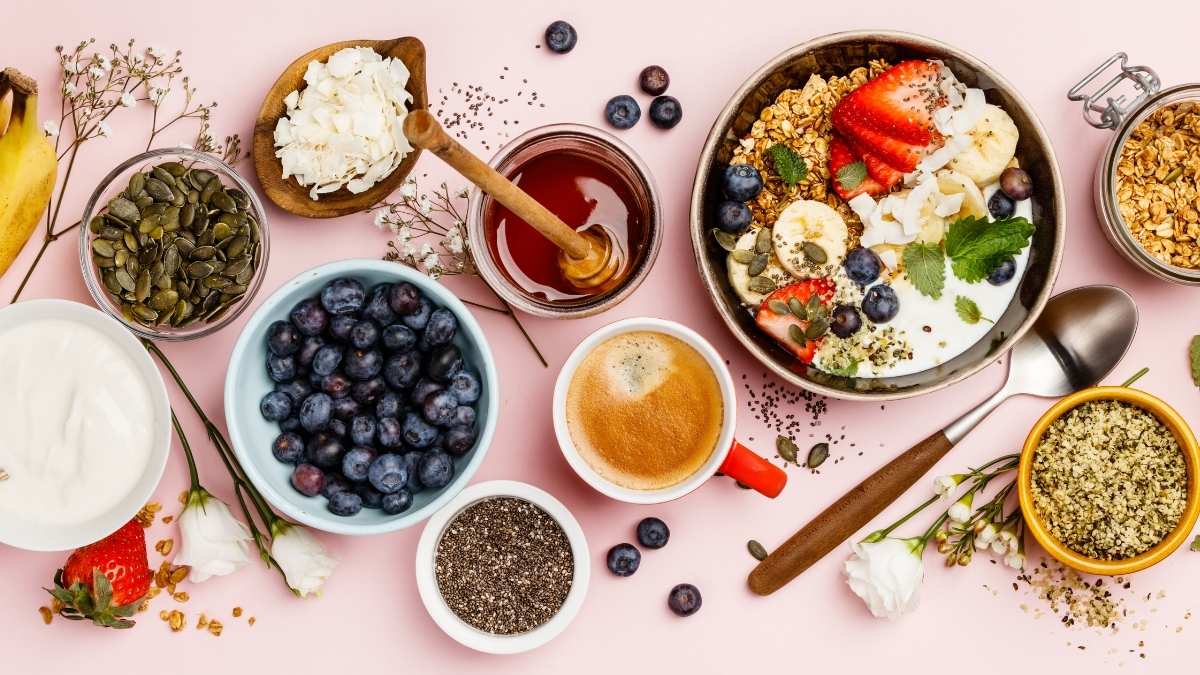
Skip the rigid meal plan. Use this simple formula instead: protein + healthy fat + one MIND-diet food + water.
Three easy combos to try:
- Greek yogurt, walnuts, and blueberries
- Scrambled eggs, spinach, and olive oil
- Oatmeal, ground flaxseed, and berries
Pick whichever fits your morning. Rotate them through the week.
Here’s the honest part. One good breakfast won’t fix brain fog by lunch. Consistency over months matters more than any single meal. That’s what the research actually shows.
Pair this with sleep and movement, not instead of them. Food alone won’t carry the whole job.
Want to track progress? Write down your foggiest moments each day for two weeks. Note what you ate and how you slept. Patterns show up fast, and they’ll tell you what’s actually working for you.
When to Stop Self-Managing and Talk to a Doctor
Some fog needs more than food and sleep fixes.
See a doctor if your fog is severe, doesn’t let up, keeps getting worse, or gets in the way of work or safety, like driving or managing medication.

A doctor can check for causes you can’t fix on your own. Poor sleep, stress, dehydration, medication side effects, or an underlying health issue. They’ll help you figure out what’s really going on.
You’re not alone in feeling behind on this. Only 9% of adults over 40 say they know how to protect their brain health. Yet 99% say it matters as much as physical health. Most people are figuring this out as they go, just like you.
Catching a pattern early gives you more options. This isn’t about panic. It’s about paying attention and acting on what you notice.
The Bottom Line,
Brain fog early signs deserve attention, not worry. Watch the pattern. Fix your sleep, stress, and food together. Start with tomorrow’s breakfast, and track how you feel over two weeks. Brain superfoods for memory are one real, useful tool, not a cure.