

Most heart risk factors in men never make a sound. No pain, no warning, no reason to call the doctor.
That silence is the problem. Heart disease is the leading cause of death for men in the United States, and men tend to have a first heart attack about ten years earlier than women. A major long term study found the gap starts opening around age 35. That is two decades before 55.
Yet plenty of men skip checkups because they feel fine. By the time something feels wrong, the arteries have often been changing for years. Most men are never told any of this.
The five heart risk factors below are the ones doctors keep watching in men before 55. Each one can be measured, and most can be changed. One of them takes a single simple blood test, once in your life, and almost nobody has had it.
Why 55 Is the Wrong Deadline
Age 55 is when many men finally start thinking about their hearts. The research says that is late.
Men’s heart attack risk generally begins rising around age 45, and about 10% of first heart attacks happen to people under 50.
The most telling evidence comes from the CARDIA study. It followed more than 5,100 adults who were between 18 and 30 when they enrolled, tracking them through 2020.

Men reached a 5% rate of cardiovascular disease about seven years before women, at about age 50.5 compared with 57.5.
Researchers then adjusted for blood pressure, cholesterol, blood sugar, smoking, activity, weight, and diet. Men still carried a higher risk of early heart disease.
The classic risk factors do not explain the whole gap. That is exactly why catching them early matters.
There is also a habit gap. Women are more than four times as likely as men to attend routine checkups, largely because of gynecologic and obstetric visits. Men often skip the very appointment that would catch a quiet problem.
The 5 Heart Risk Factors That Do Their Damage Quietly
Each one below includes what it does inside your arteries and one move you can make this month. Start with the biggest offender that makes no noise at all.
1. Blood Pressure That Climbs Without a Sound
Under the current American Heart Association and American College of Cardiology definition, nearly half of US adults have high blood pressure, starting at 130/80. Only about 1 in 4 of them has it under control, and men are more likely to have it than women, at 50% versus 42.1%.
The picture is worse in younger men. In one CDC survey that used the older 140/90 cutoff, only about 15% of men ages 18 to 39 with hypertension had it controlled, compared with about 63% of women.

Here is why it matters. Blood pressure is the force of blood pushing against the walls of your arteries. Over the years, that constant force can injure the delicate inner lining of those arteries.
Damaged lining makes it easier for cholesterol to settle in and form plaque. It also makes the heart muscle work harder with every beat.
Quick check you can do at home: Buy a validated upper arm cuff. Sit quietly for five minutes with your feet flat and your arm resting at heart level. Take two readings a minute apart, morning and evening, for a week, then bring the log to your doctor.
A single reading in a clinic can mislead, since nerves alone can push the number up. A week of home readings tells the real story.
2. LDL Cholesterol and the One Test Most Men Never Get
LDL is the “bad” cholesterol, the kind that slips into artery walls and builds plaque. Public health guidance notes that even younger, leaner men need to keep an eye on their cholesterol.
Cardiologists increasingly stress that lifetime exposure to high LDL is what raises cardiovascular risk. A man with a mildly high number at 30 and the same number at 50 has had twenty years of plaque building time.
That is why newer guidance asks doctors to look at risk over a lifetime rather than only the next 10 years, since short term estimates can give young adults false reassurance.
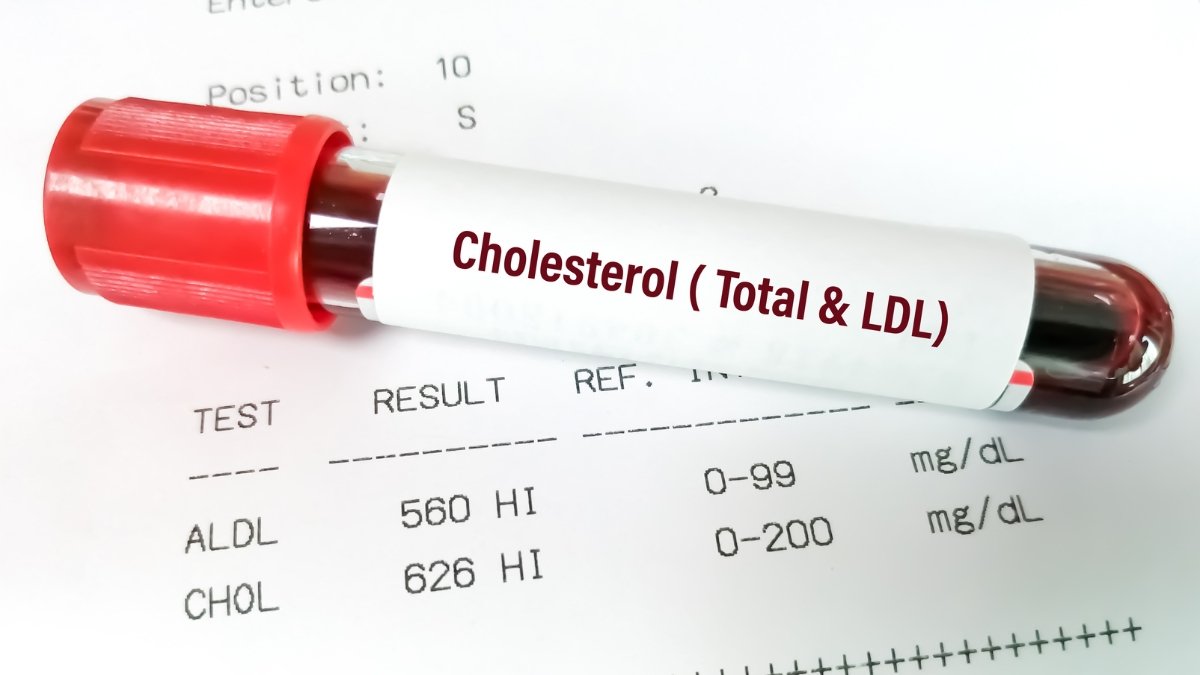
Now for the test almost nobody has had. The 2026 cholesterol guidelines say all adults should get a lipoprotein(a) blood test, called Lp(a), at least once. Lp(a) is a particle similar to LDL, but more dangerous.
Up to 90% of the variation in Lp(a) levels is genetic, and it is not directly lowered by diet, exercise, or statins. A standard cholesterol panel does not measure it.
One 2025 analysis of health records for 70 million American adults found that only 0.1% had ever been tested.
If you cannot change it, why test? Because a high result tells your doctor to push everything else harder. Managing the changeable risk factors becomes paramount, and guidelines suggest even lower LDL targets for people with high Lp(a).
Your move: Ask for a lipid panel and a one time Lp(a) test at your next visit. The Lp(a) test often costs under $100 when paid for directly.
3. Belly Fat and Blood Sugar That Drift Up Together
Where you carry fat matters as much as how much you carry. Men are more likely to store fat in the belly.
That belly fat is not just padding. Visceral fat, the kind that surrounds your internal organs, releases inflammatory molecules and drives most of the other components of metabolic syndrome.
Even men with a normal body mass index can carry excess visceral fat and elevated risk. The scale cannot tell you. A tape measure can.

A waist of 40 inches or more is one criterion for metabolic syndrome, and Harvard Men’s Health Watch editors advise trimming a waist that has crept past half your height. Some groups, such as Asian men, are advised to use a lower cutoff of about 35 inches.
Blood sugar travels with belly fat. Having any three of five factors (a large waist, high blood pressure, high fasting glucose, abnormal triglycerides or HDL cholesterol) counts as metabolic syndrome. Men are also more likely than women to have undiagnosed diabetes.
Quick check you can do at home: Wrap a tape measure around your bare waist at navel level, relaxed, after a normal exhale. Write the number down. Ask your doctor for a fasting glucose or A1c test at the same visit as your cholesterol.
Your move: The American Heart Association recommends at least 150 minutes of exercise per week. A brisk walk after dinner, five days a week, is a realistic place to begin.
Everyone’s body responds differently, so check with your doctor before changing your exercise routine or diet if you have an existing condition or take medication.
Your Heart Numbers Cheat Sheet
Cardiovascular & Metabolic Target Matrix
Key blood pressure, lipid, glycemic, and body composition targets for proactive heart health.
Below 120/80 mmHg
130/80 mmHg or higher (repeated)
Under 100 mg/dL
130 mg/dL or higher
40 mg/dL or higher
Below 40 mg/dL
Under 40 inches
≥40 inches or > half your height
Under 100 mg/dL
100 mg/dL or higher
Your doctor may set tighter targets if your overall risk is higher, so treat these as starting points.
4. Smoking, Even the Occasional Kind
Smoking tops almost every list of heart risk factors for a reason. Cigarette smokers are 2 to 4 times more likely to get heart disease than nonsmokers.
The damage starts fast. Smoking causes an instant rise in blood pressure and heart rate, reduces the oxygen reaching your tissues, harms blood vessels, and raises the risk of blood clots.
In younger patients, it stands out even more. Among the changeable risk factors for early coronary heart disease, cigarette smoking is the most common.

A study of patients under 50 with coronary artery disease backs that up. These patients were frequently smokers, physically inactive, and had high cholesterol and high blood pressure, all of which can be changed.
“Just a few cigarettes” is not a safe zone. Even occasional smoking causes harm, and the best option for any smoker is to quit completely.
The payoff for quitting is large. The American Heart Association says stopping smoking can cut the risk of heart disease by half.
Your move: Pick a quit date within the next two weeks. Ask your doctor about nicotine replacement and prescription options, because quitting with support works better than quitting on willpower alone.
5. A Father or Brother Who Had Heart Trouble Before 55
Family history is the one risk factor you cannot edit. It is also the easiest one to overlook.
Here is the definition that counts. Your risk rises if your father or brother was diagnosed with heart disease before age 55, or your mother or sister before age 65.
Coronary heart disease at younger ages is strongly influenced by genetic factors. But genes are not a sentence.

A study of 1,075 adults under 50, about half of them with early coronary artery disease, found that physical inactivity, smoking, high blood pressure, diabetes, and high cholesterol played a greater role than genetics in many young patients,
even those with a family history. The lead researcher said genetics should not be used as an excuse to call heart disease inevitable.
Family history also shows up in blood work early. In a study of 411 healthy men with an average age of about 28, those with a family history of premature coronary disease already had higher LDL cholesterol, higher body mass index, a larger waist to hip ratio, and higher blood sugar markers.
Think of it as an early warning system you can act on. The signs were there long before any symptoms.
Your move: Call or text your relatives this week. Write down who had a heart attack, stent, bypass, stroke, or sudden death, and at what age. A close relative who had a heart attack or stroke before 55 (if male) or 65 (if female) is a standard reason to get that Lp(a) test.
Small Swaps That Move the Needle
Most of these risk factors respond to ordinary habits. The trick is replacing a habit that quietly hurts with one that quietly helps.
Cardiovascular Risk Habits vs. Smarter Swaps
Identify silent cardiovascular health threats and implement practical, evidence-based lifestyle interventions.
High blood pressure and elevated LDL cause zero early symptoms.
Even occasional smoking directly damages arterial lining.
Inactivity feeds visceral belly fat and promotes high blood sugar.
Visceral fat actively drives systemic inflammation and metabolic risk.
Early cardiovascular disease frequently runs strongly in families.
Try This Today: The Five Minute Heart Check
- Wrap a tape measure around your waist and write down the number.
- Text one relative and ask about heart problems in the family and at what age.
- Put a blood pressure cuff on your shopping list, or ask your pharmacy where you can test.
- Book a visit and ask for a lipid panel, a fasting glucose or A1c, and a one time Lp(a) test.
- If you smoke, choose a quit date and tell one person about it.
When to Call for Help Right Away
- Chest pressure, tightness, or heaviness, especially with sweating.
- Trouble breathing, or severe indigestion that does not feel normal for you.
- Swelling in your feet, ankles, or legs along with unusual tiredness or shortness of breath.
- Any symptom that comes on suddenly and feels wrong.
Do not wait for it to repeat. Call your local emergency number rather than driving yourself.
The Bottom Line on These Heart Risk Factors

Five things to know: blood pressure, LDL and Lp(a), belly fat with blood sugar, smoking, and family history. Most can be measured in a single morning.
The research shows risk in men starts rising earlier than most people expect. The good news is that these are the factors you can actually see coming.
Start with a tape measure, a blood pressure cuff, and one lab visit. Then take those numbers to a doctor you trust.