
You found one exercise you love, and you have done it faithfully for years. A Harvard study of more than 111,000 adults found that people who did the widest range of activities had a 19% lower risk of early death, even after accounting for how much they exercised. Turns out the fix is small, and it may not cost you a single extra minute.
Harvard’s biggest study on this question followed adults for over 30 years, and its message was not about doing more. It was about doing different things.
Muscle, balance, and heart fitness do not all respond to the same workout, and age tends to expose the gaps. A dedicated walker may build great endurance and little muscle. A dedicated lifter may build the muscle and miss the stamina.
Here is what the study found, what it cannot prove, and an easy way to add variety to your week.
What Harvard Tracked for More Than 30 Years
The study appeared in January 2026 in BMJ Medicine, written by researchers at Harvard T.H. Chan School of Public Health. It pulled from two long running projects, the Nurses’ Health Study and the Health Professionals Follow Up Study.
Every few years, participants reported how much time they spent on a long menu of activities. That menu included walking, jogging, running, cycling, lap swimming, tennis or squash, weight training, yoga and stretching, stair climbing, and yard work or gardening.
Researchers gave each person a variety score based on how many different types of activity they did regularly. Then they compared those scores with deaths from any cause, adjusting for health and lifestyle factors.

The most varied group had a 19% lower risk of death from any cause than the least varied group. That edge held at every level of total activity.
In plain terms, spreading a given amount of exercise across more types was linked to lower risk than putting all of it into fewer types.
The researchers also saw that benefits were not a straight line. Gains tended to level off past a certain amount of activity, which hints at a sweet spot rather than a race to do more.
Why Mixing Exercise Could Work as an Anti Aging Strategy
The study did not test why variety helps, so the explanations are educated guesses. Corresponding author Yang Hu has suggested that mixing activities lets people tap into two or more dimensions of exercise, such as aerobic and strength work.
Here is the likely logic. Aerobic activity trains the heart and lungs, and cardio fitness has long been linked to a longer life.
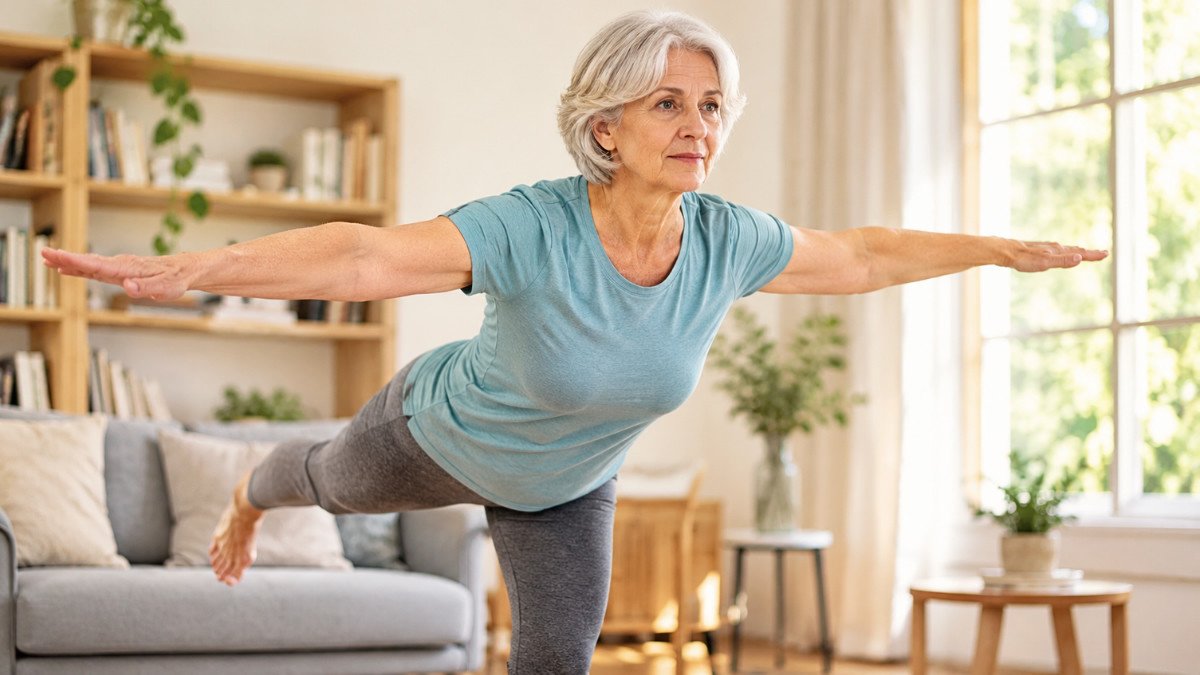
Strength work protects muscle and bone, which both decline with age. Balance and coordination activities such as tennis, tai chi, or yoga train the reflexes that help prevent falls, a leading cause of injury in older adults.

No single workout covers all three well. Think of it like food: nobody thrives on one meal, even a healthy one.
A separate Harvard analysis points the same way. Published in the British Journal of Sports Medicine in June 2026, it followed 147,374 adults and found that people who did both strength and aerobic exercise had up to 45% lower risk of death than people who did neither.
Strength training alone showed a pattern too. Adults who did 90 to 119 minutes a week had a 27% lower risk of death from neurological diseases, mostly dementia related, compared with adults who did none.
Tom Yates, a physiologist at the University of Leicester who was not part of the variety study, called the variety result a new finding. That matters, because earlier research focused mostly on how much people exercise.
Which Activities Pulled the Most Weight
Each activity was also compared on its own, and most were linked to lower risk. The table shows how the most active people in each activity did compared with the least active people in that same activity.
Longevity Activities & Mortality Risk Reduction
Quantifying the impact of specific physical activities on all-cause mortality risk reduction and core physiological training adaptations.
Endurance and daily functional mobility
Balance, agility, and quick neurological reactions
Muscular strength plus cardiovascular stamina
Skeletal muscle hypertrophy and bone mineral density
Lower-body leg power and sustained heart rate elevation
Lower-limb aerobic endurance and joint-friendly conditioning
These are not head to head rankings, because every row only compares a group with its own least active peers. Walking carried the largest single link, which makes it a natural anchor for any routine.
Swimming was the one activity without a significant link. Commentators noted that self reported swimming can mean anything from a lazy paddle to hard laps, so this does not make the pool a bad choice.
What Is Proven, What Is Early, and What Nobody Knows Yet
What is solid. Moving more is clearly tied to a longer life, and this study adds that variety carries its own link on top of total time. The cohorts are huge, and the follow up ran for three decades.
What is early. This was an observational study, so it shows a link and not cause and effect. People reported their own habits, and the groups were mostly white health professionals, so the results may not fit everyone equally.
What nobody knows yet. The score only counted how many activities people did, so the best mix is still unknown. A clinical trial would be needed to show that adding activities actually extends life.
About the phrase anti aging. The study measured risk of death, not biological age, so it cannot say variety slows aging inside your cells. Treat it as a strong clue about longevity and not a proven anti aging switch.
About quitting your favorite. Please do not drop it. Most activities in the study, taken alone, were linked to lower risk, so one exercise is far better than none.
How to Add Variety Without Adding Hours
You do not need a gym membership or a new hobby overnight. You need a rough map of the three jobs your body does: aerobic work, strength work, and balance work.
Health guidelines give a useful frame. The World Health Organization recommends 150 to 300 minutes of moderate aerobic activity a week, or 75 to 150 minutes of vigorous activity, plus muscle strengthening on at least 2 days.
For adults 65 and older, WHO adds varied activity that emphasizes balance and strength on 3 or more days a week. That advice lines up neatly with what Harvard’s data hint at.
The strength piece does not have to be huge. In that June 2026 Harvard analysis, extra benefit from strength training leveled off around 120 minutes a week.
Everyone’s body responds differently, so check with your doctor before trying these amounts if you have an existing condition or take medication.
Variety is also flexible. Hu noted that people naturally change activities over time based on their preferences and health, so the right mix can shift as your body does.
A Simple Week That Builds Variety
This sample week uses everyday activities and nothing fancy. Adjust the times to your fitness level.
Weekly Movement & Functional Protocol
Structured physical activity schedule balancing aerobic endurance, strength preservation, balance, and agility.
Brisk walk
Chair squats and wall pushups
Tai chi, yoga, or balance drills
Cycling or a hilly walk
Resistance bands and one-leg stands
Yard work, tennis, or dancing
The sample reaches the low end of the WHO aerobic range, includes two strength days, and touches balance on three days. If that feels like too much, start with half and build from there.
Try This Today
- Pick one activity you have not done in over a year, and book it for this week.
- Stand on one leg for 30 seconds per side while you brush your teeth, holding the sink if needed.
- Do 10 sit to stands from a sturdy chair during your next TV break.
- Take the stairs instead of the elevator once today.
- Write down the types of activity you did in the past 7 days. If the list has one item, that is your starting gap.
Stop and Call Your Doctor If You Notice
- Chest pain, pressure, or tightness during activity
- Shortness of breath that feels out of proportion to the effort
- Dizziness, fainting, or a racing or irregular heartbeat
- Sharp joint pain or swelling that lingers after activity
Questions Smart Readers Ask Next

Does gardening or yard work count?
The study asked about yard work and gardening alongside formal exercise, so everyday chores were part of the picture. Raking, digging, and chopping all ask more of your body than sitting does.
How many activities should I aim for?
The best mix has not been defined yet, and the study only counted how many types people did. A practical start is one activity for each job: aerobic, strength, and balance.
How soon will I notice a difference?
Strength and stamina often improve within a few weeks of steady training. The longevity link in this study reflects decades of habits, so think of it as a long game.
What if I have arthritis or sore knees?
Spreading effort across different movements may reduce repeated stress on the same joints, though the study did not test that. A doctor or physical therapist can help you pick options that fit.
The Takeaway for Your Next Workout,
Harvard’s biggest study on this question does not say your favorite exercise is wrong. It says that adding other kinds of movement may offer extra protection, whatever your total time.
The evidence is observational, so treat it as a strong clue and not a guarantee. Still, adding a strength session or a balance practice to a walking habit is low risk and easy to start.
Keep what you love. Add one new thing this week, and let the variety build.
This article is for informational purposes only and is not a substitute for professional medical advice, diagnosis, or treatment. Always consult your doctor or a qualified healthcare provider before making changes to your exercise routine, diet, or medications, especially if you have an existing health condition.
Sources
- Harvard T.H. Chan School of Public Health, news release “Exercise variety, not just amount, linked to lower risk of premature mortality,” January 20, 2026
- Han H, Hu J, Lee DH, et al. “Physical activity types, variety, and mortality: results from two prospective cohort studies.” BMJ Medicine, 2026;5:e001513. doi: 10.1136/bmjmed-2025-001513
- BMJ Group release on the same study (via ScienceDaily, April 2026), for the per activity results and the swimming finding
- Harvard T.H. Chan School of Public Health, news release “Moderate amount of strength training each week could boost longevity,” covering “Long-term resistance training with all-cause and cause-specific mortality: assessing dose-response and joint associations with aerobic physical activity,” British Journal of Sports Medicine, June 2026
- World Health Organization, “WHO guidelines on physical activity and sedentary behaviour,” 2020
- ScienceAlert coverage of the BMJ Medicine study, including comments from Tom Yates, University of Leicester