

You have probably picked up a dozen “secrets” to living past 100 by now, and half of them contradict each other.
One expert swears by intermittent fasting. Another says carbs are fine as long as you keep moving every day. Meanwhile, you are stuck guessing which habit is actually worth building your whole life around, and guessing wrong could mean spending decades protecting against the wrong thing.
A team of researchers just pulled together 55 years of centenarian research to settle the question once and for all. The real answer is stranger, and more useful, than any single tip could ever be.
Before making any changes based on this article, talk to your doctor, especially if you are currently taking medication or have a diagnosed condition.
What 55 Years Of Centenarian Research Actually Found
The review comes from a team led by pharmacologist Shaima Ibrahim at the American University in Cairo, published in the journal Discover Public Health. Her team combed through thousands of papers before narrowing the list to 124 studies focused specifically on centenarians, semi supercentenarians (ages 105 to 109), and supercentenarians (110 and older).

That is 55 years of accumulated research on the people who make it furthest into old age, all pulled into one analysis.
The headline finding is almost anticlimactic. There is no single magic habit, food, or gene. Longevity, the researchers concluded, comes from a lifetime of small advantages stacking on top of each other: genetics, daily behavior, social ties, and a fair amount of luck.
But buried inside that conclusion is something genuinely useful: three distinct patterns that describe how people actually get to 100, and a clear picture of which lifestyle habits keep showing up again and again across very different populations.
How Centenarians Actually Reach 100
Researchers who study extreme aging generally sort centenarians into three groups, based on how they relate to disease over their lifetime.
Longevity Research · Three Paths to 100
Not Everyone Who Reaches 100 Gets There the Same Way
Three distinct patterns show up again and again in centenarian research.
Escapers
HowAvoid major age-related disease almost entirely.
Looks likeReach 100 with little to no history of conditions like heart disease or diabetes.
Delayers
HowDevelop the same diseases as everyone else, just decades later.
Looks likeDiagnosed with conditions like cancer or heart disease in their 80s or 90s instead of their 60s.
Survivors
HowDevelop serious disease relatively early.
Looks likeLive with a chronic condition for many years, sometimes decades, without it shortening their life.
Most people assume every centenarian is an “escaper,” someone who simply avoided illness. In reality, delayers and survivors make up a large share of the group. Getting to 100 is not always about dodging disease. Often it is about how your body handles it once it shows up.
Why There Is No Single Longevity Gene
If you were hoping for a genetic test that tells you whether you are built to live to 100, the review has bad news.

Exceptional longevity is described as polygenic, meaning it involves many different genetic variants, each contributing only a small effect on its own. No single gene explains it. Instead, hundreds of tiny genetic advantages stack together over a lifetime.
On the biological side, the review found several patterns that repeat across studies of centenarians:
- More efficient DNA repair at the cellular level
- Healthier mitochondria, the structures inside cells that produce energy
- Better regulation of chronic, low grade inflammation
- Metabolic differences that appear to protect against age related disease
None of these are things you can simply decide to have more of. But the researchers noted that some of them, particularly inflammation control and metabolic health, are also influenced by daily habits like diet and activity, which is where the lifestyle findings become more actionable.
The Lifestyle Pattern That Keeps Showing Up
Across wildly different countries and cultures, the review found the same lifestyle threads appearing again and again among people who lived past 100.
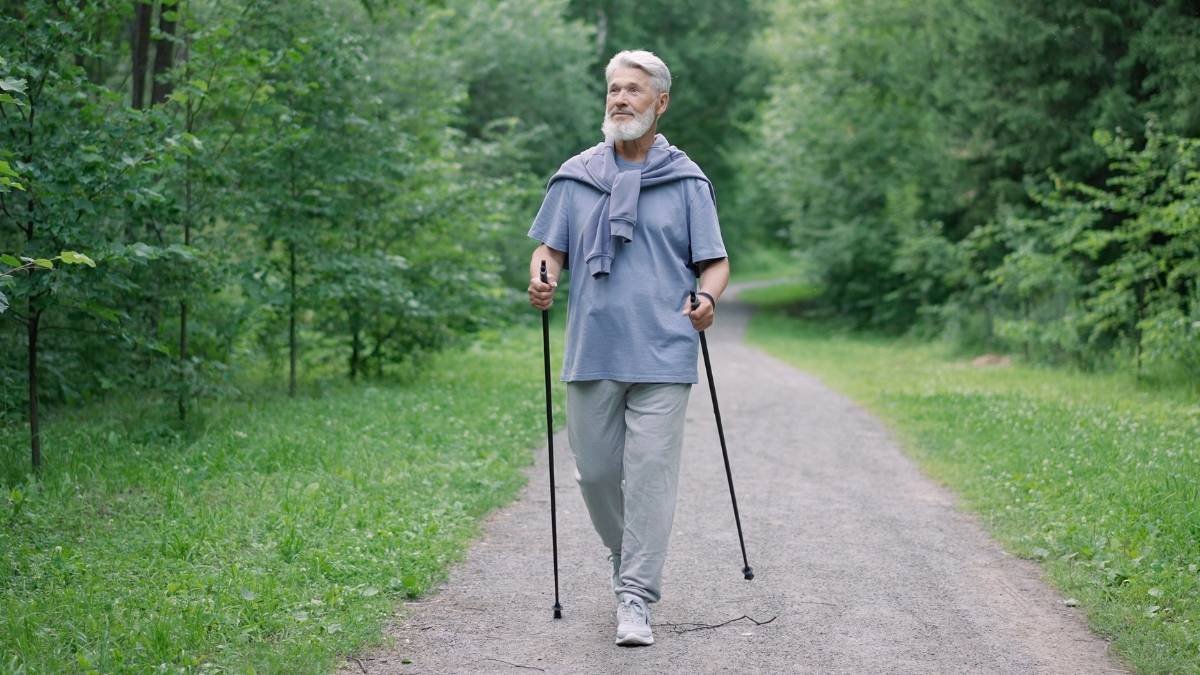
Centenarians in the studies reviewed tended to eat diets that were largely plant based, stay physically active through ordinary daily movement rather than structured workouts, avoid smoking, and maintain close social and family connections. Personality traits like resilience and lower neuroticism showed up consistently as well.
This lines up with what longer running individual studies have found. The Okinawa Centenarian Study, which has tracked centenarians in Japan since 1975 and is the longest running study of its kind in the world, found that roughly one third of Okinawan centenarians remained functionally independent, with high levels of physical activity sustained across their entire lives. Much of that has been linked to a traditional Okinawan diet built around vegetables, soy, and minimal processed food.
Separately, the New England Centenarian Study, which has followed centenarians in the Boston area since 1994, has found that people who reach 100 do not simply age more slowly for most of their lives. Instead, they tend to delay the onset of chronic disease by roughly 15 to 20 years compared to the general population, developing conditions like cancer significantly later than average.
Everyone’s body responds differently, so check with your doctor before trying this if you have an existing condition or take medication.
What The Evidence Actually Supports
Evidence Check · Longevity Claims
What Actually Extends Life — And What Doesn’t
Sorted by what multiple studies actually support, versus what’s still just a popular claim.
Helps — Backed by Multiple Studies
A largely plant-based, whole-food diet.
Daily incidental movement — walking, gardening, chores.
Never smoking.
Strong, consistent social connections.
Resilience and lower chronic stress reactivity.
Not Proven — Common Myths
One “miracle” longevity supplement.
Extreme calorie restriction as a shortcut.
A single at-home genetic test predicting your outcome.
Chasing one specific food or biohack in isolation.
Any single habit guaranteeing a specific number of extra years.
Try This Today
The Daily Habits That Actually Show Up In The Research
- Build one plant heavy meal into your day, rather than overhauling your whole diet at once
- Add movement to routine tasks, like walking instead of driving for short errands or gardening on weekends
- Protect at least one regular social connection each week, whether that is a call, a meal, or a standing visit
- If you smoke, talk to your doctor about a quit plan. It is the single most consistently supported risk factor across the review
- Notice and name stress instead of letting it run in the background. Personality and stress reactivity were repeatedly linked to outcomes in the studies reviewed
The Catch Every Longevity Study Runs Into

Here is the part most headlines about centenarians leave out.
Studying people who lived to 100 only tells you about the people who survived that long. It says very little about the many others who ate similar diets, had similar personalities, or carried similar genes, and did not make it past 80.
That is a limitation researchers call survivorship bias, and the review’s authors flagged it directly. It makes it difficult to prove that any single factor actually causes longer life, versus simply being common among the people who happened to live long enough to be studied.
Quick Reference: What The Review Covered
| Category | Examples Studied | What It Tells Us |
|---|---|---|
| Biological factors | DNA repair, telomeres, mitochondria, inflammation, genetics | Longevity has a real cellular signature, but it is not caused by one gene |
| Lifestyle factors | Diet, physical activity, smoking, alcohol use | Daily habits show the most consistent pattern across different populations |
| Social and psychological factors | Personality, social connection, community ties | Resilience and strong relationships appear repeatedly, independent of genetics |
When To Loop In Your Doctor

Longevity research is encouraging, but it is not a reason to make major changes on your own, especially if you already manage a health condition.
- Before starting a new exercise routine if you have a heart condition, joint issues, or a recent injury
- Before making significant diet changes if you have diabetes, kidney disease, or take blood thinners
- If you notice a sudden, unexplained decline in mobility, memory, or energy, get it evaluated promptly rather than assuming it is normal aging
- Before stopping or adjusting any prescribed medication in pursuit of a “reversal” or anti aging habit you read about online
A Few Common Questions
Does this mean genetics do not matter at all? No. Genetics still matter, especially at the extreme end of aging. The review found genetic influence gets stronger the older someone gets, but for most people in midlife, daily habits still carry significant weight.
How long before lifestyle changes actually show results? There is no universal timeline, since the review looked at decades long patterns, not short term interventions. Many of the benefits linked to diet and activity, like better inflammation control, tend to build gradually over years rather than weeks.
What is the most common mistake people make chasing longevity? Fixating on one variable, like a single supplement or one “superfood,” while ignoring the broader pattern of diet, movement, and social connection that actually showed up across the research.
Is it too late to start these habits later in life? The research on delayers and survivors suggests otherwise. People who develop health conditions later in life, or manage existing ones well, still make up a large share of centenarians, which points to meaningful benefit from habits adopted well into middle age and beyond.
The Bottom Line:

Fifty five years of research on the people who live the longest did not produce a single secret. It produced something more honest: a consistent pattern of small, unglamorous habits, layered on top of genetics nobody fully controls, playing out over an entire lifetime.
There is no shortcut hiding in the data. But there is a clear, repeatable pattern, and that is arguably more useful than a single trick ever could have been.
This article is for informational purposes only and is not a substitute for professional medical advice, diagnosis, or treatment. Always consult your doctor or a qualified healthcare provider before making changes to your diet, exercise routine, or medications, especially if you have an existing health condition.