

Your grip feels different than it used to. Jars fight back. Grocery bags cut into your fingers faster than they used to.
You blame age, and age is part of it. But age might not be the whole story.
Grip strength is not just about jars and bags. It’s one of the strongest predictors researchers have for how long people stay independent as they get older, and a quietly weakening grip often shows up years before anyone notices a bigger problem.
Scientists just traced part of that story to something living in your intestines. A single, specific gut bacterium appears to boost muscle strength, according to a new study, and people who carry more of it in their gut tend to have noticeably stronger hands.
Before making any changes based on this article, talk to your doctor, especially if you are currently taking medication or have a diagnosed condition.
Meet The Gut Bacterium Behind The Headline
The microbe in question belongs to a group called Roseburia. Researchers identified a specific bacterium from this genus as the microbe responsible for the strength connection, and its full name is Roseburia inulinivorans.
That name is a clue. The second half refers to inulin [a type of fiber your body can’t digest on its own, but your gut bacteria can ferment and use as food], which naturally occurs in foods like onions, garlic, leeks, asparagus, and chicory root. The Conversation
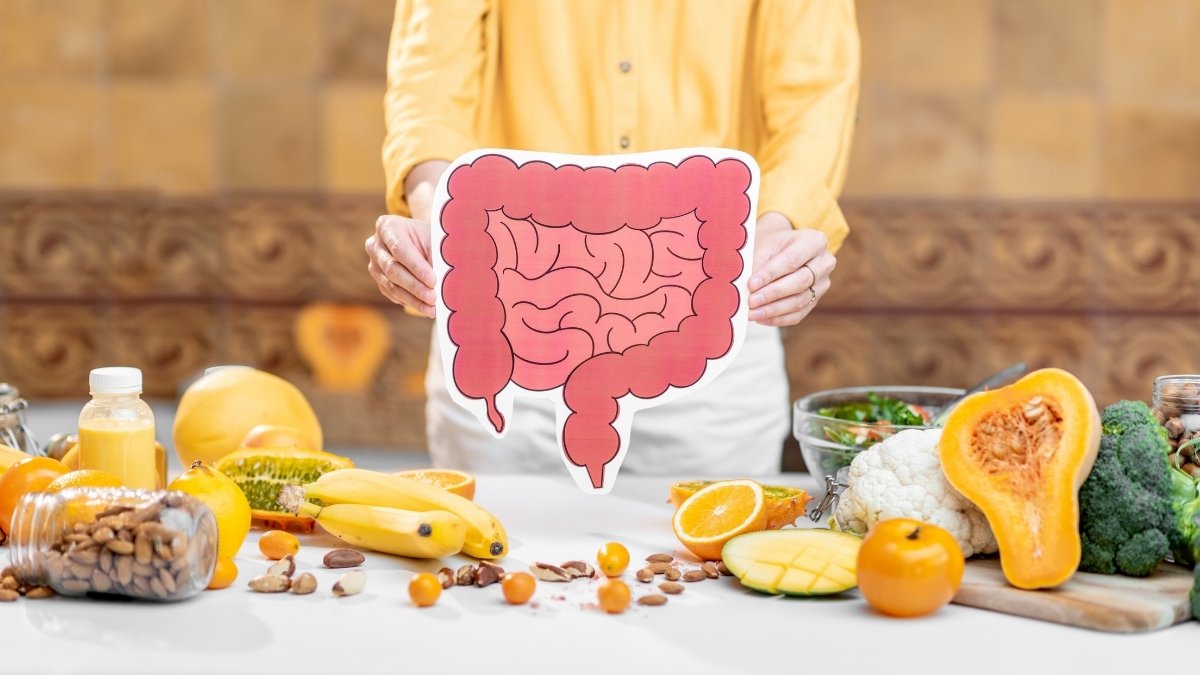
This isn’t a fringe finding. The study came out of the University of Granada in Spain, where exercise physiologist Jonatan Ruiz and his co-authors describe the results as solid evidence of a “gut muscle axis,” a communication link between intestinal bacteria and muscle tissue that works alongside the more familiar gut brain connection. It was published in the medical journal Gut in early 2026.
No fake clinic. No made up statistic. Just a small, specific bacterium that keeps showing up in people with stronger muscles.
What The Study Actually Found
To find this link, researchers examined stool samples from two groups: 90 young adults between 18 and 25, and 33 older adults 65 and above. Everyone in the study lived a fairly sedentary lifestyle and kept a stable weight, which matters because it helps rule out “these people are just naturally more active” as the explanation.

Participants went through detailed strength testing, including hand grip, leg, and upper body strength measurements, along with a test of cardiorespiratory fitness. Then researchers compared those results against each person’s gut bacteria.
Roseburia inulinivorans stood out, showing a positive relationship with grip strength, leg press, and bench press performance. To confirm this wasn’t a coincidence, the team ran a second experiment in mice.
Gut Microbiome Research
Meet R. inulinivorans: The Bacterium Tied to Stronger Muscles
Four separate measurements, same pattern — more of this microbe, more strength.
Hand Grip Strength
Adults with more of the bacterium had grip strength about 29% higher than those with little or none of it.
Grip & Cardio Fitness
More of the bacterium was positively linked to both — including higher oxygen use during exertion.
Forelimb Grip Strength
Mice recolonized with the bacterium had roughly 30% higher grip strength than mice without it.
Muscle Fiber Type
Mice given the bacterium developed more fast-twitch muscle and larger fibers in a lower leg muscle.
That last row matters for the “why.” Fast twitch fibers [the type of muscle fiber built for quick, powerful movement rather than long, slow endurance] are exactly what most people mean when they picture real strength.
Why A Fiber Loving Microbe Might Build Muscle
Here is where the study gets specific instead of vague. For the mouse portion, researchers wiped out the animals’ existing gut bacteria with antibiotics, then reintroduced human gut bacteria over eight weeks.
The mice that received R. inulinivorans didn’t just get stronger. Their muscle tissue physically changed.

The bacterium appears to work by shifting amino acid metabolism in muscle and activating what’s called the purine and pentose phosphate pathway [cellular processes muscle uses to build new material and generate energy]. In plain terms, the bacterium seemed to help muscle cells build and repair themselves more efficiently.
That’s an important distinction from a lot of gut health headlines, which lean on vague words like “boosts” or “supports” without ever explaining a mechanism. This one has an actual proposed pathway behind it, even if it’s still early.
Everyone’s body responds differently, so check with your doctor before making significant diet changes if you have an existing condition or take medication.
How To Feed This Muscle Boosting Bacteria
There’s no pill for this yet. A dedicated Roseburia probiotic supplement isn’t currently available on the market, so diet is the realistic lever right now.
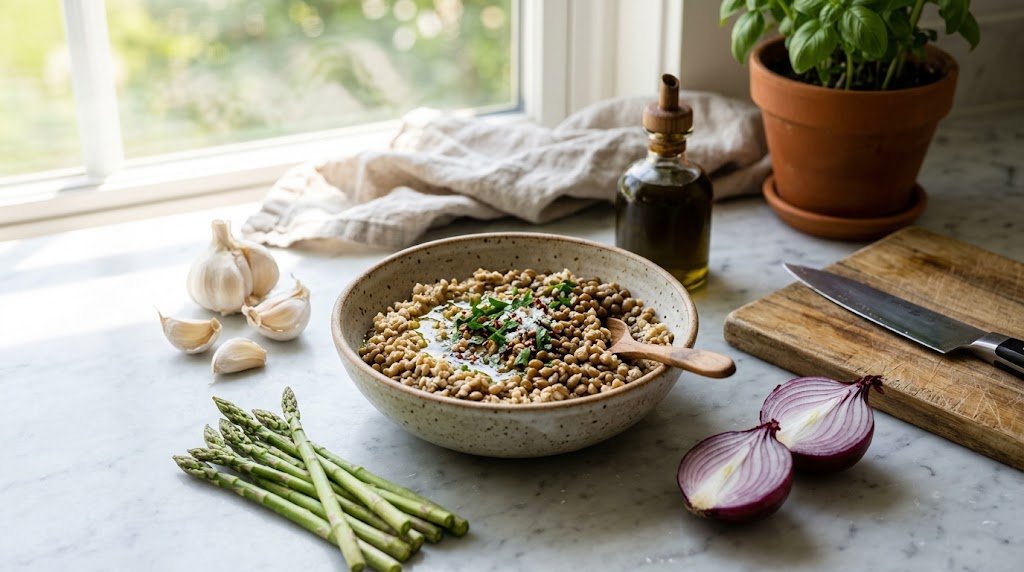
Roseburia inulinivorans thrives on fermentable fiber, especially inulin. Foods like oats, beans, lentils, onions, garlic, and asparagus help feed this type of microbe, along with the compounds it needs to do its work. MindBodyGreen
Fueling Roseburia
Prebiotic foods proven to nourish and multiply beneficial gut bacteria.
Onions, Garlic & Leeks
InulinThe primary fuel source so critical it’s actually named in the bacterium’s own name (inulinivorans).
Asparagus & Chicory Root
InulinFrom the same fermentable fiber family, these are excellent secondary options that are easy to rotate into meals.
Oats, Beans & Lentils
Fermentable FiberProvides broader fiber support and is strongly tied to the overall growth and stability of Roseburia colonies.
Mediterranean Style Diet
Mixed Plant FiberThis holistic eating pattern is clinically associated with increased Roseburia growth in general across all demographics.
Try This Today
- Add one fiber rich food to a meal today: onion, garlic, leek, asparagus, oats, beans, or lentils.
- Build at least three meals this week around a Mediterranean style pattern.
- Increase fiber gradually if this is new for you, since a sudden jump can cause bloating.
- Pair fiber increases with steady water intake.
- Keep two weekly strength sessions in place, since lifting remains the proven driver of muscle strength.
How’s Your Grip, Really?
Clinical grip strength testing uses a handheld device called a dynamometer [a tool that measures how hard you squeeze]. Most people don’t own one, but there are rough, informal signals worth paying attention to.
Struggling to twist open a jar you used to open easily is one. So is needing two trips for groceries you used to carry in one, or feeling like hanging from a bar for even a few seconds is harder than it should be.

None of these are a diagnosis. They’re simply a nudge to pay closer attention, the same way a scale nudges you to notice weight changes.
This New Discovery Versus The Usual Muscle Advice
This study doesn’t replace what already works. It adds a layer most people have never considered.
| Typical Strength Advice | What This Study Adds |
|---|---|
| Lift weights regularly | Feeding the fiber this bacterium relies on may support muscle from the inside, not just the outside |
| Eat more protein | Fiber intake, not just protein, may matter through this newly described gut muscle connection |
| Assume decline is inevitable with age | Older adults are not identical; gut bacteria differences tracked with meaningfully different grip strength |
| Track sets, reps, and weight lifted | Consider also tracking fiber rich foods, though no official guideline exists yet for this specific bacterium |
Questions Worth Asking Before You Change Anything

Can you just take a supplement for this? Not yet. As mentioned above, there’s no commercial R. inulinivorans probiotic on shelves right now, so diet is the only practical option.
How fast could this actually change your strength? There’s no confirmed timeline specific to this bacterium and muscle strength. General microbiome research suggests fiber changes can shift gut bacteria within weeks, but long term studies are still needed to determine whether higher levels of this bacterium actively improve muscle function or simply reflect other healthy habits.
Does this replace strength training? No. Resistance training remains the most reliable way to maintain muscle mass and power, especially with age, things like squats, presses, and rows still matter most.
Who should be careful with this advice? Anyone with irritable bowel syndrome or a sensitivity to high FODMAP foods, since onions, garlic, and inulin rich foods are common trigger foods for that group. Increase them slowly and watch how your body responds.
When Weak Grip Means More Than Weak Muscles
A slowly weakening grip over months or years often tracks with normal aging. A few patterns deserve a call to your doctor instead of a dietary tweak.
- Sudden weakness, especially if it’s only on one side of the body.
- Weakness paired with numbness, tingling, or trouble speaking.
- Rapid strength loss over just a few weeks with no clear cause like illness or reduced activity.
- Weakness paired with unexplained weight loss.
These can point to something beyond muscle or gut health, and they deserve a proper medical evaluation, not a fiber adjustment.
The Bottom Line,

A specific gut bacterium, Roseburia inulinivorans, showed up again and again in people and mice with meaningfully stronger muscles, and researchers have a real, proposed mechanism behind it rather than just a correlation. Older adults carrying more of it had close to 29 percent stronger grip strength, and mice given the bacterium directly grew more of the muscle fiber type tied to real power.
That said, this is one study, with a modest and mostly sedentary participant group, and human results were observational rather than proof of direct cause and effect. Feeding this bacterium through fiber rich foods is a reasonable, low risk addition, not a replacement for the basics that already work.