

You already know something is off. You’ve handled decades of pressure and you’re still performing, but recovery takes longer than it used to, sleep feels lighter, and the body doesn’t bounce back the way it did at 40.
Decades of high-pressure work gradually push the nervous system into a chronic stress state that accelerates aging even when the career itself goes well. This is not a burnout article.
It’s not about slowing down. Men and women in their 50s and 60s who have spent decades in demanding careers will find something specific here: the 11 nervous system habits that separate people who age well through hard careers from those who don’t.
1. How Decades of Pressure Rewire Your Nervous System (And What That Means for Aging)

You feel it most on Sunday nights. The mental churn that won’t stop, the body that never fully lets go, the sense that you’re always in standby mode rather than actually resting. That’s not a personality trait. It’s a nervous system that has been recalibrated by years of high-stakes work.
Your body has two main gears: the sympathetic nervous system [the fight-or-flight system that activates under pressure] and the parasympathetic nervous system [the rest-and-recovery system that allows the body to repair and reset]. In a well-regulated nervous system, these two shift back and forth smoothly throughout the day.
After years of high-pressure work, the balance tips.
Chronic occupational stress is associated with sustained overactivation of the sympathetic system and a reduction in parasympathetic tone. A review of data from more than 600,000 men and women across 27 cohort studies found that job strain and long working hours are associated with a 10 to 40 percent higher risk of coronary heart disease and stroke compared to people without such stressors.
The stakes rise after 50. After age 50, sleep quality is primarily regulated by the sympathetic division of the nervous system rather than the vagal branch.
This matters because sympathetic overactivation during the day is associated with reduced ability to shift into the deep recovery states that sleep is supposed to deliver. The nervous system habits aging research keeps pointing to are not complicated — they are simply the habits that interrupt this pattern before it compounds.

The good news is that the nervous system is not fixed. The nervous system habits aging research keeps surfacing work because they give the system the specific inputs it needs to shift back toward balance. But that shift doesn’t happen by accident.
What the next section reveals is the first and fastest lever — one that most high performers have never been taught to use.
2. The Breathing Shift That Changes Your Stress Baseline (Habits 1 and 2)

Talk to your doctor before making changes to your exercise or physical health routine if you’re managing a cardiovascular condition, hypertension, or any chronic health concern.
Most people breathe the way they drive in traffic: fast, shallow, and reactive. After decades of high-pressure work, that pattern becomes the default. The nervous system does not break from hard work. It breaks from hard work with no recovery written into the schedule.
Breathing is the one autonomic function you can control deliberately, and it is the fastest way to shift the nervous system toward parasympathetic activity.
A narrative review of 465 breathwork studies found that slow, nasal, diaphragmatic breathing is associated with improvements in vagal tone [the activity level of the vagus nerve, which activates the body’s rest-and-recovery state], HRV [heart rate variability, a measure of how well the nervous system shifts between stress and recovery], parasympathetic activity, and emotional control, and with reductions in cortisol and anxiety.
A pilot randomized controlled trial testing deep diaphragmatic breathing found that participants showed reduced cortisol, reduced inflammatory markers, and increased HRV indicating parasympathetic activation.
Here are the first two nervous system habits:
Habit no 1.
The 4-6 Protocol
The Midday
Pause
Set a single daily alarm for midday.
Stop whatever you’re doing for 60 seconds.
Breathe at your own pace, slower than normal.
The goal is interruption of the sympathetic loop, not perfection of form.
One sentence from the research that high-stress performers rarely hear: the people who benefit most from slow breathing are those with the highest resting respiratory rates — which is exactly the profile that builds up over a long career.³
Breathing sets the baseline, but only if sleep is protecting the window in which the body actually repairs itself.
3. Why Sleep Works Differently After 50 (Habits 3 and 4)
You sleep, but you don’t always recover. You wake up tired after seven hours. You lie in bed alert at 3 a.m. when nothing is wrong. These are not signs of weakness — they’re signs of an autonomic shift that happens to almost everyone after 50.
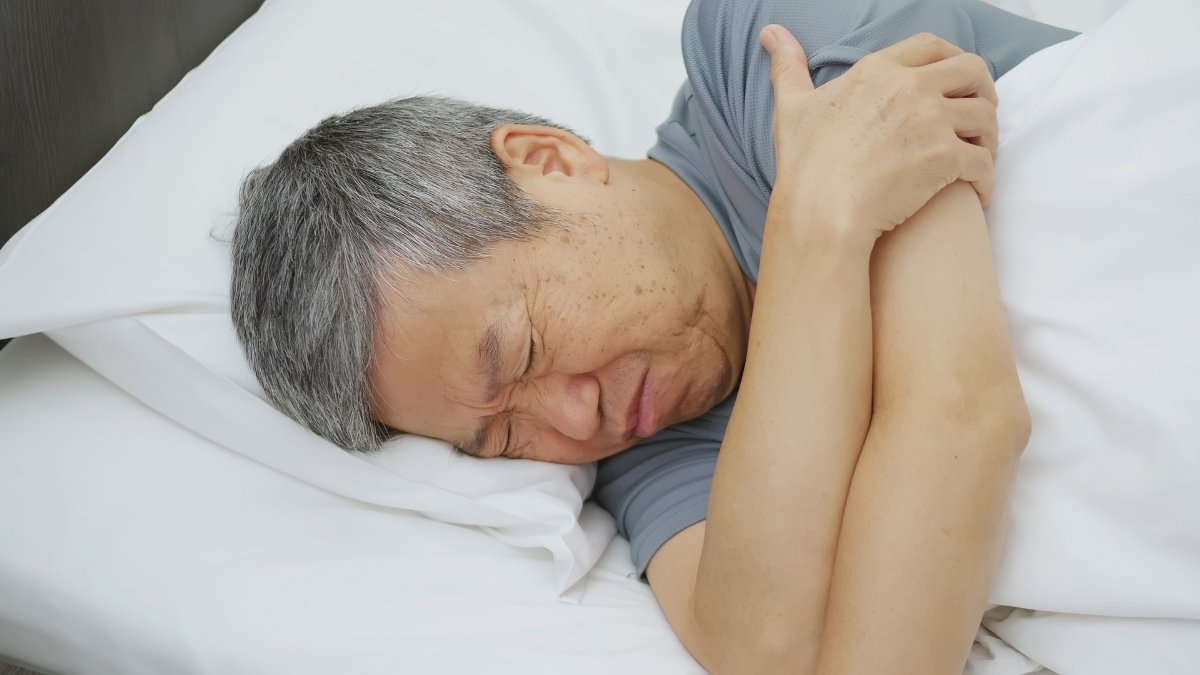
Research analyzing sleep architecture across adult age groups found that significant declines in autonomic activity occur before age 50, and significant changes in sleep quality follow after 50. After that threshold, sleep quality is mainly correlated with sympathetic nervous system activity rather than vagal tone. In plain terms: the more your sympathetic system is activated during the day, the more it intrudes at night.
A separate study from the Multi-Ethnic Study of Atherosclerosis found that both short sleep duration and poor sleep quality are associated with alterations in autonomic nervous system function.
Consistency beats duration. The research on autonomic recovery during sleep points to circadian regularity as one of the most protective factors. Your body recovers better on a consistent schedule than on a variable one, even if total hours are similar.

Here are the next two nervous system habits:
HABIT 3 — The Circadian Anchor
- Set a fixed wake time and hold it seven days a week
- This single anchor regulates your body’s internal recovery rhythm
- Shift it by no more than 30 minutes on weekends
HABIT 4 — The 30-Minute Wind-Down Window
- No screens, email, or work-related content in the 30 minutes before bed
- This isn’t about blue light — it’s about not handing the sympathetic system new material to chew on when it needs to be stepping down
The relatable truth that most sleep advice skips: after a high-pressure career, your nervous system has been trained to stay alert. You can’t just decide to switch it off. You have to give it a transition.
Sleep protects the repair window, but what you do during the day determines whether that window opens at all.
4. The Movement That Resets Your Nervous System, Not Just Your Body (Habits 5 and 6)
You’ve heard that exercise is good for stress. That’s true. What most exercise advice doesn’t specify is that the type of movement, the timing, and the intention behind it all determine whether it builds parasympathetic tone or just burns extra cortisol.
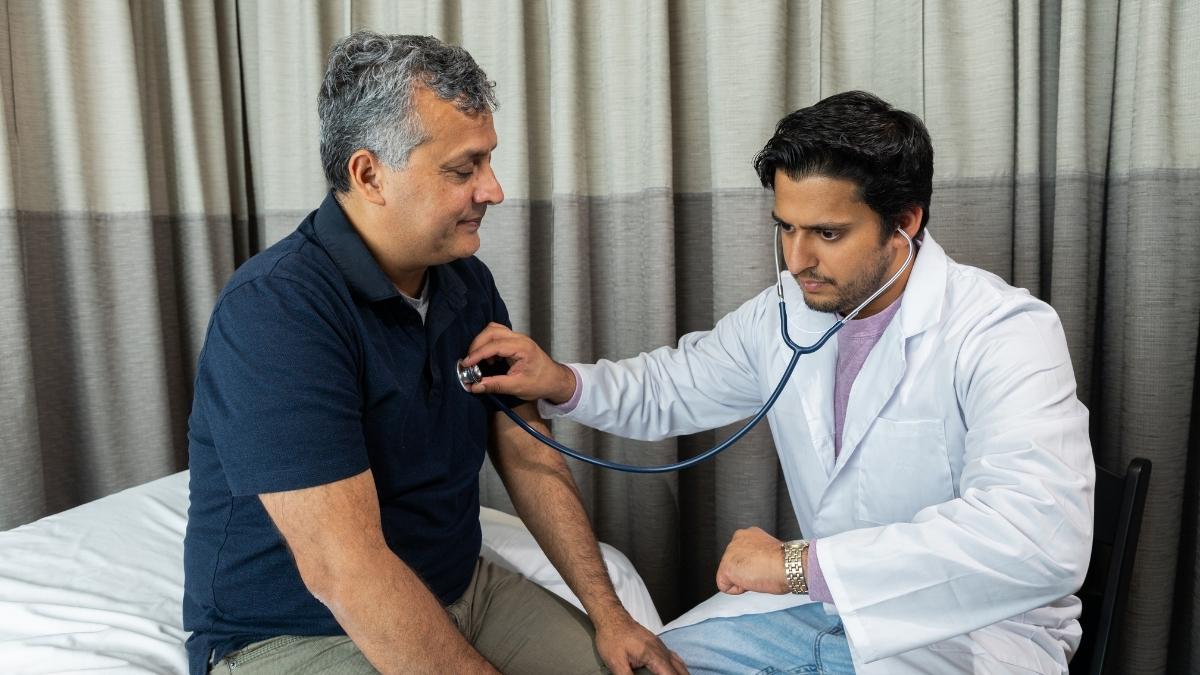
Exercise builds what researchers call heart rate recovery [the rate at which your heart rate drops back to baseline after exertion — a direct measure of parasympathetic function]. A study of 1,253 young and middle-aged adults found that moderate-to-vigorous physical activity is associated with better heart rate recovery, a marker of healthy cardiac autonomic function.
A meta-regression analysis confirmed that during the recovery phase after exercise, parasympathetic activity gradually increases and sympathetic activity decreases back toward baseline in adults.This suggests that each recovery period after exercise may function as a training stimulus for the parasympathetic system.
The mode matters. Long, high-intensity workouts late in the day can spike cortisol at the wrong time and interfere with the sleep recovery discussed in the previous section. Moderate-intensity movement in the morning or early afternoon builds parasympathetic capacity without that cost.
Here are the next two nervous system habits:
HABIT 5 — The Autonomic Build
- 20 to 30 minutes of moderate aerobic movement
- Five days per week
- Walking, cycling, swimming, or any sustained rhythmic activity counts
- The goal is consistency over intensity
HABIT 6 — The Neural Transition Walk
- A 10 to 15 minute walk immediately after the workday ends
- No calls, no podcasts, no problem-solving
- This is a deliberate signal to the nervous system that work mode is over
- It is the gap between stressed and recovered
This walk is one of the most underrated nervous system habits aging research keeps surfacing. The body doesn’t know work ended because you closed your laptop. You have to tell it.
Movement builds recovery capacity, and what protects that capacity from eroding is the topic the next section covers.
5. The Social Habit That Acts Like a Physiological Buffer (Habits 7 and 8)
High performers in demanding careers often let close relationships thin out over decades. Not dramatically — gradually. Fewer phone calls. Fewer unscheduled conversations. The relationships exist but they don’t get maintained. These are nervous system habits aging research confirms matter as much as diet or exercise.

Prolonged weak social connections dysregulate the autonomic nervous system through the HPA axis [the hypothalamic-pituitary-adrenal pathway that controls stress hormone release and feeds directly into sympathetic activation].
A meta-analysis on social support and longevity found that prolonged activation of the body’s defense system is associated with a cardiovascular and autonomic imbalance where sympathetic tone is high and parasympathetic tone is low, a condition linked to increased morbidity and mortality.
The Cardiovascular Health Study, which followed 5,749 older adults across 25 years, found that higher social network scores are significantly associated with longer life expectancy and disability-free life expectancy. Each one-standard-deviation increase in social network score was associated with 0.40 more years of life.
Quality, not quantity. The research isn’t about being social in a broad sense. It points to reciprocal relationships with genuine contact. A social media following doesn’t count. Neither does polite work-adjacent small talk.

Here are the next two nervous system habits:
HABIT 7 — The No-Agenda Conversation
- One unscheduled, unproductive conversation per day
- Phone call, in-person, or video
- No agenda, no updates, no deliverables
- This is the signal that tells the nervous system you’re not under threat
HABIT 8 — The Two-to-Three Rule
- Identify two to three relationships that involve real reciprocity
- Schedule active maintenance — not because the relationship requires it, but because the nervous system does
Social connection buffers the stress signal from the outside. The next section adds a sensory reset that works from the environment itself.
6. The Sensory Switch Your Nervous System Has Been Waiting For (Habit 9)
Most people in high-pressure careers spend the majority of their waking hours in artificial environments: fluorescent light, climate control, noise from devices and traffic, visual complexity from screens. The nervous system evolved in a different context entirely. It responds to natural environments with a measurable shift toward parasympathetic activity.

A systematic review and meta-analysis on nature exposure found that even brief exposure decreased salivary cortisol [cortisol measured in saliva, a reliable marker of stress hormone activity] by 21 percent and salivary amylase [another stress biomarker that reflects sympathetic nervous system activation] by 28 percent in adults, with greater reductions at 20 to 30 minutes of exposure.
The UK Biobank, a large study of middle-aged and older adults, found that residential green space is associated with reduced risk of psychiatric disorders and cognitive decline, with middle-aged adults, men, and those with existing health conditions showing the greatest benefit.
This is not about hiking. A park bench, a tree-lined street, a backyard, or even a window with a view of plants qualifies. The research does not require wilderness — it requires consistent, brief contact with natural sensory input.

Here is the next nervous system habit:
HABIT 9 — The Daily 20
- 20 minutes outdoors in a natural or semi-natural environment
- No phone, no earbuds, no agenda
- Morning or midday works best for nervous system reset
- Urban parks, gardens, and tree-lined routes all qualify
One thing most productivity advice never mentions: nature exposure is not rest. It’s active nervous system regulation. The body is doing something measurable and specific when you step outside and away from screens.
The environment resets the stress signal passively. The final two habits train the nervous system to recover from stress actively.
7. How Thermal Habits Train Your Stress Response to Recover Faster (Habits 10 and 11)
You can train your nervous system to be better at recovering from stress the same way you train a muscle — by exposing it to controlled, brief stress and letting it adapt. Cold and heat exposure are two of the most direct ways to do this.

Cold exposure research shows that after repeated exposure, the body’s sympathetic response to cold is reduced — it no longer overreacts. More importantly, parasympathetic activity increases after cold acclimation. In plain terms: the nervous system learns to recover faster.
A systematic review and meta-analysis found that cold water immersion and cryotherapy are associated with enhanced parasympathetic activity and reduced sympathetic nervous activity, supported by measurable changes in RMSSD [root mean square of successive differences between heartbeats, a key measure of parasympathetic function and nervous system recovery].
A 2024 narrative review in GeroScience noted that regular cold exposure may enhance stress resilience and reduce chronic stress through endorphin release and activation of the parasympathetic nervous system, and identified cold water therapy as a potentially underused tool in healthy aging interventions.
The dose is low. These habits don’t require ice baths or extreme protocols.
Here are the final two nervous system habits:
HABIT 10 — The Cold Finish
- End your daily shower with 30 to 60 seconds of cold water
- Breathe slowly and deliberately during the cold — don’t hold your breath
- The goal is controlled exposure, not endurance
- Start with 15 seconds and build gradually
HABIT 11 — The Heat Session
- Two to three heat sessions per week: sauna, hot bath, or heated environment
- 15 to 20 minutes per session
- Heat and cold are complementary — both train the stress-recovery cycle through different but reinforcing pathways
These 11 habits don’t ask you to work less. They ask you to stop running a recovery deficit. The nervous system habits aging well requires — the only question is which one to start with.
Start Tonight,
Pick one habit and do it tonight. The breathing protocol takes two minutes and costs nothing. Inhale for four seconds, exhale for six seconds, repeat for 10 rounds before bed — that is Habit 1, and it’s where most people who commit to these nervous system habits begin. Your body has been managing decades of pressure.

It will respond quickly when you give it the right inputs. The nervous system habits aging research confirms are not about willpower. They’re about giving a well-used system what it’s finally been asking for.