
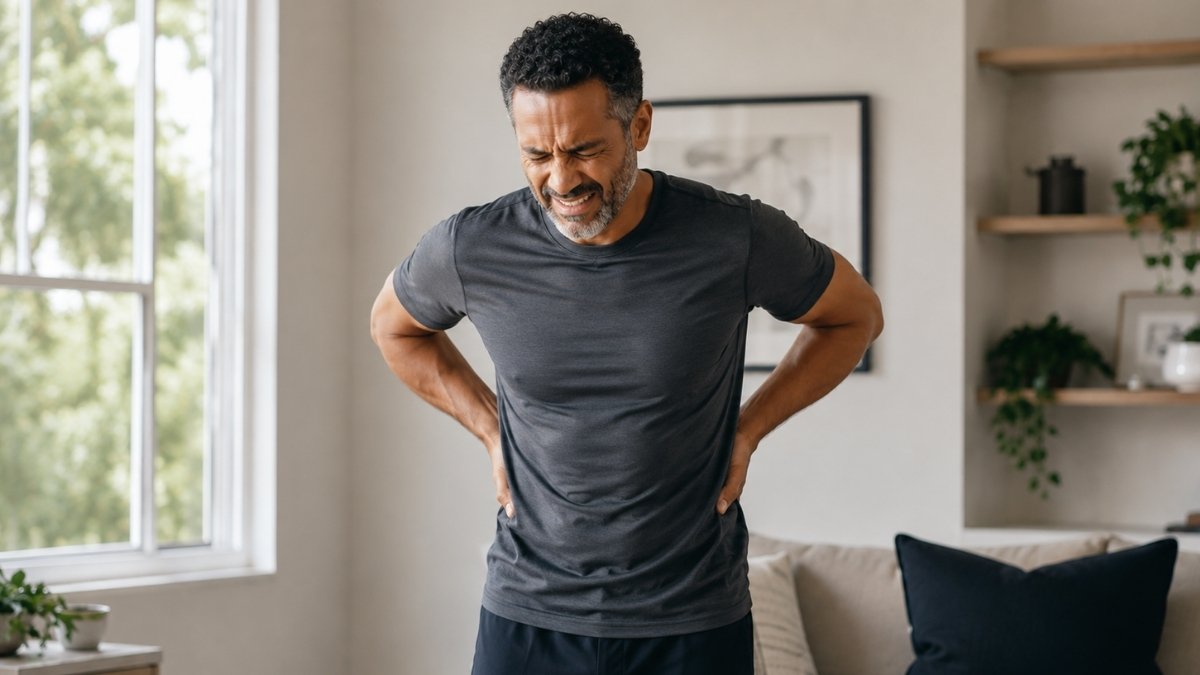
You bend down to grab a heavy bag. You feel nothing unusual. But inside your spine, bone density may already be dropping, and you would have no way to know.
Osteopenia in the spine means your bones have started losing strength, often years before any pain or stiffness shows up. This is the hard part. There is no early warning system built into your body for this.
By the time something feels wrong, like a curved back or sudden pain after a small movement, real damage may have already happened.
This guide breaks down what causes spinal bone loss, the quiet signs your body gives off, and the exact steps backed by research that protect your spine starting today.
Spinal Bone Density Auditor
Assess your hidden risk for spinal osteopenia and generate an evidence-based structural protection protocol.
1. Hormonal & Age Profile
Estrogen protects bone density. When hormones shift, spinal bone loss accelerates rapidly. Select your current stage:
2. Silent Structural Clues
Osteopenia rarely causes early pain. Select any subtle physical shifts you have noticed recently (Select all that apply):
3. Daily Load Biomechanics
How you move dictates where pressure builds on vulnerable vertebrae. When lifting an object from the floor, what is your natural reflex?
4. Bone Defense Mechanisms
Select the clinical defense protocols you actively maintain every week:
Calculating T-Score Vulnerabilities…
Cross-referencing hormonal decline data with biomechanical stress vectors.
Vulnerability Status
Diagnostic output text.
Your Bone Protection Protocol
Osteopenia is reversible if caught early. Implement these specific steps to rebuild your spinal integrity:
⚠️ Clinical Action Required
Do not guess your T-score. Ask your physician for a DEXA Scan and a FRAX risk assessment to establish your true baseline. Early imaging replaces guesswork with actionable data.
Point One: What Osteopenia in the Spine Actually Means
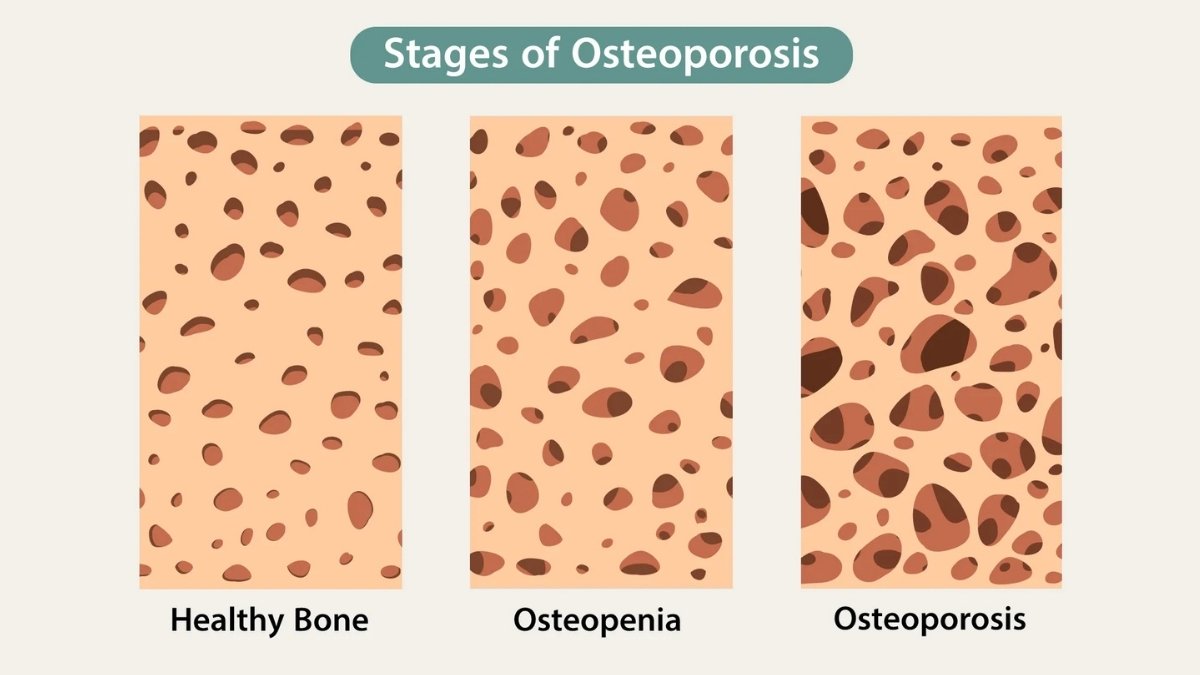
Doctors measure bone strength with something called a T-score. A score between -1.0 and -2.5 means osteopenia. Below -2.5 means osteoporosis. Wiley Online Library
Osteopenia is not a small problem you can ignore. It is your bones telling you they are losing minerals faster than your body can replace them.
Think of your spine like a brick wall. Around age 35, that wall is as strong as it will ever get. After that, more bricks come out than go back in.
This matters because almost half of women over 50 already show signs of bone thinning in the spine, based on global research. Many do not know it yet. The spine is often one of the first places this shows up, because it carries weight and pressure every single day. International Osteoporosis Foundation
- Osteopenia is the stage before osteoporosis, not a separate disease.
- A T-score between -1.0 and -2.5 marks the osteopenia range.
- Nearly half of women 50 and older already show spine bone thinning.
Point Two: Why Bone Loss Speeds Up During Midlife
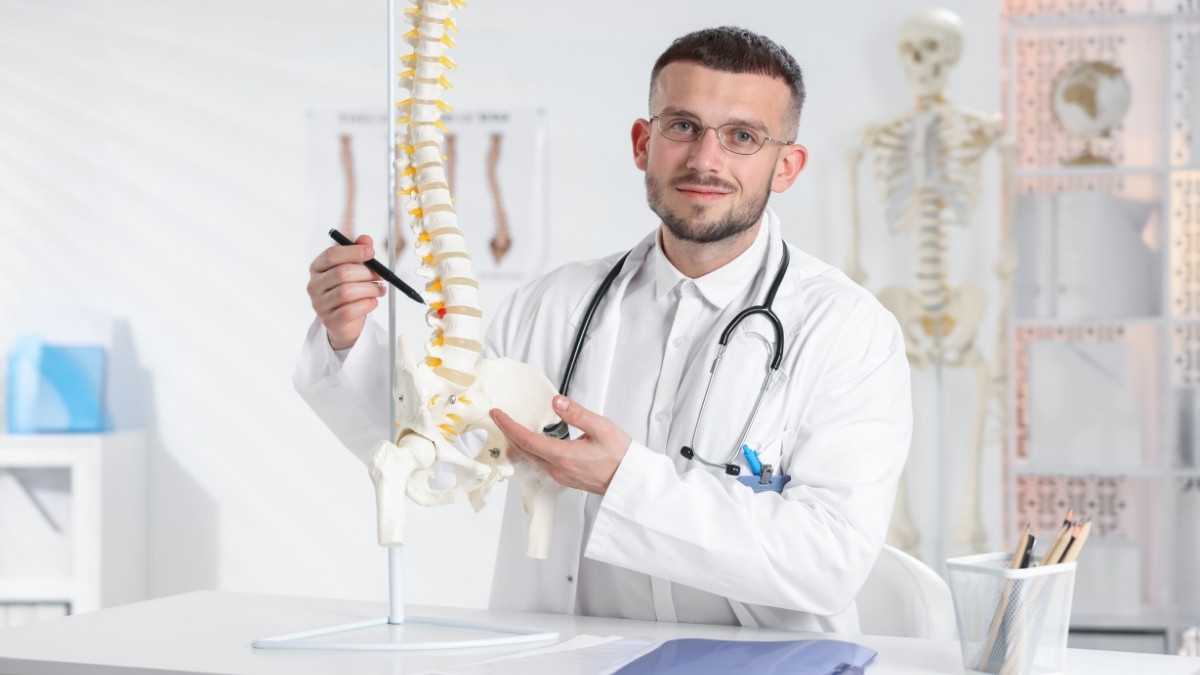
Estrogen helps protect your bones. When estrogen drops during perimenopause and menopause, bone loss speeds up fast, especially in your spine.
During the years around your final period, spine bone density can drop by about 1.8 to 2.3 percent a year on average. For some women, the rate climbs as high as 3 to 5 percent before it slows back down. PubMed CentralMass General Brigham
This is not something you did wrong. It is a normal hormone shift that happens to almost every woman. But knowing it is happening gives you a chance to act early instead of waiting until a scan finds a problem you did not expect.
- Spine bone loss can reach about 2 percent a year during this window.
- This fast-loss period usually lasts a few years.
- The rate slows back down once your hormones settle.
Point Three: Why You Can’t Feel This Happening
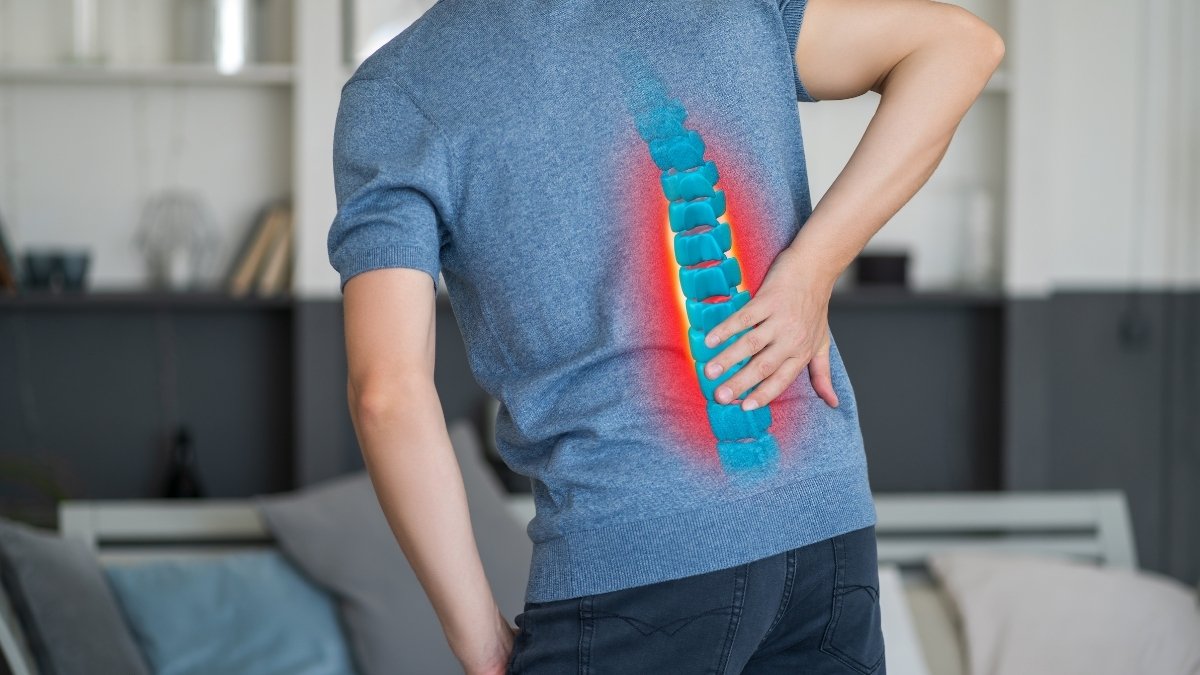
Osteoporosis and osteopenia are often called silent because they rarely cause pain in the early stages. Your spine can lose strength for years without a single symptom. kdms Hospital
Even small spine fractures, called compression fractures, often happen without any major injury. Research shows vertebral fracture rates climb from about 20 percent in women near 50 to as high as 64.5 percent in older women, yet only about one in three gets diagnosed. The rest go unnoticed. PubMed
This means relying on pain to tell you something is wrong does not work here. Your spine can be losing strength right now, and you would have no way to feel it.
- Most spine fractures cause no clear pain at first.
- Fracture rates climb sharply with age, but most go undiagnosed.
- Pain is not a reliable warning sign for spine bone loss.
Point Four: 3 Signs Your Spine Is Losing Bone
Your body does give you clues, even without pain. The clearest one is height loss. Losing three quarters of an inch (2 cm) or more from your last measured height suggests a real chance of a spine fracture. NCBI
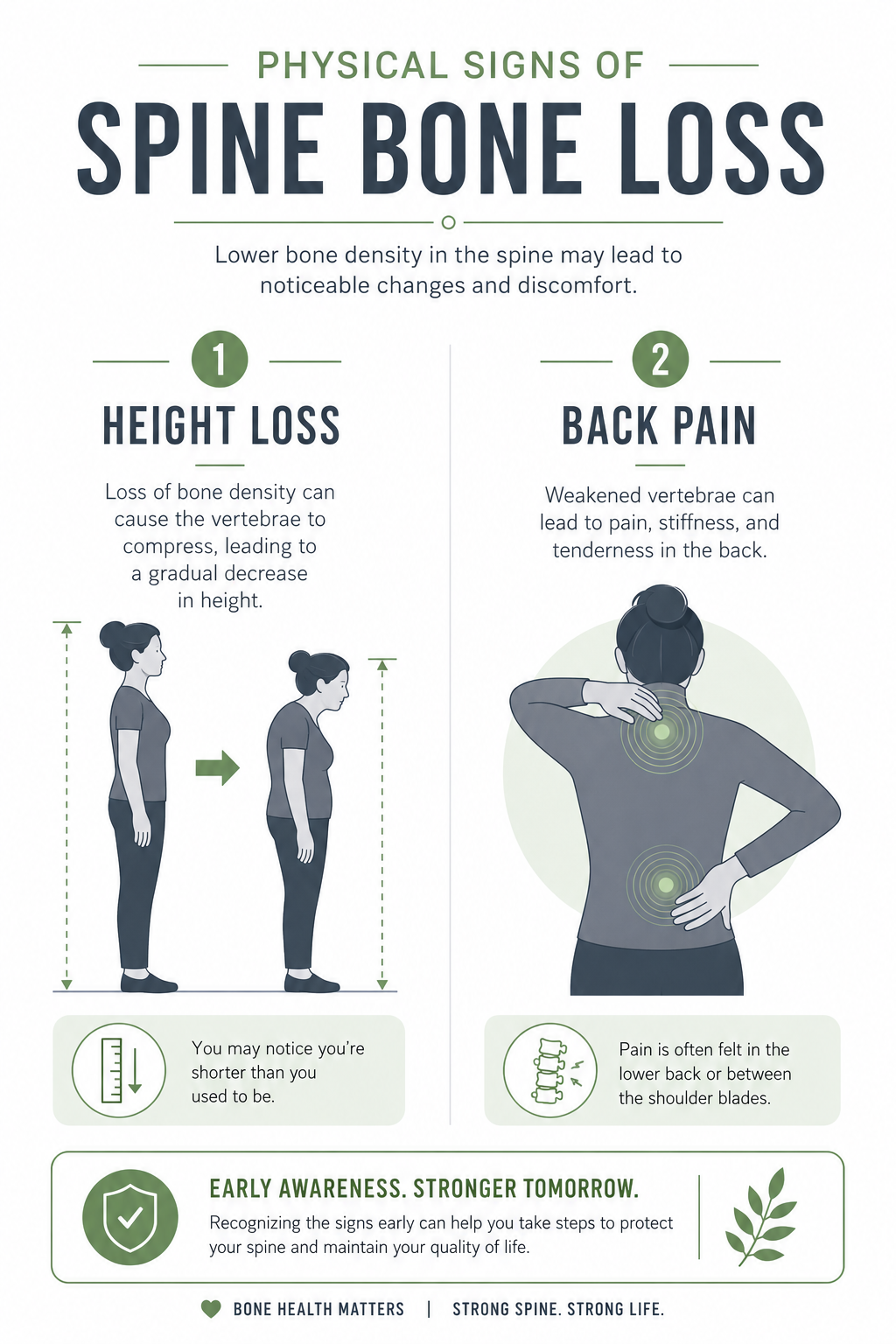
A new curve in your upper back, sometimes called a hump, is another clue. So is sudden back pain after something small, like sneezing or lifting a bag. These small moments can actually be tiny spine fractures.
Weaker grip strength and sudden weight loss can raise your risk too. None of these prove you have osteopenia. But they are strong enough reasons to ask your doctor for a bone density test.
- Height loss of three quarters of an inch or more is a red flag.
- A new hump or curve in your upper back needs checking.
- Sudden back pain after a small movement could mean a tiny fracture.
Point Five: How to Get a Real Answer (Testing That Works)
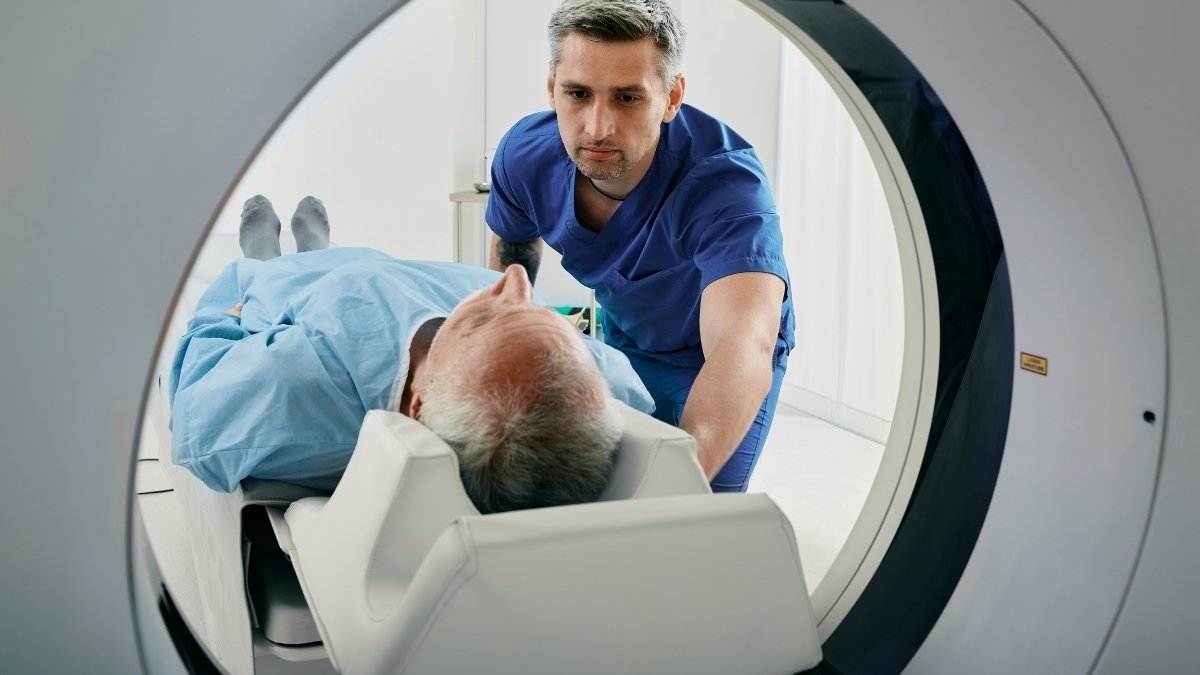
Guessing will not tell you what is happening in your spine. A DEXA scan will. This simple scan measures bone density and takes about 15 minutes.
Current guidelines recommend every woman get screened by age 65, with earlier screening for postmenopausal women who carry extra risk factors. US Preventive Services Taskforce
Your doctor can also use a tool called FRAX to estimate your fracture risk over the next 10 years. If your 10-year risk reaches 20 percent for a major fracture or 3 percent for a hip fracture, treatment becomes worth discussing. A scan turns a guess into a clear answer you can actually act on. Drooracle
- Get a DEXA scan by 65, or earlier with risk factors.
- Ask your doctor about a FRAX score for fracture risk.
- A scan replaces guesswork with a clear number you can track.
Point Six: Moves That Protect Your Spine (and Ones That Hurt It)
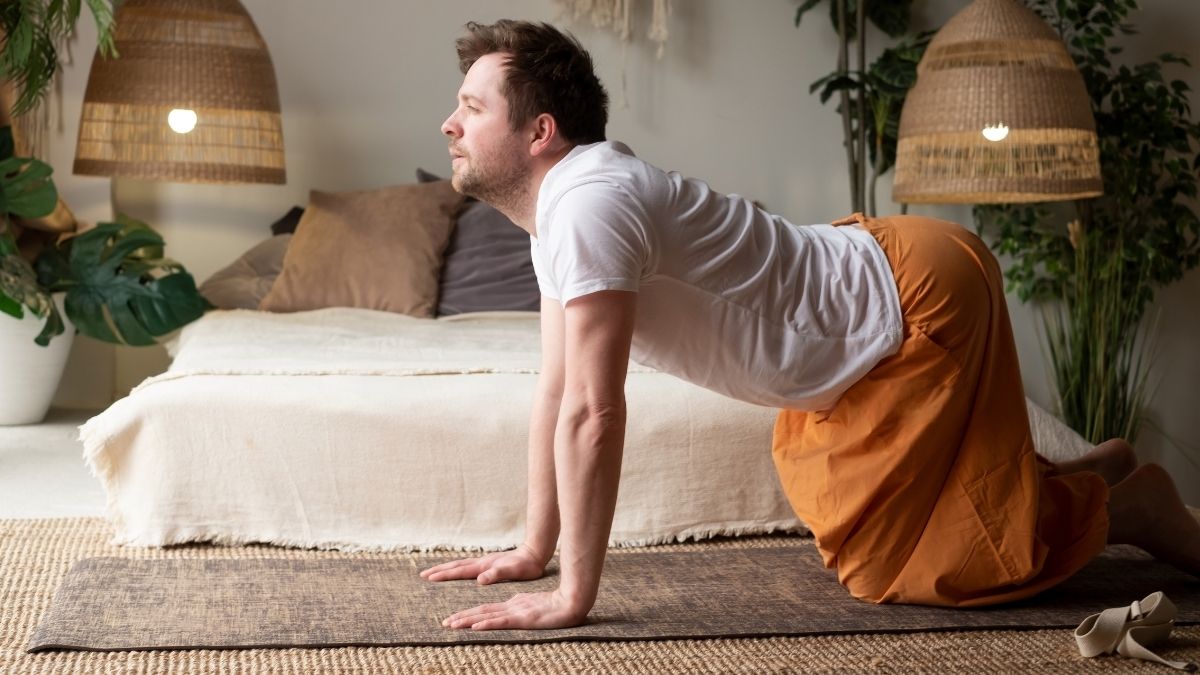
How you move every day matters more than you think. Bending forward from your spine puts pressure right where the front of a weak vertebra is most likely to give way. MelioGuide
Instead, bend from your hips and knees, keeping your back straight. This is called a hip hinge, and it protects your spine during everyday tasks like lifting or loading the dishwasher.
Twisting your back to reach something is risky too. Move your feet instead of turning your spine. Some yoga poses with deep forward folds have been linked to spine fractures, even in people who only had osteopenia. MelioGuide
- Bend from your hips and knees, not your back.
- Turn by moving your feet, not twisting your spine.
- Skip deep forward yoga folds if your bone density is low.
Point Seven: Strength Training That Builds Real Bone
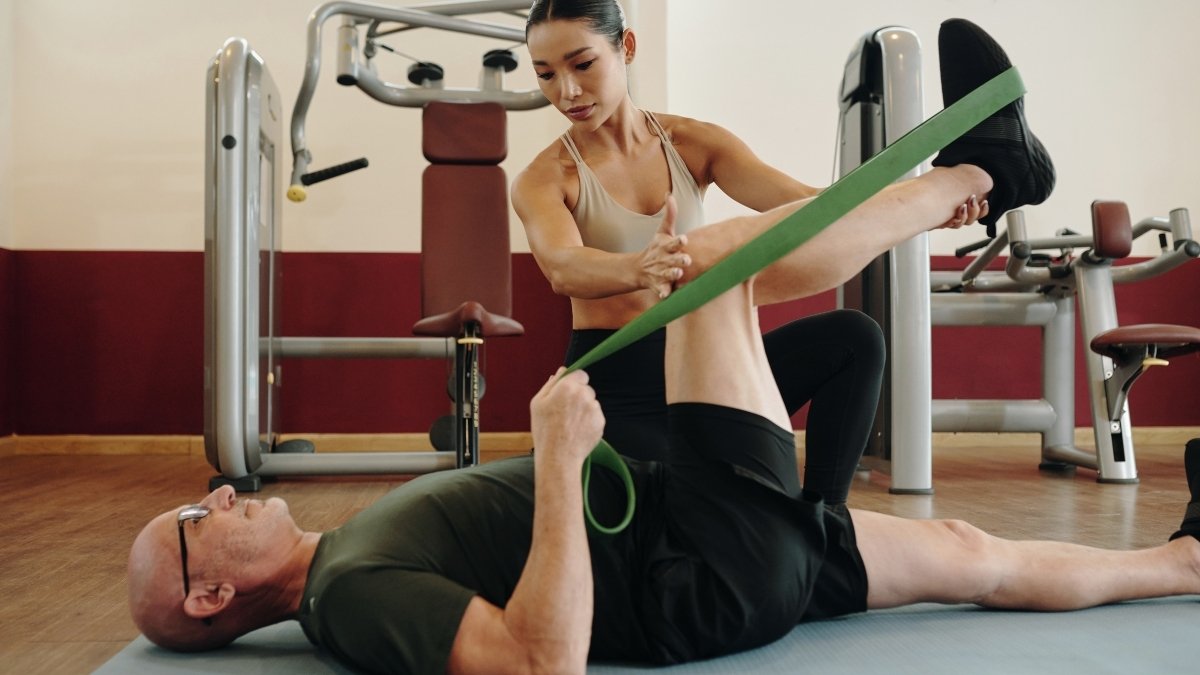
Lifting weights does more than build muscle. It tells your bones to get stronger too. Research shows high-load resistance training can significantly raise bone density in the spine. Springer
Studies use weights around 70 to 80 percent of your max effort, done two to three times a week, for the best results. Start lighter than that if you are new to strength training, and build up slowly with guidance. nih
One specific move matters most for your spine: back extension exercises. A 10-year Mayo Clinic study found that people with stronger back extensor muscles had fewer spine fractures over time. Strength training is one of the few things proven to fight bone loss directly. MelioGuide
- Resistance training two to three times a week supports spine bone.
- Back extension exercises lower your risk of spine fractures.
- Start light and build up slowly if you are new to this.
Point Eight: What to Eat for a Stronger Spine
Food gives your bones the raw materials they need. Calcium is the biggest one. Women under 50 need about 1,000 mg a day. After 50, that goes up to 1,200 mg a day. nih
Vitamin D helps your body actually use that calcium. Most adults need around 600 IU a day, from food, sunlight, or a supplement. Mayo Clinic
Protein matters too, and it is often overlooked. Higher protein intake is linked to better bone density and a slower rate of bone loss, as long as your calcium intake is also covered. Good sources include eggs, fish, beans, yogurt, and lean meat. Food alone will not fix osteopenia, but it gives your body what it needs to fight back. International Osteoporosis Foundation
- Aim for 1,000 to 1,200 mg of calcium a day.
- Get about 600 IU of vitamin D daily.
- Add more protein from eggs, fish, beans, and yogurt.
Bottom Line:
Osteopenia in the spine has no early pain signal, but it does have warning signs and real solutions. Check your height, ask about a DEXA scan, move smarter, lift weights, and eat enough protein and calcium. These small habits add up. Don’t wait for a fracture to take your spine seriously.
DISCLAIMER⚠️:
This article is for informational purposes only and does not constitute medical advice, diagnosis, or treatment. The content addresses osteopenia in the spine, its warning signs, and prevention strategies and is intended for general educational purposes only. Health conditions vary significantly between individuals — always consult a licensed physician or qualified healthcare provider before making any decisions about your health or medical care.