
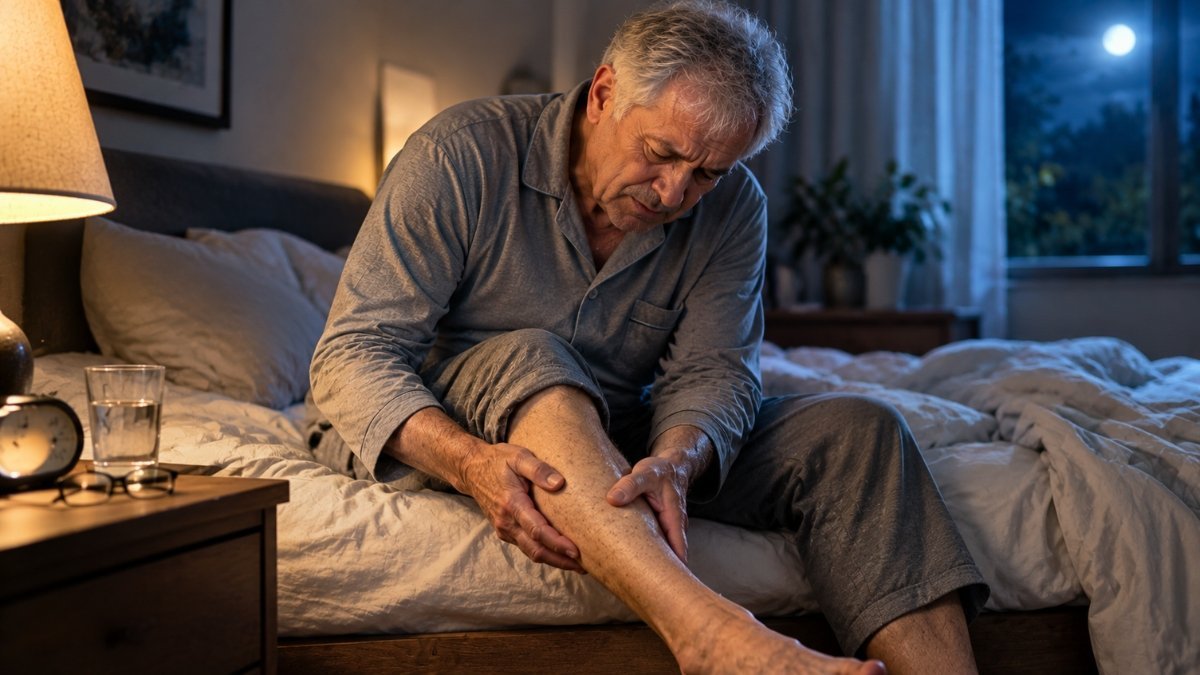
Your leg jerks. Or cramps. Or crawls.
Suddenly it is 2 a.m. and you are wide awake, staring at the ceiling, wondering what is wrong.
Most people shrug it off as a normal part of getting older. But these uncomfortable leg sensations are rarely random, and they are not all the same thing.
Research on older adults shows that nighttime cramps, creeping urges to move, and jerky leg twitches each point toward a different cause.
Some trace back to a blood iron level. Some trace back to a medication in your cabinet. A few are early warnings about circulation or nerves.
Left unexplained, they steal your sleep night after night, and poor sleep quietly drags down your mood, balance, and energy by day. The good news is that your legs are giving you clues, and most people never learn to read them. Here is how to decode every single one.
What Your Uncomfortable Leg Sensations Are Really Saying
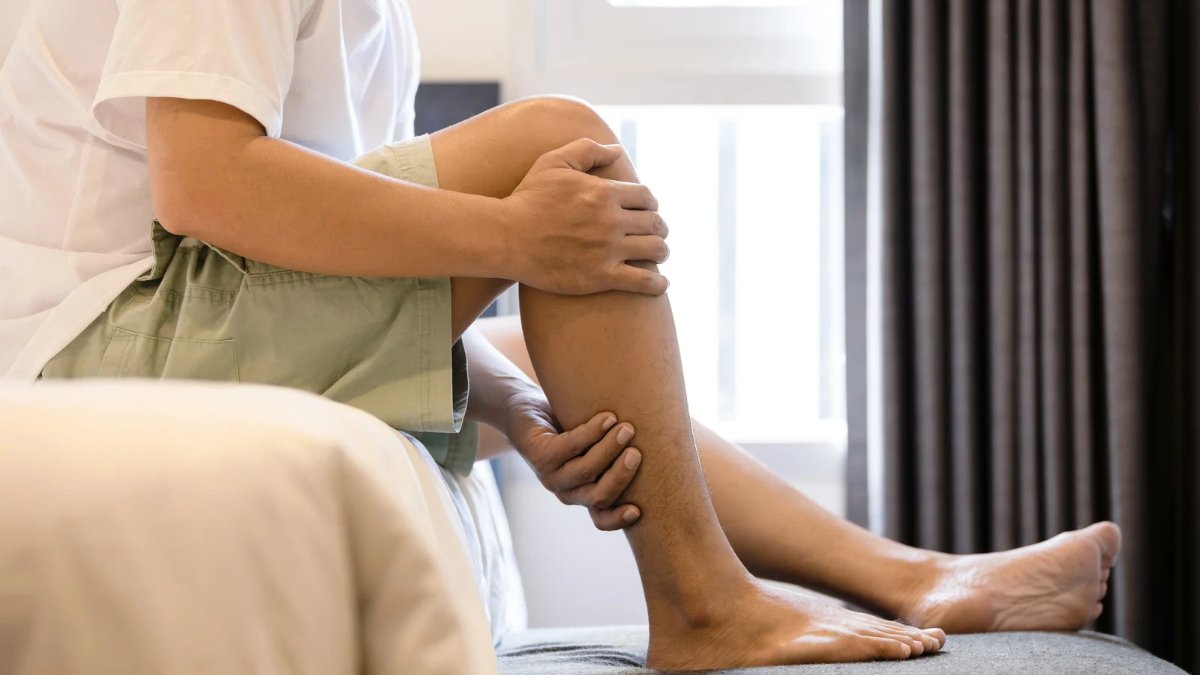
Not every nighttime leg complaint is a twitch. Doctors sort them by how they feel, when they start, and what makes them stop.
Use this quick decoder first, then jump to the section that matches you. Overlap is common, so treat it as a map and not a diagnosis.
Nighttime Leg Symptoms & Giveaway Clues
A clinical breakdown mapping what you feel at night to its most likely culprit and defining giveaway clue.
A sudden, hard knot in the calf or foot.
A creeping, crawling urge to move the legs.
Rhythmic jerks while you sleep.
Burning or pins-and-needles sensation.
Foot or toe pain that wakes you from sleep.
Why the Cramp Strikes Right After You Fall Asleep
A nocturnal leg cramp is a sudden, painful squeeze of a muscle, usually in the calf or the small muscles of the foot. Estimates suggest that somewhere between one third and one half of adults over 60 deal with them.
Nobody has pinned down one exact trigger. One leading idea involves aging nerves: the motor neurons that command your muscles gradually decline, and the loss is greater in the legs than in the arms. In one study of mostly older adults, people with nighttime cramps also tested weaker in their lower leg muscles.

Your medicine cabinet may be part of the story. A review of cramps in older people found that water pills (diuretics) and long acting beta agonist inhalers make cramps more likely. Statins are another commonly named trigger.
Never stop a prescribed medicine on your own. Ask your doctor whether a different option makes sense.
You may also hear about quinine. It is the only drug shown to reduce cramps, but the benefit is modest and it carries rare, serious risks. The FDA warned against using it for leg cramps in 2010.
The Creeping Urge That Gets Worse After Dark
Restless legs syndrome (RLS) is less about pain and more about an urge. Many people describe creepy crawly or jumpy sensations, and some find them painful.

The signature pattern is an urge to move that starts or worsens at rest and eases when you walk or stretch. RLS affects about 5 to 10 percent of adults, and the rate rises as people age.
Why nighttime? Iron may be part of the answer. MRI studies show lower iron storage in a deep brain region called the substantia nigra, and blood iron dips at night, right when symptoms peak.
The link grows stronger with age. In one clinic study, iron stores were low (ferritin under 50) in 22 percent of RLS patients whose symptoms began before age 50, but in 58 percent of those whose symptoms began after 64. In a small group of older patients, two months of iron improved symptoms the most in those who started with the lowest stores.
Ferritin is the protein that stores iron, and a simple blood test measures it. Many doctors use a level near 50 ng/mL as the screening line for iron deficiency in RLS, and a higher line near 70 may fit people with inflammation or kidney disease.

The science is not that simple, though. A population study of 365 people aged 65 to 83 found no evidence that low iron or ferritin was a major cause of RLS in that group, and researchers pointed to more complex changes in how the body handles iron.
Kidney health matters too. Iron deficiency and chronic kidney disease were the strongest predictors of RLS in one study of older hospital patients, even when the kidney disease was not severe enough to need dialysis. Antidepressants and antipsychotics, which shift serotonin and dopamine, can also trigger or worsen RLS.
Do not start iron pills on a hunch. Let a blood test show whether you need them, because too much iron causes its own problems.
The Midnight Muscle Twitch You May Never Feel
Periodic limb movement disorder (PLMD) involves twitching, flexing, and jerking of the legs, and sometimes the arms, during sleep. The jumping movements can wake the sleeper or a bed partner.
Age raises the odds sharply. Roughly 2 percent of people under 30 are affected, compared with up to 40 percent of those 65 and older.
In a study of 2,872 older men with an average age of 76, periodic leg movements went along with lighter, more fragmented sleep.

They often appear alongside sleep apnea, so a doctor may order an overnight sleep study to find the real cause.
What about the tiny flutters you can see under the skin? Doctors call them fasciculations, and they are very common and usually do not need medication. Heavy coffee or energy drink intake can fuel them, so cutting back is a fair first test.
When the Signal Comes From Nerves or Arteries
Two sensations deserve extra attention, because they can point to something below the muscle.

Burning or pins and needles. Neuropathy usually brings burning, shooting, or electric sensations that show up day and night, and moving does not relieve them the way it does with RLS. Diabetes is one of several underlying causes. The two conditions can overlap, and a person can have both at once.
An aching foot that wakes you. Pain that wakes you and eases when you dangle your foot over the side of the bed may signal vascular disease, because lying flat takes gravity out of the equation. Vascular specialists describe that pattern as a warning sign of advanced peripheral artery disease.
Other clues include cold feet, skin color changes, and sores that are slow to heal.
What Actually Helps, and What Does Not
Plenty of remedies circulate online. Here is how the common ones hold up against the research.
Leg Cramps & RLS Interventions
A clinical breakdown of research evidence and physician consultation priorities for nocturnal leg symptoms.
In 80 adults over 55, 6 weeks of nightly stretching meant 1.2 fewer cramps per night vs. control group.
Cochrane review found it unlikely to provide older adults with meaningful cramp relief.
Low iron stores are common in late-onset RLS; treating them helped restore symptom control.
Water pills, certain inhalers, statins, and antidepressants are linked to triggering leg symptoms.
Here is the routine behind that stretching result. The trial had adults over 55 stretch their calf and hamstring muscles every night, right before sleep, for six weeks.
- Calf stretch: Stand facing a wall with one foot back, heel on the floor and knee straight. Lean in until you feel a pull in the back of the lower leg.
- Hamstring stretch: Sit on the edge of the bed with one leg straight and the heel on the floor. Lean forward from the hips until you feel a gentle pull behind the thigh.
- Both sides: Hold each stretch steadily without bouncing, and stop if you feel sharp pain.
Not every study agrees on stretching, so treat it as a smart, low risk try rather than a guaranteed cure.
Iron levels, medications, and how your joints and heart handle exercise differ from person to person, so check with your doctor before you change medicines or start a new routine.
Try This Today: The Bedtime Routine That Actually Works
- Write down what you feel, when it starts, and what relieves it. A short phone video of any twitching can help your doctor too.
- Stretch your calves and hamstrings gently right before you get into bed.
- Ask your doctor or pharmacist to review every medicine you take, including inhalers and water pills.
- Ask whether a ferritin blood test makes sense for your symptoms.
- If you notice daytime flutters, cut back on coffee and energy drinks for two weeks.
Questions Seniors Ask Next

Can you have more than one of these at the same time?
Yes. Some people with restless legs also have repeated jumping movements of the legs during sleep.
Neuropathy can also sit alongside RLS. If your symptoms do not fit one box, tell your doctor exactly that.
How long before stretching helps?
The trial measured results after six weeks of nightly stretching, so give it a fair run before judging it. Keep a simple tally of cramps each week to see the trend.
Is an occasional cramp dangerous?
Nighttime cramps do not cause permanent injury, although they can badly disrupt sleep. The pattern is what matters, such as cramps every night or cramps that arrive with other symptoms.
When to Call Your Doctor Right Away
Do not wait on any of these warning signs:
- Leg or foot pain at night that eases only when you hang the leg off the bed, especially with cold, discolored skin or sores that will not heal.
- Sudden weakness, rapidly worsening weakness, or trouble walking. Weakness with loss of bladder or bowel control needs urgent care.
- Twitching or cramps that linger for several weeks, or any change in how you walk, your strength, your speech, or your swallowing.
- Swelling, warmth, and redness in one leg, which can signal a blood clot.
The Bottom Line,

Your legs are not twitching for no reason. A knotted calf, a creeping urge, rhythmic jerks, burning, and an aching foot each point in a different direction.
Match the sensation, review your medicines, ask about ferritin, and stretch before bed. Then let your doctor connect the dots.