Low-Grade Inflammation Is Silently Dissolving Your Muscle Mass While You Sleep

You could be lifting weights, eating enough protein, and going to bed at a decent time — and still losing muscle. That feels unfair. And most people never find out why it’s happening.
The answer is not laziness. It is not age. It is a quiet biological process called low-grade inflammation. It runs silently inside your body every single day. It does not cause obvious pain or swelling. But it is actively breaking down your muscle tissue — especially while you sleep.
This article explains exactly how that happens. It uses real science, not guesswork. You will learn what warning signs to look for, what habits are making this worse, and what specific steps actually stop the damage.
Everything here is based on current evidence from 2024 and 2025 research. Nothing is fabricated.
Let’s get into it.
Muscle Protection & Recovery Builder
Enter your daily metrics below to generate an evidence-based protocol that may help support recovery, muscle maintenance, and healthy inflammatory balance.
Your Evidence-Based Blueprint
Low Risk Profile
Your current habits support a healthy inflammatory balance and optimal overnight recovery.
Daily Protein Needs
Based on 1.2–1.6 g/kg daily
Per Meal Target
Distributed across 3 main meals
Omega-3 Target
EPA/DHA combined daily
Overnight Recovery Timeline
Based on your target wake-up time, follow this schedule to support deep sleep and muscle maintenance.
Screen Cutoff
Turn off digital devices. Reducing blue light may help support natural melatonin production.
Pre-Sleep Protein
Consume 20–30g of protein to supply amino acids for overnight tissue maintenance.
Recommended Bedtime
Targeting 8 hours of sleep. Optimal sleep duration is linked to a healthy inflammatory baseline.
Practical Action Steps
Point One: What Low-Grade Inflammation Actually Is
When you sprain your ankle, your body sends immune cells to fix it. The area gets red and swollen. Then it heals. That is normal, short-term inflammation. It turns on, does its job, and turns off.
Low-grade inflammation is completely different. It never fully turns off. Your immune system stays quietly activated all the time — like a car engine left running in the garage. No fire. No smoke. But damage is still happening.
This type of inflammation is measured in your blood. The key markers are CRP (C-reactive protein), IL-6, and TNF-α. Scientists sometimes call this "inflammaging" — the slow rise in baseline inflammation that comes with age and a poor lifestyle.
Chronic low-grade inflammation plays a decisive role in the development of sarcopenia by activating or inhibiting multiple molecular signaling pathways, affecting the synthesis and decomposition of muscle proteins — confirmed in a 2025 review in the Archives of Gerontology and Geriatrics.
Your body cannot tell the difference between a real threat and this low-level background noise. So it keeps activating breakdown pathways. Your muscles pay the price.
3 Quick Tips:
- Ask your doctor for a high-sensitivity CRP (hs-CRP) blood test at your next checkup.
- A CRP reading above 1 mg/L in a healthy person is worth paying attention to.
- This is not a disease — it is a condition you can actively improve.
Point Two: How Inflammation Actually Breaks Down Your Muscle Tissue
Here is the part most fitness advice completely misses.

When IL-6 and TNF-α stay elevated in your blood, they trigger something called the ubiquitin-proteasome system. Think of this as your body's internal shredder. It tags muscle proteins and destroys them. Normally this system handles old, damaged proteins. But chronic inflammation keeps it running too hot — and it starts shredding healthy muscle too.
At the same time, inflammation blocks muscle protein synthesis. Your body cannot rebuild muscle fast enough to keep up with the breakdown. Even if you eat protein, even if you lift weights, the rebuild signal is too weak.
After age 30, adults begin experiencing a gradual loss of muscle mass at a rate of approximately 3–5% per decade, a process that picks up between ages 65 and 80, affecting an estimated 5–13% of adults aged 60 and older.
Add chronic inflammation to that natural rate — and the loss accelerates.
Skeletal muscle mass and strength reduce in those with sarcopenia from the fourth decade, with up to 50% of mass lost by the eighth decade.
That is not inevitable. But it is the reality for people who never address the inflammation driving it.
3 Quick Tips:
- Train at least twice a week. Muscle use slows the breakdown signal.
- Eat protein at every meal — not just after workouts.
- Do not wait until you feel weak. Prevention works better than reversal.
Point Three: What Happens to Inflammation When You Sleep Poorly
Most people think bad sleep just makes them tired the next day. The biological reality is far worse than that.

During deep sleep, your body runs an active repair and anti-inflammatory program. It suppresses inflammatory cytokines, releases growth hormone, and rebuilds muscle tissue. This is when the real recovery happens.
When you cut that sleep short — or keep irregular hours — the program does not run fully. Your inflammatory markers rise instead of falling.
Multiple nights of experimental partial sleep deprivation, with sleep duration reduced to approximately 4.30 hours for 3 or more nights, were associated with a significant increase of both IL-6 and CRP in blood — from a 2025 meta-analysis covering 887 participants across 35 studies in the Journal of Sleep Research.
IL-6 concentrations rose significantly overnight from 35 pg/ml at 22:00 to 64 pg/ml at 07:15 in study participants. In poor sleepers, this overnight spike becomes dysregulated — driving excess muscle breakdown during the exact hours your body should be building.
Even irregular sleep timing causes damage. Chronic circadian misalignment significantly increases plasma TNF-α, CRP, and IL-10 levels — independent of how many total hours you sleep.
3 Quick Tips:
- Go to bed at the same time every night — including weekends.
- Sleeping at inconsistent times is almost as harmful as sleeping less.
- Five nights of poor sleep raises your inflammatory markers in a measurable way.
Point Four: Warning Signs That Inflammation May Already Be Attacking Your Muscles
You may already have signs of this problem and not know it. Chronic low-grade inflammation shows up in subtle ways that are easy to blame on aging or stress.
Here is what to watch for:

You wake up stiff and it takes more than 20 minutes to loosen up. That morning stiffness is a classic overnight IL-6 signal. You feel tired all the time, even after a full night's sleep. Your workouts leave you sore for three or more days. Your strength is stalling or dropping despite consistent training.
Your body fat is creeping up while your muscles are getting weaker — even though your weight has not changed much.
Fatigue, low muscle endurance, muscle weakness, and low-grade inflammation are strongly related to frailty at higher age — and these interrelationships can already be observed at midlife, according to the Copenhagen Aging and Midlife Biobank study of 965 participants.
Key signs of chronic low-grade inflammation include clusters of mild but persistent symptoms such as fatigue, muscle or joint aches, and digestive irregularities.
These symptoms overlap with many conditions. This list is a reason to investigate — not a diagnosis.
3 Quick Tips:
- Get a full blood panel that includes hs-CRP, IL-6, and vitamin D.
- Keep a simple weekly log of energy, soreness, and workout performance.
- If your recovery keeps getting slower, that is a signal worth taking seriously.
Point Five: Everyday Habits That Quietly Accelerate Inflammation and Muscle Loss
You probably do not realize some of your daily habits are pouring fuel on this fire.
Ultra-processed foods are the biggest driver most people ignore. Foods high in refined seed oils and added sugar push IL-6 and CRP higher every single day. They do not cause obvious symptoms — they just keep the inflammatory baseline elevated.
Sitting too much matters even if you exercise. Prolonged sedentary time raises baseline inflammation on its own, independent of what you do at the gym.
Chronic stress keeps cortisol elevated. And chronically high cortisol is directly pro-inflammatory. It also increases muscle protein breakdown. Your body reads long-term psychological stress the same way it reads physical threat.
Visceral fat — the fat around your belly — is not passive. It actively secretes IL-6 and TNF-α into your bloodstream around the clock.
Alcohol disrupts deep sleep architecture and raises CRP directly. Even two to three drinks a night affects sleep quality in measurable ways.
Chronic circadian misalignment significantly increases TNF-α, CRP, and IL-10 levels. Sleeping different hours on weekends is enough to trigger this.
3 Quick Tips:
- Replace one processed meal per day with whole food — fish, eggs, vegetables, or legumes.
- Take a 5-minute walk every 60 minutes if you sit for work.
- Manage your sleep timing as carefully as you manage your sleep duration.
Point Six: Why Resistance Training Is One of the Most Powerful Anti-Inflammation Tools You Have
Here is something most people do not expect. Exercise creates temporary, acute inflammation. But consistent resistance training reduces chronic, systemic inflammation — the exact kind destroying your muscle. These are two completely different processes.
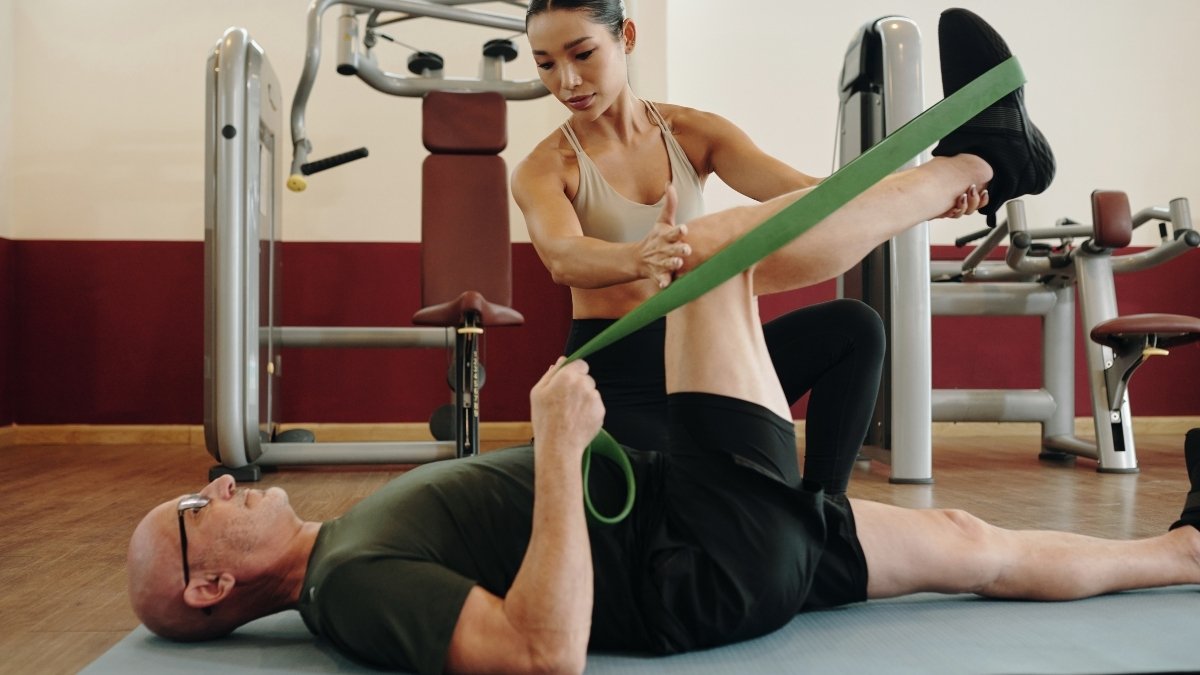
When you build muscle through resistance training, you reduce the same inflammatory markers — CRP, IL-6 — that were breaking that muscle down. It is a direct biological trade.
A 2025 systematic review and meta-analysis covering 43 randomized controlled trials with over 2,000 participants found that resistance training was associated with a significant reduction in C-reactive protein, increased muscle mass, and improvements in both upper- and lower-body strength in healthy older adults.
A 12-week resistance exercise training program in elderly women showed that training-induced reductions in CRP and TNF-α were significantly associated with increased muscle thickness, with correlation values of −0.61 and −0.54 respectively.
The more muscle you build, the more inflammation drops. The anti-inflammatory benefit is directly tied to how much muscle you gain.
The minimum effective dose is two sessions per week. Three sessions per week for 12 weeks or more shows the greatest benefit.
3 Quick Tips:
- Start with compound movements: squats, rows, push-ups, and hip hinges.
- You do not need a gym — resistance bands and bodyweight work at first.
- Consistency over 12 weeks matters more than any single session.
Point Seven: The Nutrition Strategy That Fights Inflammation and Feeds Your Muscles at the Same Time
Your food either lowers your inflammatory baseline or raises it. There is no neutral middle.
Start with protein. Adults over 50 dealing with anabolic resistance need 1.2 to 1.6 grams of protein per kilogram of body weight per day. Spread it across meals — roughly 0.4 grams per kilogram per meal. A small protein source before sleep directly reduces overnight muscle breakdown. Cottage cheese, Greek yogurt, or casein protein work well here.
Next, add omega-3 fatty acids. Systematic reviews in 2021 and 2024 showed omega-3 supplementation at around 2,400 mg per day for approximately 4.5 weeks decreases markers of inflammation and muscle damage.
Omega-3 polyunsaturated fatty acids decrease cyclooxygenase production and can be converted into specialized pro-resolving mediators, further reducing inflammation, while their incorporation into cell membranes diminishes protein release during muscle breakdown.
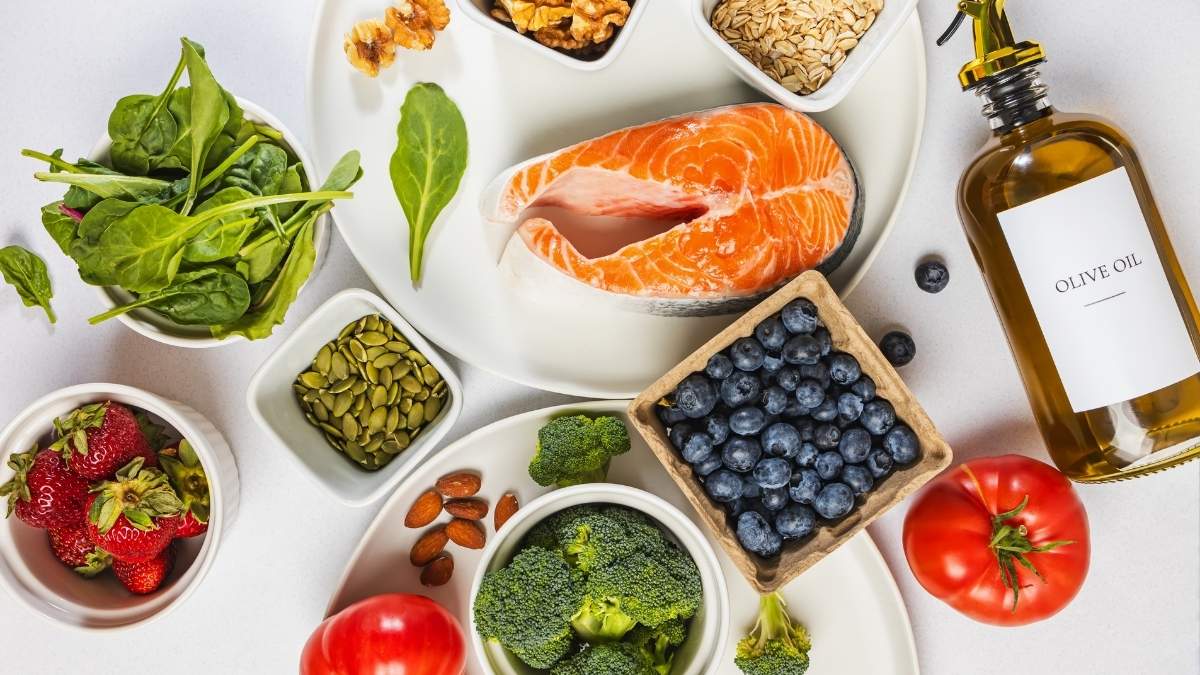
Prioritize fatty fish, olive oil, leafy greens, berries, and walnuts. Use turmeric with black pepper or fat — this significantly improves absorption. Curcumin in turmeric has confirmed effects on reducing inflammatory response in multiple peer-reviewed reviews.
A practical dinner example: grilled salmon over roasted vegetables in olive oil, seasoned with turmeric, black pepper, and garlic. Every single ingredient in that plate is working against inflammation.
3 Quick Tips:
- Eat protein at breakfast — not just lunch and dinner.
- Take 2–3 grams of omega-3 (EPA + DHA combined) daily with a meal.
- Replace vegetable oil cooking with extra-virgin olive oil as a first easy swap.
Point Eight: How to Fix Your Sleep So It Rebuilds Instead of Destroys Your Muscles
Sleep is not a passive rest state. It is the most powerful anti-inflammatory and muscle-repair program your body has. Your job is not just to sleep — it is to create conditions that let the program run fully every single night.

During deep sleep, growth hormone production peaks, protein synthesis increases, blood flow rises, and inflammation decreases — with 75% of daily growth hormone production occurring during deep sleep.
UC Berkeley researchers mapped brain circuits controlling growth hormone release during sleep, finding that disruptions in early deep non-REM sleep directly lower levels of this critical hormone — published in ScienceDaily, April 2026.
Target 7 to 9 hours per night. Keep your sleep and wake times the same every day, including weekends. Set your bedroom to around 65–68°F (18–20°C) — cooler temperatures extend time in deep sleep.
Avoid screens for 60 to 90 minutes before bed. Blue light delays melatonin and pushes back your sleep onset. Eat a small protein source 30 to 60 minutes before sleep. If you snore heavily or wake up unrefreshed, get screened for sleep apnea. Undiagnosed sleep apnea significantly elevates TNF-α, IL-6, and CRP every single night.
Low-dose melatonin (0.5 to 3 mg) 30 minutes before bed can help with timing — but it does not replace good sleep habits.
3 Quick Tips:
- Set a consistent bedtime alarm — not just a wake-up alarm.
- Lower your bedroom thermostat by 2 to 3 degrees tonight and notice the difference.
- Eat 20–30 grams of protein within an hour before sleep to slow overnight muscle breakdown.
Final Words,
Low-grade inflammation is real, measurable, and fixable. It breaks down muscle through biological pathways that science now clearly understands. Poor sleep makes it worse every night.
Resistance training, anti-inflammatory food, and consistent sleep are the three most evidence-backed tools you have. Fighting low-grade inflammation and protecting your muscle mass are not separate goals. They are the same goal.