

Carol noticed it on the stairs first. Her knees felt heavier, her legs slower to respond, and getting up from a low chair had quietly turned into a small production. She figured this was just what 68 looked like.
Ignore that feeling long enough and it does not stay small. Muscle loss after 60 does not just make you tired. It raises your risk of falling, breaks down your independence one small task at a time, and often goes unnoticed until a hip fracture or a hospital stay forces the issue.
Carol tried something different instead, something so simple it almost felt too easy to work. Her doctor looked at her next set of strength numbers and told her that, physiologically, her muscles looked like they were aging in reverse.
Before making any changes based on this article, talk to your doctor, especially if you are currently taking medication or have a diagnosed condition.
What Carol Was Actually Dealing With
Carol was not sick. She was not diagnosed with anything. She was simply experiencing what doctors call sarcopenia, the gradual, age related loss of muscle mass and strength that quietens in the background for most people until it becomes hard to ignore.
Muscle strength typically starts declining by about 1 percent a year starting in a person’s forties, and that rate speeds up with each passing decade. By the time someone reaches their seventies, they may have lost 15 percent or more of the strength they had in midlife, even if they never got sick a day in their life.
Carol’s version of this looked like stiffer knees, a slower walking pace, and a nagging worry that she was becoming someone who needed help with things she used to do without thinking. She decided to try a structured 30 minute daily method, a combination of strength moves, balance work, and walking, rather than vague advice to “stay active.”
The Reverse Muscle Aging Science Behind It
Here is where the headline stops sounding like a stretch. A widely cited study published in PLOS ONE took muscle biopsies from healthy older adults and compared their gene activity to that of younger adults. Before training, the older adults were about 59 percent weaker than the younger group.
After six months of structured resistance training, that gap closed significantly, down to about 38 percent weaker, a meaningful shift in strength for older muscle. More striking, the genetic signature tied to mitochondrial aging in their muscle tissue shifted back toward a pattern that looked like younger tissue. Researchers described this, almost literally, as reversing the aging signature at the cellular level.

That is the real basis for a doctor telling someone their muscles look like they are aging in reverse. It is not marketing language. It reflects an actual, measurable shift in how muscle tissue behaves once it is consistently challenged.
A separate 12 week study of older adults, average age just over 69, combined resistance training with basic nutrition guidance. At the start, roughly 35 percent of participants met the clinical criteria for sarcopenia. By the end of the 12 weeks, that number dropped to zero in the intervention group.
Everyone’s body responds differently, so check with your doctor before trying this if you have an existing condition or take medication.
The Daily Method vs What Most People Are Told
The Senior Fitness Shift
Standard vague advice versus the precision of Carol’s Method.
General Advice
“Stay active” or “walk more”
A structured mix of strength, balance, and cardio, done daily.
Strength Training
Often skipped entirely or seen as inherently risky.
Bodyweight and light resistance moves, 3 to 4 times through a short circuit.
Frequency
Occasional, or simply “when you feel up to it.”
Same 30 minutes, most days of the week, to build unshakeable consistency.
Protein Intake
Rarely discussed or prioritized in diet plans.
1.0 to 1.2 grams per kilogram of body weight daily, spread across meals.
Progress Tracking
Not usually mentioned or measured.
A simple, measurable sit to stand check every few weeks.
What The 30 Minutes Actually Looks Like
Carol’s routine is not complicated, and that is the point. It combines the elements that research consistently ties to preserved and rebuilt muscle in older adults: resistance work, functional movement, and a short walk.
The strength portion targets the muscles most responsible for daily function: the quadriceps and glutes that get you out of a chair, the shoulders and arms that let you carry groceries, and the core and hips that keep you steady on uneven ground.
30-Minute Daily Routine
A structured, full-body protocol to build functional strength and balance.
Warm Up
5 minutesGentle marching and arm circles prepares muscles and reduces injury risk before load bearing work.
Chair Squats & Step Ups
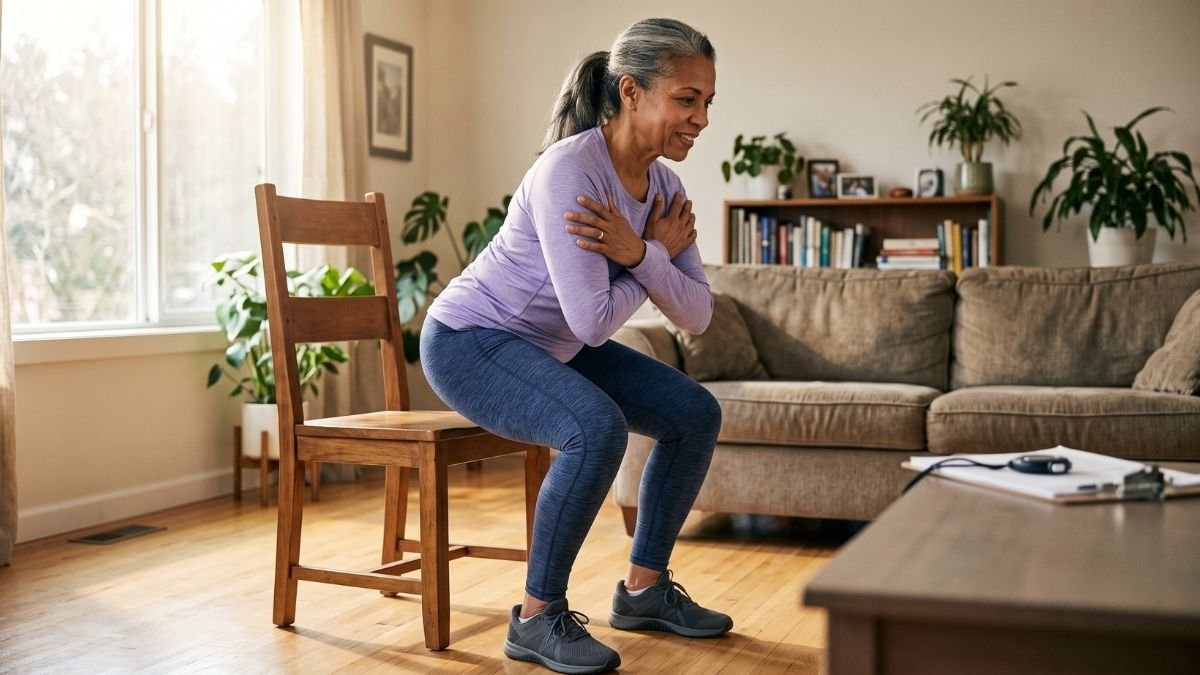
8 minutesDirectly trains the “getting up and down” movement pattern which is highly tied to fall risk.
Wall Push Ups & Rows
7 minutesUsing a wall and resistance bands preserves upper body strength needed for carrying and pushing.
Single Leg Stands
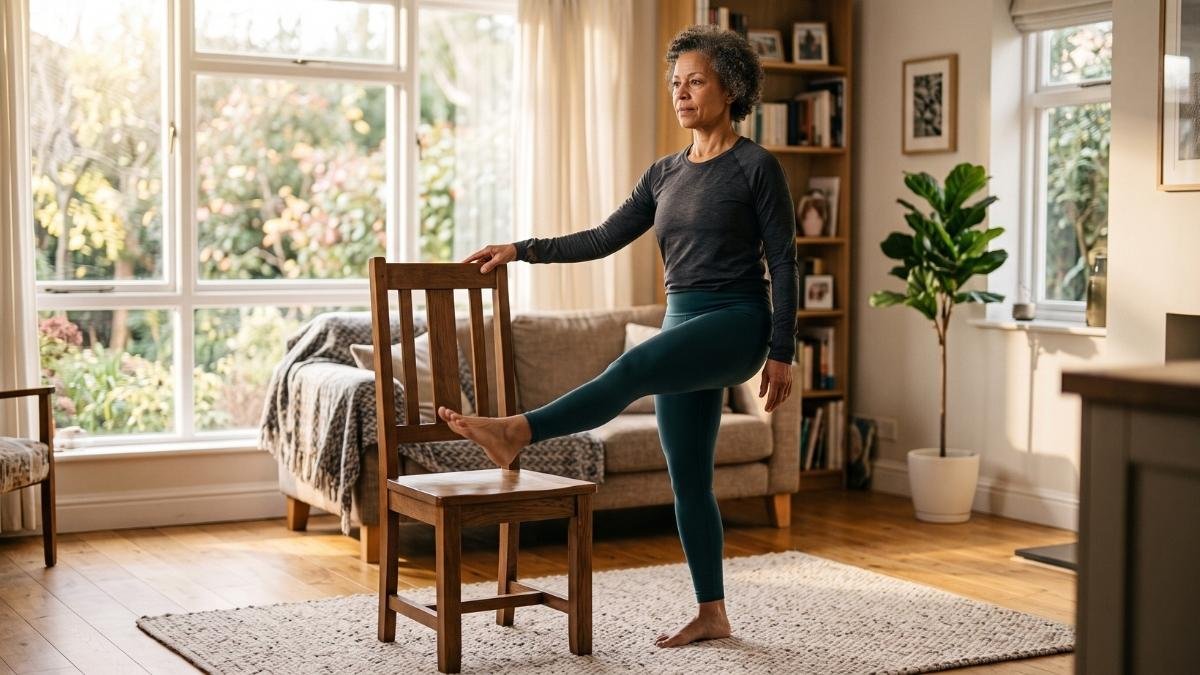
5 minutesHolding a chair for safety. Balance training is one of the few interventions shown to meaningfully cut fall risk.
Brisk Walk or March
5 minutesSupports circulation and complements the strength work rather than replacing it.
None of these movements require a gym. Carol uses a sturdy kitchen chair for balance support and a light resistance band she keeps looped over a doorknob.
Try This Today: The Daily Habit That Actually Works
- Do 10 chair squats before your morning coffee finishes brewing, holding the chair back if needed.
- Add one 30 second single leg balance hold (each side) while brushing your teeth.
- Aim for a source of protein at each meal instead of loading it all into dinner.
- Take a short walk after meals rather than one long walk once a day.
- Track your sit to stand count once every two weeks instead of daily, so small day to day changes do not discourage you.
A Simple Way To Check Your Own Progress
You do not need lab equipment to see whether this kind of routine is working. Researchers commonly use something called the 30 second sit to stand test: sitting in an armless chair, then standing up fully and sitting back down as many times as possible in 30 seconds, without using your hands.
There is no single “pass” number that applies to everyone, since it depends on age, sex, and starting fitness. What matters more is your own trend over time.
In clinical studies of older adults doing structured resistance and nutrition programs, average sit to stand counts improved by roughly two to three repetitions over several months, a meaningful functional gain even though it sounds small on paper.
Carol started at nine. Eight weeks later, she was consistently at thirteen, and stairs stopped being something she thought about before starting them.
When To See A Doctor
Most muscle related fatigue in aging is ordinary and responds well to consistent movement. But certain signs deserve a real medical evaluation rather than a new workout plan.
Red Flags That Need Medical Attention
- Sudden weakness in one arm or leg, especially if it comes on quickly.
- Falling more than once in the past six months, or a fall that caused injury.
- Rapid, unexplained weight loss along with the muscle weakness.
- Needing your hands to push off in order to stand up from a normal chair.
If any of those apply, that conversation with a doctor should happen before starting a new exercise routine, not after.
Common Questions

How long until results show up?
Early strength gains often show up within two to four weeks, mostly from improved coordination between nerves and muscle. Visible changes in muscle tissue itself, the kind tied to the “reversed aging” signature in research, tend to take closer to eight to twelve weeks of consistent effort.
What mistakes do people make when starting this?
The most common one is going too hard in week one and getting discouraged by soreness. The second is skipping protein at breakfast and lunch, then wondering why strength gains feel slow, since muscle repair depends on steady protein intake throughout the day, not just at dinner.
Who should modify or avoid this routine?
Anyone with a recent joint replacement, uncontrolled heart condition, or significant balance disorder should get individualized guidance from a doctor or physical therapist before starting, since movements may need to be adapted.
Does walking alone do the same thing?
Walking supports cardiovascular health and endurance, but research consistently shows that strength gains and the specific mitochondrial changes tied to “reversed” muscle aging come from resistance training, not walking by itself. The two work best together, which is why Carol’s routine includes both.
The Takeaway
Carol did not do anything exotic. She did the same short, structured routine most days of the week, paid attention to protein, and gave it two months before judging the results. What changed was not just how her legs felt, it was measurable, the kind of change her doctor could see in a follow up strength check.

Muscle aging is not a fixed sentence written the day you turn 60. The research is fairly consistent: muscle tissue in older adults responds to resistance training in ways that genuinely resemble younger tissue, given enough consistency and enough time.
This article is for informational purposes only and is not a substitute for professional medical advice, diagnosis, or treatment. Always consult your doctor or a qualified healthcare provider before making changes to your diet, exercise routine, or medications, especially if you have an existing health condition.