

You feel sharp. You remember the names, the appointments, where you parked. For some people, Alzheimer’s is already shrinking 2 brain regions at that very moment, quietly, years before memory loss begins.
That silent head start is the problem. By the time forgetfulness shows up, the damage has often been building for years, and the best window to act may already be closing. Researchers now say the brain may be changing for 5 to 10 years before the first real memory slip.
Johns Hopkins researchers just reported where the earliest changes appear, and it is not the region most doctors check first. The finding is brand new, and it raises a bigger question about what early detection could look like for you and the people you love.
Here is which 2 regions they found, why they matter, what the science can and cannot prove yet, and what you can start doing today.
Why Alzheimer’s May Start Shrinking These 2 Brain Regions First
The 2 regions are the entorhinal cortex and the amygdala. Both sit close to the hippocampus, the memory center most people have heard of.
The entorhinal cortex helps the brain retrieve memories it has already stored. The amygdala handles emotional memory, including how emotional experiences are processed and remembered.
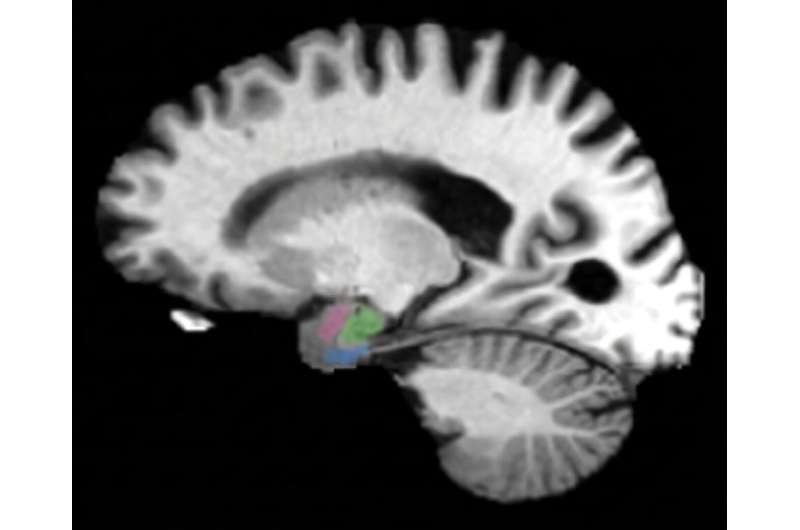
A Johns Hopkins team led by biomedical engineer Michael Miller studied hundreds of MRI and PET scans. The study, published in 2026 in NeuroImage:
Reports, drew on 2 independent research projects: the Alzheimer’s Disease Neuroimaging Initiative and a study that began with people who had normal thinking, called Biomarkers of Cognitive Decline Among Normal Individuals.
The scans followed people at different stages of the disease. Some had no symptoms, some had cognitive impairment, and some were patients who later died from Alzheimer’s.
Across both projects, the pattern held. In the early stages, the entorhinal cortex and amygdala showed greater relative tissue loss than the hippocampus did.
The hippocampus has long been the main place doctors look. This study suggests the first signal may sit right next door.
How Early Is “Years Before”? The Timeline Researchers Keep Finding
The Hopkins result fits with older work. A 2014 imaging study used statistical models to estimate when different brain structures begin to change before symptoms.
A 2020 study in Frontiers in Neuroscience found that the rate of thinning in the entorhinal cortex shifted 8 to 11 years before a diagnosis of mild cognitive impairment (MCI). By the time MCI was diagnosed, that region was up to 0.6 millimeters thinner than in people with normal thinking.
Quick reference: when each region may start changing
Brain Regions & Early Neurodegenerative Timeline
Mapping regional neurological functions and estimated early morphological changes preceding mild cognitive impairment (MCI).
Sits immediately beside the entorhinal cortex
Crucial hub responsible for retrieving stored memories
Processes emotional memory & affective responses
Primary memory consolidation and spatial navigation center
These numbers come from statistical models in different studies. Treat them as ranges, not a personal countdown.
The Tau Link: Why This Shrinkage Is Not Random
The Hopkins team also compared the tissue loss with PET imaging and digital pathology. Areas of gray matter shrinkage overlapped with areas showing tau related changes.
Tau is a protein that normally helps maintain the internal structure of nerve cells. In Alzheimer’s, it can build up abnormally and form tangles that interfere with healthy brain function.
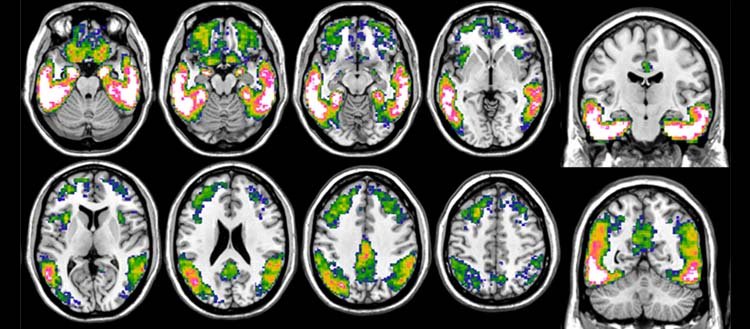
Gray matter is packed with nerve cell bodies, so losing it means losing working tissue. Earlier research also points to the entorhinal cortex as one of the first places where tau tangles collect, before the hippocampus.
That overlap is why researchers see shrinkage in these regions as a possible early marker, not a random side effect of aging.
Why You Can Feel Completely Fine While This Happens
Scientists believe the brain compensates for a long time. Connected networks can cover for a small area that is losing tissue, so early changes may not show up in daily life.
The Alzheimer’s Association calls this silent period the preclinical stage. Biological changes are underway, but memory and thinking symptoms have not appeared yet.

This is exactly why the Hopkins team wants better early markers. Coauthor Marilyn Albert, who directs the Johns Hopkins Alzheimer’s Disease Research Center, said the goal is to treat people before symptoms develop, so the disease might be delayed or even stopped.
Miller put the promise in simple terms: starting treatment at the 2, 3, or 4 year mark of brain change instead of after about 15 years, when memory symptoms appear.
What Is Proven, What Is Early, And What Nobody Knows Yet
The headline finding is promising, and it is also easy to overstate. Here is the honest breakdown.
What is solid: Imaging studies over more than a decade, including the new Hopkins work, point to the entorhinal cortex changing before the hippocampus.
What is early: The new study analyzes scans from research groups. It shows a pattern across many people, not a prediction for one person. The study does not establish a clinical test, and more research is needed before doctors can use these changes as a reliable diagnostic tool.
What is unknown: No clinical test can tell a healthy person today that they will develop Alzheimer’s years from now. Timelines vary between studies, and the amygdala’s exact timing is less settled than the entorhinal cortex. Whether treating people at this stage improves outcomes is still a hope, not a result.
The Alzheimer’s Association has also said it does not recommend Alzheimer’s biomarker tests for people without symptoms. So read this as a promising lead, not a verdict.
What You Can Do Now While The Science Catches Up
Nothing in the Hopkins study tests a treatment or a lifestyle change. Other strong evidence does show that daily choices matter for brain health.
The 2024 Lancet Commission on dementia prevention reviewed the evidence and named 14 modifiable risk factors. It estimated that addressing all of them could potentially prevent or delay around 45 percent of dementia cases worldwide. That figure is a modeled estimate that assumes the risks are causal and could be fully eliminated, so real world results may be smaller.
The list includes less education early in life. In midlife it covers hearing loss, high LDL cholesterol, depression, head injury, physical inactivity, diabetes, smoking, high blood pressure, obesity, and excessive alcohol. In later life it adds social isolation, air pollution, and untreated vision loss.

A 2025 randomized trial called U.S. POINTER, published in JAMA, tested 2 lifestyle programs in 2,111 older adults at risk of cognitive decline. Over about 2 years, both a structured program and a self guided program improved cognition. The structured program, with more intensity and accountability, did better.
The structured plan included 30 to 35 minutes of moderate to intense aerobic exercise 4 times a week, plus strength and flexibility work twice a week. It also had computer based brain training 3 times a week for 30 minutes, the MIND diet (leafy greens, berries, nuts, whole grains, olive oil, and fish), and regular checks of blood pressure, weight, and lab results.
Everyone’s body responds differently, so check with your doctor before starting a new exercise or diet plan, especially if you have a heart condition, diabetes, or take medication.
A caution: the main U.S. POINTER results measured thinking scores, not whether the entorhinal cortex or amygdala shrinks more slowly. No lifestyle plan can promise you will avoid Alzheimer’s. Researchers are following participants for 4 more years to learn more about dementia risk.
Try This Today: 5 Small Moves For Your Brain
- Book a checkup to review your blood pressure, cholesterol, and blood sugar. High blood pressure, LDL cholesterol, and diabetes are all on the Lancet list.
- Take a brisk 30 minute walk and repeat it 4 times this week.
- Add 1 MIND diet food to today’s meals: a handful of berries or nuts, a serving of leafy greens, or a portion of fish.
- Ask about a hearing and vision check if it has been a while.
- Call or meet 1 friend this week, since social isolation is a listed risk factor.
When To Stop Waiting And Call A Doctor
The Alzheimer’s Association says memory loss that disrupts daily life is not a typical part of aging. See a doctor if you or someone close to you notices:
- Forgetting recently learned information, or asking the same questions again and again
- Trouble planning or finishing familiar tasks, like following a recipe or paying bills
- Confusion about time or place, or getting lost in familiar spots
- Changes in mood or personality, such as new suspicion, fear, or withdrawal
Other causes, including depression and medication side effects, can look similar. A full medical evaluation is the way to sort it out.
Normal Forgetting Or A Warning Sign?
The Alzheimer’s Association lists 10 warning signs. Here are 5 of them next to what typical aging looks like.
Typical Aging vs. Early Cognitive Warning Signs
Differentiating normal age-related cognitive changes from red flags that warrant neurological evaluation.
Forgets a name occasionally, recalls it later
Makes an occasional math or balancing slip
Briefly unsure of the day of the week
Makes one bad decision every now and then
Gets annoyed when a specific routine changes
Quick Questions People Ask Next

Can a scan show this today?
MRI is already part of many dementia evaluations for people with symptoms. Measuring these 2 regions to predict Alzheimer’s in healthy people is not a clinical test yet. The Hopkins team expects imaging to become more accessible and less expensive over time.
Does a smaller entorhinal cortex or amygdala always mean Alzheimer’s?
No. Some tissue loss happens with normal aging, and researchers look at the rate and pattern of change over time. Only a doctor who reviews your symptoms, history, and testing can interpret a scan.
Should I ask for a scan if Alzheimer’s runs in my family?
Start by talking with your doctor about your family history and any changes you notice. The Hopkins team imagines that doctors might someday examine these regions in people with a family history as early as their 30s or 40s. That is a future goal, not current practice.
What To Take From This,
Alzheimer’s may begin shrinking the entorhinal cortex and amygdala years before memory loss, and before the hippocampus shows the same changes. That is a promising lead for earlier detection. It is still research, not a test you can order.
What you can do today is simple. Look after your heart, hearing, vision, movement, and friendships, and speak up early if memory changes start getting in the way of daily life.
This article is for informational purposes only and is not a substitute for professional medical advice, diagnosis, or treatment. Always consult your doctor or a qualified healthcare provider before making changes to your diet, exercise routine, or medications, especially if you have an existing health condition.
Sources,
- Miller MI, Xie Y, Stouffer KM, et al. Rostral associations of MRI atrophy of the amygdala and entorhinal cortex across the AD spectrum. NeuroImage: Reports, 2026;6(3):100392. DOI: 10.1016/j.ynirp.2026.100392
- Johns Hopkins University, research summary on early amygdala and entorhinal cortex atrophy, published by ScienceDaily, November 14, 2026
- Entorhinal and Transentorhinal Atrophy in Preclinical Alzheimer’s Disease. Frontiers in Neuroscience, 2020. DOI: 10.3389/fnins.2020.00804
- Younes et al. Inferring changepoint times of medial temporal lobe morphometric change in preclinical Alzheimer’s disease. NeuroImage: Clinical, 2014
- Livingston G, et al. Dementia prevention, intervention, and care: 2024 report of the Lancet standing Commission. The Lancet, 2024. DOI: 10.1016/S0140-6736(24)01296-0
- Baker LD, Espeland MA, Whitmer RA, et al. Structured vs Self-Guided Multidomain Lifestyle Interventions for Global Cognitive Function: The US POINTER Randomized Clinical Trial. JAMA, 2025. DOI: 10.1001/jama.2025.12923
- Alzheimer’s Association, 10 Warning Signs of Alzheimer’s, and Alzheimer’s Disease Facts and Figures reports (2024 to 2026 editions)