

Extra body fat does not stay in your waistline. It reaches your brain.
Research now links body fat to inflammation, scarring, and shrinking tissue in the very areas that handle memory, hunger, and decision making. Some of that damage shows up in animal studies within days of starting a fatty diet, long before the scale really moves much.
That is the part most people never hear. Left alone for years, the same processes are tied to a higher risk of dementia later in life.
The good news is that these effects are not a life sentence. Harvard Health Publishing has highlighted research suggesting that the type of fat matters, and that deep belly fat looks like the biggest concern.
Here are 4 ways extra body fat damages brain cells, what the research found, and the small daily changes that give your brain the best shot at staying sharp for years.
Before You Panic: What “Damage” Really Means Here
The studies behind this topic come from several institutions. The evidence is a mix of animal experiments, brain scans, and long term population data.

Harvard Health Publishing has summarized the visceral fat findings for a general audience. One of the larger visceral fat and brain aging studies was led by a researcher who is also an adjunct professor at Harvard.
So here is the plain version. Some findings show nerve cells being injured in animals. Others show smaller brain volume in people, which is an association and not proof of cause.
Here is the whole picture at a glance before we go deeper.
4 Ways Metabolic Dysfunction Harms the Brain
Mechanistic pathways through which inflammation, insulin resistance, visceral fat, and tissue loss accelerate brain aging.
Hypothalamus & Hippocampus
Hypothalamus & Blood-Brain Barrier
Cortex & Memory Regions
Deep Brain Structures & Total Volume
1. Chronic Inflammation Injures the Neurons That Control Hunger
The brain’s appetite center reacts first.
Deep in the brain sits the hypothalamus, the control room for hunger, fullness, and energy use.
In rats and mice, inflammatory signaling in this region appeared within 1 to 3 days of starting a high fat diet, before substantial weight gain. That timing matters. It suggests the brain reacts to fatty food faster than the waistline does.

Within the first week, researchers also saw reactive gliosis and markers of neuron injury in the arcuate nucleus. Gliosis is the brain’s version of wound healing, the same response seen in stroke and multiple sclerosis.
Here is where it turns worrying. The early response faded after a few days, then came back around week four. With continued high fat feeding, the inflammation and gliosis returned permanently.
By month 8, mice on the high fat diet had fewer POMC neurons, a group of cells that help regulate body weight. The lead researcher suggested this kind of injury could help explain why lasting weight loss is so hard for many people.
Why saturated fat is the suspect.
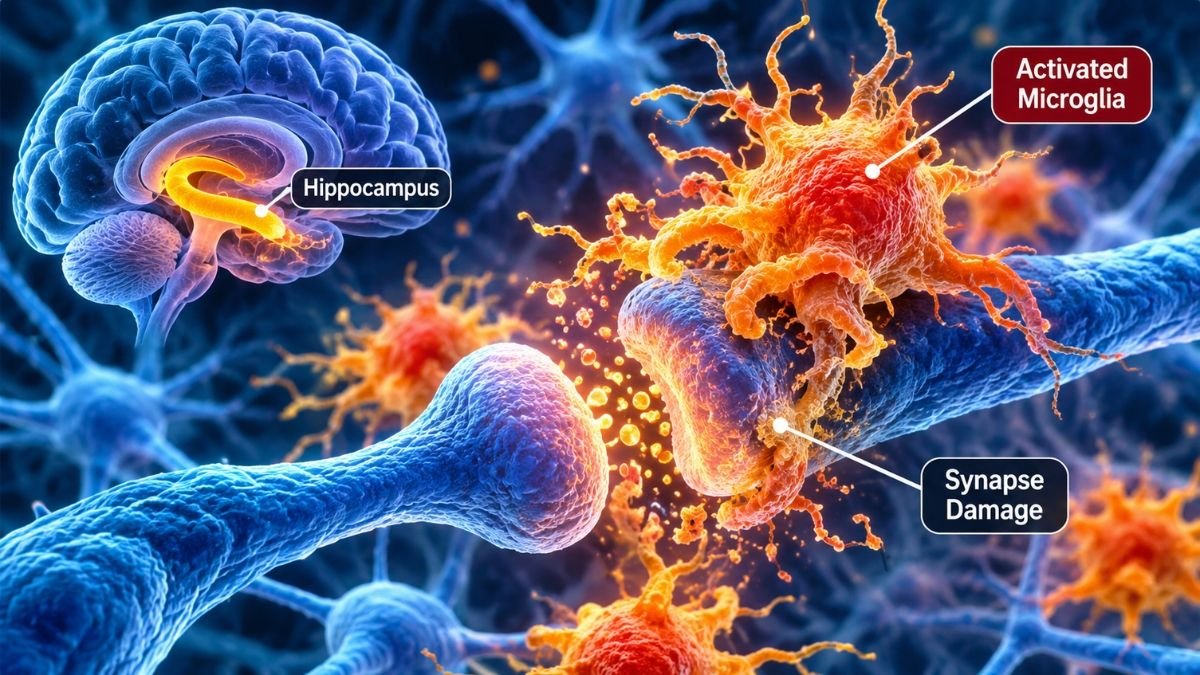
Long chain saturated fats appear to trigger an inflammatory response driven by TLR4 and cellular stress, damaging the neurons that control food intake. In the short run, that damage is reversible.
This is not only a rodent story. MRI scans of obese people showed increased gliosis in the same part of the hypothalamus.
Memory areas may take a hit too. In obese mice, microglia (the brain’s immune cells) were activated and consumed healthy synapses in the hippocampus, a key memory center.
The catch: much of this work was done in animals, so the exact timeline in people is still being mapped.
2. The Brain Slowly Stops Hearing Insulin
Your brain has its own insulin problem.
Insulin does more than manage blood sugar. It also sends messages to the brain about food and energy.
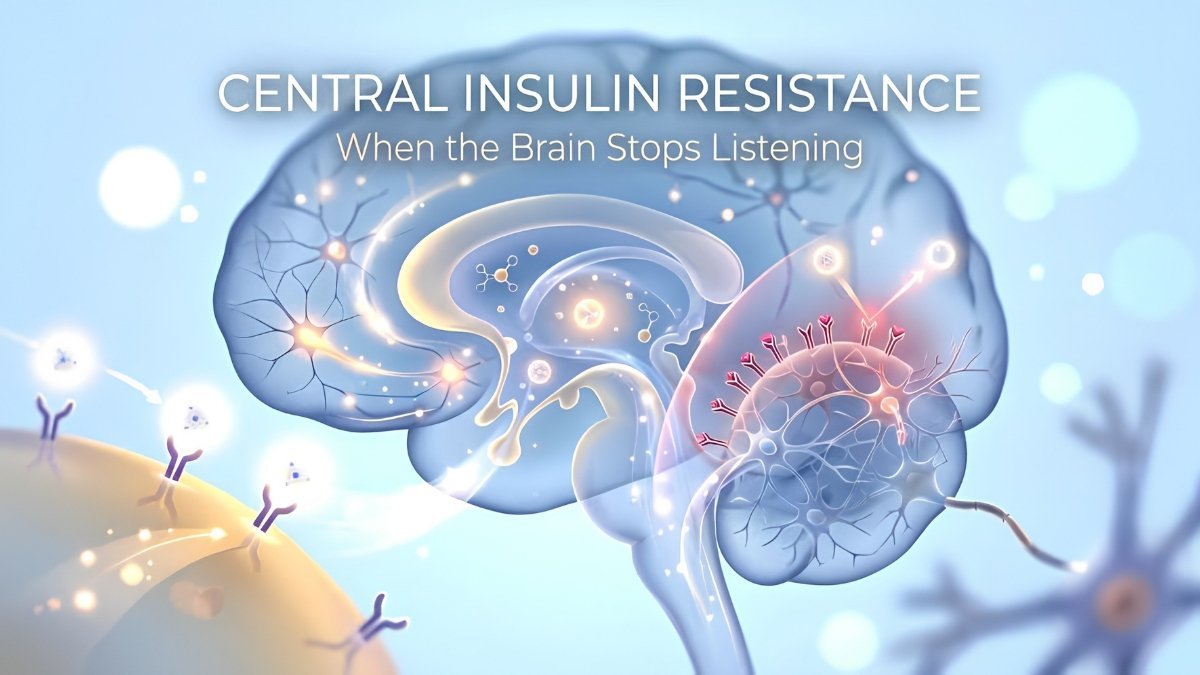
Insulin crosses the blood brain barrier through an active transport system, and the hypothalamus takes up more of it than other regions. That is a lot of traffic through one narrow checkpoint.
In one research review, a high fat meal reduced how much insulin crossed the barrier compared with a low fat meal. Over time, obesity can disrupt insulin transport across brain blood vessel cells, which feeds central insulin resistance often linked to cognitive problems.
How it becomes a loop.
Saturated fats such as palmitate can cross the barrier and build up in the hypothalamus, where they blunt the fullness signals sent by insulin and leptin.

Inflamed neurons then respond poorly to those signals, which can push food intake and weight higher. More weight brings more inflammation, and the cycle feeds itself.
Insulin trouble in the brain also touches Alzheimer’s biology. High insulin levels can block the proteins that break down amyloid in the brain.
The catch: brain insulin resistance is less well understood than the version that affects the rest of the body. It matters, but scientists are still filling in the details.
3. Deep Belly Fat Travels With Alzheimer’s Proteins
Where you carry fat changes the story.
Not all body fat behaves the same. Subcutaneous fat sits under the skin and makes up about 90 percent of our fat tissue. Visceral fat is stored deep in the belly, around the liver, intestines, and other organs.

Harvard Health Publishing covered a 2024 study finding that people with more visceral fat had higher levels of abnormal proteins that are hallmarks of Alzheimer’s. The study included 80 middle aged adults with normal thinking skills, who had PET scans, MRI, and other tests.
The numbers are striking. Visceral fat accounted for 77 percent of the effect of high BMI on amyloid, and other fat types did not explain the increase.
The high visceral fat group also had lower blood flow across the whole brain, while high subcutaneous fat showed no such difference.
Why the timing stands out.
Researchers described these brain changes as appearing as much as 15 years before the earliest memory loss symptoms of Alzheimer’s. That is a long window to act.

One suspected reason is inflammation. Inflammatory substances released by visceral fat may contribute to inflammation in the brain.
You can carry this fat even at a normal weight. A Kaiser Permanente study of more than 6,000 people found that normal weight adults with a large belly had almost twice the dementia risk of normal weight adults with a normal waist size.
The catch: an outside neurologist noted that the study does not prove visceral fat causes brain damage.
Everyone’s body responds differently, so check with your doctor before starting a new exercise routine or changing your diet, especially if you have heart disease, diabetes, or take medication.
4. Extra Body Fat Is Tied to Shrinking Gray Matter

The tissue that holds nerve cells gets smaller.
Gray matter is the part of the brain packed with nerve cells. Several large scan studies suggest it shrinks as body fat rises.
A UK Biobank analysis of MRI scans from 12,087 people, average age 62, tied higher body fat to lower gray matter volume. In men the link showed up in overall gray matter, while in women it appeared only in the globus pallidus, a region involved in voluntary movement.
In both men and women, higher body fat meant a greater chance of microscopic changes in white matter, the long nerve fibers that connect brain regions.

What the cubic centimeters show.
Another study of 9,652 people, average age 55, found the lowest gray matter volume (786 cubic centimeters) in those with both a high BMI and a high waist to hip ratio. Healthy weight participants averaged 798, and people with a high BMI but a normal waist to hip ratio averaged 793.
Those gaps look small. But smaller gray matter volume suggests a loss of neurons.
Cause is still the open question. Because these scans were taken at a single point in time, researchers cannot say whether obesity changes the brain or whether brain differences raise the risk of obesity.
Long term data adds weight to the concern. A meta analysis found that obesity in midlife (ages 35 to 65) was linked with dementia in late life, with a relative risk of 1.33, while simple overweight was not.
Now for a closer look at how strong each piece of evidence really is.
Obesity & Brain Structure Research Studies
Key clinical studies, MRI cohorts, and PET imaging analyses evaluating adiposity against neurodegeneration.
Rats, mice, & obese humans scanned via MRI
Inflammation & gliosis in the appetite control region
12,087 adults (average age 62)
Higher body fat correlates with less gray matter (men) & white matter changes
9,652 adults (average age 55)
786 cm³ gray matter with high BMI/wide waist vs. 798 cm³ at healthy weight
80 midlife adults
Visceral fat directly tracked with amyloid and tau pathology
Can This Damage Be Reversed?
Nobody can promise full reversal in people. But there are hopeful signals.
In rodents, the early damage to hypothalamic neurons was reversible in the short run. That is a strong argument for acting sooner rather than later.
A long term MRI study at Ben Gurion University of the Negev linked lower accumulation of visceral fat to slower brain atrophy and better preservation of key brain structures. Persistently high visceral fat over five years was tied to faster loss of brain volume.
Does this apply if my weight is normal?
It can. Visceral fat can build up around the organs of people with healthy BMIs. That is why waist size can tell you something the scale does not.
Is the scale the best way to track progress?
Not always. Harvard Health notes you can lose visceral fat and gain muscle even when your weight does not change. A tape measure at the waist gives a second data point.
Try This Today: 4 Small Moves for Your Brain

- Walk briskly for 30 minutes, most days. Harvard Health points to at least 30 minutes of moderate activity, such as brisk walking or relaxed cycling, to help reduce visceral fat.
- Measure your waist once a month. Write it down next to your weight so you can spot visceral fat changes the scale misses.
- Swap one saturated fat heavy food a day. Try fish, nuts, or olive oil in place of fried food, processed meat, or butter heavy dishes.
- Ask for the right bloodwork. Higher insulin resistance and lower HDL cholesterol were linked to more amyloid in the brain, so blood sugar and cholesterol checks belong on your list.
When to See a Doctor Right Away
- Memory loss that disrupts daily life, such as missed appointments or getting lost on familiar routes
- Sudden confusion, or trouble speaking or understanding speech
- Sudden numbness, weakness, or vision changes (call emergency services immediately)
The Bottom Line for Your Brain,
Extra body fat can inflame the brain’s appetite center, blunt insulin signals, pair with Alzheimer’s proteins, and track with smaller gray matter.
Some of these links are proven in animals and others are associations in people. All of them point the same way.
The earlier you act, the more room you have to change the direction. A daily walk and a tape measure are a good place to start.
This article is for informational purposes only and is not a substitute for professional medical advice, diagnosis, or treatment. Always consult your doctor or a qualified healthcare provider before making changes to your diet, exercise routine, or medications, especially if you have an existing health condition.