

Your supplement drawer is probably fuller than your produce drawer, and it still isn’t doing what you hoped it would. That’s not a guess. It’s what happens when the real risk (the muscle you quietly lose every year after 50, and meals that never quite add up to anything nutrient dense) keeps compounding while the bottles pile up next to the sink.
U.S. News & World Report just asked 63 of the country’s top longevity experts what actually moves the needle on healthy aging. The answer left the supplement aisle out completely.
Before making any changes based on this article, talk to your doctor, especially if you are currently taking medication or have a diagnosed condition.
What U.S. News Actually Asked 63 Health Experts
This wasn’t a random online poll. The panel included longevity experts, registered dietitians, medical doctors, clinical researchers and fitness experts, surveyed online for U.S. News’s second annual Healthy Aging Survey between July and August of 2026. U.S. News & World Report

Researchers asked this group what actually protects healthspan, meaning the years someone stays mobile, sharp, and independent, not just alive. Physical activity and a nutrient dense diet tied at 89%, dwarfing every other answer. Restorative sleep came in a distant third at just 30%. U.S. News & World Repor
That 89% is not a typo, and it’s not two separate groups splitting the vote. The same experts kept circling back to the same two basics.
Here’s how the full ranking shook out.
Expert Consensus on Aging
Tracking the percentage of experts who identified these specific lifestyle factors as highly critical.
Physical activity
Tied for firstConsidered a fundamental pillar, overwhelmingly ranked at the top.
Nutrient dense diet
Tied for firstMatches exercise perfectly as the foundation for longevity.
Restorative sleep
ThirdRecognized as important, but ranked lower in critical priority overall.
Social isolation
UnderappreciatedHighlights the immense, yet frequently overlooked, risk of loneliness.
Interestingly, nearly six in ten experts also flagged social isolation as the most underappreciated accelerator of biological aging, ranking it well above sleep disruption or everyday stress. That’s worth filing away, but it wasn’t one of the two things that tied for first. Movement and food were. U.S. News & World Report
The First Thing: Moving More Than Most People Think They Need To
This isn’t about training for a marathon. It’s about a slow leak most people never notice until it’s already cost them something.
Starting around age 30, and speeding up considerably after 50, the body gradually loses muscle mass, a process called sarcopenia, which affects mobility, balance, and independence, and raises the risk of falls and frailty. Left unaddressed, that leak doesn’t stop. svetness
Without resistance training, adults lose roughly 1% of muscle size and 3 to 5% of strength and power every year after age 40. Do the math over a decade and it’s easy to see how someone ends up struggling with stairs, groceries, or getting up off the floor, and quietly assumes that’s just what aging feels like. It isn’t. hubermanlab
The stakes get sharper with numbers. A 2020 meta analysis found that every 5 kilogram increase in grip strength was linked to a 16% reduction in mortality risk. Grip strength is basically a proxy for whole body muscle health, which is why doctors sometimes check it in a routine visit without much explanation. superpower
Everyone’s body responds differently, so check with your doctor before trying this if you have an existing condition or take medication.
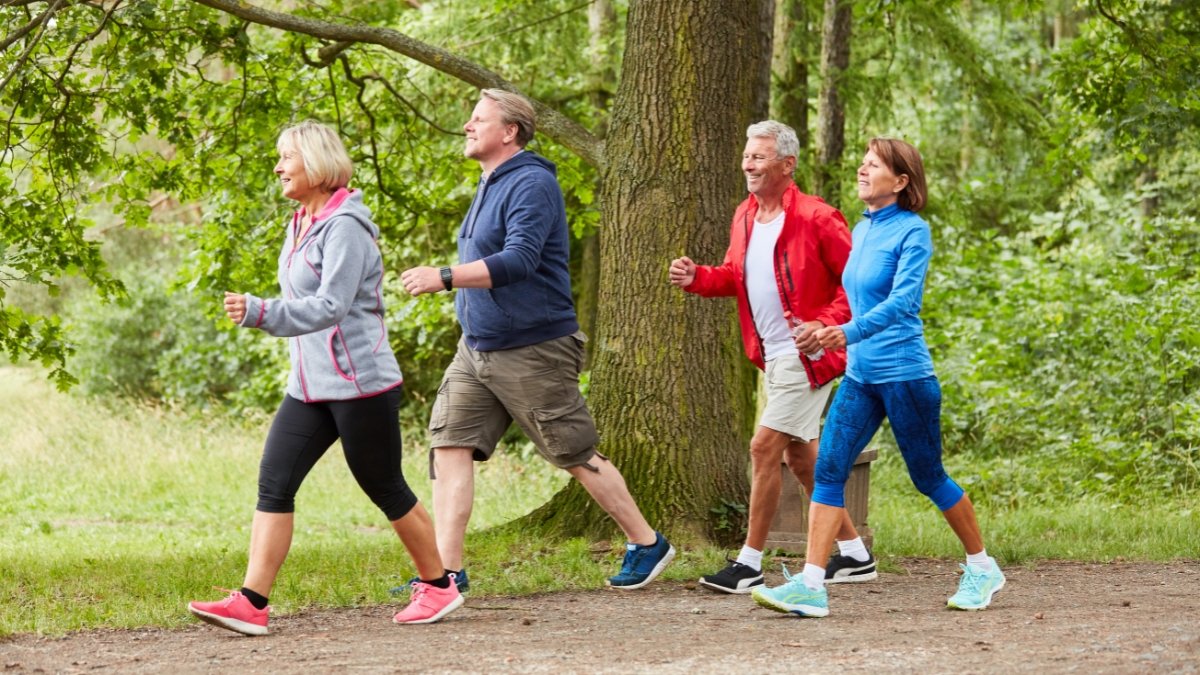
So what does “enough” actually look like? Most health guidelines call for at least 150 minutes of moderate aerobic activity a week, plus strength training two to three times a week. Yet only about 24% of American adults currently meet both of those targets. sydneymaikwiedenbach
None of this requires a gym membership. A brisk 20 minute walk most days covers the aerobic piece. Two short sessions a week of bodyweight squats, wall pushups, or resistance bands cover the strength piece. Consistency beats intensity here, especially when you’re just getting the habit back.
There’s a reason this matters beyond mobility, too. For women specifically, bone density can drop by as much as a third after menopause, and impact focused movement like light jump training or brisk walking has been shown to meaningfully slow that loss. hubermanlab
The Second Thing: Eating Like Your Plate Is Doing the Real Work
The second habit tied at 89% wasn’t a specific superfood or a macro ratio. It was simply eating real, varied, plant heavy food on a regular basis, the kind of pattern nutrition researchers usually describe as nutrient dense rather than calorie dense.
The clearest evidence for this comes from people who were already over 65 when researchers started watching. An Italian study following more than 5,000 adults aged 65 and older found that closely following a Mediterranean style pattern, rich in vegetables, fruit, fish, and olive oil, was linked to a 25% lower risk of death from any cause, with a clear dose response relationship: the closer the adherence, the greater the benefit. theweek
A separate 20 year study out of the University of Barcelona, tracking dietary biomarkers rather than self reported food logs, reached a similar conclusion in adults over 65. When researchers measure what people actually ate, instead of what people say they ate, the pattern holds. ub
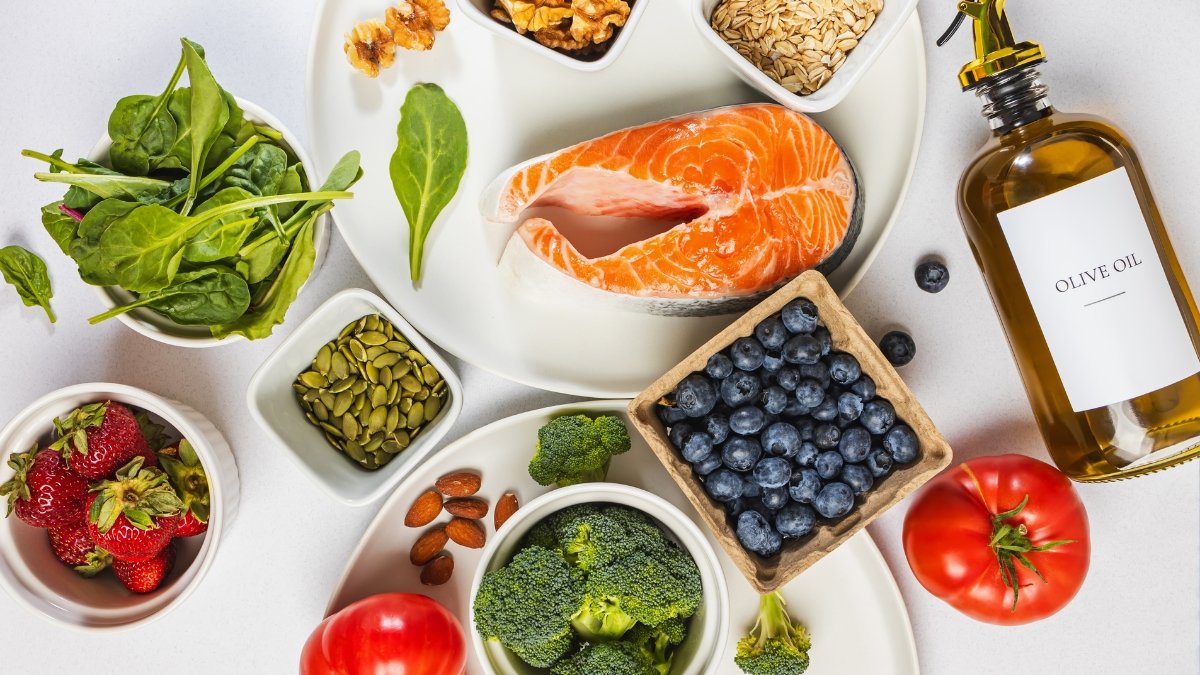
Not every food on the list matters equally, either. In a large study of older women, higher intake of vegetables was linked to a 9% lower mortality risk, nuts to a 13% reduction, and whole grains to a 17% reduction, making whole grains and nuts the strongest individual predictors in the entire Mediterranean pattern. iucc
Even something as ordinary as breakfast plays a role. In an Australian study of more than 8,500 adults over 70, eating eggs one to six times a week was linked to up to a 15% lower mortality risk and a nearly 29% lower risk of dying from heart disease compared with rarely or never eating them. Substack
The common thread across all of it: mostly plants, modest portions of lean meat and fish, olive oil instead of processed oils, and very little that comes in a wrapper. No pill replicates that combination, because it isn’t one ingredient. It’s a pattern. wral
Here’s how the two habits compare side by side.
The Wellness Blueprint
Bridging the gap between ambitious targets and simple daily habits.
150 minutes of moderate cardio, plus strength work for major muscle groups at least twice a week.
A daily 20 minute walk, and two short bodyweight sessions a week.
Vegetables, whole grains, nuts, and fish most days. Make red meat and refined sugar occasional.
Fill half your plate with vegetables, and swap one packaged snack for a handful of nuts.
Why the Expensive Stuff Didn’t Make the List
Here’s the part that should make anyone who’s dropped money on trendy wellness gadgets sit up. Only 40% of the surveyed experts said wearable health trackers provide tangible benefit, and 31% said none of the popular biohacking trends they were asked about have any proven value at all. U.S. News & World Report
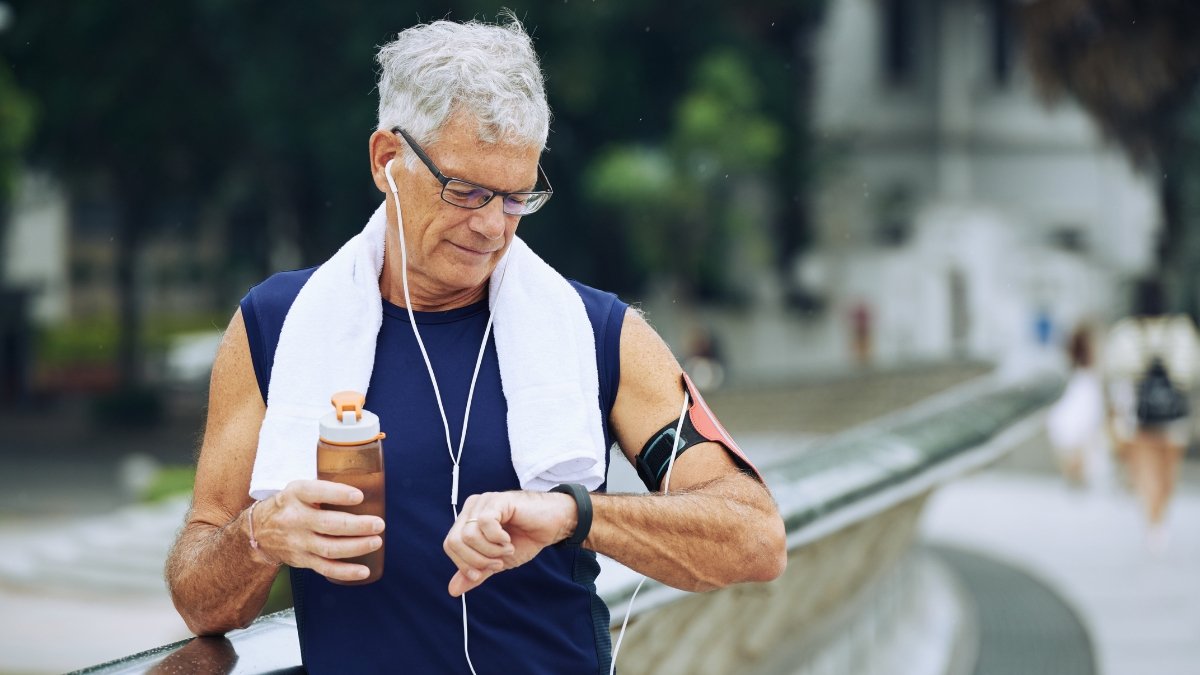
AI powered coaching tools didn’t fare much better. About a quarter of experts saw real promise there, while roughly a fifth said current AI tools offer no meaningful benefit to healthspan. U.S. News & World Report
None of that means these tools are worthless for everyone. It means the experts surveyed weren’t willing to rank a $200 sleep tracker above a daily walk and a plate of vegetables, and that’s the gap this whole survey was designed to expose.
Try This Today
- Walk for 20 minutes, ideally somewhere with a slight incline
- Do one short bodyweight strength session (squats, wall pushups, or a resistance band)
- Add one extra vegetable to dinner instead of removing anything
- Swap a processed snack for a handful of nuts or a piece of fruit
- Skip buying a new supplement this week and put that money toward groceries instead
When to Check With a Doctor First
Movement and food changes are safe for most people, but a few signs mean it’s worth a conversation before you start.
Talk to a doctor before beginning new exercise if you notice:
- Chest pain, tightness, or unusual shortness of breath during light activity
- Dizziness, fainting, or joint pain that doesn’t ease up after rest
- Sudden, unexplained weight loss or loss of appetite alongside fatigue
- New swelling in the legs or feet that wasn’t there before
A Few Questions Worth Asking
Does one of the two matter more than the other? Not according to the survey. Physical activity and nutrient dense eating tied exactly, which is itself the finding: experts don’t see one as a substitute for the other. U.S. News & World Report
How long before it actually feels different? Most people notice better sleep and steadier energy within two to four weeks of consistent walking and better eating. Measurable strength or lab changes tend to take six to twelve weeks.
What if formal exercise isn’t realistic right now? Gardening, taking the stairs, and carrying groceries in multiple trips instead of one all count. The goal is consistent movement, not a specific workout format.
Is it too late to start this in your 60s or 70s? The Italian study above specifically followed adults who were already 65 and older when it began, and still found meaningful benefit. Starting later still counts.
The Bottom Line

Ninety percent of a national panel of longevity experts landed on the same two answers, and neither one came in a bottle. Regular movement protects the muscle, bone, and heart health that quietly erodes after 50. A nutrient dense, plant heavy diet does the rest, consistently, without needing a subscription or a tracker to prove it’s working.