

At 73, Robert noticed the jar of pickles that used to twist open in one try was suddenly winning. Stairs left him breathing harder than they used to. His arms looked thinner in the mirror than they had even two years earlier, and he didn’t love what that meant.
This is not just a cosmetic problem. Left alone, this kind of quiet muscle loss raises the risk of falls, fractures, and losing independence, and most people do not catch it until after a bad fall already happened.
Robert never joined a gym. He never touched a barbell or a dumbbell. What he did instead rebuilt measurable muscle, tracked with real numbers, and it is simpler than most fitness advice aimed at people his age.
Before making any changes based on this article, talk to your doctor, especially if you are currently taking medication or have a diagnosed condition.
What Was Quietly Happening To Robert’s Muscles
The process has a clinical name: sarcopenia. It is the gradual loss of muscle mass, strength, and physical function that comes with aging, and it accelerates faster than most people realize.
Research shows adults who lead sedentary lifestyles can lose about 3 to 5 percent of their total muscle mass per decade, starting earlier than most people expect. The decline does not stay gentle forever.
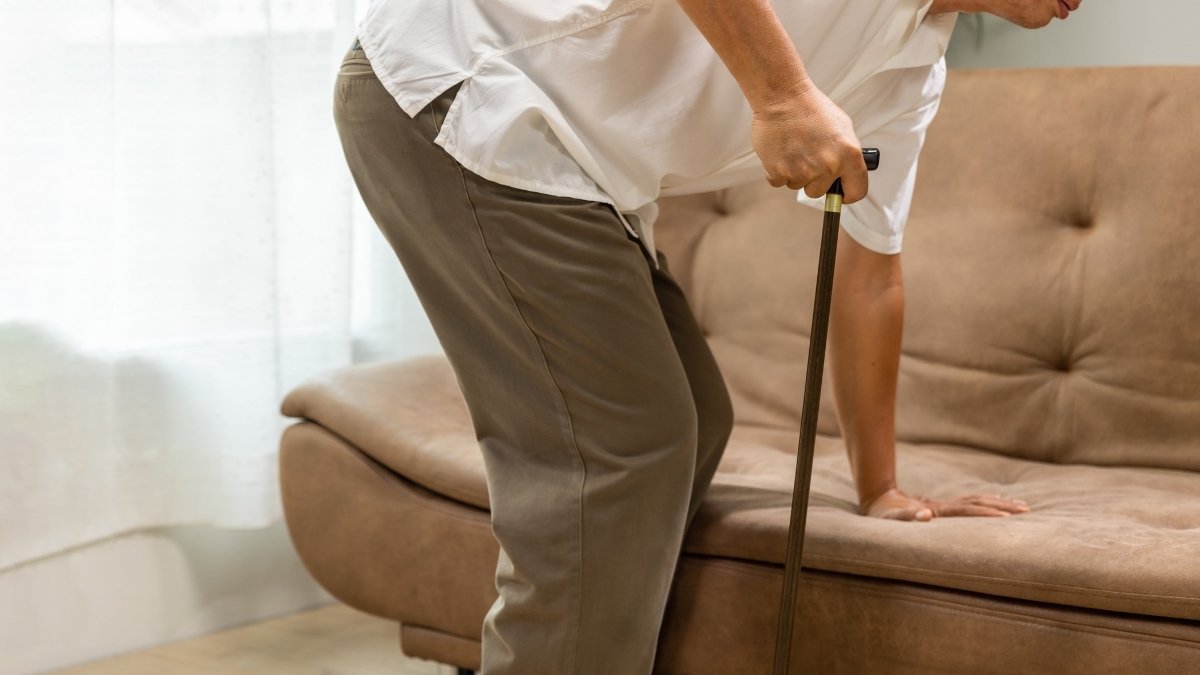
After age 50, muscle mass tends to decrease by 1 to 2 percent per year, and strength itself can decline by 10 to 15 percent per decade until age 70, when the rate of loss speeds up to 25 to 40 percent per decade. For someone Robert’s age, that acceleration is exactly the window he was standing in. cambridge
Nobody warns people that 70 is often the tipping point, not 50. That gap is part of why Robert’s story matters for anyone reading this in their seventies rather than their fifties.
The Method That Rebuilt His Muscle Without a Single Weight
Robert’s routine was built on two ideas: bodyweight movements and inexpensive resistance bands, done with intention rather than casually. The missing ingredient in most casual walking or stretching routines is not effort. It is progression.
A study of adults between 57 and 75 years old found that low load resistance training using bodyweight and elastic resistance bands, performed just twice a week for 12 weeks, increased muscle thickness, strength, and physical function. That is close to the exact age range and starting point Robert was working with. nihjssm

The training itself was not exotic. Chair assisted squats, wall push ups progressing to floor push ups, glute bridges, step ups on a low stair, and band rows made up most sessions.
What changed over time was not the equipment. It was the difficulty: slower tempo, a few extra repetitions, less rest between rounds, and eventually a harder version of the same movement.
Why Muscles Do Not Actually Care About The Weight On The Bar
Muscle growth responds to tension and effort, not specifically to a loaded barbell. Training a muscle close to fatigue with a lighter load can trigger a similar growth signal as training with a heavier one.
Evidence on resistance training shows that pushing sets closer to failure matters more when the load is light, while heavier loads can still be effective without reaching complete failure.
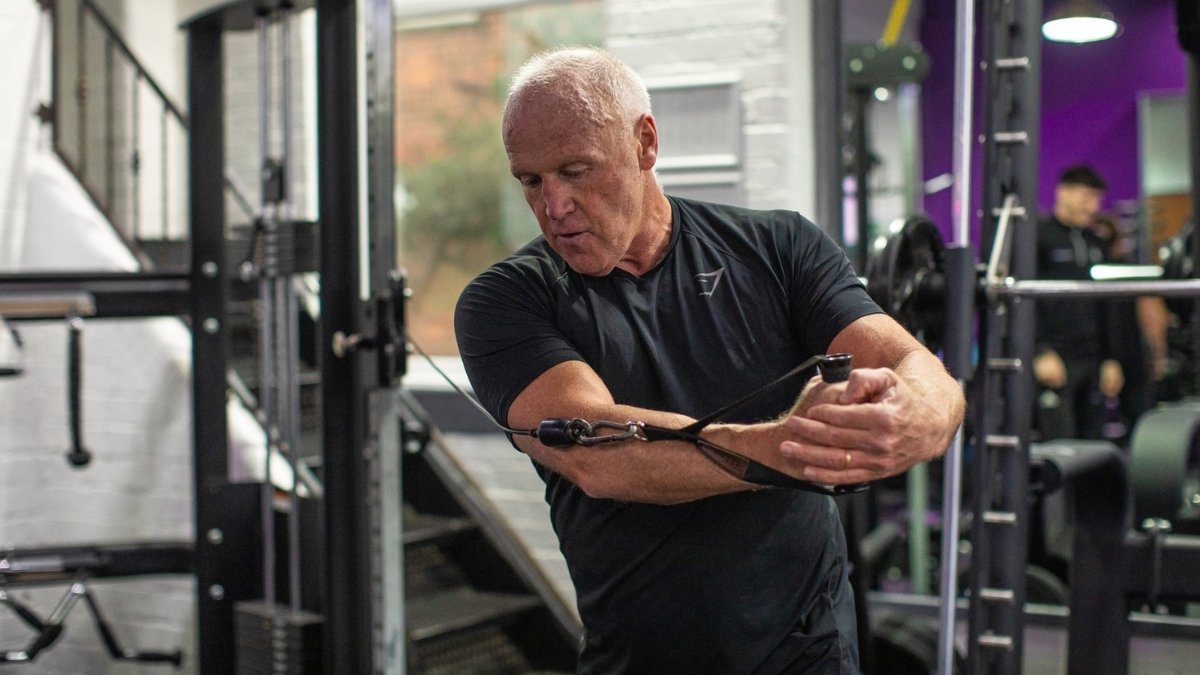
In plain terms: intensity and effort can substitute for added weight, especially for someone starting from a low training base. biolayne
This is good news for anyone who finds a gym intimidating, expensive, or simply inaccessible. The muscle does not know the difference between a dumbbell and a slow, controlled bodyweight squat held two extra seconds at the bottom.
The Weekly Routine Robert Actually Followed
Robert trained three days a week, with rest or a short walk on the days in between. Each session took about 20 to 25 minutes.
The 3-Day Protocol
A balanced, time-efficient split for full body strength and mobility.
Monday
Lower Body Push
Build foundational leg strength with moves like chair squats and wall sits.
Wednesday
Upper Body Pull & Push
Develop torso control and power utilizing band rows and incline push ups.
Friday
Full Body & Balance
Integrate coordination and stability via step ups, glute bridges, and single leg stands.
Everyone’s body responds differently, so check with your doctor before trying this routine if you have an existing joint condition, a recent surgery, or take medication that affects balance or heart rate.
He progressed roughly every two weeks: a few more repetitions, a slower lowering phase, or a version of the move with less support (for example, moving from a wall push up to a countertop push up, then eventually the floor).
The Part Almost Nobody Mentions: What He Ate
Muscle rebuilding does not happen from exercise alone. Older adults face something researchers call anabolic resistance, meaning the body needs more protein per meal to trigger the same muscle building response a younger adult gets from less.

Research recommends older adults consume between 1.0 and 1.2 grams of protein per kilogram of body weight daily, with the anabolic threshold for a single meal set around 25 to 30 grams, containing roughly 2.5 to 2.8 grams of leucine. For Robert, that meant adding eggs, Greek yogurt, or a portion of chicken or fish to meals that used to be mostly carbohydrates. scribd
He did not use expensive supplements. A glass of milk, a scoop of cottage cheese, or a handful of nuts alongside a meal was usually enough to close the gap.
How Robert Actually Measured It
“Measurable” is the key word in this story, and Robert tracked two simple numbers instead of guessing.

Grip strength, measured with an inexpensive handheld dynamometer, is widely recommended as a biomarker of aging and is linked to future mobility, fall risk, and overall health status. A basic dynamometer costs less than a nice dinner out and takes seconds to use. nih
The sit to stand test, which counts how many times someone can rise from a chair without using their hands in a set period, is also recognized as a practical screening tool tied to muscle strength and function. Robert did his in front of a kitchen timer. clinicaltrials
6-Month Transformation
Tracking functional fitness markers and stamina from baseline to achievement.
Grip Strength (Dominant Hand)
Sit to Stand Reps (30 Seconds)
Two Flights of Stairs
These are Robert’s own numbers, not a guarantee, and results vary by starting health, consistency, and medical history.
Try This Today
- Do a set of chair assisted squats before breakfast, aiming for slow and controlled rather than fast.
- Add one extra source of protein to lunch, such as eggs, yogurt, or beans.
- Time yourself on a 30 second sit to stand test this week and write the number down.
- Pick one bodyweight move and hold the hardest part of it for two extra seconds.
- Walk for 10 minutes on rest days instead of sitting the whole day.
When To Stop And Call Your Doctor
- Chest pain, pressure, or unusual shortness of breath during exercise.
- Dizziness, lightheadedness, or fainting at any point in a session.
- Joint pain that does not ease with rest or gets worse over a few days.
- Sudden swelling in a leg or arm that was not there before.
Questions Readers Ask Robert

How long until results show up? The study behind this approach measured meaningful strength and muscle thickness changes at 12 weeks with consistent twice weekly training. Most people notice function first, like easier stairs, before they notice visible muscle change.
What is the most common mistake? Staying at the same difficulty for months. Progression, even small progression, is what separates a maintenance routine from one that actually rebuilds muscle.
Who should modify or skip this? Anyone with uncontrolled heart disease, severe osteoporosis, a recent joint replacement, or significant balance problems should get a doctor’s clearance and possibly a physical therapist’s guidance before starting.
Do you need protein powder? No. Whole food sources worked for Robert, though a convenient shake is a reasonable option for someone who struggles to eat enough food at each meal.
The Short Version
Robert did not need a gym membership or a rack of dumbbells. He needed a bodyweight and band routine done three times a week, meals with enough protein to actually support muscle repair, and two simple numbers to track instead of guessing.

The acceleration in muscle loss after 70 is real, but so is the body’s ability to respond to consistent training well past that age.