

A protein your neurons rely on every day to send each other messages might also be Alzheimer’s favorite delivery method for poison.
Every time it makes one of its deliveries, a healthy brain cell can end up holding a package of toxic tau protein it never asked for. Once that cell opens the package, the damage starts spreading into it too.
This is not a one time event buried in the past. Researchers now believe it is happening cell by cell, right now, inside the brains of people living with Alzheimer’s, and that pattern helps explain why the disease rarely stays confined to one area.
There is finally a name for the protein doing the delivering, and understanding it may be the first real lead toward slowing the spread.
Before making any changes based on this article, talk to your doctor, especially if you or someone you love has been diagnosed with Alzheimer’s disease or another form of memory loss.
The Brain Protein Nobody Suspected of Spreading Alzheimer’s
The protein is called Arc, and for most of its scientific history it had a fairly ordinary reputation. It helps neurons store memories and adjust the strength of their connections, a process scientists call synaptic plasticity.
Arc has an unusual backstory that turns out to matter here. It evolved from an ancient retrotransposon, a leftover viral like gene that became part of the mammalian genome more than 250 million years ago. Somewhere along the way, evolution repurposed it into something useful.
That virus like origin is not just trivia. Arc actually assembles itself into tiny capsids, structures that resemble the outer shell of a virus, and uses them to package its own genetic material for transport between neurons. It ships these capsids inside extracellular vesicles, or EVs, which are microscopic bubbles that travel from one brain cell to the next like sealed envelopes.

A June 2026 study out of University of Utah Health, published in the journal Cell, found that this same delivery system can be hijacked. Toxic tau protein, it turns out, can stick itself to Arc and hitch a ride inside those EVs, moving directly from a sick neuron into a healthy one nearby.
The study was led by neurobiologist Jason Shepherd, whose lab first described Arc’s virus like capsid behavior back in 2018. The new work’s first author is Mitali Tyagi, who carried out the research as a graduate student in Shepherd’s lab before moving to a postdoctoral position at Washington University in St. Louis.
Tau itself is not the villain in a healthy brain. It normally works like scaffolding inside neurons, helping hold their internal structure together and helping shuttle materials from one part of the cell to another.
In Alzheimer’s disease, tau stops doing that job and starts clumping into tangles instead. Tyagi has described these tangles as behaving like “glue monsters,” clumps that jam up transport inside the neuron and eventually kill it.

Here is the detail that matters most. Those glue monsters can break apart into smaller fragments called tau seeds, and it is these seeds that Arc appears to be shuttling out of dying cells and into their neighbors.
Once a tau seed reaches a new, previously healthy neuron, it can corrupt the normal tau already living there. The clumping process then starts over again in a cell that had nothing wrong with it before.
What Happened When Researchers Removed Arc
To test whether Arc was really the culprit, the research team compared Alzheimer’s model mice that had normal Arc levels to mice that were genetically engineered to lack Arc entirely.
In the mice with normal Arc, the team found EVs in brain tissue carrying both Arc and sticky tau together. These EVs were able to infect healthy neurons and start brand new tangles.
In the mice without Arc, the picture looked very different. Their brain EVs carried almost no tau, and the transfer of tau into new cells was, in Tyagi’s own description, severely reduced, almost to nothing.
The Arc Protein Paradox
How a single protein dictates whether toxic tau is trapped inside a dying neuron or spread to healthy ones.
Tau Inside EVs (Extracellular Vesicles)
High concentration. Toxic tau travels efficiently because it attaches directly to the Arc protein inside the vesicles.
Very low. Without Arc acting as a transport vehicle, tau inside EVs is barely detectable.
Spread to Healthy Neurons
Frequent and aggressive. It successfully acts as a vector, seeding new toxic tangles in completely healthy neurons elsewhere.
Rare and contained. The pathogenic spread across the neural network is nearly completely halted.
Survival of Original Sick Neuron
Longer survival. The original sick cell lives longer because the dangerous excess tau gets constantly cleared out.
Shorter survival. Because it cannot be exported, the trapped tau builds up rapidly to fatal, toxic levels within the cell.
The researchers also examined donated human brain tissue and found the same type of EVs there too, ones carrying both Arc and tau together. That suggests a similar hijacking process could be happening in people, not only in mice.
The team has been careful not to overstate this. Confirming that the exact same mechanism drives disease progression in humans, and that safely blocking it is possible, will likely take years of additional research before it reaches anyone’s treatment plan.
Why Blocking This Protein Isn’t as Simple as It Sounds
It is tempting to assume the fix is obvious. Block Arc, stop the spread, slow the disease. The biology is more complicated than that.
Arc’s cargo shuttling also appears to protect neurons earlier in the disease process. By ejecting excess toxic tau, Arc seems to help a struggling neuron survive longer than it otherwise would.

In the mice that lacked Arc, sick neurons that could not eject their tau actually died faster, because the toxic protein had nowhere to go and simply built up inside them until the cell failed.
That is a genuine tradeoff. Removing Arc entirely might protect a sick neuron’s neighbors while speeding up the death of the sick neuron itself, which is not obviously a better outcome.
Because of that tradeoff, the research team is now more interested in a narrower target: the tau filled EVs themselves, caught after they leave a sick cell but before they reach a healthy one. Researchers sometimes describe this as intercepting the cargo mid flight. In theory, that could interrupt the spread without stripping Arc of its normal, protective functions in memory and cell survival.
Does This Mean Alzheimer’s Spreads Like an Infection?
Not in the way most people picture an infection working between different people. This entire process happens inside one person’s own brain, moving from one of their neurons to a neighboring neuron, not from one person to another.
Scientists have long borrowed language from infectious disease research to describe how tau moves through a single brain, because a tau seed can corrupt healthy tau on contact in a way that resembles how misfolded proteins behave in prion disorders.
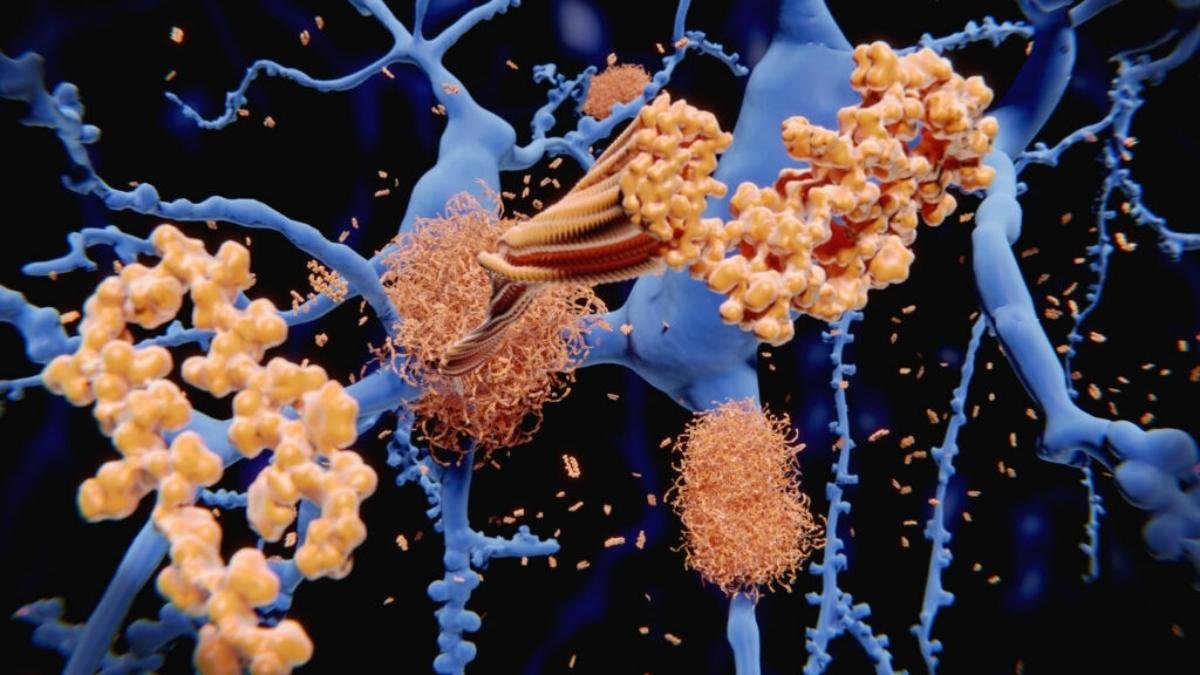
That comparison is only about the mechanism inside one brain. It does not mean Alzheimer’s is contagious, and this discovery does not change the fact that you cannot catch it from another person.
What the discovery does change is the picture of how the disease moves from one brain region to the next once it has started, which is exactly what makes finding a way to interrupt that movement so appealing to researchers right now.
Try This Today: Supporting Your Brain While the Science Catches Up
- Get blood pressure checked and treated if needed. Midlife high blood pressure is one of the most consistently documented dementia risk factors.
- Move most days of the week. Even a 30 minute walk supports blood flow to the brain.
- Get hearing tested and treated if needed, since untreated hearing loss is linked to faster cognitive decline.
- Protect consistent, quality sleep rather than just logging enough hours.
- Stay socially and mentally engaged through conversation, hobbies, or learning something new.
Everyone’s health history is different, so check with your doctor before making major changes to diet, exercise, or supplement routines, especially if you already have a diagnosed condition or take medication.
What Actually Lowers Your Risk While Scientists Chase a Drug
Alzheimer’s disease affects an estimated 7 million people in the United States, and no drug currently exists that reverses or reliably halts it once tangles are established. That is exactly why prevention research matters alongside discoveries like the Arc finding.
A 2024 update from the Lancet Commission on dementia estimated that around 45 percent of dementia cases worldwide are linked to a set of 14 modifiable risk factors, meaning factors people have at least some real ability to influence. That figure was raised from an earlier 40 percent estimate as evidence accumulated.
Cognitive Preservation
Modifiable risk factors linked to cognitive decline and actionable targets to build neurological defense.
High Blood Pressure
Damages the delicate blood vessels feeding the brain over decades.
Hearing Loss
Directly linked to faster cognitive decline and psychological social withdrawal.
Physical Inactivity
Reduces vital blood flow and growth factors that structurally support brain cells.
Social Isolation
Strongly associated with higher dementia risk in long-term human studies.
Poor Sleep Quality
May severely interfere with the brain’s overnight cleanup of toxic waste proteins.
None of these guarantee protection, and none of them undo Alzheimer’s in someone who already has it. They simply shift the odds in a more favorable direction, which is a different thing entirely from a treatment aimed at existing disease.
When Memory Changes Are More Than Just Aging
Occasional forgetfulness is a normal part of getting older. Certain patterns are not, and they are worth bringing to a doctor rather than waiting out.
Warning signs worth a conversation with a doctor:
- Memory loss that disrupts daily life, like repeatedly asking the same question
- New difficulty completing familiar tasks, such as managing bills or following a favorite recipe
- Confusion about time or place that goes beyond simply losing track of the day
- Noticeable changes in mood, personality, or judgment that feel out of character

Catching these patterns early does not change the underlying biology described above, but it does open the door to earlier support, planning, and in some cases treatments that work best when started sooner rather than later.
Researchers studying Arc and tau are not promising a cure. What this discovery offers is a genuinely new target: a specific delivery system that had been hiding in plain sight, inside a protein neurons use for something completely different.
That is often how progress against a disease like Alzheimer’s actually happens. Not one dramatic breakthrough, but a clearer picture of the machinery, one hijacked messenger at a time.
This article is for informational purposes only and is not a substitute for professional medical advice, diagnosis, or treatment. Always talk to your doctor or a qualified healthcare provider before making changes to your diet, exercise routine, or medications, especially if you or a family member has an existing memory or neurological condition.