
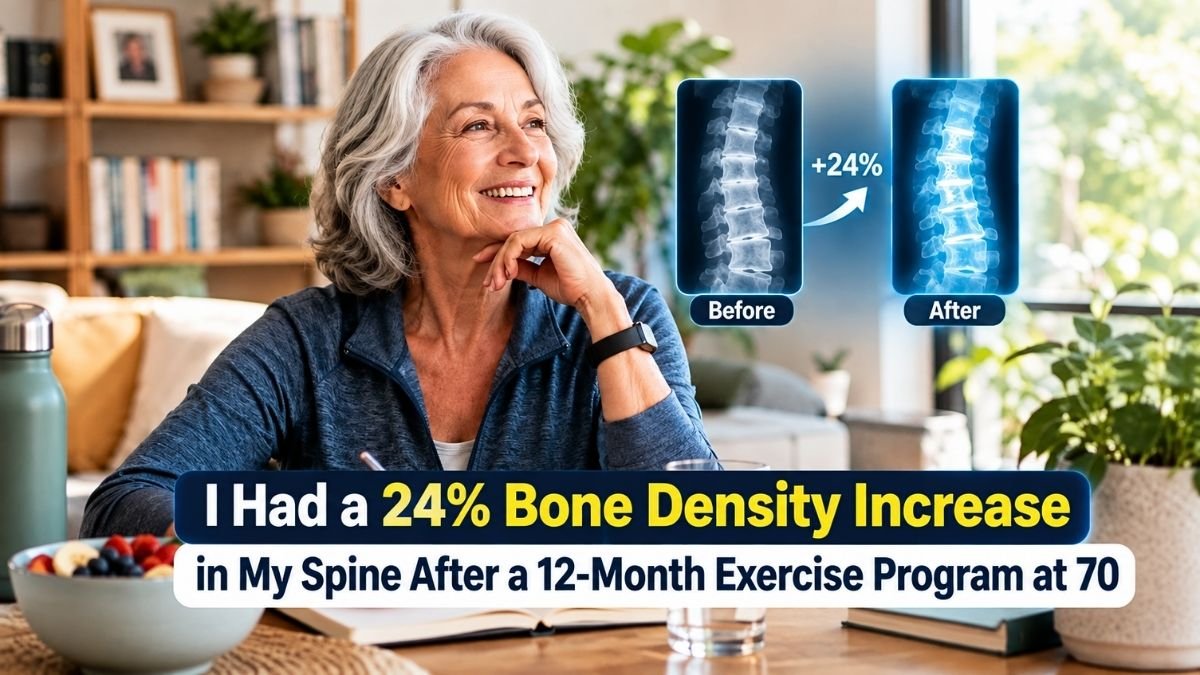
Carol’s doctor said the word osteoporosis, and everything else in the room went quiet. At 70, that word usually means a slow retreat. Less lifting. More caution. A creeping fear that one wrong step off a curb ends in a hospital bed and a walker.
Her doctor mentioned medication. Her daughter mentioned moving in with her. Instead, Carol picked a specific 12 month exercise program built around bone density, and her follow up scan showed a change her own doctor had to check twice.
Before making any changes based on this article, talk to your doctor, especially if you are currently taking medication or have a diagnosed bone condition.
What Actually Happened During Carol’s Program
Carol was diagnosed with low bone density in her lumbar spine at 69, the section of vertebrae in the lower back that takes the brunt of everyday movement. Her doctor cleared her for supervised exercise before starting medication, since her fracture risk score was not yet in the danger zone.
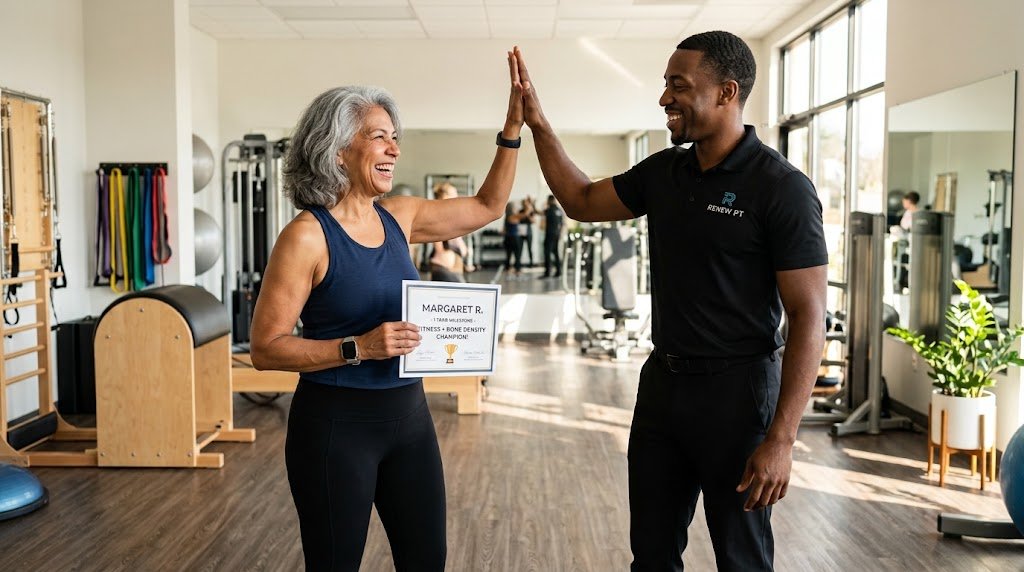
She joined a twice weekly resistance and impact program at a clinic that specializes in bone health, working with a trainer familiar with older adults and low bone density.
The sessions ran about 30 minutes each, twice a week, for 12 months straight.
At her one year rescan, her lumbar spine bone density had climbed 24 percent. That is a dramatic number, and it deserves an honest look, which is exactly what the research section below gives you.
Why This Kind Of Exercise Talks Directly To Your Spine
Bone is not a fixed structure like the frame of a house. It is living tissue that rebuilds itself constantly, guided by a principle scientists call Wolff’s Law: bone strengthens in response to the load placed on it, and weakens when that load disappears.
When your spine bears real weight, tiny fluid shifts inside the bone trigger cells called osteocytes to send a signal. That signal tells osteoblasts, the cells that build new bone, to lay down fresh material exactly where the stress happened.
This is why walking alone rarely moves the needle much for spine density. Walking is low impact and mostly loads the hips and legs.
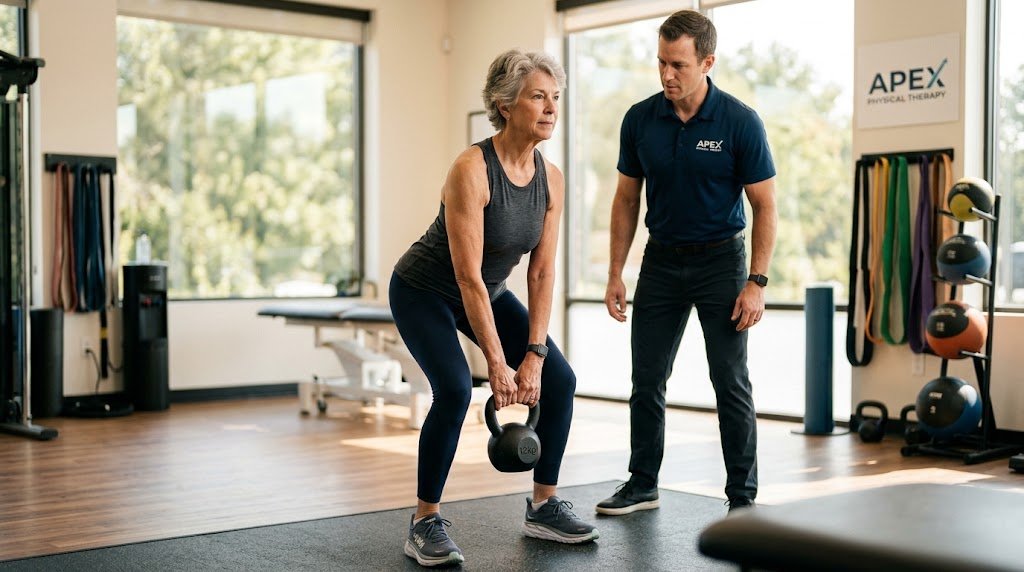
The spine needs its own targeted signal, usually delivered through resistance training, carrying load through the trunk, and controlled impact.
Bone density researchers at Griffith University in Australia tested this directly in a trial called LIFTMOR, short for Lifting Intervention for Training Muscle and Osteoporosis Rehabilitation.
Their 2018 findings, published in the Journal of Bone and Mineral Research, showed that supervised, high intensity resistance and impact training was both safe and effective for postmenopausal women with low bone mass, a group doctors had previously steered away from heavy lifting out of fracture fear.
The Numbers Researchers Actually Found (And Why 24% Is Rare)
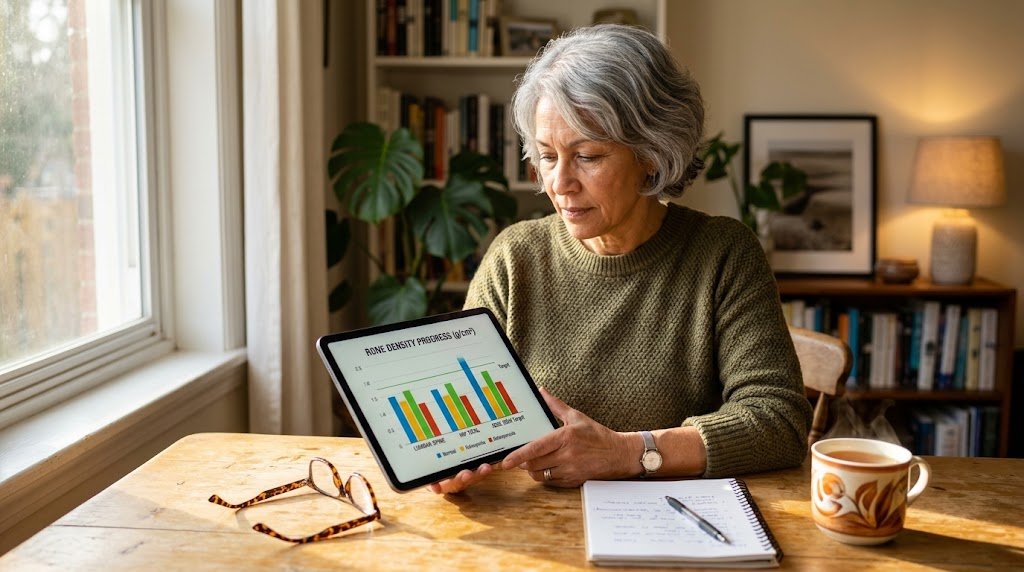
Here is where honesty matters more than hype. Most well designed studies on exercise and spine bone density show real, meaningful gains. They do not typically show gains anywhere near 24% in a single year.
The Evidence · Bone Density & Exercise
What the Research Actually Shows
Four studies, four different programs — all pointing the same direction.
Roughly 0.7% to 2.8% gain in spine bone density, compared with declining controls.
Meta-analysis pooling 18 studies, various journals.
2.9% gain versus a 1.2% loss in the control group.
Watson et al., Journal of Bone and Mineral Research, 2018.
6.3% gain in the exercise group versus losses in sedentary controls.
Small study, peer-reviewed exercise physiology research.
Spine loss was one quarter that of the control group, with larger hip gains.
Caplan et al., Australian Journal of Public Health.
A 24% increase sits well outside what any of these trials recorded. That does not mean Carol’s result is not real to her. It likely reflects a combination of factors research does not fully control for in one person’s story: a very low starting point where percentage gains look larger by math alone, natural variation between two scans, possible differences in scanner calibration or positioning between visits, and individual biology that simply responds faster than average.
Everyone’s body responds differently, so check with your doctor before trying this if you have an existing condition or take medication.
If your own results land closer to 2% to 6% after a year of consistent training, you are squarely in line with what the best research on this topic actually shows, and that is still a meaningful win for spine health.
Exactly How Carol Trained, Step By Step
Carol’s program mirrored the structure researchers use in high intensity resistance and impact training, adjusted to her starting fitness and cleared by her physician first.
Twice a week, she worked with a trainer through a warm up, then moved into three to five sets of five controlled repetitions on compound lifts that load the spine through the legs, hips, and trunk. A deadlift pattern was central, since pulling weight from the floor loads the lumbar spine directly along its natural axis.
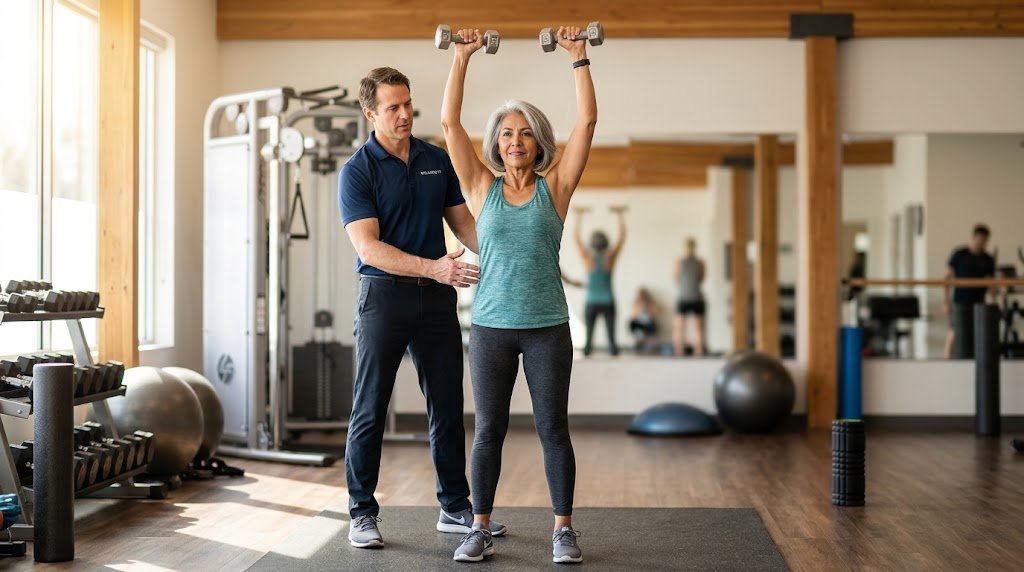
She also did a standing overhead press, weighted back extensions to strengthen the muscles that support the vertebrae, and controlled impact work like supervised drop landings once her strength base was established. Every session ended with a short cool down and a form check from her trainer.
The loads increased gradually as her strength improved, always staying below the point of strain or pain. Supervision mattered here. The original LIFTMOR trial reported only one minor adverse event across the entire study group, and that was because every session was closely monitored by a trained professional.
Try This Today
The Habit That Actually Moves The Needle
- Book a bone density scan if you have not had one in the last two years and you are a postmenopausal woman, since screening is recommended starting at 65.
- Add two short sessions a week of resistance work that loads your legs, hips, and back, even starting with light weights or resistance bands.
- Get a form check from a physical therapist or trainer experienced with low bone density before attempting anything heavy.
- Pair training with 1,200 milligrams of calcium and 800 to 1,000 IU of vitamin D daily, or whatever amount your doctor recommends based on your labs.
- Add a source of protein to each meal, since the muscle pulling on bone during exercise is part of what creates the building signal.
Warning Signs Your Spine Needs Attention Now
Stop And Call Your Doctor If You Notice
- Sudden back pain that is worse when standing or walking and eases when lying down.
- Noticeable height loss or a new rounding of the upper back.
- Sharp pain after a simple bend, cough, or lift that does not fade within a few days.
- Numbness, tingling, or weakness that spreads into your legs or arms.
These can signal a vertebral compression fracture, which happens when a weakened bone in the spine collapses under normal pressure. It is common enough that roughly one in five postmenopausal women experiences one in their lifetime, and many do not even realize it happened until a scan finds it.
What Your Bone Density Score Actually Means
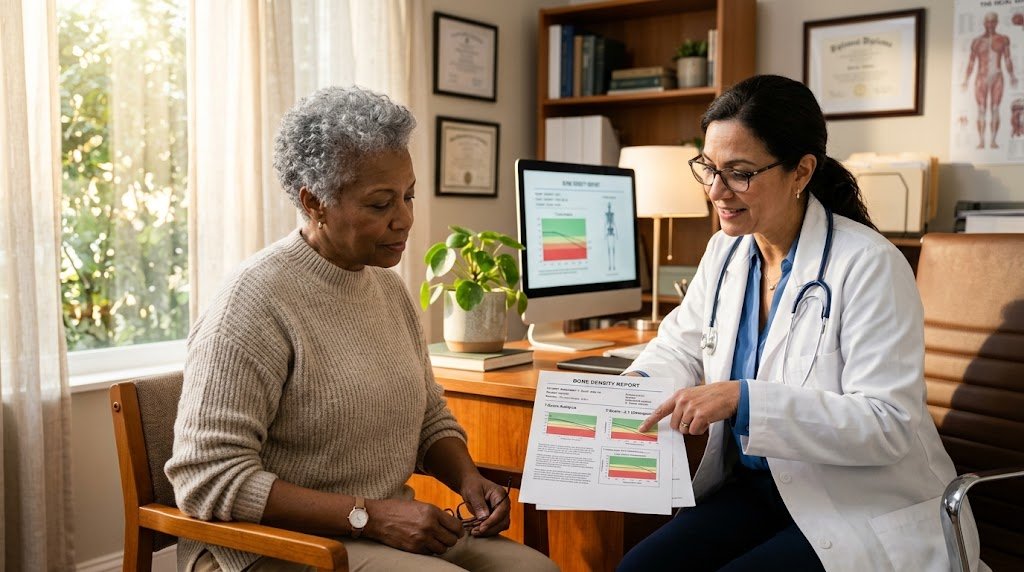
Before starting any program, it helps to understand the number your doctor is looking at. A DXA scan, the standard test for bone density, gives you a T score that compares your bones to a healthy young adult of the same sex.
Understanding Your Diagnostic Range
Three distinct clinical categories — defining bone health status and recommended response levels.
-1.0 or higher (Normal)
-1.0 to -2.5 (Osteopenia)
-2.5 or lower (Osteoporosis)
If your score falls into the middle or bottom row, that is exactly the population most of the exercise research above was built around, and it is also exactly why medical clearance matters before starting anything intense.
Questions People Ask Before Starting

Is a result like Carol’s realistic for me? Probably not at that exact percentage, but a meaningful, medically documented improvement is realistic if you train consistently for close to a year and follow a program built around resistance and controlled impact.
How long until a scan would show a change? Bone remodels slowly. Most doctors will not rescan for at least a year, since anything shorter often cannot separate a real change from normal scan to scan variation.
Who should avoid this type of training? Anyone with a recent fracture, severe osteoporosis without medical clearance, uncontrolled heart conditions, or balance issues that raise fall risk should be evaluated by a doctor and likely a physical therapist before attempting resistance or impact work.
What is the most common mistake? Going too light. A weight that feels easy will not create the mechanical signal bone needs to respond. The other common mistake is skipping supervision on technique, especially for lifts like the deadlift pattern that load the spine directly.
The Bottom Line,
Carol’s number is hers, and it is on the far edge of what research documents. What the science does solidly support is that targeted resistance and impact training, done consistently and safely, is one of the few interventions shown to meaningfully slow or reverse spine bone loss rather than just slowing the decline.