

You finally fall asleep. Then it hits you. That pressure in your bladder that won’t let you ignore it. So you get up, again, and your sleep is broken for the third time tonight.
This has a name. Doctors call it nocturia (the medical term for waking up at night to pee). It’s common. About 40% of adults ages 18 to 79 deal with it. If you’re tired of waking up to pee, here are 9 real, research-backed ways to sleep through the night again.
Point One: Fix Your Fluid Timing, Not Just Your Fluid Intake
Most people think the fix is simple. Drink less water. But that’s not the full answer.
The real problem is often timing, not amount. If you drink most of your water late in the day, your body has to process it all at once, right when you’re trying to sleep.
Try this instead. Drink more water in the morning and afternoon. Taper off 2 to 3 hours before bed. Sip slowly in the evening instead of gulping a full glass.

Cleveland Clinic recommends cutting back on liquids in the two hours before bed as one of the simplest ways to reduce nighttime trips.
One warning. Don’t cut your water too much. Concentrated urine can irritate your bladder and make things worse, not better. The goal is spacing your fluids out, not starving yourself of them.
Point Two: Cut Back on Evening Salt
Had a salty dinner and woke up puffy and needing to pee twice? That’s not a coincidence.
Salt pulls extra fluid into your bloodstream. During the day, that fluid sits in your tissues. At night, your kidneys have to process it, and that means more trips to the bathroom.

This one has real numbers behind it. In one study, patients who lowered their daily salt from about 10.7 grams to 8 grams cut their nighttime bathroom trips from roughly 2.3 down to 1.4 per night. That’s a big change from one simple habit.
You don’t need to obsess over every meal. Just pay attention to dinner. Go easy on processed food, salty sauces, and takeout in the evening. Save the saltier meals for lunch instead.
Point Three: Watch Caffeine and Alcohol After Lunch
That afternoon coffee or evening glass of wine might be part of your problem.
Both caffeine and alcohol are diuretics. That means they push your body to produce more urine. Caffeine also irritates the bladder wall directly, which can make you feel like you need to go even when your bladder isn’t full.

Alcohol works differently. It blocks a hormone that normally tells your kidneys to slow down urine production at night.
The fix is simple. Set a cutoff time. Many experts suggest stopping caffeine by noon, or at least avoiding it after lunch. Same goes for alcohol. Have that drink earlier in the evening, not right before bed.
Point Four: Elevate Your Legs and Try Compression Socks
Notice your ankles look puffier by the end of the day? That swelling is connected to your nighttime bathroom trips too.
During the day, fluid collects in your legs and feet, especially if you sit or stand a lot. When you lie down at night, that fluid moves back into your bloodstream and heads to your kidneys. Your body then needs to get rid of it, and that wakes you up.
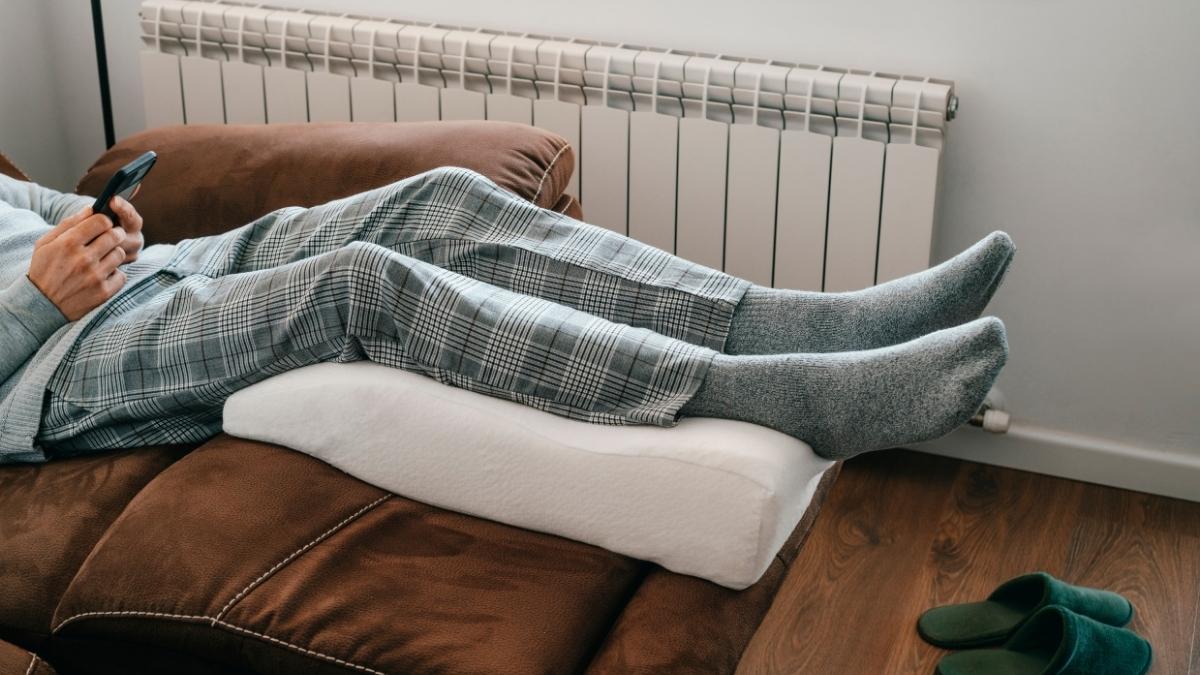
You can get ahead of this. Elevate your legs for 20 to 30 minutes in the late afternoon or early evening. Wear compression socks during the day if you’re on your feet a lot. A small study on compression stockings found they showed real promise for reducing nighttime urination. It’s a low-effort fix worth trying.
Point Five: Strengthen Your Pelvic Floor
If you feel a sudden, strong urge to pee even when your bladder isn’t full, weak pelvic floor muscles could be part of the reason.
These muscles support your bladder and help you control when you go. When they’re weak, your bladder can send false urgency signals, especially at night when your body is more relaxed.

The good news is you can strengthen them at home. Here’s a basic routine:
- Empty your bladder first.
- Tighten your pelvic muscles for 3 to 5 seconds.
- Relax for 3 to 5 seconds.
- Repeat this 10 times.
Do this once or twice a day. If nighttime urges don’t improve after a few weeks, a pelvic floor therapist can help with more targeted training.
Point Six: Train Your Bladder With Timed Voiding
Do you pee “just in case” before bed, even when you don’t really need to? That habit can actually train your bladder to expect frequent trips, day and night.
Bladder training works the opposite way. Instead of going the moment you feel an urge, you go on a schedule and slowly stretch out the time between bathroom trips. Over weeks, your bladder learns to hold more without sending a false alarm.

This isn’t an overnight fix, but it works. Most people notice a difference within 3 to 6 weeks. Results tend to get more reliable after 8 to 12 weeks of sticking with it. It pairs well with the pelvic floor exercises from Point Five, since stronger muscles make it easier to hold off when the urge hits early.
Point Seven: Rule Out Sleep Apnea
Here’s one most nighttime-urination articles never mention. If you snore, wake up tired even after a full night, or your partner has noticed you gasping in your sleep, your nighttime bathroom trips might not be about your bladder at all.
Sleep apnea disrupts a hormone called ADH (the hormone that normally tells your kidneys to slow down urine production overnight). When your breathing is interrupted repeatedly through the night, that hormone doesn’t rise the way it should.

Your kidneys keep producing urine at daytime levels, and your bladder fills up faster than normal. People with sleep apnea often wake up feeling like their bladder is full, even when the actual urine volume isn’t that high.
This connection matters because treating the sleep apnea can treat the nocturia too. People who use CPAP therapy consistently often cut their nighttime bathroom trips by about 1 to 2 per night. If snoring and nighttime peeing are both happening, bring both up at your next doctor visit. They’re likely connected.
Point Eight: Review Medication Timing With Your Doctor
Before anything else in this section: never stop or change a medication on your own. Talk to your doctor first. This tip is about timing, not about adjusting your dose yourself.
Some common medications can add to nighttime urination. Diuretics (“water pills”) used for blood pressure are the most common culprit. Certain antidepressants and calcium channel blockers can also play a role for some people.

If you take any of these, ask your doctor whether the timing can shift. Taking a diuretic earlier in the day, for example, gives your body more time to process it before bed. This is a quick conversation that can make a real difference, and your doctor can tell you if it’s safe for your specific situation.
Point Nine: Keep a Bladder Diary and Know When to See a Doctor
If you’re not sure what’s actually driving your nighttime trips, a bladder diary can help you and your doctor spot the pattern.
For a few days, jot down when you drink fluids, what you drink, when you pee, and roughly how much. This kind of tracking makes it much easier for a doctor to figure out what’s going on, instead of guessing based on memory.

It’s also worth knowing when this needs medical attention, not just home fixes. See a doctor if:
A Cleveland Clinic urologist, Dr. Emily Slopnick, points out that while there are small, effective changes people can make on their own, frequent nighttime urination can sometimes point to an underlying condition that’s worth checking with a doctor. Don’t wait it out if something feels off.
Final Thoughts,
You don’t need to try all nine tips at once. Pick two that fit your life, maybe fluid timing and cutting evening salt, and start there. Small changes add up. If nighttime peeing keeps disrupting your sleep after a few weeks, see a doctor. You deserve a full night’s rest.