

Something has been off for a while, and you know it. Most men who feel tired, gain belly fat, or lose strength assume it is just aging, when a drop in testosterone may be a signal that their heart is already under stress.
Men over 40 who feel slower, heavier, or less energetic often write these changes off to a busy schedule or poor sleep. They do not connect them to a hormone.
They do not connect that hormone to their heart. By the end of this article, you’ll know exactly what the low testosterone heart health connection looks like in the body, why it matters beyond the bedroom, and one clear step you can take at your next doctor’s appointment.
The Signal Your Body Has Been Sending You
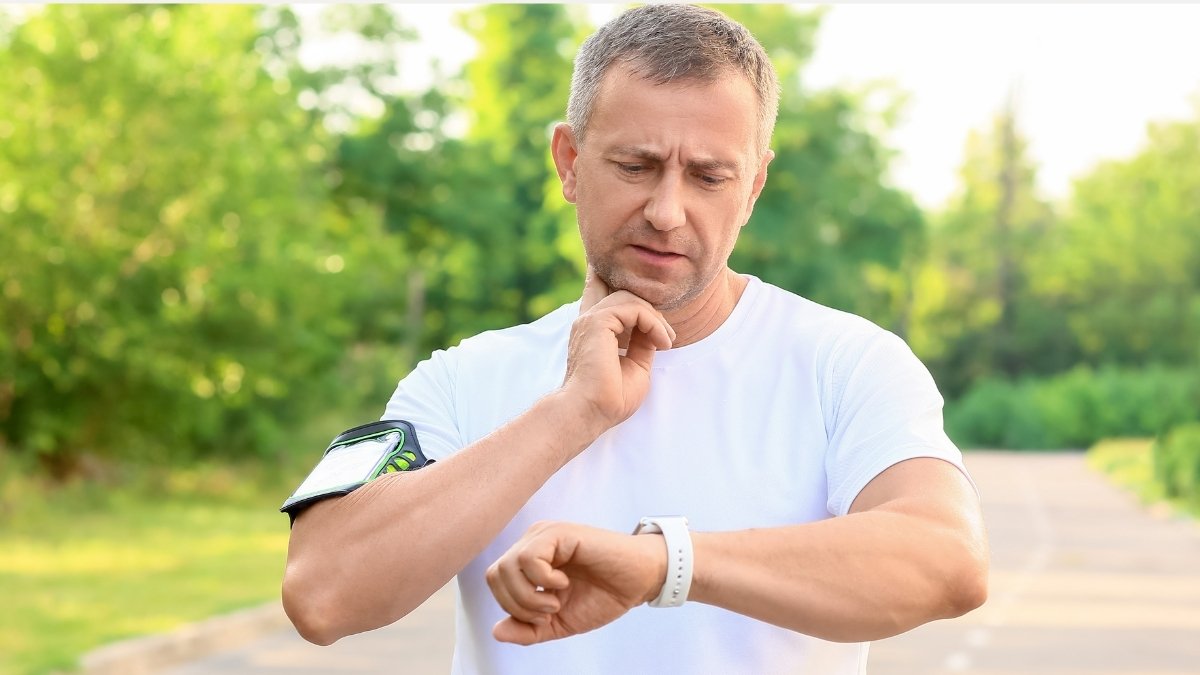
You feel it before you name it. The energy you used to have just is not there. You wake up tired. You skip things you used to do. Men over 40 who feel slower, heavier, or less energetic are living with the symptoms of low testosterone every day without realizing the hormone is part of what’s changed.
This is one of the clearest entry points into the low testosterone heart health conversation, and most men miss it entirely.

Testosterone declines with age. After age 30, levels drop roughly 1 to 2 percent each year in most men.¹ But there is a difference between a gradual, expected decline and a sharper, faster drop. That faster drop is what this article is about.
US national data tells part of the story. The average total testosterone in young American men fell from 605 ng/dL in 1999 to 2000 to 451 ng/dL by 2015 to 2016, based on analysis of 4,045 men in national health surveys.¹ That is a population-wide shift across roughly 15 years, not the slow hormonal drift of individual aging.
The symptoms that follow a drop in testosterone are easy to blame on everything else. The Hypogonadism in Males study found that approximately 38.7% of men aged 45 and older have low testosterone levels, with persistent fatigue being among the most common complaints.² Most of these men attributed their tiredness to work, stress, or just getting older.
The missed connection is this: the same system that produces testosterone is closely linked to the cardiovascular system.³,⁴ When one starts to struggle, the other often follows. The next section explains exactly what that looks like in the body before a single symptom becomes a diagnosis.
Why Your Arteries Feel It Before You Do
You don’t feel your artery walls getting stiffer. That’s the problem. By the time most men notice something is wrong, the cardiovascular system has already been under strain for some time. Testosterone does not just affect muscle and drive. Your testosterone level is not just a number about your sex drive: it is a running report on how your blood vessels are holding up.
Here’s the specific chain of events. Testosterone helps the walls of blood vessels stay flexible and responsive.³ When levels drop, a chemical called endothelin-1 [a signaling protein made by artery walls that tells blood vessels to tighten] rises.
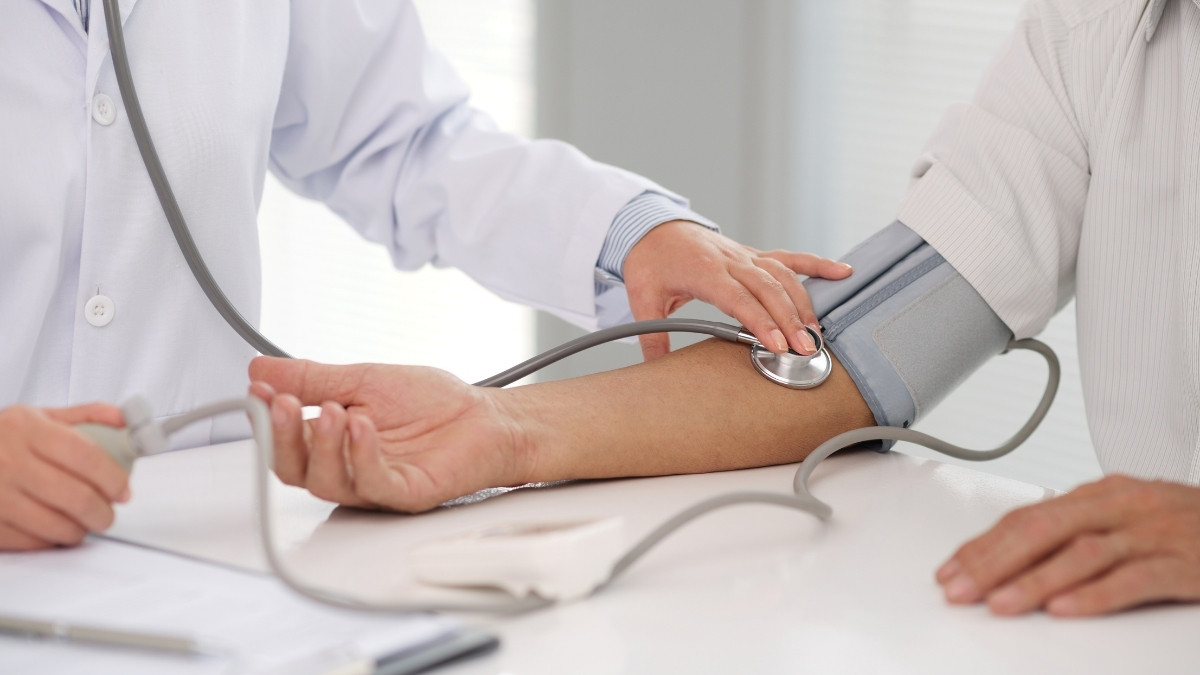
A 2025 study of middle-aged and older men found that those with low testosterone had significantly higher endothelin-1 levels and measurably worse brachial artery flow compared to age-matched men with normal testosterone.³
Stiffer arteries mean the heart works harder to push blood through the body.⁴
A separate study of 455 men with no known cardiovascular disease found that lower testosterone was independently associated with higher aortic stiffness [a measure of how rigid the main artery leaving the heart has become], as measured by pulse wave velocity.
The effect was most pronounced in younger men and in those with higher blood pressure.⁴
The connection to testosterone arteries health is direct, not theoretical. Research cited in a Journal of Endocrinology review suggests that men receiving therapy to block testosterone production for prostate cancer may develop measurable arterial stiffening within months.⁵
None of these changes announce themselves. No chest pain. No alarm. Just a hormone level quietly tracking downward while the arteries adapt in ways that make a future cardiac event more likely. What the research says about exactly how much more likely is where the next section goes.
CALLOUT BLOCK: Save This
Three arterial warning signs connected to low testosterone in men:
- Your blood pressure is creeping up without a clear reason
- Your resting heart rate has increased over the past year
- You feel short of breath during mild activity you handled easily before

These are not diagnostic. They are reasons to get a blood test before you assume it’s just age. Talk to your doctor before making any changes to your supplement routine, exercise program, or diet, especially if you manage a chronic condition or take medication.
What the Research Shows About Low Testosterone and Heart Health
This is the part most health articles soften too much or skip entirely. The data on low testosterone and cardiac risk is real, consistent across large studies, and worth reading clearly. You’re not reading a verdict. You’re reading a risk profile.
The most important study to come out recently is an individual participant data meta-analysis of 11 prospective cohort studies covering 24,109 men across Australia, Europe, and North America.

It found that men with baseline testosterone below 7.4 nmol/L (213 ng/dL) had a higher risk of all-cause mortality, even after adjusting for age, body mass index, and other cardiovascular risk factors.
Men with testosterone below 5.3 nmol/L (153 ng/dL) had a higher risk of dying from cardiovascular disease specifically.⁶
A second study using NHANES data found low testosterone, defined as at or below 300 ng/dL, in 70.68% of male cardiovascular disease patients in the database. Those men with low testosterone had significantly higher all-cause mortality compared to patients with normal levels.⁷ The mean age of patients in this study was 66 years.
Important language here. These are observational studies. They show association, not proven cause-and-effect. Low testosterone may be a marker of poor cardiovascular health rather than a direct driver of it.
Both possibilities point toward the same action: pay attention to the number and talk to your doctor. A low reading warrants a full cardiovascular review, not just a hormone conversation.

The low testosterone heart health link, in plain terms: men with the lowest testosterone levels consistently show up in the highest-risk groups for both heart disease and early death. That pattern holds across multiple continents and over 24,000 men. It does not prove causation. What comes next is what the data cannot give you: a clear action to take today.
The Belly Fat, Blood Sugar, and Testosterone Trap
You’ve probably noticed that belly fat seems harder to lose after 40. What most men don’t realize is that the fat isn’t just sitting there. It’s actively interfering with testosterone production, and low testosterone is making it harder to lose the fat.
For men dealing with testosterone belly fat challenges, that loop also pushes blood sugar in the wrong direction.⁹
Visceral fat [fat stored around the organs inside the abdominal cavity, not the fat just under the skin] acts as a hormonally active tissue. Research suggests it may release inflammatory chemicals that appear to suppress the brain signals needed for testosterone production in the testes.⁸

This appears to create a bidirectional relationship: more belly fat is associated with lower testosterone, and lower testosterone is linked to further fat accumulation.⁸
The blood sugar piece completes the trap. Research has found hypogonadism [clinically low testosterone production] prevalence of up to 50% in men with type 2 diabetes.⁸
And lower testosterone appears to reduce the body’s ability to use insulin properly, independent of body weight changes.⁹
The low testosterone heart health connection deepens here: each component of the trap, insulin resistance, inflammation, and low testosterone, is itself a risk factor for heart disease. When all three appear together in the same person, the risk compounds.
This is also good news. It means that breaking the loop in one place helps all three.
Reducing visceral fat lowers inflammation, which allows the hypothalamic-pituitary system to produce more testosterone, which improves insulin sensitivity, which makes it easier to continue losing fat. You do not need to fix everything at once.

You need a starting point. Section 6 covers that. Section 5 covers what to do before you leave your next doctor’s appointment.
What to Ask Your Doctor Before You Leave the Room
Most men don’t ask about the low testosterone heart health link at a routine checkup. Most doctors don’t bring it up unprompted. That gap is where a lot of early cardiovascular risk sits, undetected and unaddressed.
You do not need to walk in as an expert. You need two or three sentences that open the right conversation.
Here is what to say:
“I’d like a fasting morning testosterone test.” The Endocrine Society recommends measuring total testosterone in the morning, when levels are naturally at their highest, using a fasting sample.¹⁰
If the result is low, the guideline recommends confirming it with a second morning test on a separate day before any diagnosis is made. About 30 percent of men whose first test reads low will have normal levels on the retest.¹⁰

“If my testosterone is low, can we also look at my cardiovascular risk?” This is the question most men never think to ask. A complete picture commonly includes blood pressure, fasting glucose, a lipid panel, and waist circumference. These numbers together tell a far more complete story than any single value alone.
“What threshold are you using?” Labs differ. The generally accepted low cutoff used in peer-reviewed research is 300 ng/dL, though some guidelines and labs use different numbers. Knowing which threshold your doctor is working from helps you understand what the result actually means.¹¹
A low result is not a sentence. What that conversation can reveal, and what you can do before you ever make the appointment, is in the next section.
What You Can Do Starting Today
The most useful thing about improving low testosterone heart health is that the lifestyle habits involved support both systems at the same time. You’re not managing two separate health projects. You’re working one list that serves both systems.
Here is what the research supports:

- Lift weights consistently. A study of lifelong sedentary aging men found that a structured exercise program significantly improved free testosterone levels.¹² Compound movements that use large muscle groups, like squats, deadlifts, and rows, produce the most consistent hormonal response.
- Protect your sleep. In a JAMA study of healthy young men, restricting sleep to five hours per night for just one week caused daytime testosterone levels to drop by 10 to 15 percent.¹³ That’s a drop comparable in scale to aging a decade or more in seven days.
- Cut visceral fat, not just weight. Weight loss that targets the abdomen specifically reduces the inflammatory load on the hypothalamic-pituitary axis and can meaningfully improve testosterone over time. As noted in Section 4, breaking the belly fat loop has cascading effects.
None of these are experimental. None require a prescription. They are the same interventions a cardiologist and an endocrinologist would both recommend at the same appointment for different reasons.
The habits that support testosterone and the habits that protect your heart are the same list.
At the Last,
The most important thing you can do today is make the appointment and ask for the test. Ask your doctor to test your testosterone level at your next visit and request a cardiovascular risk review at the same time.

One blood draw can open a conversation that most men delay by years while the early signs sit in plain sight. The low testosterone heart health connection is not a personal failing and it goes well beyond sex drive.
For men over 40, it’s a signal worth reading before it becomes a diagnosis.
REFERENCES
- Lokeshwar SD et al. Decline in Serum Testosterone Levels Among Adolescent and Young Adult Men in the USA. European Urology. 2020. https://pubmed.ncbi.nlm.nih.gov/32081788/
- Corona G et al. Hypogonadism in Males (HIM) study findings on prevalence of low testosterone in men aged 45 and older, with fatigue as a primary symptom. Referenced in: Burnett-Bowie SA et al. Prevalence of Symptomatic Androgen Deficiency in Men. Journal of Clinical Endocrinology and Metabolism. 2007. https://academic.oup.com/jcem/article/92/11/4241/2598366 [NEEDS VERIFICATION: HIM study primary source not returned directly by search; prevalence figure confirmed via secondary clinical reference]
- Moreau KL et al. Endothelial dysfunction in middle-aged and older men with low testosterone is associated with elevated circulating endothelin-1. American Journal of Physiology: Heart and Circulatory Physiology. 2025. https://pubmed.ncbi.nlm.nih.gov/39887085/
- Vlachopoulos C et al. Testosterone deficiency: a determinant of aortic stiffness in men. Atherosclerosis. 2014. https://pubmed.ncbi.nlm.nih.gov/24529157/
- Smith JC et al. Increased insulin sensitivity and free testosterone in men receiving androgen deprivation therapy developing arterial stiffness. Referenced in: Harvey JM et al. Testosterone: a vascular hormone in health and disease. Journal of Endocrinology. 2013. https://joe.bioscientifica.com/view/journals/joe/217/3/R47.xml [NEEDS VERIFICATION: arterial stiffening timeline from ADT referenced in review; primary Smith et al. source not directly retrieved]
- Yeap BB et al. Associations of Testosterone and Related Hormones With All-Cause and Cardiovascular Mortality and Incident Cardiovascular Disease in Men: Individual Participant Data Meta-analyses. Annals of Internal Medicine. 2024. https://www.acpjournals.org/doi/10.7326/M23-2781
- Li X et al. Association between Low Serum Testosterone Levels and All-cause Mortality in Patients With Cardiovascular Disease: A Study Based on the NHANES Database. Frontiers in Cardiovascular Medicine. 2025. https://pmc.ncbi.nlm.nih.gov/articles/PMC11909012/
- Grossmann M, Matsumoto AM. Testosterone and insulin resistance in the metabolic syndrome and T2DM in men. Nature Reviews Endocrinology. 2013. https://pubmed.ncbi.nlm.nih.gov/23797822/
- Dhindsa S et al. Low Testosterone Associated With Obesity and the Metabolic Syndrome Contributes to Sexual Dysfunction and Cardiovascular Disease Risk in Men With Type 2 Diabetes. Diabetes Care. 2011. https://diabetesjournals.org/care/article/34/7/1669/38648/
- Bhasin S et al. Testosterone Therapy in Men With Hypogonadism: An Endocrine Society Clinical Practice Guideline. Journal of Clinical Endocrinology and Metabolism. 2018. https://academic.oup.com/jcem/article/103/5/1715/4939465
- Finkle WD et al. Veterans Affairs cohort study; 300 ng/dL threshold for low testosterone. Referenced in: Association of testosterone therapy with mortality, myocardial infarction, and stroke in men with low testosterone levels. JAMA. 2013. https://pubmed.ncbi.nlm.nih.gov/24193080/
- Hayes LD et al. Exercise Training Improves Free Testosterone in Lifelong Sedentary Aging Men. Endocrine Connections. 2017. https://pubmed.ncbi.nlm.nih.gov/28515052/
- Leproult R, Van Cauter E. Effect of 1 Week of Sleep Restriction on Testosterone Levels in Young Healthy Men. JAMA. 2011. https://stacks.cdc.gov/view/cdc/212252