
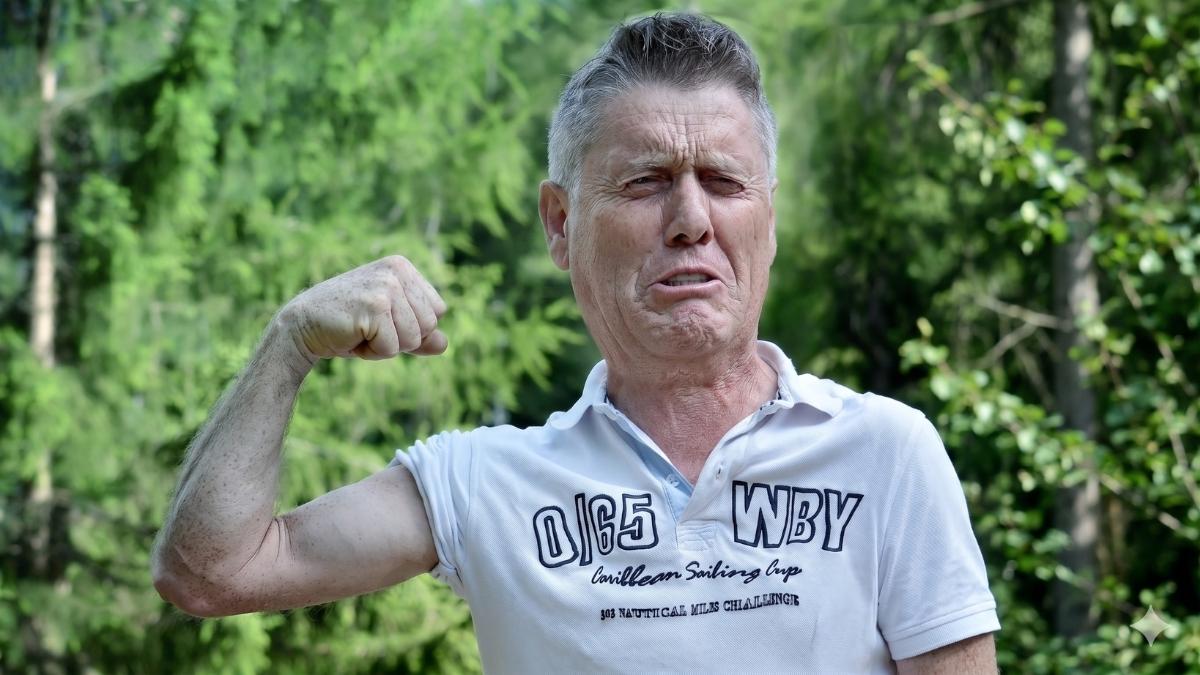
You are probably aging faster than your birth certificate says. And the reason is not your diet, your genes, or your stress levels. It is your muscles.
Most people feel it before they understand it. You get tired faster. You recover slower. Climbing stairs feels harder than it used to. Carrying groceries feels like a workout. You blame it on “getting older.” But that explanation is incomplete.
Science now shows that muscle weakness is not just a side effect of aging. It is one of the main causes of it. Your muscles control your metabolism, your hormones, your cellular repair, and even how fast your DNA ages.
The good news? This is fixable. You do not need a gym membership or a complicated plan. You need the right information and a few hours per week. This article gives you both.
Your Body Starts Losing Muscle at 30 — Whether You Notice It or Not
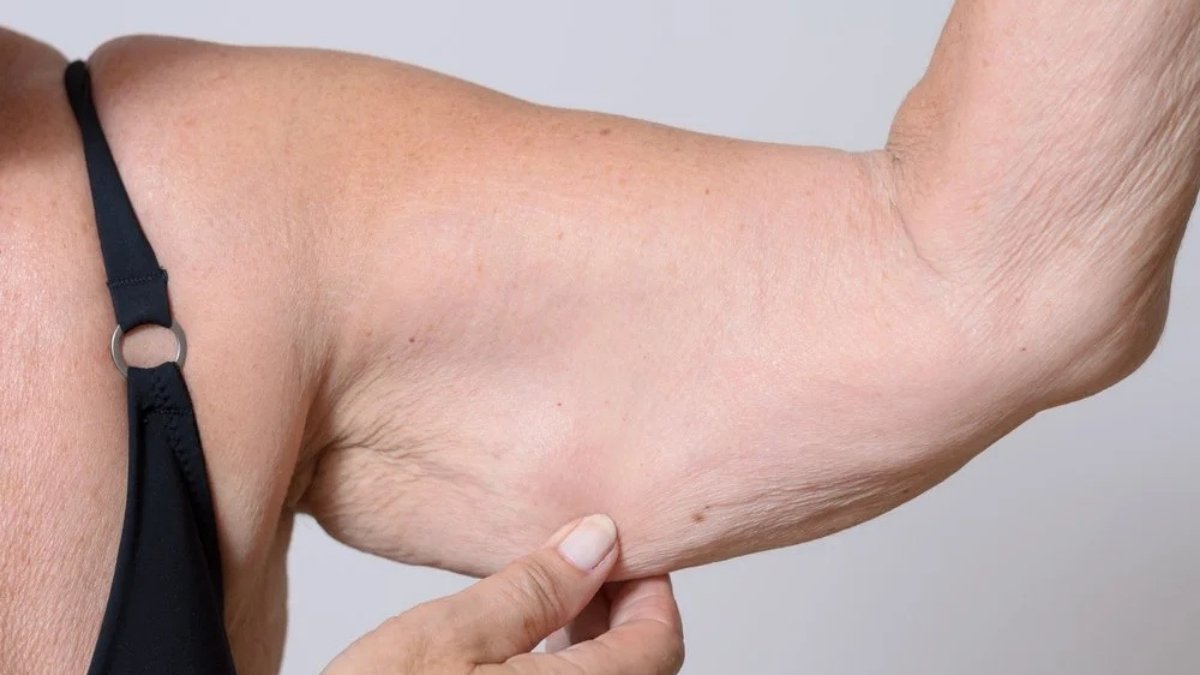
Most people think serious muscle loss happens in old age. Research says it starts at 30.
After age 30, adults lose 3 to 8 percent of their muscle mass every decade. Everyone loses muscle with age, typically about 3 to 5 percent each decade after age 30. Inactive people lose the most. Most men will lose about 30 percent of their total muscle mass over their lifetime, according to Harvard Health.
You probably won’t feel it right away. The loss is slow and silent in your 30s. By your 40s, it gets noticeable. By your 50s and 60s, it becomes a real problem.
A groundbreaking Swedish study that tracked people for nearly 50 years found that physical strength and fitness start slipping around age 35 — not 60, as most assume. The decline then worsens gradually over time. ScienceDaily
After age 60, the rate of muscle loss picks up sharply. Between ages 65 and 80, you may lose as much as 8 percent of your muscle mass each decade. The risk only increases as you get older. Cleveland Clinic
This is not just about looking softer or feeling weaker. Muscle loss is the root driver of faster biological aging. It affects your energy, your bone strength, your metabolism, and your risk of chronic disease. Ignore it now and pay for it later.
The Science: How Muscle Weakness Directly Ages Your Cells

Two people can both be 50 years old. One has the biology of a 42-year-old. The other has the biology of a 61-year-old. What is the difference? Muscle.
For the first time, researchers found that muscle weakness — marked by grip strength, a proxy for overall strength — is directly associated with accelerated biological age. Results were measured using age acceleration clocks based on DNA methylation, which provides a molecular estimate of how fast the body is actually aging. ScienceDaily
Think of DNA methylation like a biological timestamp. It tells scientists not how old you are on paper, but how fast your cells are aging on the inside. Weak muscles speed that clock up.
Scientists from the Wellcome Sanger Institute and Sun Yat-sen University discovered that genes controlling ribosomes — the parts of cells responsible for producing proteins — become less active in aged muscle stem cells. This stops the body from repairing and regenerating muscle fiber properly as you age. ScienceDaily
Research from Columbia University Medical Center went even deeper. Scientists found that sarcopenia occurs when calcium leaks from a group of proteins in muscle cells called ryanodine receptor channel complexes. These leaks trigger a chain of events that limits the ability of muscle fibers to contract. Columbia University Irving Medical Center
In short, weak muscles stop your cells from repairing themselves. That speeds up aging from the inside out.
What Experts Are Now Saying About Muscle and Aging

The medical view on muscle loss has changed. Experts used to treat it as an unfortunate side effect of growing older. Now they call it a cause of aging itself.
Research now shows that muscle weakness itself is often more predictive of negative health outcomes than even muscle mass loss. Low muscle strength is a biomarker that predicts future disease and death over the long term. medrxiv
A large-scale genetic analysis of over 250,000 people aged over 60 identified specific biological mechanisms that push some people toward sarcopenia while protecting others — meaning your lifestyle choices can activate or suppress those genetic tendencies. ScienceDaily
Doctors are now using low grip strength as a clinical screening tool. It tells them what your health will likely look like 10 to 20 years from now. It is a preview of your future body.
Pamela Webert, MS, ACSM-CEP, Exercise Physiologist at Henry Ford Health, puts it simply: “Everyone should be doing strength training as part of their exercise program. It’s never too late to start.”
A 2025 study in GeroScience followed older men through 12 weeks of resistance training and found that lifting weights reduced key aging-related genes in their muscle tissue, making it function biologically younger. Participants also improved their mitochondrial function — meaning better energy production and recovery at the cellular level. gulfnews
The Numbers That Prove Fixing This Works

Here is where it gets exciting. The same science that explains the problem also proves you can reverse it.
A study published in the journal Biology analyzed telomere length — the protective caps on your DNA that shorten as you age — in 4,814 US adults. Regular strength training was strongly linked to longer telomeres and measurably less biological aging. mdpi
People doing 90 minutes of strength training per week showed biological markers of being 3.9 years younger. Those doing 180 minutes per week — about an hour, three times a week — showed markers of being nearly 8 years younger, to be exact, 7.8 years. yahoo
A separate study found that sedentary middle-aged women reduced their epigenetic age by two full years after just 8 weeks of combined aerobic and strength training. Aging-US
A sweeping review of over 200 studies found that structured exercise like aerobic and strength training has stronger anti-aging effects than casual activity, with measurable reductions in biological age across multiple organs — not just muscles. ScienceDaily
And if you think it is too late to start? Adults who became active later in life still improved their physical performance by up to 10 percent. The research is clear. Starting late still works. ScienceDaily
Warning Signs You Are Already Losing Too Much Muscle

Before you fix the problem, you need to know if you already have it.
These are real warning signs backed by clinical criteria, not just general fitness talk.
Early Signs of
Sarcopenia
Unexpected Weakness
Struggling with getting out of chairs, opening jars, or carrying groceries are early signs doctors watch for.
Slowed Walking
Clinicians use gait speed as a formal diagnostic marker. If you walk slower than you used to, it’s a measurable signal.
Increased Falling
People with sarcopenia have 2.3 times the risk of low-trauma fractures from falls (broken hip, collarbone, wrist).
Sarcopenic Obesity
Your weight stays the same but you look softer. As muscle shrinks, fat replaces it. The scale does not always tell the truth.
Quick Home Check
The SARC-F is a 5-question clinical screening tool used by doctors worldwide. It takes less than 2 minutes to complete. A score of 4 or more means you need further testing.
If any of these sound familiar, the plan below is exactly where to start.
The Fix: Your Simple Weekly Plan to Stop Aging Faster

This is not a complicated program. It is the minimum effective dose based on what the research actually supports.
1. Resistance Training — 2 to 3 Days Per Week Do compound movements: squats, deadlifts, rows, chest presses, and lunges. These work multiple muscles at once and produce the strongest hormonal response. If you are a beginner, start with bodyweight versions — chair squats, wall push-ups, and resistance bands. Aim for 45 to 60 minutes per session.
2. Protein — Eat More Than You Think You Need A 2022 review in Nutrients recommends going above the standard 0.8g per kilogram of body weight. A realistic target is 1.2 to 1.6g per kilogram daily. For a 154-pound (70kg) adult, that is 84 to 112 grams per day. Focus on eggs, chicken, Greek yogurt, cottage cheese, lentils, and tofu.
3. Break Up Sitting — Every 90 Minutes Sitting for long stretches accelerates muscle loss on its own, even if you exercise. Set a timer. Stand up. Walk for 5 minutes. That small habit adds up across a week.
4. Sleep — 7 to 9 Hours Muscle repair happens while you sleep. Poor sleep raises cortisol, which breaks down muscle tissue. This is not optional recovery. It is when the actual rebuilding happens.
5. Add One Fermented Food Daily A study analyzing 5,368 people from the NHANES dataset found lower rates of sarcopenia in people who regularly ate fermented foods. Add one serving of sauerkraut, kefir, or plain yogurt per day. It is the easiest upgrade on this list.
Your Weekly
Framework
Monday
45-min strength session (lower body)
Wednesday
45-min strength session (upper body)
Friday
45-min full body or brisk walk
Daily
100g+ protein, one fermented food, stand up every 90 minutes
Every Night
7 to 9 hours of sleep
Lastly,
Muscle weakness is not just a fitness problem. It is directly tied to how fast your body ages at the molecular level — and researchers now use it as a marker for predicting chronic disease and early death. The fix is not complicated. Two to three strength sessions per week, enough protein, and consistent sleep. That is it. Start this week. Your biology will respond.
Please Read Our
Medical Disclaimer
Savvy Hipster is for informational purposes only and is not a substitute for professional medical advice, diagnosis, or treatment. Always consult a qualified healthcare professional before making any changes to your diet, exercise, or supplement routine.
Health results vary individually, and you should stop immediately and seek medical help if any unusual symptoms occur. By using this website, you take responsibility for your own health decisions.