

Something shifts after 55, and most people notice it before their doctor does. Stairs feel steeper, and conversations take more effort. Your world gets a little smaller each year.
Ignore it, and the slide tends to speed up. Muscle thins, friendships fade, and independence gets harder to protect. Stanford Medicine researchers reported that many of the body’s molecules shift sharply around age 60, so the years just ahead matter more than most people realize.
Here is the good news: researchers at Harvard, Johns Hopkins, and other major institutions keep pointing to a short list of habits after 55 that make a measurable difference, and some are simpler than you would expect. One of them has nothing to do with the gym or the kitchen.
Below are all five, plus an honest look at where the headlines run ahead of the science, because the full picture is more useful than the hype.
The Five Habits Researchers Keep Returning To
Each habit below comes with the research behind it, the reason it works, and one step you can take this week. First, a quick snapshot of how firm the evidence is for each one.
1. Take More Steps, Just Not 10,000

The number everyone knows has a shaky origin. Researchers behind a 2022 Lancet Public Health meta analysis point out that 10,000 steps a day came from a marketing campaign in Japan, not from evidence. Their analysis pooled 15 studies covering 47,471 adults and 3,013 deaths.
Among adults 60 and older, the risk of early death kept falling as steps rose, then leveled off at about 6,000 to 8,000 steps a day. That is the closest age group to this one, so treat it as a sensible target, not a guarantee.
Researchers at Brigham and Women’s Hospital and Harvard Medical School found good news for people who barely move. In a 2019 JAMA Internal Medicine study of 16,741 women with an average age of 72, those averaging about 4,400 steps a day had lower death rates than those averaging about 2,700. Pace mattered less than total steps once the daily count was taken into account.
A 2025 systematic review and meta analysis in Lancet Public Health compared 7,000 steps a day with 2,000. It linked the higher count to a 47% lower risk of death from any cause. These are observational findings, so they show a strong link, not proof.
Walking works the heart and blood vessels, helps the body handle blood sugar, and keeps your leg muscles busy. Check your phone’s weekly average, then add about 10 minutes of walking, which is roughly 1,000 steps. Build from there toward the 6,000 to 8,000 range.
Everyone’s body responds differently, so check with your doctor before raising your activity level, particularly if you have heart disease, joint problems, or take medication.
2. Lift Something Twice a Week
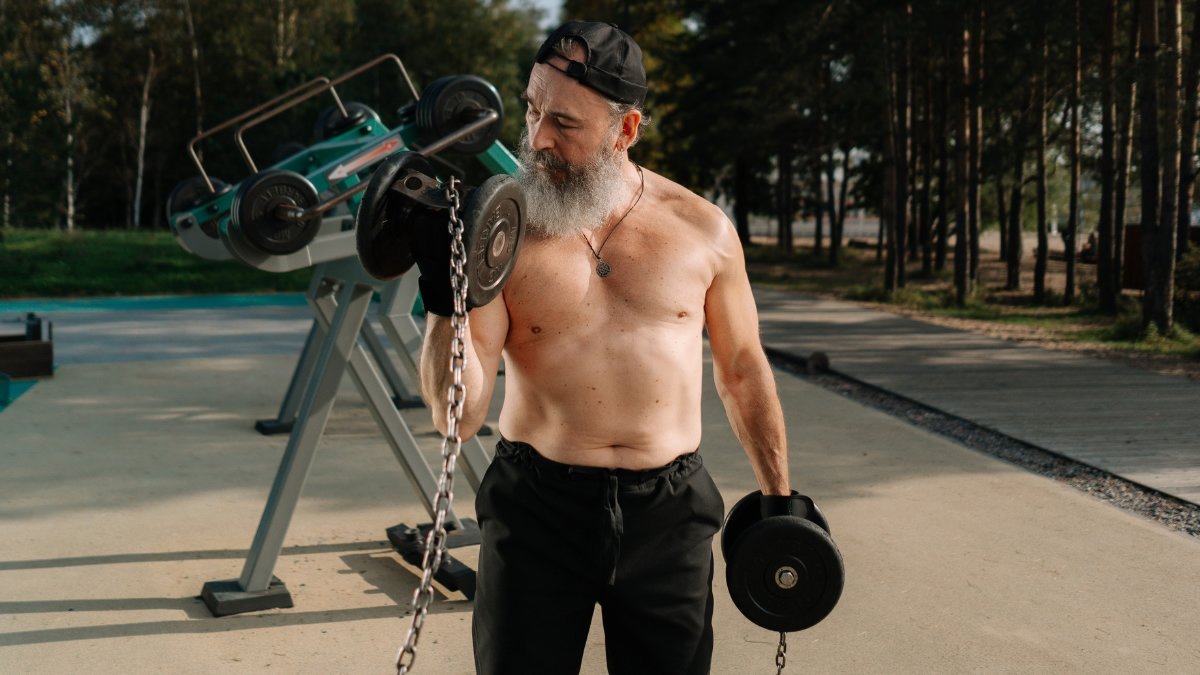
Muscle quietly shrinks with age. A Harvard Medical School report on strength training says adults who skip regular strength work can lose roughly 4 to 6 pounds of muscle per decade.
That matters because muscle does more than power your movement. It helps clear sugar from the blood, loads your bones, and keeps your balance steady, which is why strength is tied so closely to staying independent.
A 2022 systematic review and meta analysis of prospective cohort studies linked muscle strengthening to a 10 to 17% lower risk of death from any cause, heart disease, cancer, diabetes, and lung cancer. The benefit seemed to peak around 30 to 60 minutes a week, and results for higher amounts were less clear.
A 2024 study in the International Journal of Epidemiology looked at older adults specifically. Any amount of weight training was linked to lower risk of death from all causes, heart disease, and cancer, and people who combined weights with aerobic exercise did best.
National and global guidelines call for muscle strengthening on at least two days a week, working all the major muscle groups. Start with body weight, resistance bands, or light dumbbells. Try chair stands, wall push ups, and band rows, and stop each set when the last few repetitions feel hard but your form stays clean.
3. Eat Mostly Plants and Cut Back on Ultra Processed Food
Researchers at Harvard T.H. Chan School of Public Health tracked more than 105,000 health professionals for up to 30 years. Their 2025 Nature Medicine study asked a bigger question than most diet research. Who reached age 70 free of major chronic disease, with sharp thinking and good physical and mental health intact?
Only 9.3% of participants made it. Those who followed healthy eating patterns most closely were more likely to be among them, and the Alternative Healthy Eating Index showed the strongest link. At age 75, the closest followers had more than twice the odds of healthy aging compared with the least consistent.
All eight eating patterns tested were tied to healthy aging, including Mediterranean style and DASH, so there is no single perfect diet. The common thread was more fruits, vegetables, whole grains, nuts, legumes, and unsaturated fats. People with the highest intake of ultra processed foods had a 32% lower chance of healthy aging, with processed meat and sugary or diet drinks standing out.
Plant rich foods bring fiber and unsaturated fat to your plate, which supports blood pressure, cholesterol, and blood sugar control. Ultra processed products tend to bring extra sodium, added sugar, and refined starch.
Pick one change, not a whole new diet. Swap a sugary drink for water or unsweetened tea, or add beans, lentils, or a handful of nuts to a meal you already eat. If you take blood thinners or have kidney disease, ask your doctor which foods to adjust first.
4. Protect Your Closest Relationships

The Harvard Study of Adult Development began in 1938 and has followed participants and their families for more than 85 years. Its director, Robert Waldinger of Harvard Medical School and Massachusetts General Hospital, says the biggest surprise was how strongly relationships predicted health.
People who were the most satisfied in their relationships at age 50 turned out to be the healthiest at age 80. Waldinger describes social fitness as just as important as physical fitness.
A landmark 2010 meta analysis in PLoS Medicine backs the idea. Across 148 studies and 308,849 people, those with stronger social relationships had a 50% greater likelihood of survival, and the link was comparable to well known risks such as smoking. It was strongest in studies that measured how connected people really were, not just whether they were married.
One likely explanation is stress buffering. Close people help you handle everyday stress, nudge you toward healthier routines, and give life a sense of purpose. Observational studies cannot rule out that healthier people simply find it easier to stay social.
Treat this like a workout. Put a standing call, walk, or meal with a friend on the calendar, and say yes to one group that meets regularly, such as a club, class, or volunteer team. Depth appears to matter more than headcount, so protect the few people who really know you.
5. Test Your Hearing, Then Treat What You Find

This is the habit most people never think of. Johns Hopkins researchers helped lead a major randomized trial called ACHIEVE, published in The Lancet in 2023, that tested whether hearing aids could slow cognitive decline.
The trial enrolled 977 adults aged 70 to 84 with untreated hearing loss at four U.S. sites. Half received hearing aids and audiology counseling, and half received health education.
In the full group, the hearing intervention did not reduce three year cognitive decline. In participants at higher risk of decline, it slowed the loss of thinking and memory by 48%.
Researchers are still working out why, with brain scans and social engagement among the factors under study. The 2024 Lancet Commission on dementia prevention lists hearing loss among 14 modifiable risk factors, and earlier commission reports named it the largest single one.
Signs worth acting on include asking people to repeat themselves, turning the TV up, or dreading restaurants. Ask your doctor for an audiology referral, since members of the ACHIEVE team recommend that people with hearing concerns see an audiologist. Participants were 70 to 84, so evidence for people in their late 50s and 60s is thinner.
Longevity Habits: Best Evidence vs. Main Limits
Evaluating study designs, longitudinal cohorts, and methodological caveats across core longevity interventions.
Large cohorts, meta-analyses
Cohorts, meta-analyses
30-year cohort study
Lifelong study, meta-analysis
Randomized trial
Do Harvard, Stanford, and Johns Hopkins Really Agree on These Habits After 55?
Not in the way the headline suggests. We found no joint statement from the three institutions. What exists is a set of separate findings that point the same direction: Harvard affiliated teams on steps, eating, and relationships, and Johns Hopkins on hearing.
Stanford’s contribution is about timing. In a 2024 Nature Aging study of 108 volunteers, Stanford Medicine researchers reported that many molecules and microbes shifted in clusters around ages 44 and 60. It describes biology, not a habit plan, and it included no one over 75.
Here is what is solid. Higher daily movement and stronger social ties are linked to longer, healthier lives across many large studies, and hearing care has a randomized trial behind it, which is the strongest design on this list.
Here is what is still early. Most of this research is observational, so it shows links, not proof, and the hearing benefit appeared only in a higher risk group over three years.
Here is what nobody knows yet: whether starting at 55 pays off as much as starting at 45, and what the ideal amounts are. The 2024 Lancet Commission estimates that addressing 14 risk factors could prevent or delay up to 45% of dementia cases, but even the commission calls that figure theoretical.
Questions Readers Ask Next

How long until I notice a difference?
The big studies follow people for years, so none of them promises a date. Some people notice easier stairs and steadier energy within weeks of regular walking and lifting, though that varies widely.
Do I need to start all five at once?
No. Pick the habit that feels easiest, then add a second after a few weeks. Walking and lifting pair well, and the hearing test is a one time task you can book this week.
What if I have arthritis, heart disease, or diabetes?
These habits can usually be adapted, but your doctor should set the starting point. Water walking, seated resistance band work, and shorter walks spread through the day are common adjustments. Ask about heart rate limits, blood sugar checks around exercise, and any restrictions on lifting.
Mistakes That Quietly Cancel the Benefit
Even good habits stall when they start in the wrong place. These are the most common missteps and the fix for each.
Longevity Habits: Common Mistakes vs. Better Moves
Practical adjustments to avoid early overreach and build sustainable, evidence-aligned longevity habits.
Chasing 10,000 on day one
Add a little to your average
Lifting too heavy, too soon
Start light and master form
Cutting everything at once
Change one meal at a time
Counting contacts, not closeness
Spend time with people who know you
Waiting until it feels severe
Get a baseline exam when changes begin
Try This Today: The Five Minute Starter Stack
- Walk for 10 minutes after your next meal and note your phone’s step count.
- Stand up from a sturdy chair slowly, five times, and notice how hard it feels. That is your strength baseline.
- Replace one packaged snack or sugary drink with fruit, nuts, or water.
- Text or call one person you have not spoken to in a while and suggest a coffee or a walk.
- Book a hearing test, or ask your doctor for an audiology referral.
When to Call Your Doctor First
- Chest pain, pressure, or unusual shortness of breath while walking or lifting.
- Fainting, new dizziness, or a fall during exercise.
- Sudden hearing loss or new ringing in one ear, which needs prompt medical attention.
- Low mood or loss of interest that lingers, especially if you are pulling away from people.
The Short Version:

Walk more, and let your step count guide you toward the range the research supports. Lift something twice a week. Build meals around plants, and protect the people who know you best.
Then test your hearing and treat what you find. Pick one habit, start this week, and add the next when the first feels automatic.
This article is for informational purposes only and is not a substitute for professional medical advice, diagnosis, or treatment. Always consult your doctor or a qualified healthcare provider before changing your diet, exercise routine, or hearing care plan, especially if you have an existing health condition.