
You show up. You sweat. You finish the workout, and three months later the mirror hardly agrees that anything changed.
That is rarely a motivation problem. If you want to build muscle faster, it is usually a selection problem, and it quietly costs you months of progress you never get back.
Many routines are packed with moves that train one small muscle at a time. The lifts that recruit the most muscle get skipped because they feel hard. Every week you skip them is a week of growth you leave on the table.
Here is the good news. You do not need a complicated plan to get results. Four movements do most of the heavy lifting, and researchers keep pointing back to them.
Below, you will find what they are, how to do each one well, and the small mistakes that quietly hold your results back.
Why Four Lifts Beat a Dozen Random Machines
Compound exercises work several muscle groups and joints at once, while isolation exercises train a single muscle through one joint. That means one set of the right lift does the job of several smaller moves.
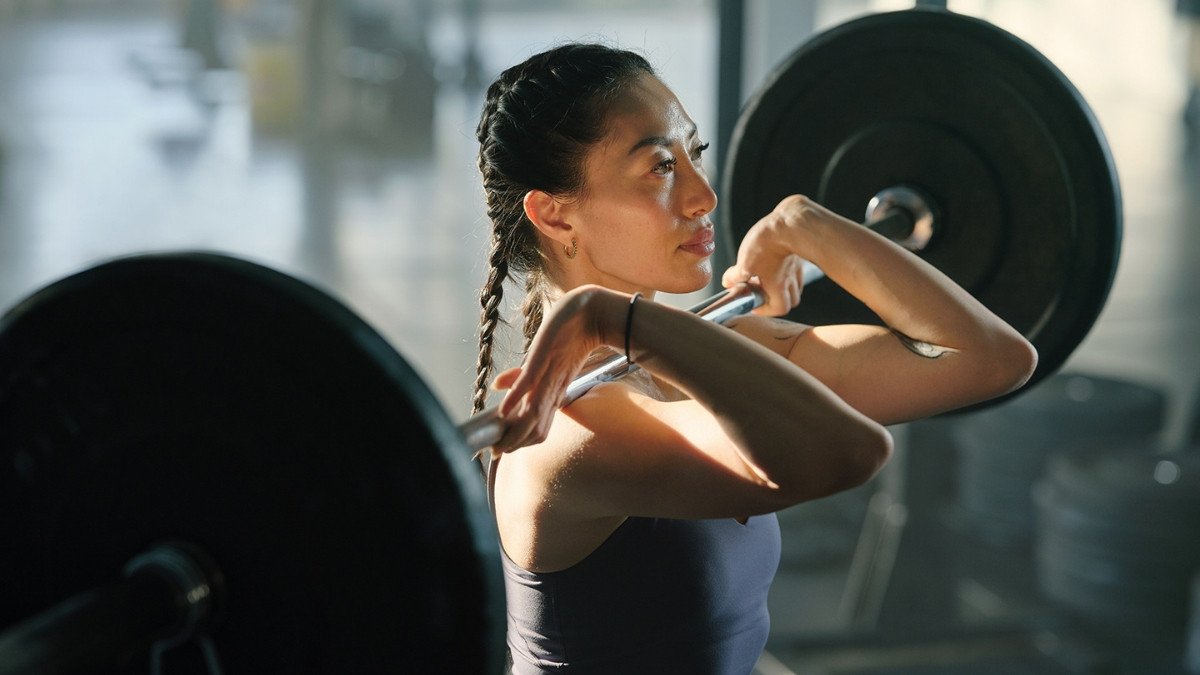
Researchers keep landing on the same short list. A January 2026 NPR feature on strength training described experts recommending just a handful of exercises, including squat variations, the row, the bench press, the deadlift, and the overhead press.
There is a simple reason these lifts work. Heavy work through big movements creates high tension inside the muscle, and that tension is a major driver of growth.
This list boils those lifts down to four patterns: a squat, a hip hinge, a press, and a row. Here is the quick reference before we get into each one.
1. Squats: Depth Is Where the Growth Lives
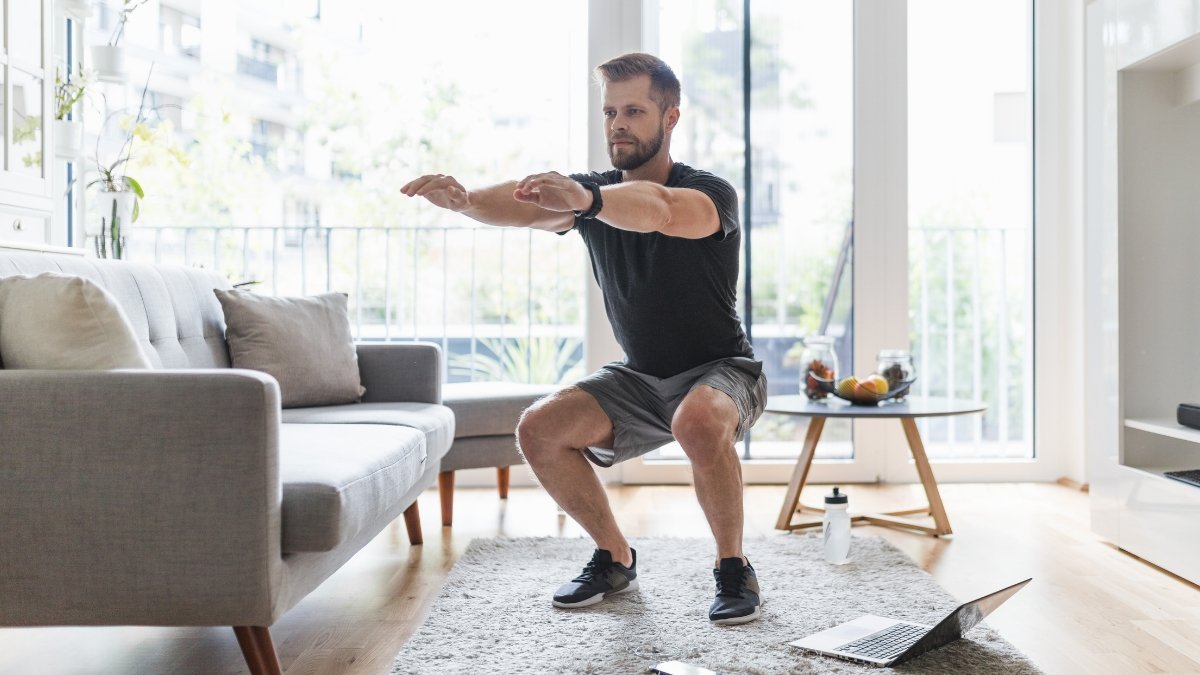
The squat loads your quads, glutes, and inner thighs in a single movement. Your core and back work the whole time to keep you upright.
That is why one exercise gives you so much return. A huge amount of muscle works under load, and the bottom of the rep puts your thighs under tension while they are stretched.
Depth matters more than most people think. In one study, lifters who squatted down to about 120 degrees of knee bend grew more quadriceps muscle than lifters who stopped near 60 degrees. Another study found that deeper squatters built more glute and inner thigh muscle.
The practical takeaway is simple. Around 90 to 100 degrees of knee bend looks like the minimum for maximizing quad growth. In plain terms, that is roughly thighs parallel to the floor, or a little lower.
New to squatting? Start with a goblet squat.
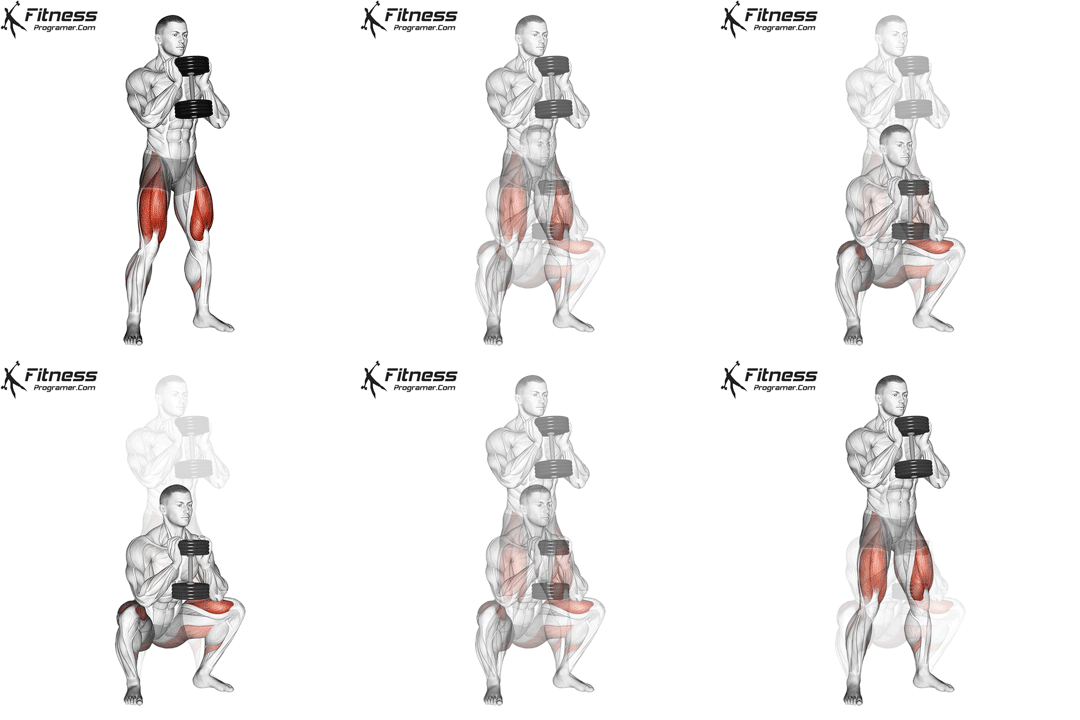
Hold a dumbbell against your chest, sit your hips back, and keep pressure through your heels. If your heels rise, take a wider stance or reduce the depth slightly.
The split squat, with one foot forward and one back, is another option researchers like. Both train the same muscle group, and neither needs a rack.
Start with 3 sets of 6 to 10 reps. Rest 2 to 3 minutes between sets, and stop each set with a couple of clean reps still in reserve.
The most common mistake is cutting depth to move more weight. Take 10 percent off the bar and earn the full range instead.
Everyone’s body responds differently, so check with your doctor before adding heavy squats if you have a knee, hip, or back condition, or if you take medication.
2. Deadlifts: The Hip Hinge Most Routines Skip
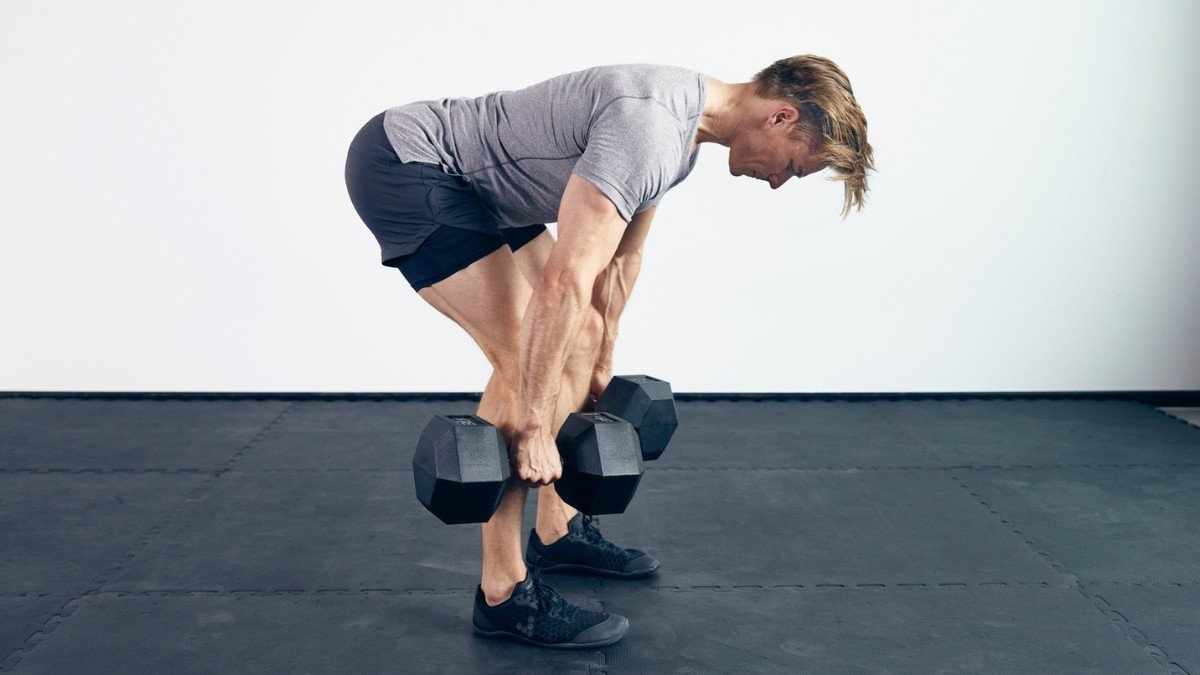
The deadlift trains your hamstrings, glutes, and the muscles along your spine. Your upper back and grip work hard to hold the bar.
It is also the lift that builds the back of your body. Hinging to lift something off the floor is a daily movement pattern, so the strength carries over to real life.
You have two good options, and each has a job.
The conventional deadlift starts from the floor and works the whole body. One study found noticeably higher quad and glute activation in the regular deadlift than in the Romanian deadlift.
The Romanian deadlift, or RDL, starts standing and stays on the hinge. It tends to tire your whole system less than a heavy deadlift, so you can add more volume without burning out.
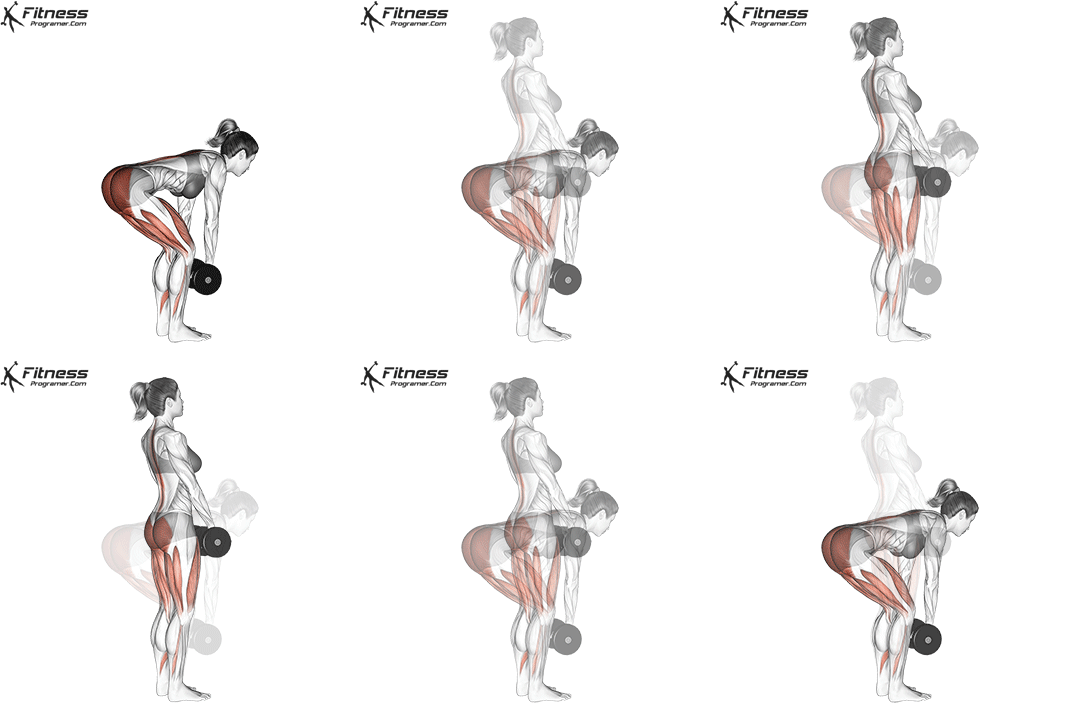
The bottom of the RDL stretches your hamstrings while they hold the load, and that position matters. A 2026 meta analysis of eight studies found that partial reps done at longer muscle lengths produced more growth than partials done at shorter lengths.
Here is a simple way to choose. If you are new, or short on recovery, make the RDL your main hinge. If you want maximum strength from the floor, use the conventional deadlift and keep it to one heavy session a week.
Keep the bar close to your legs the whole way. Push your hips back while your knees soften, and hold a flat spine.
Try 3 sets of 8 to 10 for RDLs, or 3 sets of 5 to 8 for conventional deadlifts.
Watch for two mistakes. One is rounding the lower back, and the other is bending the knees so much that the lift turns into a squat. Lower the weight until your back stays flat.
3. Bench Press or Push Ups: The Press That Builds More Than Your Chest
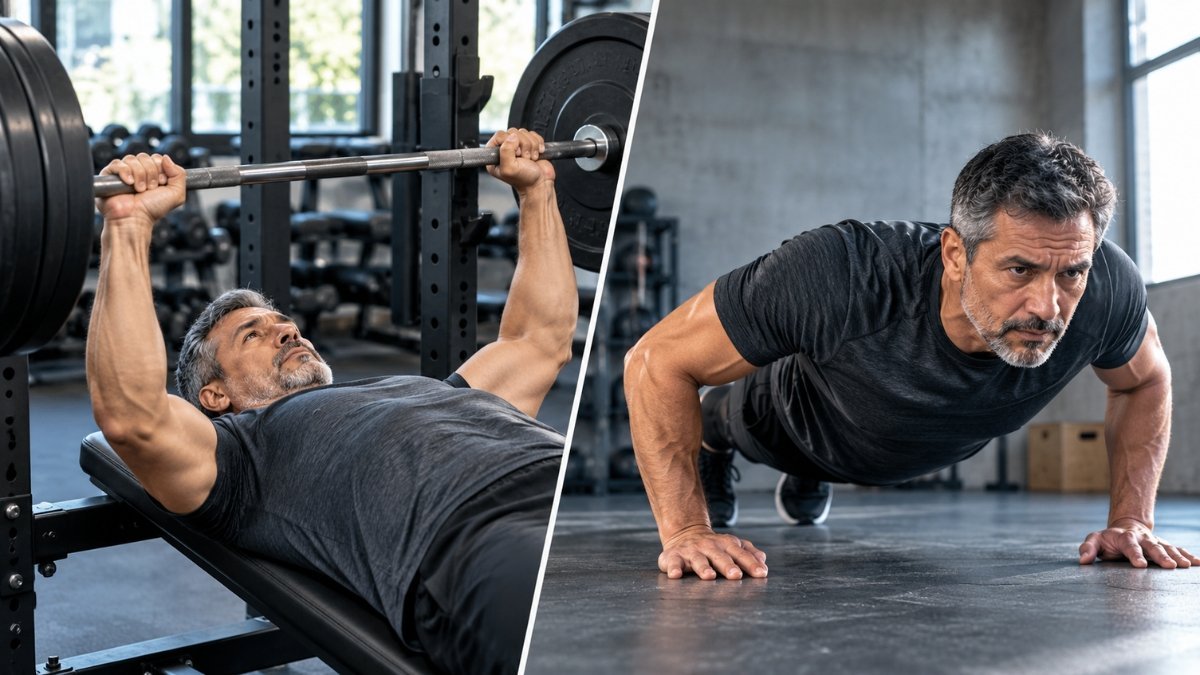
The bench press works your chest, front shoulders, triceps, and trapezius muscles together. That is a lot of muscle for one movement.
Because the bench press is done with a barbell, you can keep adding plates and raise the load over time. That steady increase is what keeps the muscle growing.
No bench? Push ups can work too.
In an eight week trial of 18 young men, push ups adjusted to match 40 percent of each man’s bench press max, for example by kneeling, produced muscle and strength gains similar to bench pressing at that load. Both groups trained twice a week, and the sets were taken to failure.
That study was small and used untrained men, so treat it as encouraging, not final. Researchers at the University of Wisconsin La Crosse also found that the bench press activated the chest more than three push up variations they tested. Activation is not the same as growth, but it is a reminder that load matters.
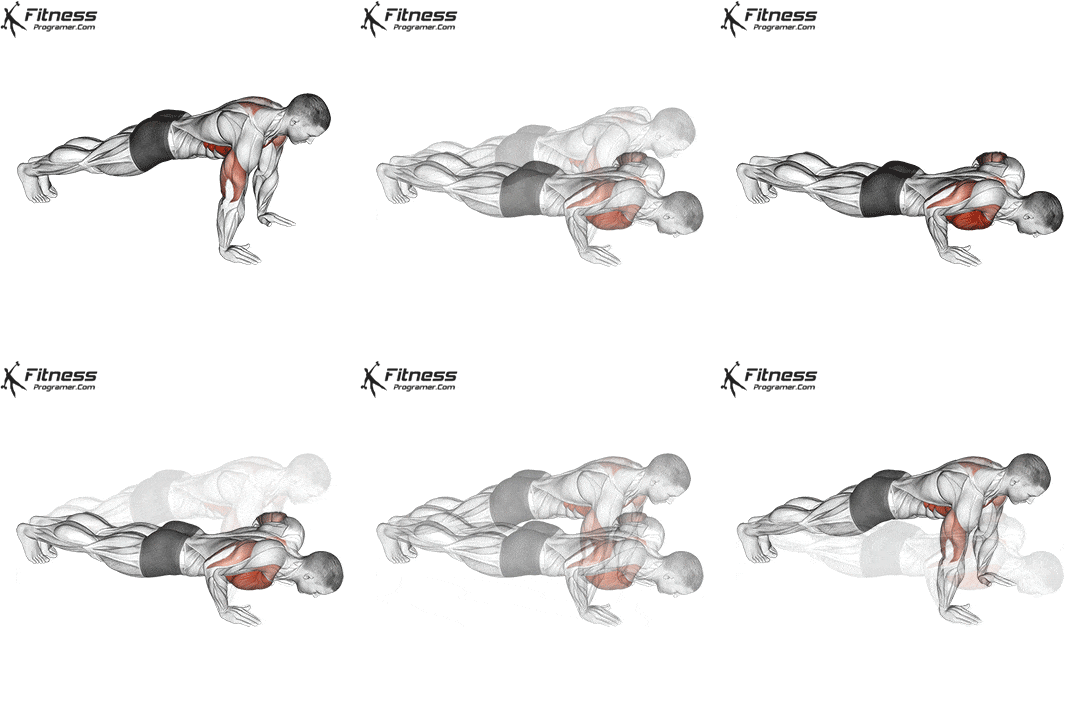
Standard push ups get easy as you get stronger. Very strong lifters cannot easily load a push up to match a heavy bench press. Raise your feet, add a loaded backpack, or loop a band across your back to keep the challenge up.
Plant your feet and pull your shoulder blades back and down. Lower the bar to your mid chest under control, then press up.
Aim for 3 sets of 6 to 10 reps. Use a spotter or safety arms if you train heavy.
Two mistakes show up everywhere. One is bouncing the bar off the chest, and the other is flaring your elbows straight out to the sides. Tuck them to about 45 to 60 degrees to spare your shoulders.
4. Rows: The Pull That Balances Everything You Push

Rows train your lats, the muscles between your shoulder blades, your rear shoulders, and your biceps. Most people press far more than they pull, and the upper back becomes the weak link.
Not every row is equal. A review of two muscle activation studies found that the one arm dumbbell row ranked high for both lat and mid back activation, while the bodyweight inverted row ranked lowest. Pull ups ranked best for the lats.
Think of pull ups as the width builder and rows as the thickness builder. Rows hit the area between your shoulder blades directly, and they let you stack up quality sets with flexible loading.
A stronger upper back may also help your posture under load and give you a better base for pressing. That is a bonus when you are chasing a bigger bench.
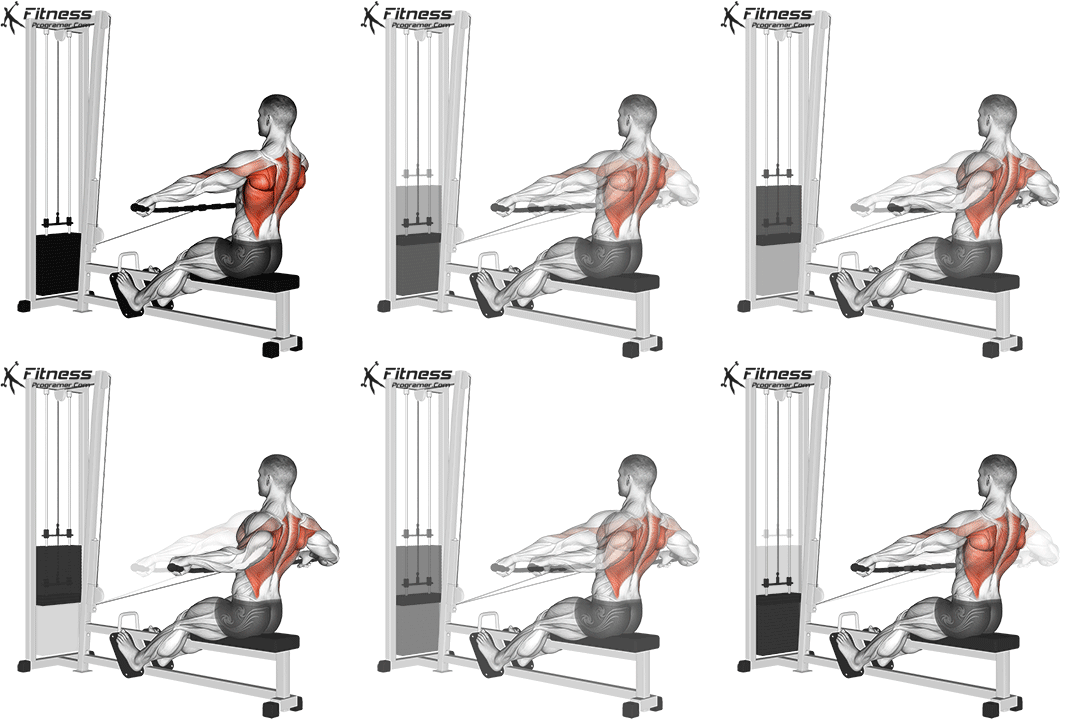
If your lower back is too tired to train the upper back hard, switch to a chest supported, seated cable, or machine row. You still get the pull without the fatigue.
Pull your elbow toward your hip, squeeze for a beat, and lower slowly until your shoulder blades open. Like the RDL, a full stretch under load is part of what makes the rep count.
Do 3 sets of 8 to 12 reps. Aim for about as many pulling sets as pressing sets each week.
The usual mistakes are yanking the weight with momentum and cutting the range short. Slow down and let your back do the work.
The Essential Strength Matrix
A structured breakdown of core compound movement patterns, target muscle groups, beginner-friendly swaps, and starting volume guidelines.
Squat
Quads, glutes, inner thighs
Goblet squat or split squat
Hip Hinge
Hamstrings, glutes, lower back
Dumbbell Romanian deadlift
Press
Chest, front shoulders, triceps
Push-ups or dumbbell bench press
Row
Lats, mid-back, rear shoulders, biceps
Seated cable or chest-supported row
Build Muscle Faster: The Rules That Make These 4 Lifts Pay Off
The lifts only work if the plan around them does. Here is what the research says about sets, effort, progress, and food.
How Many Sets? About 10 Per Muscle Each Week
A meta analysis of resistance training studies found a graded link between weekly sets and muscle growth, with more sets per muscle producing more growth up to 10 or more. In that research, average muscle thickness rose about 5 percent with fewer than 5 weekly sets, about 7 percent with 5 to 9, and about 10 percent with 10 or more.
A 2026 analysis from Florida Atlantic University also found that going from 6 to 12 weekly sets produces a noticeable jump in growth.
For these four lifts, start with 3 to 4 sets of each lift, twice a week. Then add a set or two as your recovery allows, working toward about 10 hard sets per muscle group per week.
These numbers are general starting points from studies on healthy adults. Your ideal sets, loads, and protein intake depend on your own health, so talk with your doctor or a registered dietitian first, especially if you have kidney disease or take medication.
How Often? Twice a Week Is Plenty
That same analysis found that training a muscle more often did not clearly add growth once total weekly volume was matched. So you can split your sets across two or three sessions to fit your schedule.
ACSM guidance for beginners suggests 2 to 3 training days per week.
How Hard? Leave 1 to 3 Reps in the Tank
You do not need to grind every set to failure. A meta analysis of 15 studies found no evidence that training to complete failure beats stopping short of it for muscle growth.
A separate analysis of 55 hypertrophy studies suggested staying within about 0 to 5 reps of failure. A practical sweet spot is finishing each set with 1 to 3 clean reps left.
How Do You Keep Progressing? Add Weight in Small Steps
ACSM guidance suggests adding 2 to 10 percent to your load once you can beat your target reps by one or two. That is a small jump, and it is enough.
A 2026 overview of reviews also suggests that load alone does not decide growth across a wide range, from light to heavy. So the exact rep range matters less than whether the set is truly hard. Write your numbers down so you can beat them next time.
What Should You Eat? Protein First
A large meta analysis of 49 trials and 1,863 people found that muscle gains plateaued once protein intake reached about 1.6 grams per kilogram of body weight per day. For a 70 kilogram person, that is about 112 grams a day.
Some research suggests higher intakes up to about 2.2 grams per kilogram can still help certain people. Treat 1.6 as a solid target, not a hard ceiling.
Calories and training quality matter too, so protein alone will not do the job. Sleep is part of the equation as well.
Here are the mistakes that quietly stall progress, and the quick fix for each.
Strength Training Pitfalls & Quick Fixes
Identify common strength training mistakes that stall muscle hypertrophy and mechanical efficiency, paired with immediate clinical corrections.
Cutting Squat Depth
The quads get significantly less stretch under load, missing peak mechanical tension.
Lower the weight and aim consistently for 90 to 100 degrees of knee bend.
Stopping Far From Failure
Easy, non-stimulating reps generate a weak neuromuscular growth signal.
End working sets with 1 to 3 reps left in reserve (RIR 1-3).
Pressing More Than Pulling
The upper back falls behind, creating structural and postural imbalances.
Match rowing sets 1:1 with pressing sets in your weekly program.
Never Adding Weight
The muscle receives no new adaptive stimulus or reason to grow bigger.
Add 2 to 10 percent load whenever you beat your target reps by 1 or 2.
Try This Today

The Daily Habit That Actually Works
- Pick one swap. Choose a goblet squat, dumbbell RDL, push ups, or seated cable row and put it first in your next workout.
- Write it down. Log this session’s weight and reps so you know exactly what to beat next time.
- Leave reps in the tank. Stop each set with 1 to 3 clean reps left.
- Hit your protein. Aim for about 1.6 grams per kilogram of body weight, spread across your meals.
- Warm up first. Do 1 or 2 light sets of your first lift before the heavy work.
When to Stop and Call a Doctor
Stop lifting and get medical advice if you notice any of these:
- Chest pain, pressure, or unusual shortness of breath during or after training.
- Sharp or sudden joint pain, or pain and swelling that lingers for days.
- Numbness, tingling, or weakness running down an arm or leg.
- Dizziness or fainting while you lift.
The Short Version,
Squat deep, hinge at the hips, press, and row, and do them twice a week. Work toward about 10 hard sets per muscle group, finish sets with a few reps left, and add weight in small steps.
Eat enough protein, sleep well, and keep a written log. That is the plan that builds muscle faster, and none of it needs a fancy machine.
This article is for informational purposes only and is not a substitute for professional medical advice, diagnosis, or treatment. Always consult your doctor or a qualified healthcare provider before making changes to your exercise routine, diet, or medications, especially if you have an existing health condition.