

Your midlife habits are quietly deciding how many of your later years you’ll spend with a sharp memory. Dementia doesn’t arrive overnight. The brain changes behind it build quietly for many years, long before the first forgotten name, and by then the easiest chances to act have passed.
A large 2026 study just put a number on this. Adults who had none of three common risk factors in midlife lived nearly 13 extra years without dementia compared with adults who had all three. That gap is hard to ignore, and it should make you curious about your own odds.
Turns out the three habits behind it are ones you can start working on this week. Most people have heard of each one, but almost nobody has seen them explained together. Here is what the research shows, what it can’t prove, and exactly what to do next.
Before making any changes based on this article, talk to your doctor, especially if you take medication for blood pressure or diabetes. Never stop or adjust a prescription on your own.
What This Study Proves, and What It Doesn’t
Proven: these three factors travel with earlier dementia and fewer dementia free years. Not proven: that changing them adds 13 years, because this was an observational study and each factor was measured only once.
Unknown: how much of the gap you can close if you change course at 55 or 60.
The 3 Midlife Habits Behind the 13 Year Gap

The three habits, in plain terms: keep your blood pressure in a healthy range, keep your blood sugar out of the diabetes range, and stay smoke free. Each gets its own section below, with the research and one specific step.
The finding comes from the Atherosclerosis Risk in Communities (ARIC) study. A 2026 observational cohort analysis published in Neurology Open Access followed 12,409 adults who were free of dementia at the start, with an average age of 56. They were tracked for an average of 26 years.
During that time, 3,008 people developed dementia and 5,238 died without it. The researchers measured high blood pressure, diabetes, and smoking once, in midlife.
Each extra risk factor shortened dementia free life. That step by step drop adds up to the nearly 13 year gap in the headline.
Dementia-Free Years by Midlife Risk Profile
Expected years lived free of dementia from baseline across midlife cardiovascular and metabolic risk factor groups.
None of the three
All three
All three
All three
One detail matters here. Dementia free years end with either dementia or death, so part of the gap reflects shorter lives and not only later dementia.
The authors say the risk factors were tied to both earlier dementia onset and a shorter dementia free life. Women stayed ahead of men at every level of risk. With all three factors, women averaged 18.1 dementia free years and men 16.6.
Why Your Blood Vessels Are the Real Story

The brain is one of the most blood hungry organs you own. It depends on a dense web of tiny vessels that never get a day off.
High blood pressure, high blood sugar, and tobacco smoke all injure the lining of those vessels. Over years, the small arteries deep in the brain stiffen, narrow, and leak.
Researchers link that kind of damage to injury in the brain’s white matter and to tiny silent strokes. Neither one announces itself while it is happening.
A 2024 evidence review from the Lancet Commission on dementia prevention, published in The Lancet, listed 14 modifiable risk factors. All three habits in this article were on the list.
The commission estimated that about 45% of dementia cases worldwide could in theory be prevented or delayed. That is a theoretical ceiling, not a promise, but it explains why midlife matters so much.
Damage that builds quietly in your forties and fifties tends to show up as trouble in your seventies and eighties. That delay is why the habits feel optional when you are in your fifties.
1. Keep Blood Pressure Out of the Silent Danger Zone
The habit: know your number and keep it in a healthy range.

High blood pressure rarely feels like anything. That is exactly why it does so much quiet harm.
The 2025 guideline from the American Heart Association and American College of Cardiology sets the line for high blood pressure at 130/80, lower than many people expect.
The quick reference table further down has the exact numbers. The ARIC study itself used a higher bar: 140/90 or taking blood pressure medication.
Here is how it hurts the brain. Constant force on artery walls thickens and stiffens them, and the tiny vessels deep in the brain take the worst of it.
Blood flow to the brain’s wiring drops, and small patches of tissue can die without causing a noticeable stroke. Over decades, that damage adds up.
Treating it appears to help. In the 2019 SPRINT MIND randomized trial published in JAMA, 9,361 adults aged 50 and older (average age 68) were assigned to a systolic target below 120 or below 140.
The lower target cut mild cognitive impairment by 19%. The 17% drop in probable dementia did not reach statistical significance, so that result is suggestive, not settled.
The 2025 guideline also recommends keeping systolic pressure under 130 in adults with high blood pressure to help prevent mild cognitive impairment and dementia.
A larger 2025 cluster randomized trial in rural China, published in Nature Medicine, enrolled about 34,000 adults aged 40 and older across 326 villages. Village doctors used a stepwise medication plan plus health coaching.
After four years, dementia risk was about 15% lower than with usual care. Systolic pressure fell about 22 points more in the program group than in the usual care group.
Notice what these trials tested. They tested treatment in people who already had high blood pressure, so they show that lowering pressure helps, not that perfect numbers from age 45 guarantee protection.
Start with a validated upper arm home monitor. Sit quietly for five minutes with your feet flat and your arm resting at heart level, then take two readings one minute apart.

Do this morning and evening for seven days and bring the log to your doctor. One office reading can be thrown off by nerves, but a week of home readings tells the real story.
Salt is the easiest lever you control, and most of it hides in bread, deli meat, soups, and restaurant food rather than the shaker. If a doctor prescribes medication, take it as directed, because missed doses are a common reason readings stay high.
2. Keep Blood Sugar Out of Diabetes Range
The habit: get your A1C checked and act on prediabetes early.
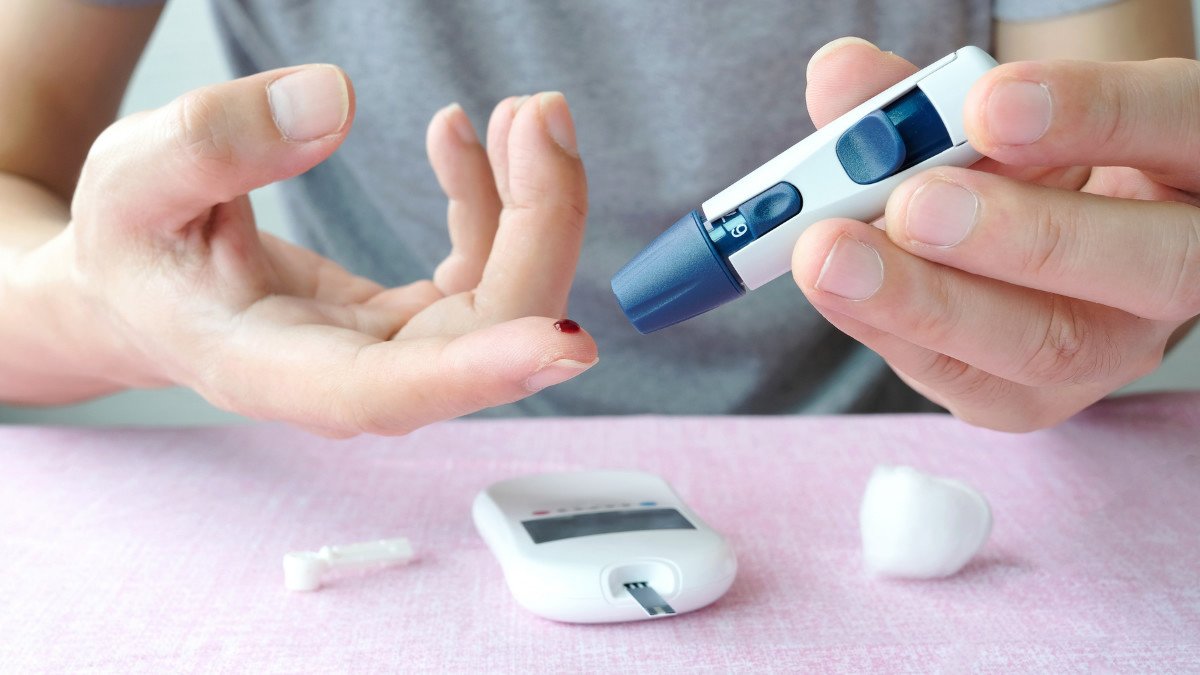
Type 2 diabetes is the second factor in the study, and it usually develops slowly. Many people carry prediabetes for years without a single symptom.
High blood sugar over time damages blood vessels, including the tiny ones that feed the brain. It also drives inflammation and can make cells respond poorly to insulin, which the brain uses too.
Researchers think these effects combine to speed up brain aging. The exact chain of events is still being worked out.
A 2014 observational study in Annals of Internal Medicine followed 15,792 middle aged adults from the same ARIC cohort for about 20 years. Diabetes in midlife was linked to faster cognitive decline, and the effect was larger when diabetes was poorly controlled.
The good news is that early diabetes is often preventable. In the Diabetes Prevention Program, a 2002 randomized trial in the New England Journal of Medicine, 3,234 adults with elevated blood sugar (average age 51) were split into three groups.
A lifestyle program cut new diabetes cases by 58% compared with placebo. Metformin cut them by 31%.
That trial measured diabetes, not dementia. Connecting the two is a reasonable inference, but it is still an inference.
The lifestyle goals were modest: lose at least 7% of body weight and get at least 150 minutes of physical activity a week. For a 200 pound adult, 7% is 14 pounds.

Ask for an A1C or fasting glucose test at your next visit, especially if diabetes runs in your family or you carry extra weight around your middle. If it lands in the prediabetes range, treat it as a head start and not a verdict.
Swap sugary drinks for water first, since liquid sugar hits the bloodstream fastest. Add strength training twice a week, because muscle is one of the main places your body stores glucose.
3. Quit Smoking, Because It’s Never Too Late
The habit: stay smoke free, or set a quit date.

Smoking is the habit with the clearest exit ramp. The study’s senior author, Dr. Josef Coresh of NYU, specifically emphasized stopping smoking in midlife.
Tobacco smoke floods the bloodstream with oxidants and sets off inflammation. It stiffens arteries, raises heart rate and blood pressure, and reduces oxygen delivery.
Health authorities also link smoking to a higher risk of type 2 diabetes. That means it can feed the other two factors at the same time.
A 2015 meta analysis of 37 prospective studies, published in PLoS ONE, found that current smokers had about a 30% higher risk of dementia and about a 40% higher risk of Alzheimer’s disease than people who never smoked.
Former smokers looked different. Their dementia risk was essentially the same as never smokers, with a relative risk of 1.01.
This is observational data, and people who quit may differ from those who don’t in other ways. Still, the direction is encouraging, and it matches what you would expect if the brain recovers some of its footing after quitting.
Pick a quit date within the next two weeks. Call the national quitline at 1 800 QUIT NOW (1 800 784 8669) for free coaching.

Ask your doctor about combining a nicotine patch with gum or lozenges, or about prescription options. Many people find that combination works better than going cold turkey.
Plan for cravings before they hit, because they tend to fade within minutes. Keep gum, water, and a short walk ready for those minutes.
If you don’t smoke, protect that streak. Secondhand smoke counts too, so keep your home and car smoke free.
Your Numbers Cheat Sheet
Key Health Measures: Healthy Range vs. Warning Zone
Core vascular, glycemic, dietary, and lifestyle benchmarks for long-term cardiovascular and brain protection.
Under 120/80
130/80 or higher
Under 5.7%
5.7% and above
Under 100 mg/dL
100 mg/dL and above
Ideal under 1,500 mg
Over 2,300 mg
None
Any tobacco use
An A1C of 6.5% or higher meets the American Diabetes Association definition of diabetes, and the range from 5.7% to 6.4% counts as prediabetes. Take any number in the warning zone to your doctor as a starting point for a conversation.
The Mistakes That Quietly Cancel Your Effort

Most people who try to protect their brain make the same few errors. None of them is about willpower. They are about information.
Checking blood pressure once a year and calling it done. Readings swing with stress, caffeine, sleep, and even a full bladder. A single office number can look fine while your average is high, or the reverse.
Treating prediabetes as a warning you can ignore. An A1C just under the diabetes line feels like a pass. In reality, the blood vessel damage described earlier does not wait for an official diagnosis.
Swapping one habit for another. Some people quit smoking and gain weight, then let blood sugar drift. Others focus on salt and ignore the cigarettes.
The study’s message is that the three factors stack. A good plan watches all of them at once, even if you tackle them one at a time.
Stopping medication when the numbers improve. Normal readings on treatment usually mean the treatment is working, not that you no longer need it. Any change to a prescription belongs in a conversation with your doctor.
How Long Until This Pays Off?

Nobody can promise a timeline for dementia, because it unfolds over decades. But some of the steps pay off much sooner on the measures you can actually see.
Blood pressure responds to treatment and lifestyle changes over weeks to months. In the Chinese trial described above, the gap between the program group and the usual care group was already large at the end of the study, and it was built by steady adjustment, not a single change.
Blood sugar moves on a similar scale. A1C reflects roughly the last three months of average glucose, so a retest about three months after you change your habits shows whether the plan is working.
Expect the brain payoff to be quiet. The goal is not a sudden jump in memory but the absence of a decline that never happens.
Who Should Be Extra Careful?

Some people have a head start on risk. If you have a parent or sibling with diabetes, a history of high blood pressure during pregnancy, or you have carried extra weight for many years, your checkups matter even more.
The ARIC analysis also found differences by sex and by race in dementia free years at every level of risk. The study measured these differences but could not explain them, so they should not be read as destiny.
What they do suggest is that access to regular screening and treatment matters. If you have had trouble getting consistent care, a community health center or a pharmacy blood pressure kiosk is a reasonable place to start.
People who take several medications should be especially careful. Some blood pressure drugs and some diabetes drugs can cause dizziness or low blood sugar, and doses often need adjusting as you lose weight or change your diet.
That is one more reason to tell your doctor about any lifestyle changes before you make big ones.
What If You Already Have One of the Three?
Then you are not alone, and you still have room to improve.
Start with the one that feels easiest to move. For many people that is the quit date, because it costs nothing, and for others it is a blood pressure check.
Remember that these three are not the whole story. The Lancet Commission also named physical inactivity, hearing loss, and high LDL cholesterol among its 14 factors.
Think of the three habits as the foundation, not the finish line. Regular movement, a hearing test if you struggle in noisy rooms, and a cholesterol check all build on the same blood vessel protection.
Try This Today
- Find your last blood pressure and A1C in your patient portal and save both in one note.
- Take a 10 minute walk after dinner tonight.
- Read the sodium line on three pantry staples.
- Save the quitline number in your phone, for yourself or someone you love.
- Book one appointment this month to go over your numbers.

When To Call A Doctor Right Away
- Sudden severe headache, chest pain, vision changes, confusion, or numbness on one side of the body. Call emergency services.
- A home blood pressure reading above 180/120, especially with symptoms.
- Extreme thirst, frequent urination, or unexplained weight loss.
- Memory changes that disrupt daily life, such as getting lost on familiar routes or repeating questions.
The Short Version,
Three midlife habits track with the biggest gap in dementia free years in a large 2026 study: healthy blood pressure, blood sugar out of the diabetes range, and no smoking. The study can’t prove that changing them delivers the full 13 years, but trials of blood pressure treatment and diabetes prevention point the same way.
The practical move is small and fast. Learn your numbers, pick the easiest habit, and start this month.
This article is for informational purposes only and is not a substitute for professional medical advice, diagnosis, or treatment. Always consult your doctor or a qualified healthcare provider before changing your diet, exercise routine, or medications, especially if you have an existing health condition.