If You Assume These 15 Self-Care Ideas, You Win Life. The Rest Is Just Noise

You are not lazy. You are not weak. You are just running on empty.
Right now, over 1 billion people worldwide are living with a mental health condition. That is 1 in every 7 people on the planet. And most of them are not getting help. They are just pushing through — exhausted, anxious, and wondering why life feels so hard.
Here is the truth: self-care is not a reward you earn after a hard week. It is the fuel that makes everything else possible. Work, relationships, energy, focus — all of it breaks down without it.
These 15 self-care ideas are not fancy. They are not expensive. They are backed by real research from the WHO, CDC, Mayo Clinic, and NIH. And every single one of them is something you can start today.
15 Self-Care Ideas,
You Win Life.
Why Self-Care Is Not Optional in 2026

Most people think self-care means bubble baths and spa days. It does not.
Real self-care is what keeps you from falling apart. According to WHO 2025 data, more than 1 billion people globally are living with a mental health condition. In the U.S. alone, 23% of adults experienced mental illness in 2025. That number has not moved in four years.
Here is what hits harder: the average American adult feels truly relaxed for only 40 minutes per day. And 47% say they get even less than that.
The International Center for Self-Care Research confirms that consistent self-care leads to better well-being and lower rates of illness, hospitalization, and even early death. That is not a wellness blog saying that. That is peer-reviewed science.
Among Gen Z frontline workers, 83% report burnout. And 62% of people across 31 countries say stress affected their daily lives at least once last year.
The good news? Most of the self-care habits that actually work cost nothing.
1. Protect Your Sleep Like It Is Your Job

Sleep is not passive. While you sleep, your body repairs cells, clears toxins from your brain, and resets your emotions. The CDC recommends 7 to 9 hours every night for adults.
When you cut sleep short, everything suffers. Your mood drops. Your focus disappears. Your immune system weakens. Research links poor sleep directly to anxiety, depression, and high blood pressure.
The biggest sleep thief in 2026? Your phone. Blue light from screens tricks your brain into thinking it is still daytime. This delays sleep and cuts into the deep sleep stages your body needs most. Limiting screen time at least one hour before bed makes a real difference.
You do not need a fancy mattress or sleep supplements. You need a dark, quiet, cool room and a consistent bedtime. That is it.
What to do: Set an alarm 30 minutes before your target bedtime. Use that as your wind-down signal. Put the phone in another room.
3 Tips:
- Keep your room cool — around 65–68°F (18–20°C) is ideal for deep sleep
- Go to bed and wake up at the same time every day, even on weekends
- Avoid caffeine after 2 p.m. — it stays in your system for 6 hours
2. Move Your Body for 30 Minutes Every Day

Exercise is the closest thing we have to a mental health pill — and it is free.
When you move, your brain releases endorphins. These are chemicals that reduce pain and boost your mood. At the same time, your body lowers cortisol — the stress hormone that keeps you wired and anxious. The result is better sleep, better focus, and better resilience.
The WHO recommends 150 minutes of moderate activity per week. That breaks down to just 30 minutes a day, five days a week. A brisk walk counts. Cleaning your house counts. Dancing in your kitchen counts.
You do not need a gym membership. You do not need workout clothes. You just need to move consistently.
Research from Rahu (2025) confirms that exercise creates a positive feedback loop — better movement leads to better sleep, which leads to more energy, which leads to more movement.
What to do: Pick a movement you actually enjoy. Do it for 30 minutes today. Start there.
3 Tips:
- Walk after dinner — it helps digestion and lowers blood sugar
- Try YouTube workouts if the gym feels overwhelming
- Even 10-minute movement breaks during work count toward your daily total
3. Practice 10 Minutes of Mindfulness Every Day
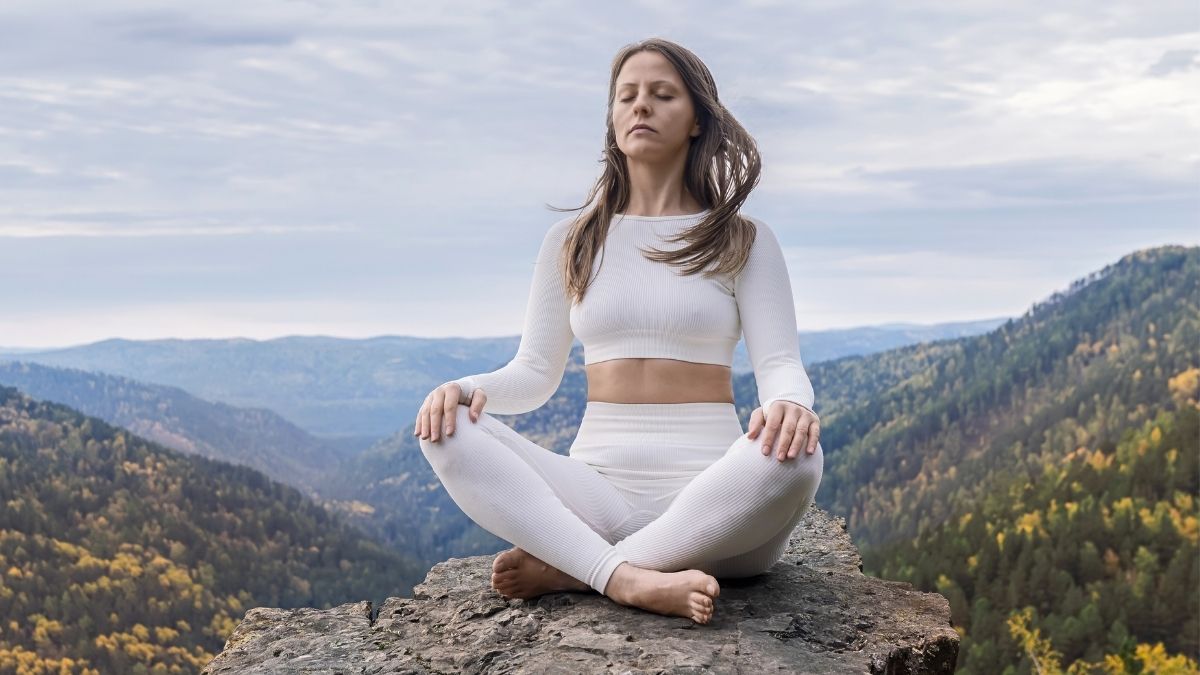
You do not need to meditate for an hour. You do not need to clear your mind completely. You just need 10 quiet minutes where you pay attention to the present moment.
Mayo Clinic (January 2026) confirms that regular mindfulness practice helps manage depression, improves sleep quality, lowers blood pressure, and reduces symptoms of chronic conditions like IBS and fibromyalgia. That is a lot from 10 minutes.
Mindfulness works by changing how your brain responds to stress. It reduces activity in the amygdala — the part of your brain that triggers fear and panic. Over time, it trains you to respond to problems instead of react to them.
Research shows that adding mindfulness to your morning routine can lower cortisol production by up to 30% within just a few weeks.
What to do: Download Insight Timer — it is free. Start with a 5-minute guided meditation. Build to 10 minutes over the next two weeks.
3 Tips:
- Morning mindfulness works better than evening for most people
- Focus on your breath when your mind wanders — that is the practice, not a failure
- Even mindful breathing for 2 minutes during a stressful moment counts
4. Journal Three Times a Week

Writing your thoughts down is one of the simplest and most powerful things you can do for your mental health.
A study published in JMIR Publications found that regular journaling significantly lowers anxiety, depression, and distress. That is not a small thing. The Mindfulness App (2025) also reports a sleep lab study where people who spent just five minutes writing a to-do list before bed fell asleep much faster than those who did not.
Journaling helps you spot emotional patterns. When you can see what triggers your stress, you can deal with it before it becomes a crisis. It also gives your thoughts a place to go, so they are not just circling your head at 2 a.m.
You do not need a special journal or prompts. A plain notebook works fine.
What to do: Every night, write three things you are grateful for, one thing stressing you, and one action you can take tomorrow. Five minutes. That is all it takes.
3 Tips:
- Write by hand, not on your phone — it slows your thinking down in a good way
- Do not edit yourself — write whatever comes, messy thoughts and all
- A to-do list before bed helps your brain “release” the day and sleep faster
5. Set and Enforce One Boundary Per Week

Boundaries are not selfish. They are survival.
Every time you say yes to something that drains you, you are saying no to something that could restore you. PMC-published mindfulness research is direct about this: learn to say no to the things that drain you and yes to the things that replenish you.
Most people struggle with boundaries because they confuse them with rejection. But a boundary is not about the other person. It is about protecting your energy so you have something left to give.
You do not need to make a dramatic announcement. One small boundary per week is enough. Stop replying to work messages after 9 p.m. Leave one social event you said yes to out of guilt. Let one phone call go to voicemail.
Small boundaries build big self-respect over time.
What to do: This week, identify one situation that consistently drains you. Decide how you will respond differently — and follow through just once.
3 Tips:
- Start with low-stakes boundaries before tackling the big ones
- You do not need to explain or justify your boundaries to anyone
- “I can not make it” is a complete sentence
6. Build One Meaningful Social Connection Each Week

Loneliness is not just a sad feeling. It is a health risk.
WHO 2025 data shows that 23% of people globally report feeling lonely for much of the previous day. Research from LightWork Therapy (2025) confirms that strong social ties can lower your stress levels by as much as 50% and significantly reduce feelings of isolation.
In 2026, most of us feel more “connected” than ever through social media — and more lonely than ever in real life. Scrolling someone’s Instagram is not connection. Sitting across from them is.
You do not need a large social circle. One real conversation per week is enough to move the needle on your mental health. A phone call, a coffee, a walk with a friend — all of it counts.
What to do: Text one person right now and schedule a real interaction this week. One conversation. That is the whole habit.
3 Tips:
- Phone calls feel more connecting than text messages for most people
- If you are rebuilding your social life, start with low-pressure activities like a walk
- Quality matters more than quantity — one genuine conversation beats ten surface-level ones
7. Eat at Least One Proper Meal Every Day

You do not need a strict diet. You need to stop running your body on caffeine and convenience.
Nutrition is physical self-care at its most basic. Omega-3 fatty acids — found in salmon, walnuts, and flaxseeds — improve mood, reduce brain inflammation, and support cognitive function. Eating a variety of colorful vegetables provides phytonutrients that support gut health, immune function, and long-term brain health.
Your gut and brain are directly connected. What you eat affects how you feel, think, and cope with stress. Poor nutrition makes anxiety worse. It disrupts sleep. It drains your energy before noon.
You do not need to overhaul everything. One better meal per day changes your baseline over time. Start with whichever meal in your day is usually the worst.
What to do: Look at your day and find the weakest meal. Replace one thing in it with something real — a handful of nuts, a piece of fruit, or a vegetable. Just one swap.
3 Tips:
- Add one color to every plate — it is the simplest nutrition rule that works
- Staying hydrated (aim for 8 glasses of water) directly affects your mood and energy
- Eating within one hour of waking up stabilizes your blood sugar and reduces morning anxiety
8. Do a 24-Hour Digital Detox Once a Week

Your phone is not just a distraction. It is a stress machine.
Forbes’ 2025 wellness trends show that 38% of consumers now name digital detoxes as their top solution for burnout. Constant notifications, bad news cycles, and comparison culture on social media keep your nervous system in a low-grade state of alert — even when nothing is actually wrong.
A full 24-hour break from screens once a week is one of the fastest resets available to you. No email. No social media. No news. Just you and the analog world.
People who do this consistently report better sleep, lower anxiety, and a stronger sense of being present in their own lives. It sounds extreme until you try it. Then it becomes something you protect.
What to do: Pick one day or half-day this week. Put your phone in a drawer. Use that time for one activity that requires your full attention — cooking, reading, a walk, or a conversation.
3 Tips:
- Tell people in advance if you need to be unreachable — it removes the anxiety of disconnecting
- Replace screen time with something physical or creative, not just sitting with nothing to do
- Start with a half-day if 24 hours feels too big right now
9. Spend Time in Nature at Least Once a Week

There is a reason you feel calmer after a walk outside. It is not in your head — it is in your biology.
Forest bathing (Shinrin-yoku) is identified by Forbes’ 2025 wellness trends as a proven antidote to burnout. Research consistently shows that time in nature lowers cortisol, reduces blood pressure, and improves mood. PMC mindfulness research specifically lists spending time outdoors as a spiritual self-care practice.
You do not need forests or mountains. A park works. A tree-lined street works. Twenty minutes in a green space produces measurable stress reduction — enough to shift how the rest of your day feels.
In 2026, most of us spend the majority of our waking hours indoors, under artificial light, staring at flat screens. Nature is the antidote we keep walking past.
What to do: This week, take one 20-minute walk somewhere green. Leave your headphones out if you can. Notice what is around you.
3 Tips:
- Morning nature walks have an extra benefit — morning light helps regulate your sleep cycle
- You do not need a destination — walking around a neighborhood park is enough
- Combine with habit #2 (movement) for double the benefit with the same time investment
10. Build a Morning Routine That Belongs to You

The first 30 minutes of your day belong to you — or they belong to everyone else. You decide.
Mental health professionals recommend dedicating some time each morning to movement, mindfulness, deep breathing, or journaling before the day’s demands begin (LightWork Therapy, 2025). A morning routine does not need to be long. It just needs to happen before you check your phone.
When you start your day reacting — to notifications, emails, and other people’s urgencies — you never fully catch up. A morning routine puts you in the driver’s seat.
It is also a daily signal to your brain that you matter. Not your boss. Not your inbox. You.
What to do: Pick two habits from this list. Do them every morning before you look at your phone. Start with 15 minutes total. Build from there.
3 Tips:
- Keep your phone in another room overnight so it is not the first thing you reach for
- Write your morning routine on paper the night before — this removes decision fatigue in the morning
- Consistency matters more than duration — even a 10-minute routine done daily beats a 60-minute one done sometimes
11. See a Doctor or Therapist — Do Not Wait to Break

You would not wait until your car breaks down completely before getting it serviced. Your body and mind deserve the same logic.
Only 51% of young U.S. adults with a mental illness received treatment in 2023 (SAMHSA, 2024). That means nearly half are carrying the weight entirely alone. Meanwhile, 68% of U.S. therapists report an increase in first-time therapy seekers — which means more people are finally making that call (GrowTherapy, 2026).
Here is the data point that should make everyone take this seriously: preventive mental health care integrated into regular doctor visits reduced suicide attempts by 25% in the three months following the visit (NIMH, 2024). Prevention works. Waiting does not.
You do not need to be in crisis to see a therapist. You just need to be human.
What to do: Book one appointment this month — physical or mental health. One call. That is it.
3 Tips:
- BetterHelp and similar platforms offer online therapy at lower cost than traditional in-person sessions
- A regular GP visit is also a good place to raise mental health concerns if therapy feels like too big a step
- You do not need to have a diagnosis to benefit from talking to a professional
12. Practice Gratitude Every Day — Not Just When Things Are Good
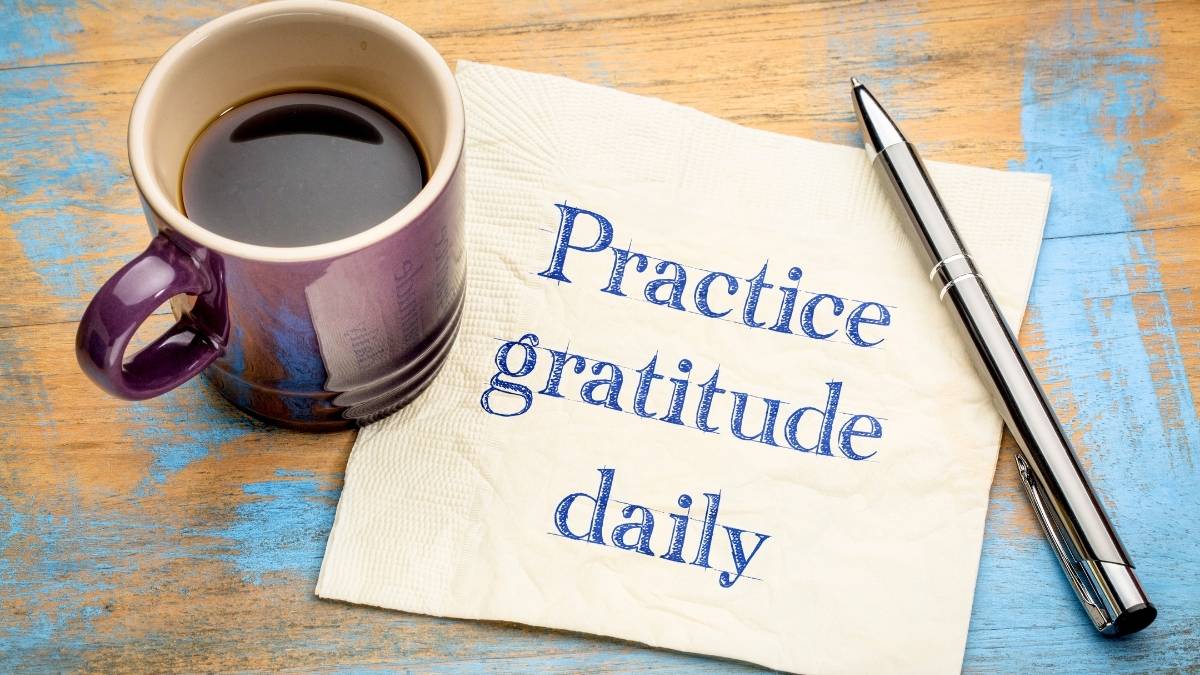
Gratitude is not about pretending everything is fine. It is about training your brain to also notice what is working — because the brain naturally focuses on threats and problems.
The Mindfulness App (2025) reports that gratitude journaling retrains the brain toward positive awareness and creates a mental environment that supports relaxation and better sleep. Research by Lyubomirsky, Sheldon, and Schkade (cited in PsychUniverse, 2025) confirms that small daily positive habits build into significant long-term well-being improvements over time.
The key is being specific. “I am grateful for my family” is vague. Your brain does not respond to vague. “My daughter called me today just to chat” — your brain responds to that.
What to do: Every morning, write three specific moments from the previous day that were good. Be precise. Small moments count more than big ones.
3 Tips:
- Do this before you check your phone — it frames your mental state for the morning
- Combine with journaling (habit #4) for a more powerful daily practice
- On hard days, look for the smallest possible positive — a warm meal, a comfortable chair, one moment of quiet
13. Do One Creative Thing With No Goal Attached

This is the habit most adults quietly abandon the moment life gets serious. And it is the one that keeps your inner life from going dry.
PMC mindfulness research lists painting, drawing, singing, and gardening as legitimate mental self-care activities. The point is not to get good at something. The point is to do something purely for the experience of doing it — with no productivity goal, no audience, no result to measure.
This reactivates the brain’s reward system. It also gives you something doomscrolling can never give you: the feeling of being genuinely absorbed in something you chose.
Most adults stopped doing creative things because no one told them it still counts as valuable once you are grown.
It does.
What to do: Think back to something you enjoyed before adulthood got loud. Pick one thing. Block 30 minutes for it this week and protect that time.
3 Tips:
- It does not need to look good or sound good — the process is the whole point
- Creative activities reduce cortisol and activate the parasympathetic nervous system (the “rest and digest” state)
- If you are stuck, try coloring books, doodling, cooking a new recipe, or playing a musical instrument badly and happily
14. Cut Back on Alcohol

This one is uncomfortable for some people. That discomfort is worth sitting with.
Alcohol use disorder is one of the most prevalent mental health disorders in men globally, according to The Lancet Psychiatry (2023). Even moderate drinking disrupts your sleep architecture — meaning you spend less time in deep, restorative sleep stages even if you sleep for eight hours.
Alcohol also increases anxiety the day after drinking (the rebound effect), suppresses your immune system, and makes it harder to regulate your emotions. It is one of the most common ways people self-medicate stress — and one of the most effective ways to make it worse over time.
The trend toward alcohol-free living is growing fast in 2025 and 2026. Many people who Cut alcohol report better sleep within days and lower anxiety within weeks.
What to do: Try one alcohol-free week. Track your sleep, mood, and energy. Let the data tell you what to do next.
3 Tips:
- Quit alcohol today and live a healthy life.
- Tell one person about your experiment so you have accountability
- If Cut alcohol feels very difficult, that is important information worth discussing with a doctor
15. Do a Five-Minute Sunday Life Check-In

Most people drift into burnout slowly. They do not notice it happening until they are already in it.
Self-care research published in PMC recommends using a PEMSS framework to regularly check in with yourself across five areas: Physical, Emotional, Mental, Social, and Spiritual. Without a regular check-in habit, small problems grow silently until they become large ones.
Five minutes every Sunday is enough to spot where you are depleted before it becomes a crisis. It is the GPS for your overall well-being. It also keeps you honest — because it is easy to tell yourself you are fine when you have not actually stopped to check.
This habit costs nothing. It takes almost no time. And it prevents almost everything on this list from being needed urgently.
What to do: Every Sunday evening, ask yourself five questions: Am I sleeping enough? Am I moving? Have I connected with someone real? Have I done something kind for myself? What do I need most right now?
3 Tips:
- Write the answers down — it takes the check-in from a vague thought to a real assessment
- If you answer no to three or more questions, pick one habit from this list and prioritize it that week
- Pair this with a cup of tea or coffee — it becomes something you look forward to, not a chore
How to Build These Habits Without Quitting After Two Weeks
Here is what happens to most people: they read an article like this, feel motivated, try to start all 15 habits at once, and quit by Friday.
Research cited by PARINC (December 2025) shows that roughly 88% of people quit new habits within the first two weeks. The reason is not willpower. It is trying to do too much too fast.
PsychUniverse (2025) confirms that even 10 minutes of meditation, even brief journaling, even short walks produce measurable mental health benefits. Consistency beats intensity every single time.
The method that works is called habit stacking. You attach a new habit to something you already do. Gratitude journaling while your coffee brews. A 10-minute walk after lunch. A body scan while your dinner heats up.
You also need to schedule it. Treat your self-care block like a meeting you cannot cancel — because it is.
And track progress without punishing yourself for missing a day. Self-care is a lifestyle, not a test you pass or fail.
Globally, 52% of consumers are now taking a long-term approach to their health — integrating lasting changes rather than chasing quick fixes (Lallemand Health Solutions, 2024). That is the mindset that actually works.
3 Tips:
- Pick one habit only for the first two weeks — then add a second once the first is automatic
- Stack new habits onto existing ones to reduce the mental effort of starting
- Missing one day is normal — missing three in a row is when you need to simplify further
Final Words,

These 15 self-care ideas are not trends. They are backed by WHO, CDC, NIH, and peer-reviewed research. None of them require money, hours of spare time, or a perfect life.
Pick one. Start it today.
Your daily self-care routine does not need to be perfect. It just needs to exist.