
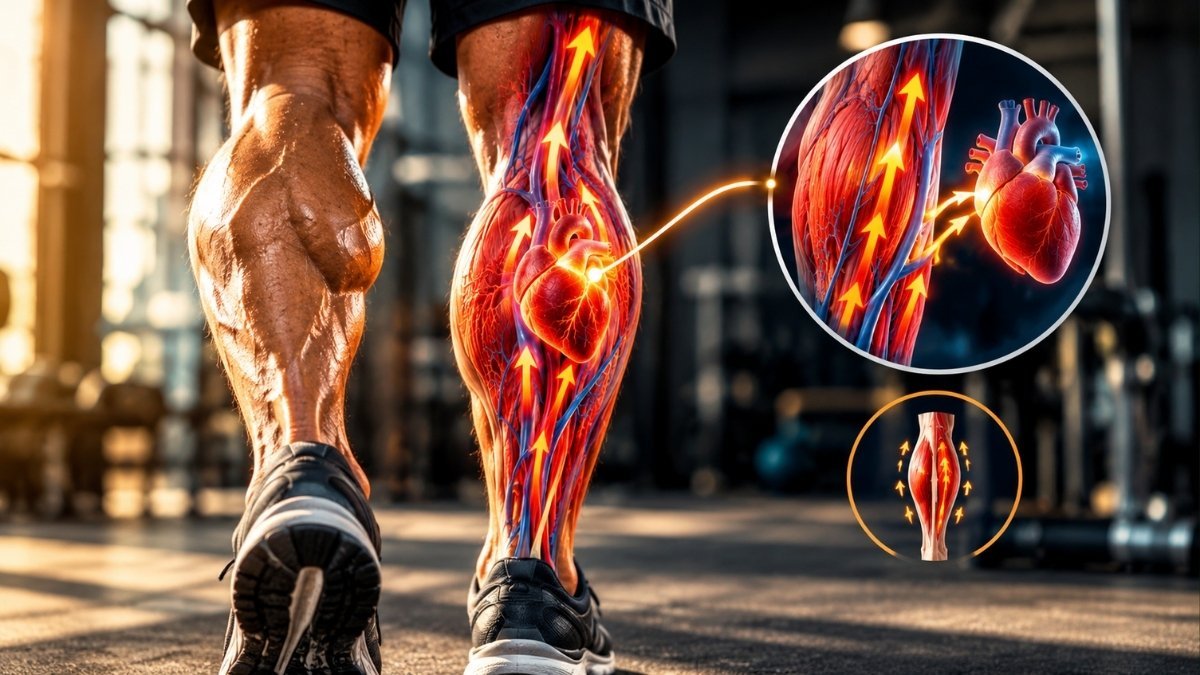
Your legs feel heavy by late afternoon. Your ankles look a little puffy after a long day of sitting.
Most people blame age and move on. But the calf muscles, often called the second heart, may be doing less work than they should, and that can quietly affect your circulation over time. Here is what they actually do, and the small changes that keep them working.
Before making any changes based on this article, talk to your doctor, especially if you are currently taking medication or have a diagnosed condition.
Why Your Calves Are Called The Second Heart
Your heart does an incredible job pushing blood out to your body. Getting it back is harder.
Blood in your feet and lower legs has to travel uphill, against gravity, to return to the heart. The heart’s pumping force has mostly faded by the time blood reaches your veins.
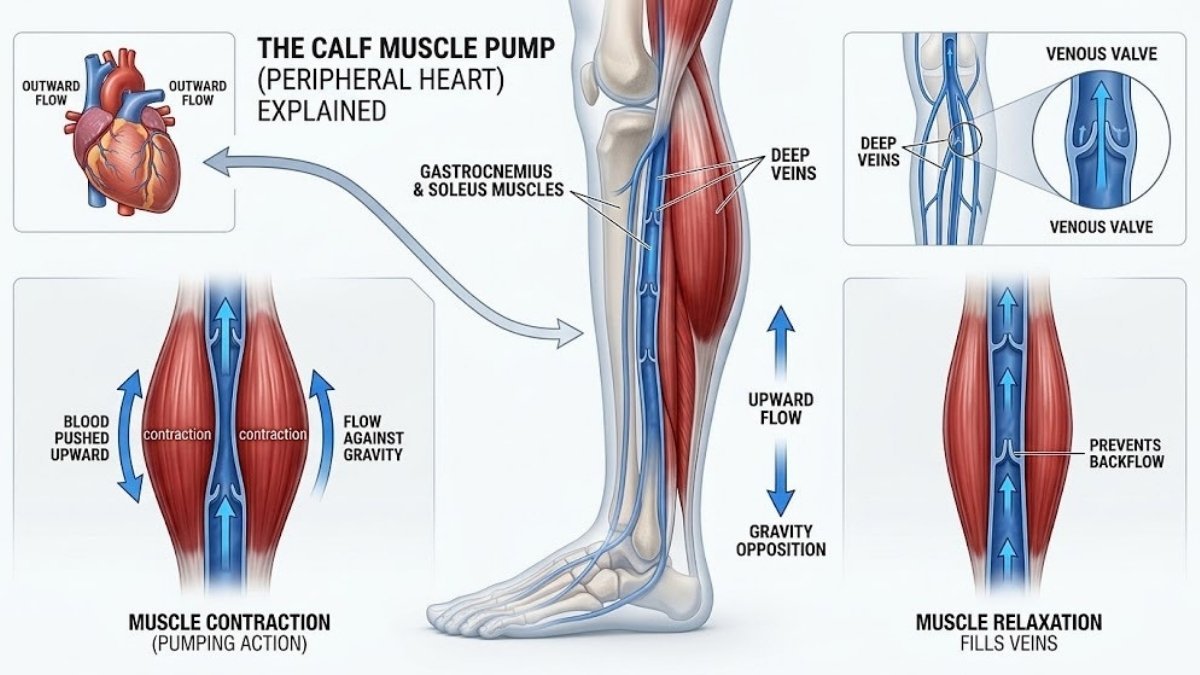
That is where the calves come in. Each time you walk, the muscles in your lower legs squeeze the deep veins running through them. This squeeze pushes blood upward.
Doctors and physiologists call this the calf muscle pump. Some also call the calf a “peripheral heart,” because its job is to help your circulation on the return trip.
How The Calf Muscle Pump Actually Works
Your leg veins contain small one way valves. Think of them as tiny doors that open upward and close behind the blood.
When your calf muscle contracts, it compresses the vein and forces blood up through one of those doors. When the muscle relaxes, the valve closes so the blood cannot fall back down. The vein then refills from below, and the cycle repeats.
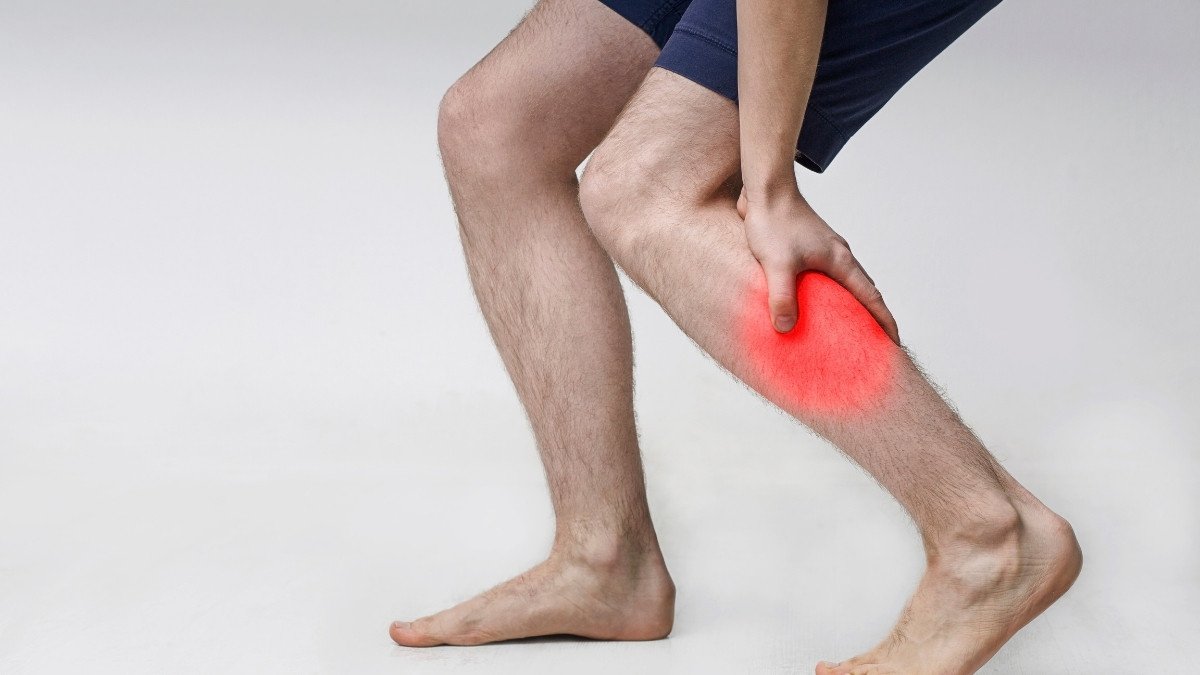
Every step you take repeats this cycle. That is why the headline is accurate: every step helps.
When you sit or stand still for hours, the pump goes quiet. Blood can pool in the lower legs, and pressure builds inside the veins.
Meet The Muscles Behind The Pump
Your calf is not one muscle. It is a team, and each member has a slightly different job.
Lower Leg Anatomy & Activation
A targeted guide to understanding the muscles of your lower leg, where they sit, and the exact biomechanical movements needed to properly train them.
Gastrocnemius
The rounded, highly visible, and most prominent superficial part of the calf.
Standing heel raises or walking uphill.
Soleus
The deeper, wider muscle that sits directly underneath the gastrocnemius.
Seated heel raises and bent knee movements.
Tibialis anterior
The muscle running along the front of the shin, responsible for flexing the foot upwards.
Targeted toe lifts or walking on your heels.
The soleus deserves special attention. It is a large, deep muscle that sits close to major veins, and researchers consider it one of the most important parts of the calf pump.
It also tires slowly, which makes it well suited to gentle, repeated movement throughout the day.
What Happens When The Pump Slows Down
A weak or underused calf pump can contribute to a few common complaints. These include swollen ankles, aching or heavy legs at the end of the day, and visible veins.
Over time, poor venous return is linked to a condition called chronic venous insufficiency. This happens when leg veins struggle to send blood back to the heart. It becomes more common with age, and it is one reason doctors ask patients about their daily movement habits.
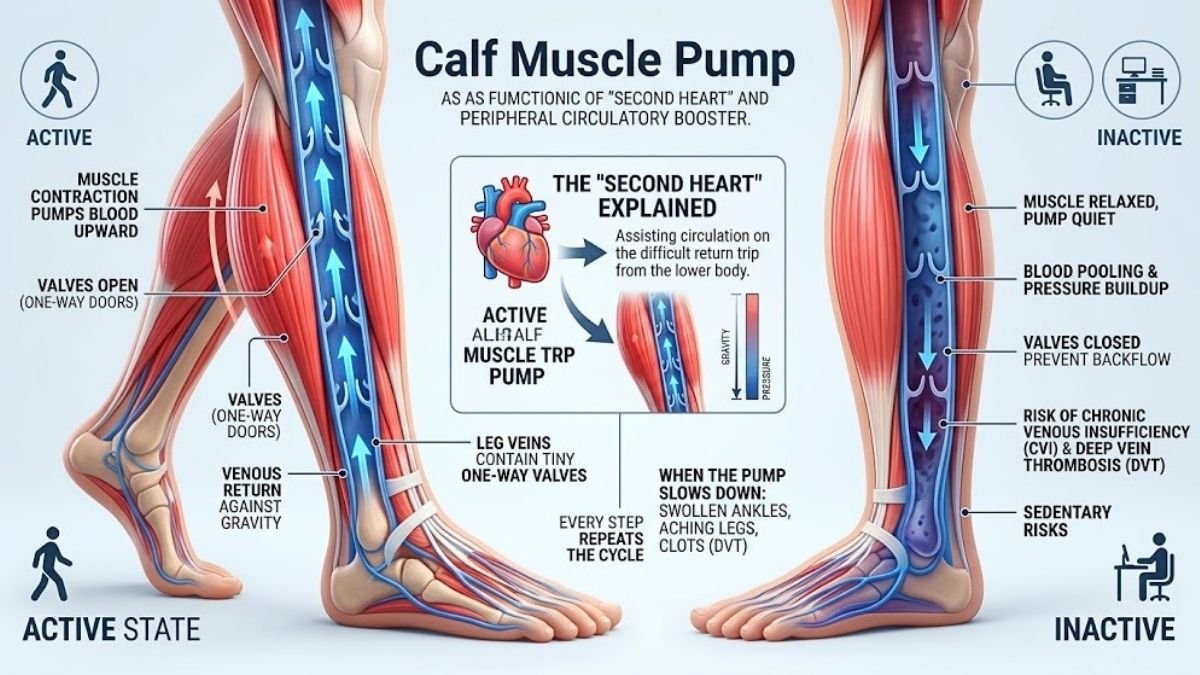
Long periods of sitting also matter for another reason. Extended immobility, such as a long flight or bed rest after surgery, raises the risk of blood clots in the deep veins of the legs. Doctors often encourage calf movement during those situations for this reason.
Movement alone is not a guarantee against clots or vein disease. But keeping the pump active is one of the simplest habits available.
The Sitting Problem Nobody Talks About
Here is what most people miss. A workout does not cancel out hours of stillness.
You can walk 30 minutes in the morning and still spend eight hours in a chair. During those hours, your calf pump barely fires.
Health organizations increasingly recommend breaking up long sitting periods. A common suggestion is to stand up and move for a few minutes every 30 to 60 minutes.
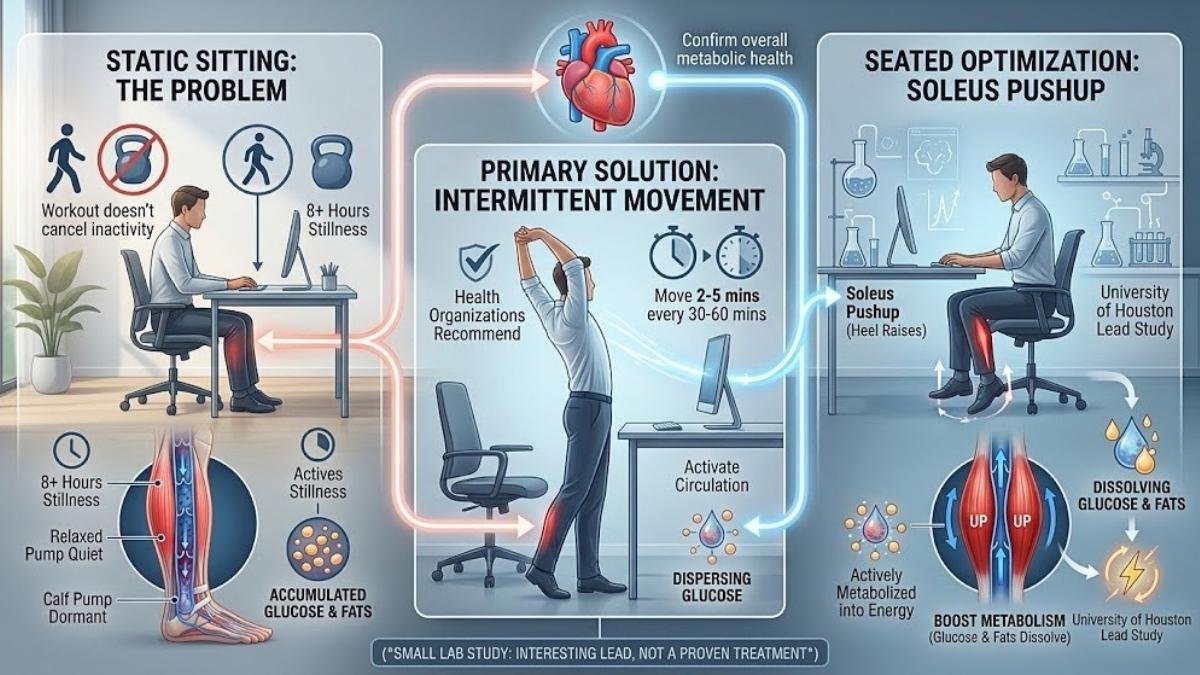
Some research has also looked at the soleus specifically. A small laboratory study from the University of Houston found that a seated movement called the soleus pushup,
which is repeated raising of the heels while sitting, boosted how the body handled blood sugar and fats in healthy adults. It was a small study, so treat it as an interesting lead, not a proven treatment.
Everyone’s body responds differently, so check with your doctor before trying these movements if you have an existing condition or take medication.
Try This Today: The Second Heart Habit Box
Small moves that keep your calf pump working:
- Stand and move every 30 to 60 minutes. Even one minute of walking counts.
- Do 15 seated heel raises during phone calls or TV shows. Keep your toes on the floor and lift your heels.
- Do ankle pumps before getting out of bed or when your legs feel heavy. Point your toes, then flex them back, 15 to 20 times.
- Take a short walk after meals. Ten minutes is a good start.
- Move often on long trips. On a flight or drive, flex and rotate your ankles regularly and stand when you safely can.
Simple Exercises To Strengthen Your Calf Pump
You do not need a gym. These four moves cover most of what your calves need.
Standing heel raises:
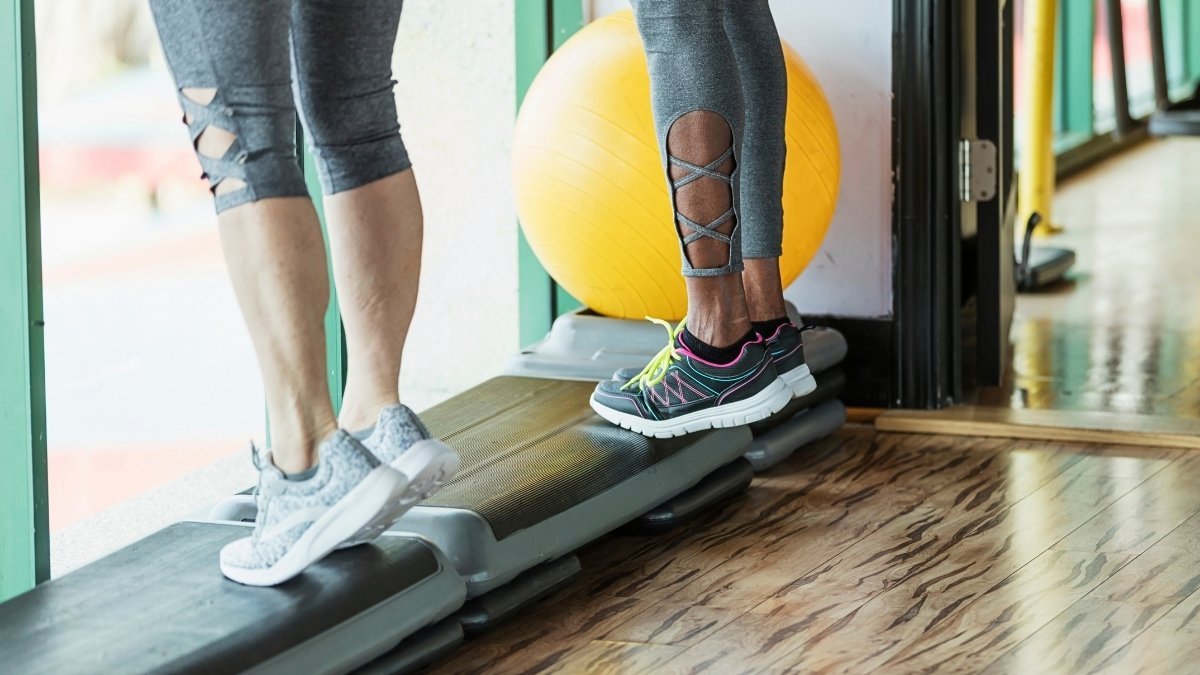
Hold a counter for balance. Rise onto your toes slowly, pause for a second, then lower over three seconds. Aim for 2 sets of 10 to 15 repetitions.
Seated heel raises:
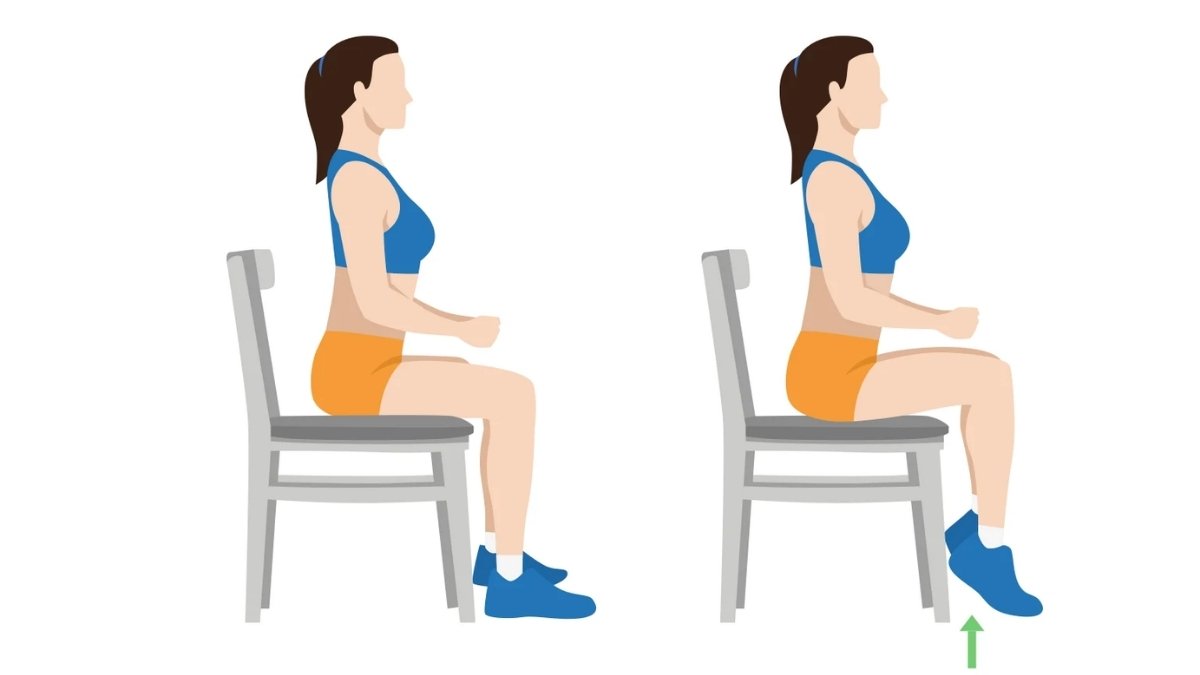
Sit with your feet flat and knees bent. Lift your heels as high as you comfortably can and lower them. This targets the soleus, and you can do it almost anywhere.
Ankle pumps:
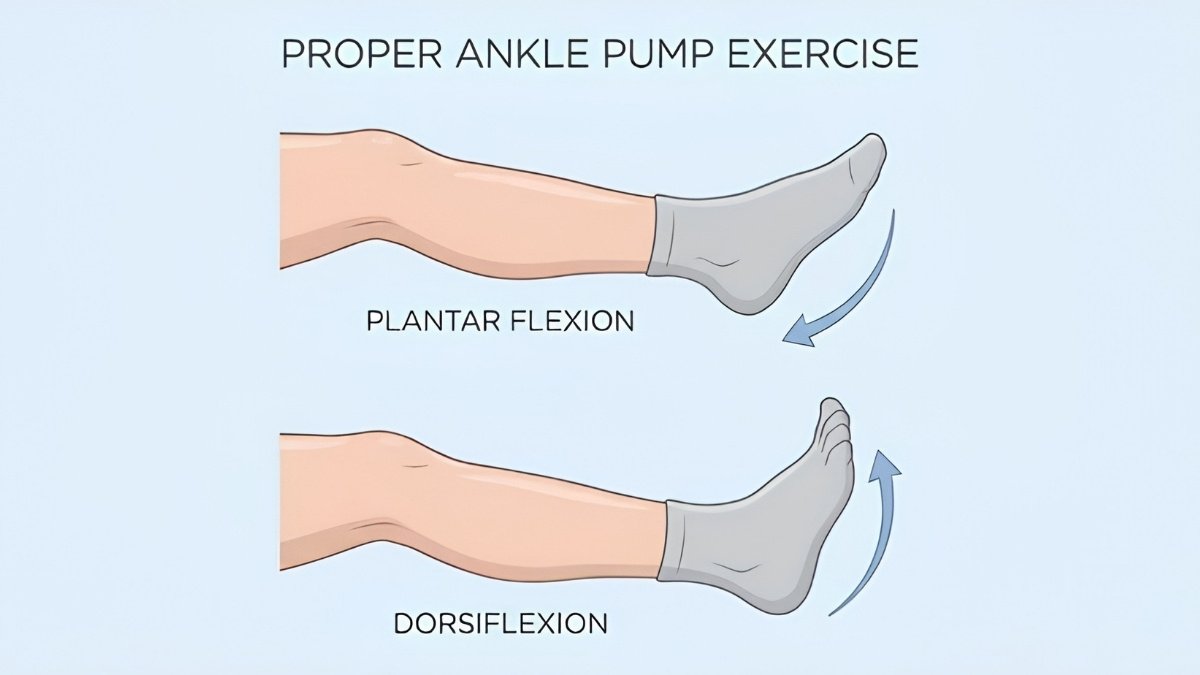
Lie down or sit with your legs supported. Point your toes away, then pull them toward you. This is gentle and works well for people who cannot stand for long.
Walking:
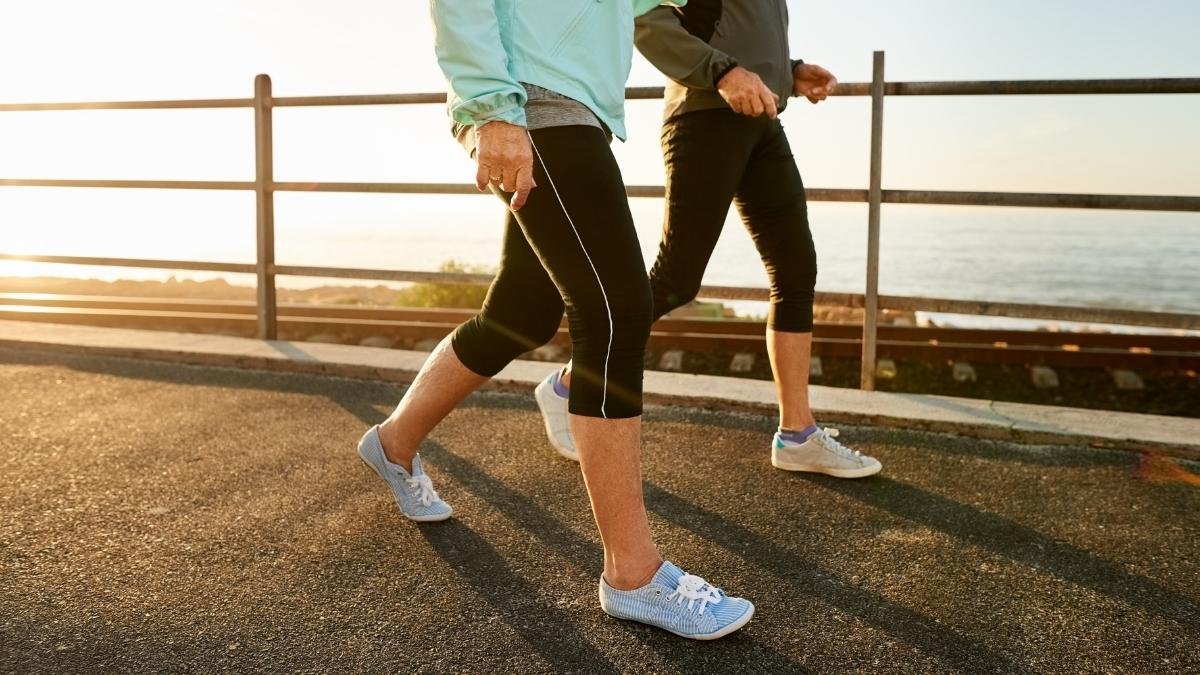
A steady walk of 20 to 30 minutes on most days uses the calf pump with every step. Walking uphill or on gentle slopes increases the demand on the muscles.
A Quick Self Check You Can Do At Home
Stand next to a sturdy counter and hold it lightly. Try to rise onto your toes 10 times in a row, slowly and with control.
If this feels easy, your calf strength is likely in decent shape. If you struggle to rise fully,
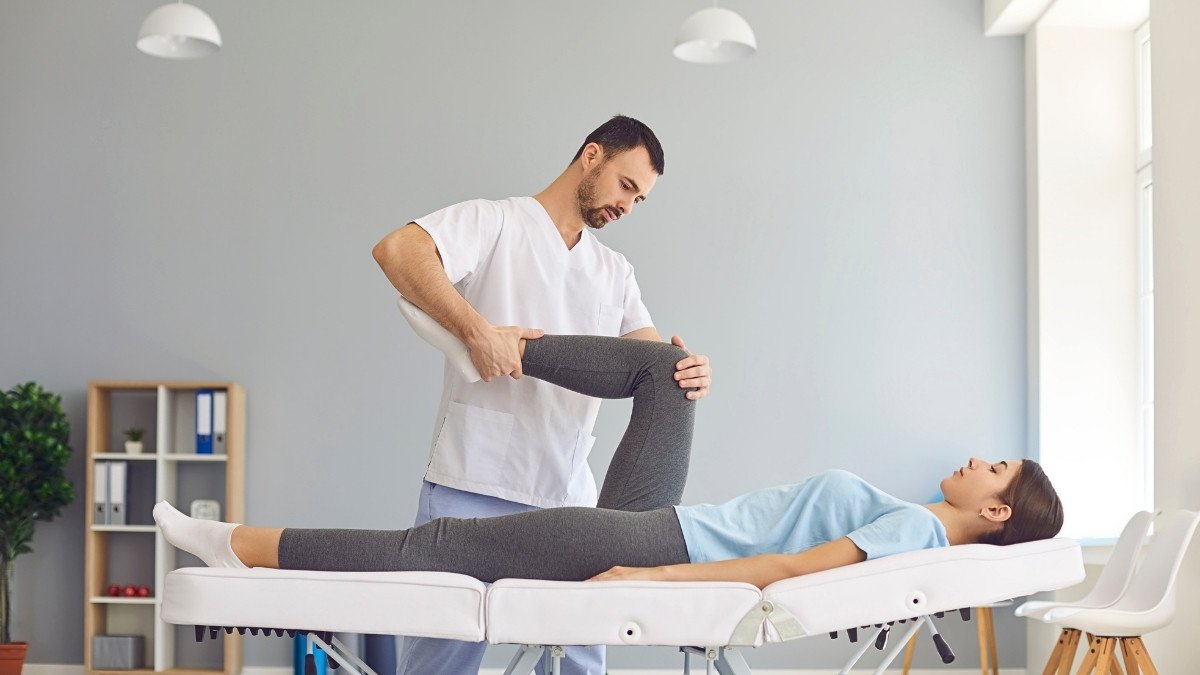
feel one leg is clearly weaker, or need to lean heavily on the counter, mention it to your doctor or a physical therapist.
This is a simple screening idea, not a diagnosis. Balance problems, joint pain, or nerve issues can also affect the result.
Everyday Habits That Help Or Hurt
Small choices add up across a day. Here is a quick look at what supports your calf pump and what works against it.
The Circulation Scorecard
How your daily habits directly affect the “calf muscle pump,” either supporting healthy blood flow or allowing fluids to pool in your lower legs.
Sitting for hours without moving
The muscle pump stays completely quiet, gravity takes over, and blood heavily pools in the lower legs.
Taking short walking breaks
Each and every step actively squeezes the deep veins and successfully pushes blood upward back to the heart.
Crossing legs for long periods
Creates mechanical pressure that may significantly reduce and restrict proper circulation in the legs.
Staying properly hydrated
Directly supports a healthy blood volume, keeping circulation smooth and preventing thickening.
Some people benefit from compression stockings, which apply gentle pressure to help veins push blood upward. They are commonly used for swelling and vein problems, but the right strength varies. Ask your doctor before buying a pair, since they are not suitable for everyone.
Common Questions

How long before I notice a difference?
Some people feel lighter legs within days of moving more often. Strength gains from exercise usually take several weeks of regular practice.
Can I overdo calf exercises?
Yes. Sudden, intense calf work can cause soreness or strain. Start small and build up gradually.
Who should be careful?
Anyone with a history of blood clots, severe swelling, heart or kidney conditions, or nerve problems should get medical guidance first.
Red Flags: When To Stop Reading And Call A Doctor
Get medical help promptly if you notice any of these:
- Swelling in one leg only, especially with pain, warmth, or redness in the calf
- Sudden shortness of breath or chest pain, which needs emergency care
- Skin changes on the lower leg such as darkening, hardness, or sores that do not heal
- Calf pain that appears suddenly and does not ease with rest
These can signal a blood clot or another serious condition. Do not try to stretch or exercise through them.
The Bottom Line,
Your calves are more than muscles for walking. They are a working part of your circulation, and they get stronger or weaker depending on how you use them.
The good news is that keeping the pump active does not require a big commitment. A few minutes of movement scattered through your day can make a real difference to how your legs feel.