
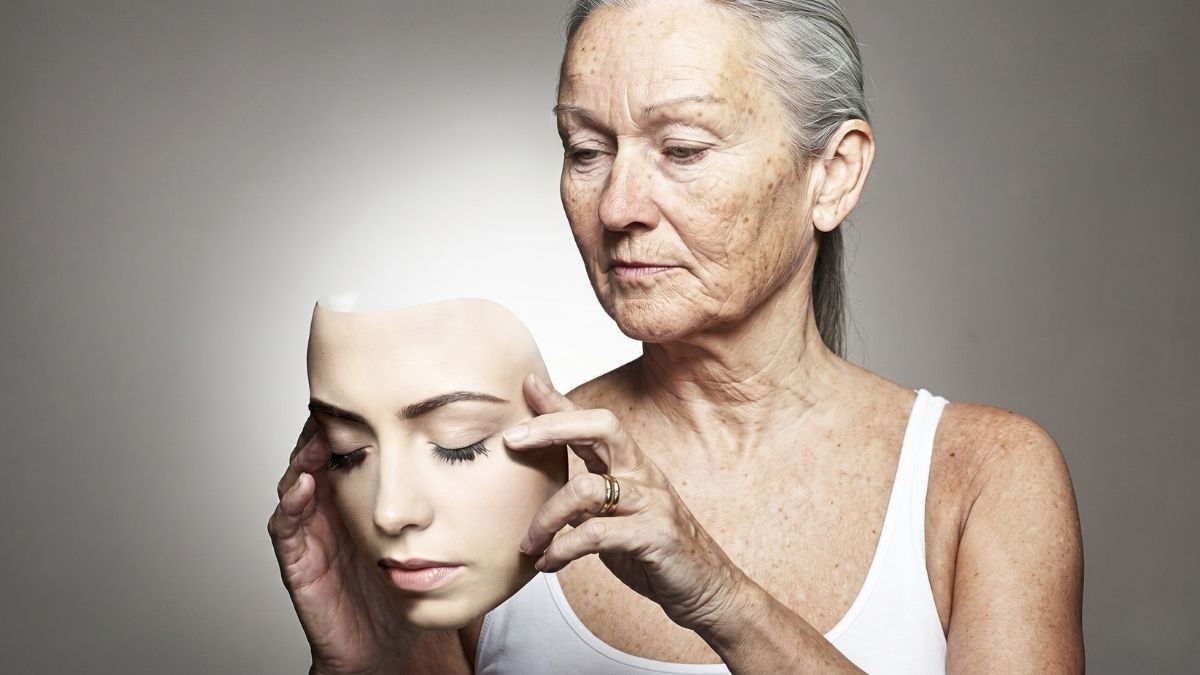
You are in your mid-30s. You wash your face every night. You use good products. But your skin still looks tired, dull, and older than it should.
The problem is not your skincare routine. The real problem is happening inside your body — in your hormones.
Most people never hear this from their doctors. They buy more creams. They try new serums. Nothing works long-term because they are treating the symptom, not the cause.
You will learn the clear warning signs. And you will get a real, evidence-backed plan you can start this week to slow it down and fix it.
Which hormones are aging your skin
Point One: The Hormone-Skin Link Most Doctors Never Tell You About
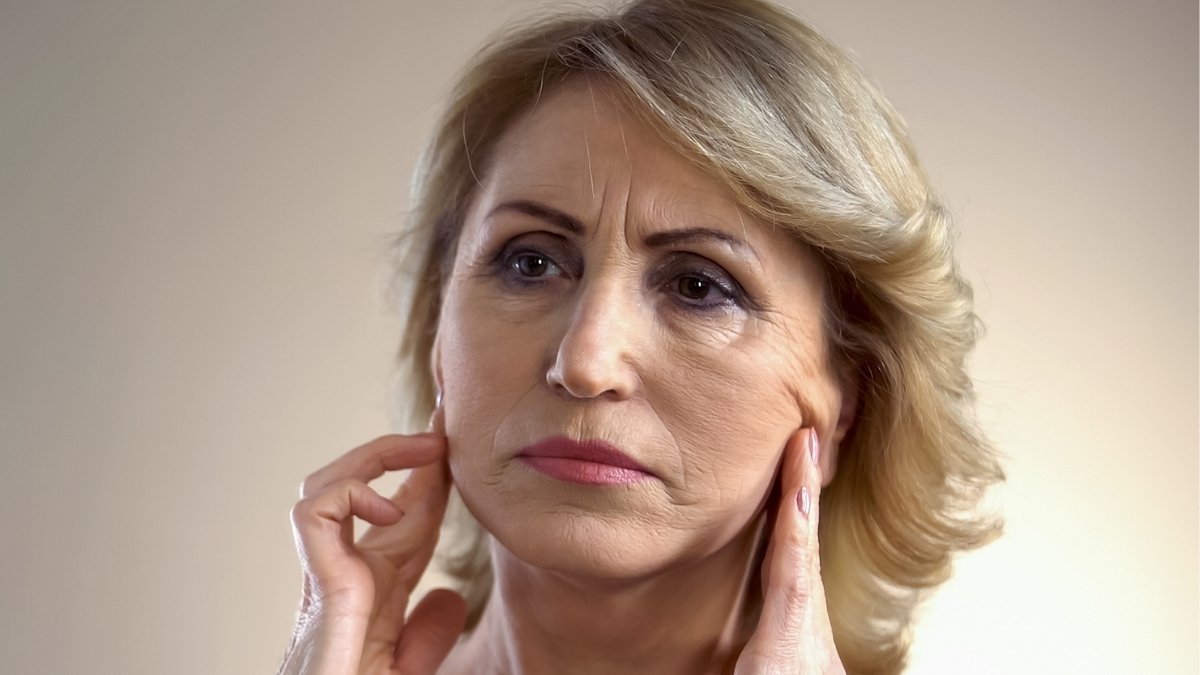
Your skin is not just a surface. It is a living organ that both responds to hormones and produces them.
In 2025, Dr. Markus Böhm of the University of Münster confirmed through the Endocrine Society that the skin is “the largest and richest site for hormone production besides classical endocrine glands.” That means what happens in your hormones shows up directly on your face.
Three hormones control how fast your skin ages: estrogen, cortisol, and progesterone. Estrogen tells your skin to build collagen and hold water. Cortisol tells it to break collagen down. When these two fall out of balance, your skin pays the price.
Here is the part most people miss. Collagen production starts dropping at age 25. Estrogen starts falling in your mid-to-late 30s. These two declines happen at the same time — quietly — before you notice a single wrinkle.
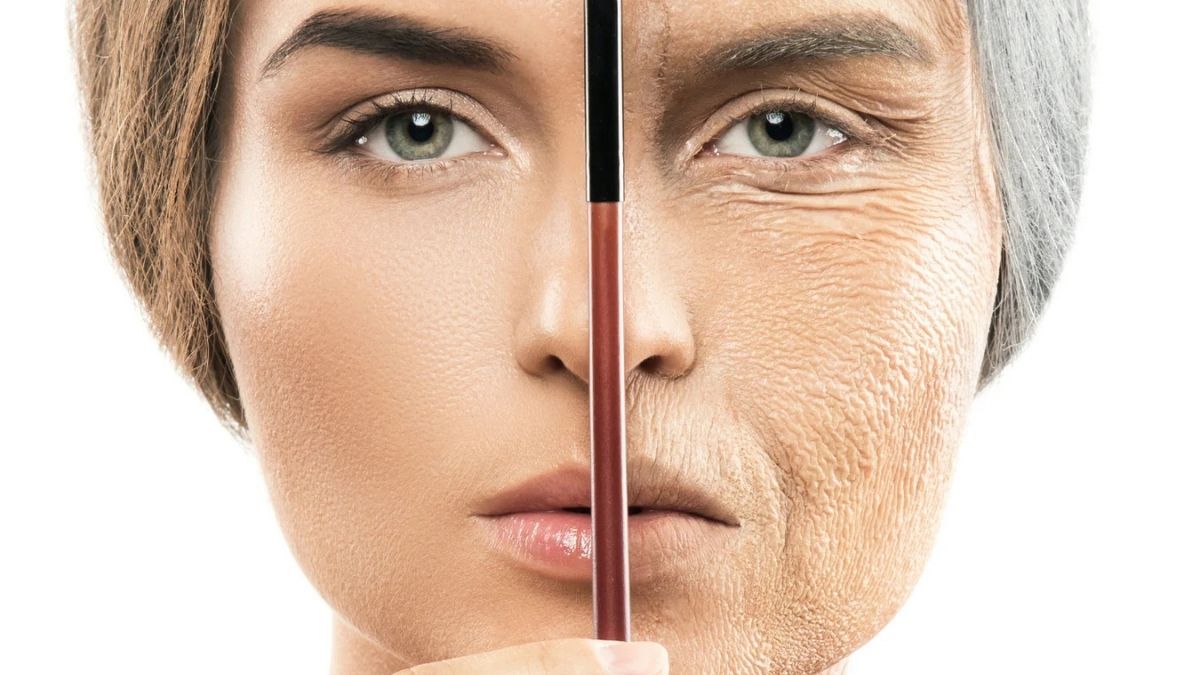
Your skin’s aging speed is not fixed. Hormonal imbalance is something you can change. A 34-year-old under constant stress can have the skin biology of someone ten years older.
Helpful Tips:
- Ask your doctor to check your estrogen and cortisol levels at your next visit
- Start tracking skin changes like dryness or dullness — they often signal hormone shifts
- Know that your skincare routine alone cannot fix a hormone problem
Point Two: Estrogen Loss — The Silent Collagen Thief
Picture a metal scaffold behind your face. That scaffold is collagen. Estrogen is the worker who keeps it strong. When estrogen drops, the worker disappears — and the structure slowly falls.
Women lose up to 30% of their skin’s collagen in just the first five years after menopause. After that, collagen keeps dropping at about 2% every year. This is not a gradual fade. It is a steep fall confirmed by the American Society of Plastic Surgeons in December 2025.
Perimenopause — which can start in your mid-to-late 30s — causes progesterone to drop first. Then estrogen follows. Many women in their late 30s blame skin dullness, jaw breakouts, or puffiness on stress or diet. The actual cause is often this hormonal shift.
Menopause-related estrogen loss causes thinner skin, more wrinkles, increased dryness, and decreased skin firmness and elasticity. PubMed Central No moisturizer can fully fix this because the problem is structural, not surface level.
Here is a simple test. Did your skincare routine work well three or four years ago but stop working now — with no major changes? That is a hormonal shift, not a product failure.
Helpful Tips:
- If your skin suddenly became dry in your 30s, ask your doctor about perimenopause
- Add phytoestrogen-rich foods like flaxseed and soy to support natural estrogen levels
- Use a retinol product to stimulate collagen production while estrogen declines
Point Three: Cortisol — The Stress Hormone Destroying Your Skin Daily

You do not need years of sun damage to age your skin fast. Stress alone can do it. This is not motivational talk. It is biology.
Cortisol blocks two substances that keep your skin looking plump and vibrant: hyaluronan synthase and collagen. Cleveland Clinic Hyaluronic acid is what keeps your skin full and bouncy. When cortisol blocks it, your skin deflates.
A 2025 peer-reviewed study published in the Journal of Cosmetic Dermatology found that cortisol reduced filaggrin — a key protein protecting your skin barrier — by 32%. Chronic psychological stress affects skin biology through different pathways:
from DNA damage to altered gene expression, translating into wrinkles and impaired antioxidant protection. PubMed Central
Think about the “presidential aging effect.” Leaders enter office looking healthy. Four years later, they are visibly older. That is chronic cortisol doing visible, measurable damage.
Individuals experiencing long-term stress exhibit significantly shorter telomeres, indicating faster biological aging compared to low-stress populations. Medical Daily Shorter telomeres mean your cells age faster at a genetic level.
Low estrogen plus high cortisol is the worst combination for your skin. It attacks collagen from two directions at once.
Helpful Tips:
- Do 10 minutes of deep breathing or meditation daily — it directly lowers cortisol
- Limit caffeine after noon, as it raises cortisol levels in the afternoon
- Avoid scrolling stressful content before bed — your cortisol stays elevated for hours after
Point Four: Six Warning Signs Your Skin Is Aging From Hormones, Not Age
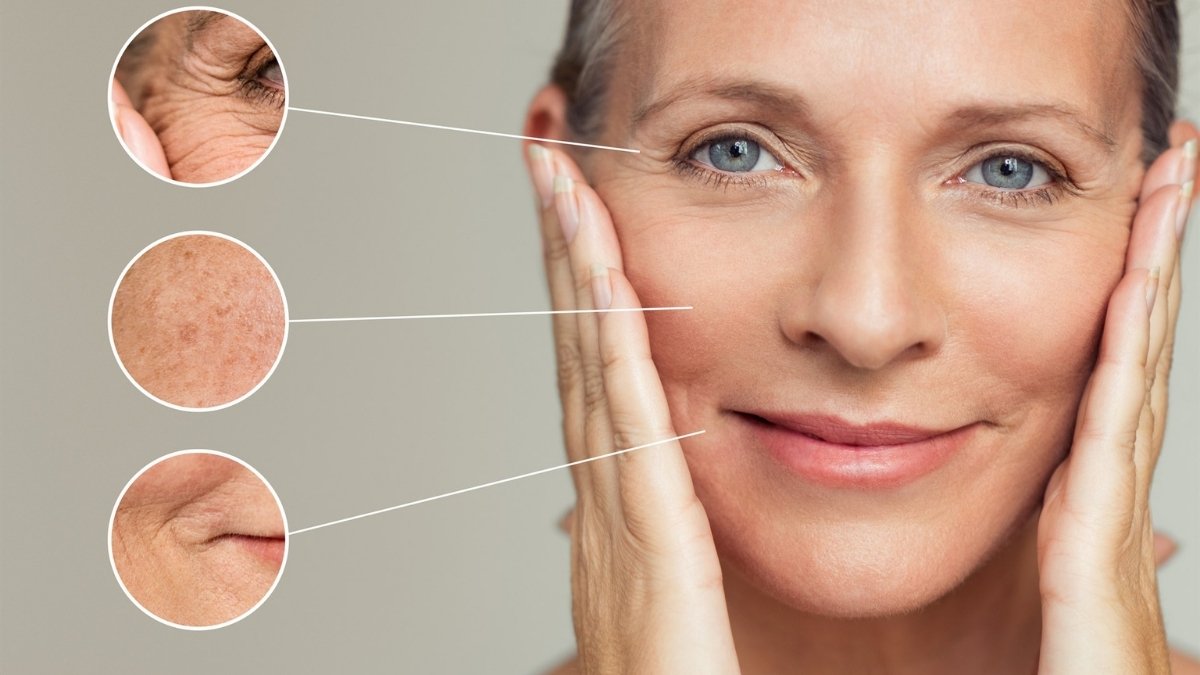
Normal aging happens slowly and evenly over decades. Hormonal skin aging is faster, uneven, and starts earlier than expected. Knowing the difference gives you power to act.
Here are six clear signs your skin is aging from hormonal imbalance — not just time.
6 Signs of Hormonal Skin Shifts
Sudden Dryness
Occurs in your 30s, especially if you used to have oily skin. This links directly to falling estrogen and lower sebum production.
Sagging Jawline
Loss of firmness along the jawline or neck before age 45. This is collagen collapse, not gravity.
Adult Breakouts
Acne appearing specifically along the jaw and chin—a direct sign of progesterone and testosterone imbalance.
Dull Skin
Skin loses its glow, even after a full night of sleep. Low estrogen significantly slows skin cell turnover.
Easy Bruising
Skin that bruises or tears much more easily than before indicates that the dermis is thinning.
Products Fail
Skincare that used to work is now doing nothing. Your underlying hormonal environment has changed entirely.
Nearly 70% of menopausal women report sagging skin as their primary concern, yet few connect this to hormone imbalance. Inner Balance More than one-third of women develop dark spots and uneven tone after menopause due to hormonal shifts in melanin production.
Helpful Tips:
- Count how many of these six signs you have — three or more points to a hormone issue
- Take a photo of your face monthly to track changes over time
- Tell your doctor about these specific signs, not just “my skin looks older”
Point Five: Five Things You Can Do Right Now to Fix Hormonal Skin Aging
The good news is that hormonal skin aging responds well to the right lifestyle changes. Your body can rebalance. But you have to give it the right signals.
Hormonal Aging Protocol
Integratedmedicine
Cleveland Clinic
Skin Care Institute
Helpful Tips:
- Start with just one change this week — small consistent steps beat big short bursts
- Ground flaxseed in yogurt or oatmeal is the easiest daily hormone-support habit
- Use ceramide-rich moisturizer at night when your skin barrier repairs itself most actively
Point Six: When Lifestyle Is Not Enough — Medical Help for Hormonal Skin in 2026

If you have changed your diet, improved your sleep, and reduced stress — but your skin is still aging fast — that is not failure. That is a signal your hormonal imbalance needs medical support.
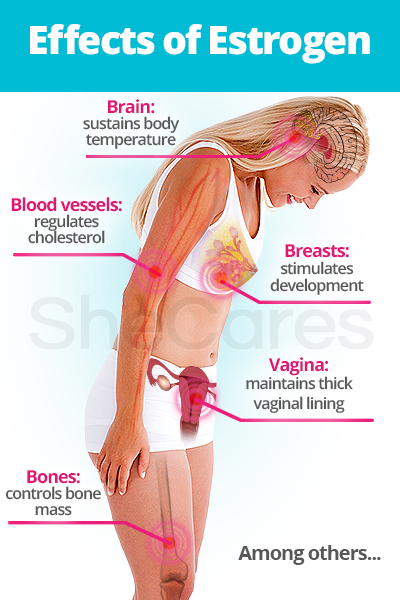
In November 2025, the US FDA officially removed misleading warnings on hormone replacement therapy (HRT). The FDA stated that estrogen is a key hormone for women’s health and that every single part of a woman’s body depends on estrogen to operate at its best.
Including the brain, bones, heart, and muscles. MDPI HRT has been shown to increase skin hydration, thickness, and elasticity while reducing wrinkle depth.
Ask your doctor for these specific lab tests: estradiol, morning cortisol, progesterone, DHEA-S, TSH, and free T3. These give a full hormonal picture of what is driving your skin aging.
Estrogen-based skincare contains bio-identical estrogens or estrogen-mimicking compounds like estriol that bind to estrogen receptors in the skin to address the collagen and hydration decline that happens when estrogen levels fall in peri and post-menopause. American Society of Plastic Surgeons These require a prescription and medical supervision.
For in-office treatments, microneedling with radiofrequency (like Morpheus8) and laser resurfacing build collagen in hormonally thinned skin and work best alongside hormone support.
Helpful Tips:
- Print this article and bring it to your doctor to ask for the specific lab panel listed above
- Do not accept “your age is normal” as an answer if you have multiple hormonal skin signs
- Ask about prescription topical estriol if you are in perimenopause or post-menopause
Final Words,

Premature skin aging is almost always hormonal. Falling estrogen and rising cortisol work together to destroy collagen, dry out your skin, and accelerate aging years before it should happen.
The fix is not a new serum. It is a hormone-aware plan. Start one habit today. Your skin is waiting.