
You walk for an hour. You bike on weekends. You tell yourself that is enough. And still your legs feel weaker every year.
Here is the problem. Cellular decay after 50 is real: muscle fibers shrink, and the tiny power plants inside them (mitochondria) lose their edge. Hours of steady cardio do not fully rebuild what is slipping away.
Ignore it, and the stakes get personal. Stairs feel steeper. Standing from a low chair takes a push from your arms. A fall becomes a real risk, and independence starts to shrink.
Research points to one movement pattern that helps, and it is not another long walk. It is the squat. It is not magic, and the full story has a twist. But the evidence is stronger than most people expect, and you can start in ten minutes. Here is what the science says, and how to begin safely at home.
Before making any changes based on this article, talk to your doctor, especially if you are currently taking medication or have a diagnosed condition.
What Cellular Decay After 50 Actually Looks Like
Your muscles are not just tissue that moves you around. They are packed with mitochondria, the structures that turn food into usable energy.
After about age 35, muscle loss begins at roughly 1 to 2 percent a year, according to Harvard Health. After 60, it can speed up to around 3 percent a year.
Adults who skip strength training can lose an estimated 4 to 6 pounds of muscle per decade. Much of it gets replaced by fat.
This matters because weak muscle is not a cosmetic problem. Harvard reports that disability is 1.5 to 4.6 times higher in older people with moderate to severe muscle loss than in people with normal muscle mass.
There is an energy side too. In a 2007 study, muscle samples from healthy older adults showed gene activity linked to mitochondrial impairment, compared with samples from young adults. Picture a power grid running on old wiring.
The Single Movement Pattern: The Squat
Meet the squat. It is the same movement you make every time you lower yourself into a chair and stand back up.
Done with resistance, it loads your glutes, quadriceps, and hamstrings at once. Those are the largest muscles in your body, so they are where the most is at stake.

Here is the honest part. No study has tested the squat alone as a cellular rejuvenation tool. The best evidence comes from resistance programs built around leg work, such as the leg press and leg extension. The squat is simply the cheapest way to train those same muscles at home.
What Happened When Older Adults Lifted For Six Months
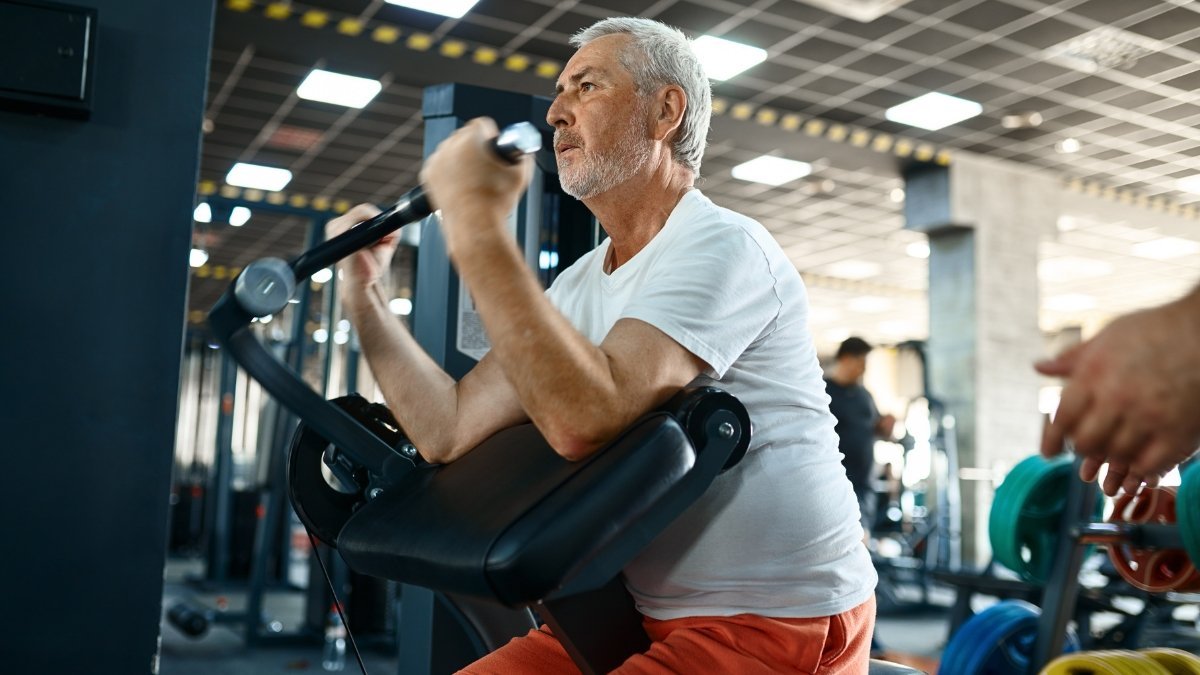
The 2007 study, published in PLOS ONE, compared muscle biopsies from 25 healthy adults aged 65 and older with samples from 26 young adults. Fourteen of the older adults then followed a six month resistance program on standard gym equipment.
Before training, the older group was 59 percent weaker than the young adults. After six months, the gap shrank to 38 percent.
Even more striking, most of the age related gene changes moved back toward the pattern seen in younger muscle. The authors described the reversal as partial for strength and substantial for gene activity.
One caution: only 14 older adults completed the training. Treat it as a promising signal, not final proof.
The Research At A Glance
Strength Training & Aging Research Matrix
Landmark scientific studies tracking how resistance exercise, cardio, and muscle strengthening impact longevity biology.
Strength gap with young adults shrank from 59% to 38%. Aging gene patterns moved toward younger levels.
Interval cycling raised mitochondrial proteins the most, while weights built muscular strength.
Endurance and interval training raised telomerase activity and telomere length; weight training did not.
Muscle strengthening was linked to a 10% to 17% lower risk of all-cause mortality.
Do You Really Have To Quit Cardio?
Not quite, and this is where many articles on this topic get it wrong.
The 2017 Mayo Clinic study compared interval cycling, weight training, and a mix of both. Short, hard intervals produced the biggest gains in mitochondrial proteins. Weight training alone built strength, but it did not raise mitochondrial function in the same way.
A 2019 German randomized trial found something similar for telomeres, the protective caps on your DNA. Endurance and interval training increased telomerase activity and telomere length. Resistance training did not.

So the headline is half right. You do not need hours of cardio. You do need a smarter mix.
Here is how the Physical Activity Guidelines for Americans frame it. They call for 150 to 300 minutes of moderate activity or 75 to 150 minutes of vigorous activity a week, plus muscle strengthening on 2 or more days.
Think of the squat as the missing piece for most people, not a replacement for everything else.
How Much Strength Work Is Enough?
Less than you might think. A 2022 review of 16 studies in the British Journal of Sports Medicine linked muscle strengthening to a 10 to 17 percent lower risk of death from any cause, heart disease, cancer, and diabetes.

The biggest drop for death, heart disease, and cancer showed up at about 30 to 60 minutes a week. People who combined strength work with aerobic activity did even better.
These were observational studies, so they show a link, not proof of cause.
How To Do The Squat Pattern Safely After 50
Start with a chair. It gives you a target and a safety net.
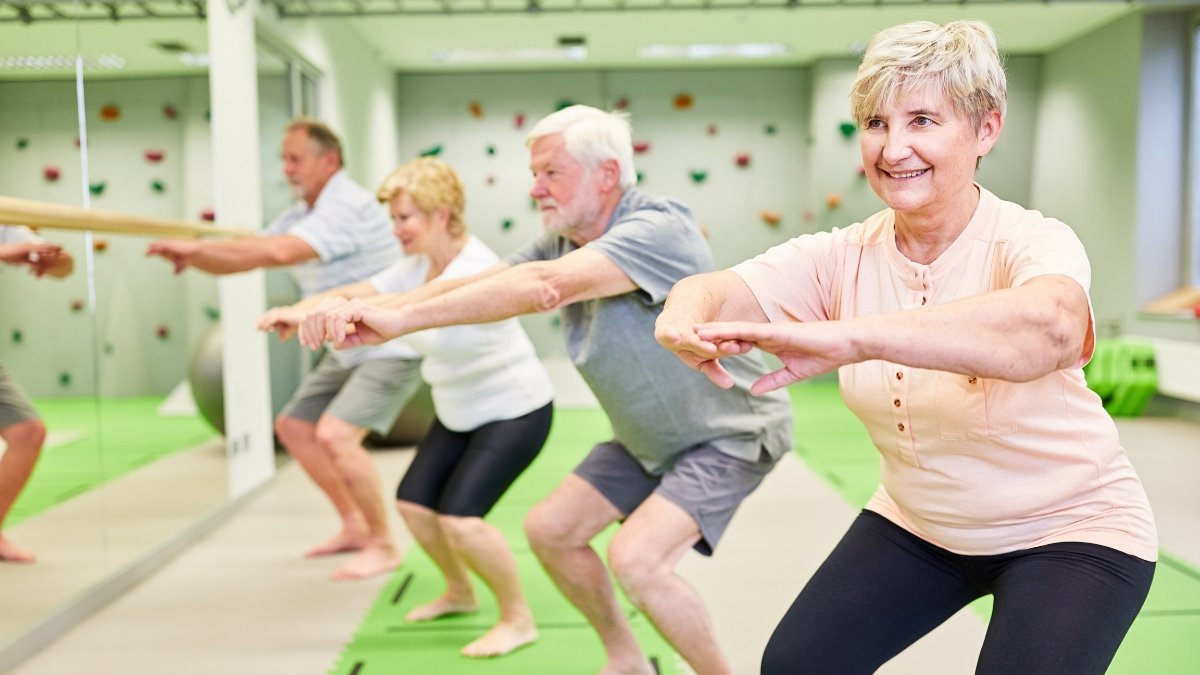
- Set your stance. Sit tall near the front of a sturdy chair, with your feet about shoulder width apart.
- Stand up slowly. Lean slightly forward, press through your whole foot, and rise until your hips and knees are straight.
- Hinge back down. Push your hips back as if reaching for the seat, and take about three seconds to lower.
- Touch and go. Tap the seat lightly. Do not drop into it.
- Add weight later. After two comfortable weeks, hold a light weight against your chest.
How much? The 2007 study used 3 sets of 10 repetitions per muscle group, with sessions twice a week. If you are new, start with 2 sets of 6 to 8 and build up from there. Leave a rest day between sessions.
Everyone’s body responds differently, so check with your doctor before trying these sets if you have an existing condition or take medication.
Try This Today: The 10 Minute Squat Habit
Small, doable steps to start tonight:
- Do 5 slow sit to stand reps the next time you get up from the couch.
- Pick 2 set days this week, such as Monday and Thursday, for 2 sets of 6 to 8 chair squats.
- Breathe out as you stand. Never hold your breath.
- Keep one brisk walk on your calendar each week.
- Include protein at every meal to support muscle repair.
Test Your Starting Point In 30 Seconds
The 30 second chair stand test is a simple check of leg strength used in the CDC’s STEADI falls program. Set a straight back chair without arms against a wall, cross your arms over your chest, and count how many full stands you complete in 30 seconds.
If you need your arms to stand, the test is scored as zero. Have someone nearby for safety.
The CDC flags these scores as below average, which signals a higher risk of falls:
Age-Stratified Grip Strength Standards
Below-average grip strength thresholds for men and women across different age brackets.
The CDC chart starts at age 60. If you are in your 50s, use the 60 to 64 row as a target.
Simple movement tests can say a lot. A Brazilian study of 2,002 adults aged 51 to 80 found that each extra point on a test of sitting down on the floor and rising again was linked to a 21 percent lower risk of death. It measures balance and flexibility along with strength, and it is not a safe test for everyone.
Questions People Ask Next

How soon will I notice a difference?
The main study measured changes after six months of twice weekly training, so think in months, not days. Track your chair stand score every few weeks to see your own progress.
Do I need extra protein?
Harvard notes that the standard recommended amount is 0.8 grams per kilogram of body weight. Research suggests 1 to 1.2 grams per kilogram can help repair muscle fibers broken down by strength training. Ask your doctor first, especially if you have kidney problems.
Who should be extra careful?
People with joint replacements, osteoporosis, balance problems, or heart conditions should get medical clearance first. A physical therapist can show you the safest version of the squat for your body.
When To Stop And Call A Doctor
Stop exercising and get medical help if you notice:
- Chest pain or pressure
- Dizziness, fainting, or unusual shortness of breath
- Sharp or sudden joint pain, which feels different from normal muscle burn
- New swelling in one leg
The Bottom Line,
Muscle loss after 50 is predictable, and so is the fix. Training your biggest muscles with the squat pattern has real research behind it, including signs of younger gene activity in older muscle after six months.

It does not replace walking or short bursts of hard cardio. It fills the gap that hours of steady cardio leave behind.
Start with a chair. Keep it slow. Two short sessions a week is a smart place to begin.