
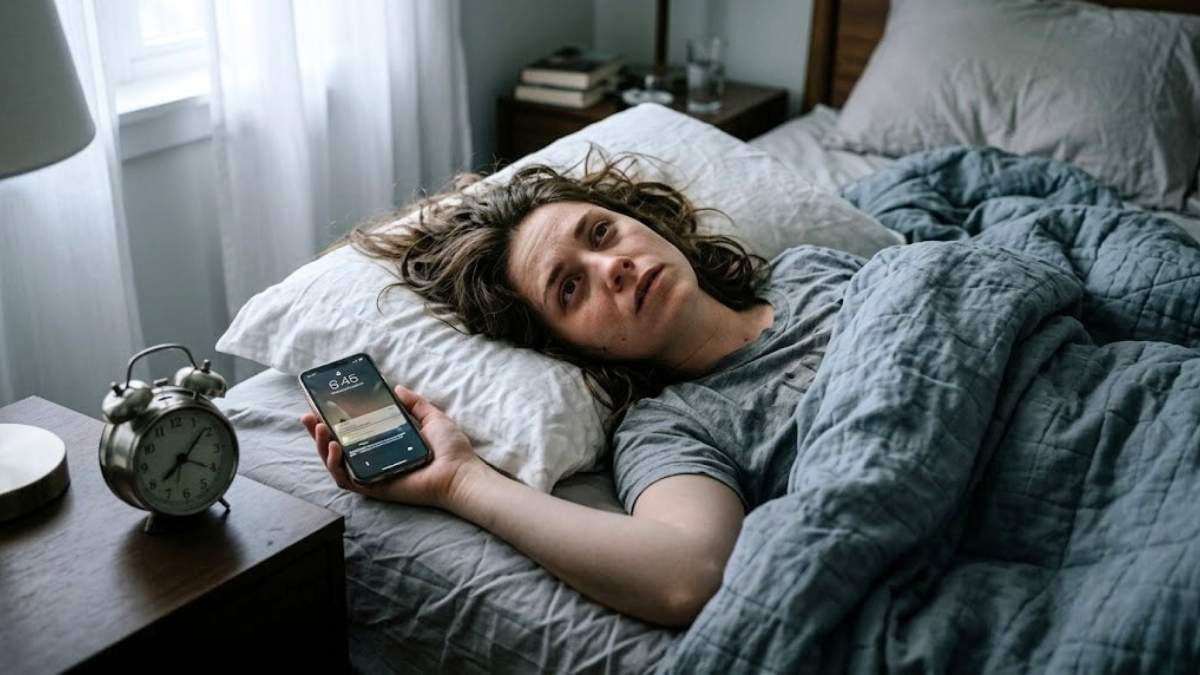
Every night, millions of people give their screens the hours their brain needs most. You scroll. You stream. You watch one more video. And then you wonder why you wake up tired, foggy, and forgetful.
Here is the truth: this is not just aging. It is a habit. And it is doing real damage to your brain — damage that builds up silently over months and years.
In this article, you will learn exactly why late-night screens kill your sleep hormone, how lost sleep physically shrinks your brain, what the science says about dementia risk, and what you can do tonight to stop the damage.
No complicated science. Just clear answers and steps that work.
Point One — The Bedtime Screen Habit That Is Silently Destroying Your Sleep
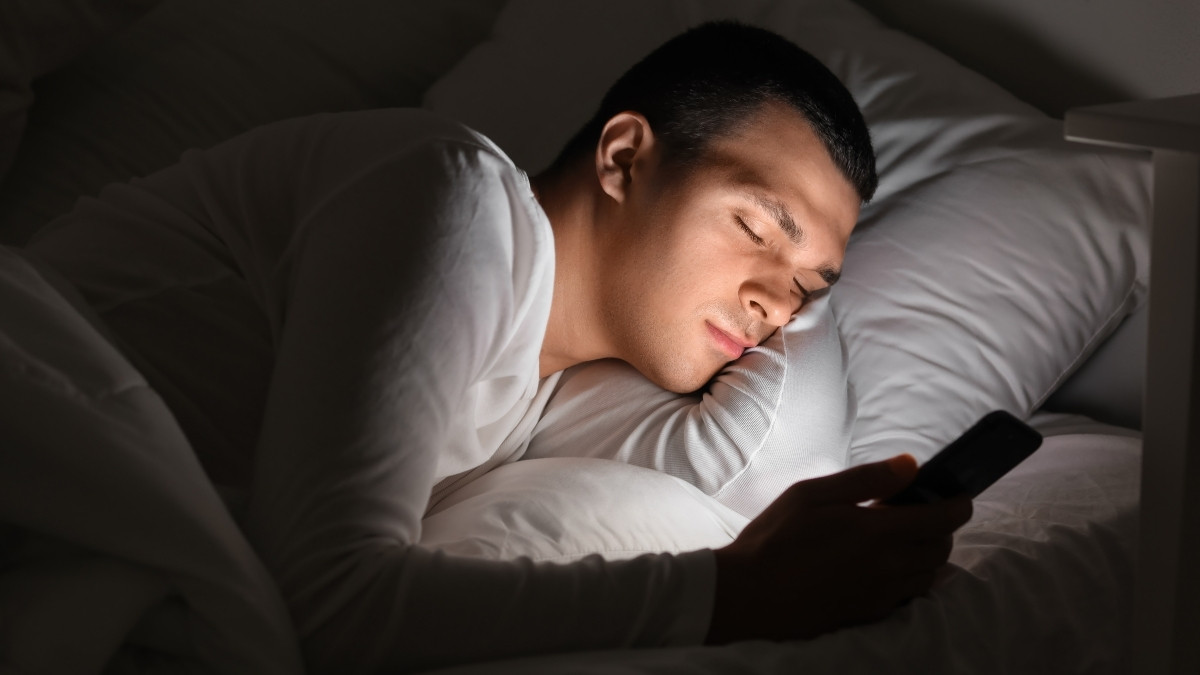
Most people do not think of checking their phone before bed as dangerous. It feels normal. You are just unwinding. Catching up. Relaxing with a show. But your brain does not see it that way.
According to a 2025 survey by the American Academy of Sleep Medicine, 50% of adults use a screen in bed every single day. Another 33% do it most nights. And more than one in four adults admit they choose screen time over sleep on purpose.
That is a massive problem. Because your brain cannot tell the difference between screen light and sunlight. When you stare at your phone at 11 PM, your brain gets a signal that says: stay awake. It is still daytime. Do not sleep yet.
You are fighting your own biology — and losing.
Ask yourself: Do you use your phone in bed? Do you fall asleep with the TV on? Do you watch videos until your eyes get heavy? If yes, this article is written for you.
3 Tips to Act On:
- Set your phone face-down on a nightstand — not in your bed
- Turn off autoplay on streaming apps so videos do not keep running
- Put a sticky note on your TV remote that says “Off by 9 PM” as a daily reminder
Point Two — The Blue Light Problem: Why Your Phone Tells Your Brain It Is Still Noon
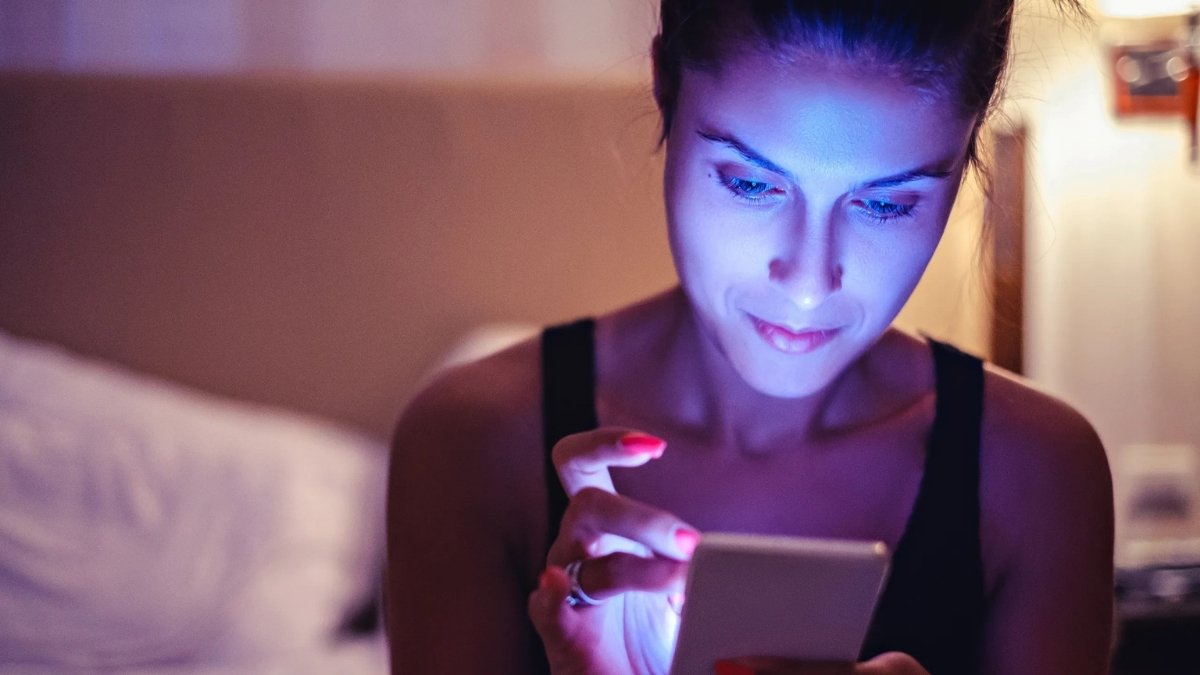
Here is how the damage starts. Your phone, tablet, TV, and laptop all give off blue light. This light has a short wavelength — around 400 to 500 nanometers. And your eyes are very sensitive to it.
When blue light hits your retina at night, your brain gets a wake-up signal. It slows down — then stops — making melatonin. Melatonin is the hormone that tells your body it is time to sleep. Without it, you stay alert when you should be winding down.
Research published in the Journal of Biomedical Physics and Engineering confirms that artificial light at night — especially blue light — disrupts the body’s circadian rhythm, causes sleep problems, and leads to metabolic issues over time.
Your circadian rhythm is your body’s 24-hour internal clock. It controls when you feel sleepy and when you feel awake. Blue light at night breaks that clock.
And here is something important: it is not just the brightness of the screen. It is the specific wavelength hitting your eye. Even a dim phone screen in a dark room is enough to suppress melatonin production.
3 Tips to Act On:
- Enable “Night Shift” on iPhone or “Night Mode” on Android after sunset — it reduces blue light output
- Lower screen brightness manually in the evening, even with Night Mode on
- Remember: these filters help but do not fully solve the problem — putting the screen down is always better
Point Three — The Numbers Do Not Lie: Screen Use Before Bed Breaks Your Sleep
The science is not guessing anymore. The data is in — and it is serious.
A March 2025 study published in JAMA Network Open looked at over 122,000 adults across the United States. The result was clear: people who used screens before bed had a 33% higher rate of poor sleep quality than those who did not.
A separate 2025 study in Frontiers in Psychiatry followed nearly 40,000 university students. Every extra hour of screen use in bed raised their risk of insomnia symptoms by 59%. They also slept an average of 24 minutes less per night for each extra hour of screen time. That adds up to nearly three hours of lost sleep every week — just from this one habit.
The CDC reported in 2024 that 30.5% of Americans — nearly one in three — sleep less than seven hours a night. Only 54.8% of adults wake up feeling rested. And a 2024 Gallup poll showed the number of Americans who want more sleep jumped from 43% in 2013 to 57% in 2023.
3 Tips to Act On:
- Keep a simple sleep log for two weeks — write down screen use time and how rested you feel each morning
- Calculate your weekly “lost sleep” total if you use screens for one hour before bed every night
- Share these numbers with a partner or friend to create mutual accountability
Point Four — Your Brain Is Aging Faster Than It Should, and Poor Sleep Is Why
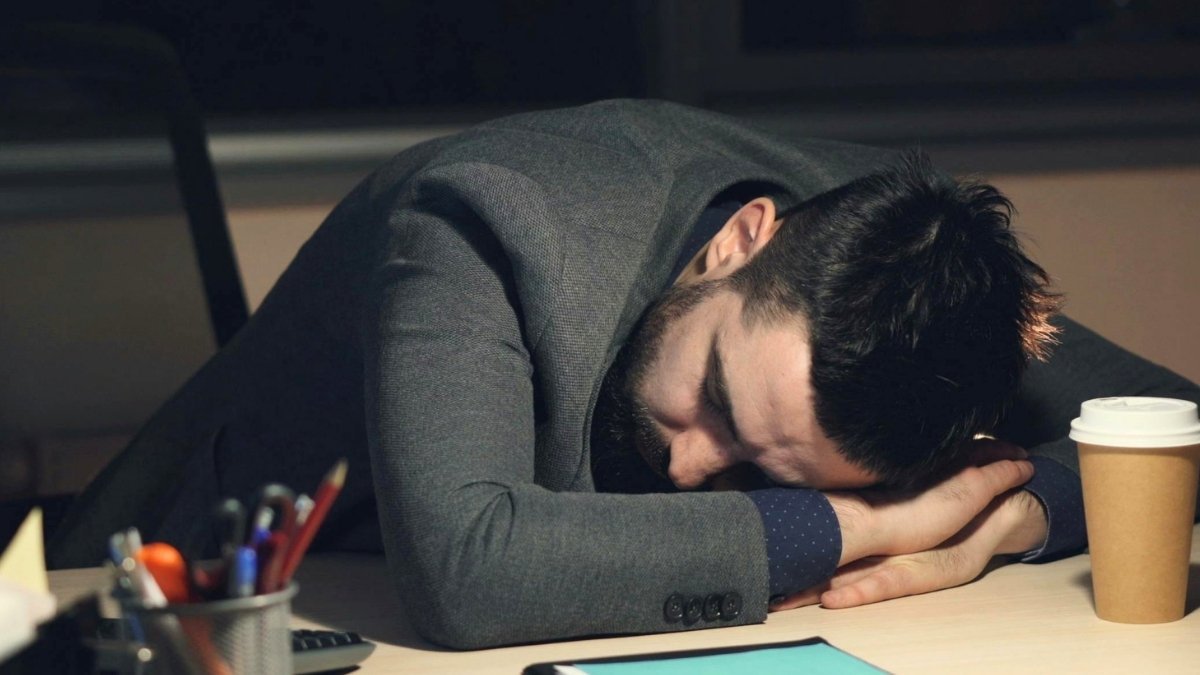
This is where things get serious. Lost sleep is not just tiredness. Over time, it changes your brain physically.
Scientists can now scan a brain with an MRI and estimate how old it looks. People who sleep poorly have brains that look older than their actual age. A 2025 study from Karolinska Institutet confirmed this directly, finding that poor sleep accelerates visible brain aging and that inflammation is one of the key reasons why.
During deep sleep, your brain runs its own cleaning system — called the glymphatic system. It flushes out toxic waste, including amyloid beta, the sticky protein linked to Alzheimer’s disease. When you cut sleep short with screen use, that cleaning crew never fully shows up.
A 2024 study in Ageing Research Reviews found that sleep deprivation causes shrinkage in the hippocampus — the part of your brain that controls memory. The 2024 Lancet Commission identified sleep disorders as modifiable risk factors for dementia. That means this is something you can actually change.
3 Tips to Act On:
- Think of your sleep window as brain maintenance time — not optional recovery, but essential cleaning
- If you are over 40 and regularly sleeping under six hours, speak to your doctor about cognitive health
- Track your deep sleep percentage using a wearable like an Oura Ring or Apple Watch to see real data
Point Five — It Is Not Just the Light: The Content You Watch Before Bed Also Attacks Your Brain

Blue light is problem one. But what you are actually watching is problem two — and most people ignore this completely.
When you watch upsetting news, heated arguments on social media, or stressful videos before bed, your body releases cortisol. Cortisol is your stress hormone. It is designed to help you fight or run from danger. At 11 PM, it is the last thing you want in your blood.
High cortisol before bed delays sleep onset, fragments your sleep during the night, and suppresses growth hormone — which your body needs to repair itself while you sleep.
AASM Past President Dr. James Rowley put it plainly: “Internalizing topics that are stressful or worrisome before bed makes it difficult to have the deep, restorative sleep that is imperative to overall health.”
There is also a behavior called revenge bedtime procrastination. This is when you stay up late scrolling because your day felt out of control and this feels like your only personal time. It is understandable — but it makes the brain damage worse.
3 Tips to Act On:
- Stop watching news or checking social media at least 60 minutes before bed
- If you use your phone before bed, switch to calming audio — a podcast, soft music, or an audiobook
- Notice when you are scrolling out of stress, not boredom — that is the most damaging type
Point Six — Why the Damage Hits Harder After 40 (And What to Watch For)
If you are over 40, your body already has less protection against sleep disruption. And screens make that worse.
As you age, the lens of your eye naturally turns yellowish. Research shows that light transmission at a key blue-light wavelength drops by 72% between age 10 and 80. This sounds like it might protect you from screen light — but it actually means your circadian system gets weaker overall. Your body clock becomes less stable and harder to reset.
A 2025 study confirmed that older adults experience reduced sleep quality, more nighttime awakenings, and a lower circadian rhythm amplitude compared to younger people. One bad night of sleep hits a 55-year-old far harder, cognitively, than it hits a 25-year-old.
In 2024, about 6.9 million Americans aged 65 and older were living with Alzheimer’s disease.
Watch for these warning signs that your screen habit is already hurting you: waking between 2 and 4 AM regularly, taking more than 20 minutes to fall asleep, brain fog in the morning, afternoon energy crashes, and needing caffeine just to function.
3 Tips to Act On:
- If you wake between 2–4 AM more than twice a week, treat it as a signal — not just bad luck
- After 40, aim for 7 to 8 hours of sleep as a non-negotiable health target
- Tell your doctor about sleep problems — they are a legitimate medical concern, not a personal weakness
Point Seven — What to Actually Do: The Proven Nightly Routine That Protects Your Brain
Here is the plan. It is simple. But simple does not mean easy — so follow these steps in order.
Step 1: Set a screen cut-off time. At least 60 minutes before bed. Ideally 90. The American Academy of Sleep Medicine officially recommends avoiding blue light from electronics 30 to 60 minutes before sleep.
Step 2: Get morning sunlight within the first hour of waking. Spend 10 to 20 minutes outside. This resets your circadian clock and naturally programs when melatonin rises that night.
Step 3: Replace the screen with something physical. Read a real book. Journal. Stretch. Take a warm shower. These activities calm the mind without the alertness screens create.
Step 4: Make your bedroom sleep-only. Dark, cool — ideally 60 to 67°F — and no screens in the bed. Ever.
Step 5: Shift your bedtime gradually. If you go to bed at 1 AM, do not jump to 10 PM overnight. Move it back by 15 to 30 minutes every few days.
Step 6: Wake up at the same time every day. Yes, even weekends. This is the single strongest anchor for your circadian rhythm.
3 Tips to Act On:
- Set a phone alarm called “Screen Off” 75 minutes before your target bedtime as a daily trigger
- Buy one physical book this week and put it on your pillow as a visual reminder of what replaces the phone
- Tell one person your new cut-off time — accountability doubles your chance of sticking with it
Point Eight — Resources and Tools That Actually Help You Sleep Better in 2026

You do not need expensive tools. But the right ones help.
For tracking sleep, Oura Ring, Whoop, Apple Watch, and Garmin all give you real sleep stage data. Seeing your deep sleep percentage drop after a screen-heavy night is one of the fastest ways to motivate change.
For blocking screens, Freedom app and Opal Screen Time let you schedule automatic app blocks at night. One Sec app adds a 10-second pause before any social media app opens — that friction alone reduces impulsive use significantly. Your phone’s built-in tools — iOS Screen Time and Android Digital Wellbeing — are free and work well.
For your bedroom environment, blackout curtains are worth every dollar. Philips Hue or LIFX smart bulbs can auto-shift to warm, low-blue light in the evening. A white noise machine removes sound disruptions without needing a screen.
For trusted information, visit sleepeducation.org (run by AASM) and sleepfoundation.org. Read Why We Sleep by Matthew Walker — a neuroscientist at UC Berkeley — for the full science explained clearly. If your sleep problems continue despite these changes, see a sleep specialist. Chronic insomnia and sleep apnea require professional care.
3 Tips to Act On:
- Download one screen-blocker app tonight and schedule it to activate 60 minutes before your bedtime
- Visit sleepeducation.org and take their free sleep health quiz to assess your current sleep quality
- If you have struggled with poor sleep for more than three months, book an appointment with your doctor this week
Final Words,
Late-night screen use kills your sleep hormone, breaks your sleep, and over time physically ages your brain. The research is clear.
The fix is also clear. Put the phone down 60 minutes before bed. Do it tonight. Your brain is repairing itself every night — but only if you let it.