

What if the most powerful thing you could do for your health had nothing to do with your diet, your gym, or your doctor — but with why you wake up in the morning?
Most people spend money on supplements, gym memberships, and medical checkups. But they completely ignore the one thing that research now links directly to a longer life: a clear sense of purpose.
Millions of people live with a quiet feeling of emptiness. They are busy but not fulfilled. They are surviving but not truly living. And that feeling is slowly hurting their health.
In this article, you will learn what the science says, which health problems purpose prevents, how real populations around the world prove this, and exactly what you can do this week to start building your own purpose.
The Ikigai Life Buffer
Research from the MIDUS study shows purpose can lower mortality risk by 17%. Find your starting point by answering four key questions.
Your Daily Alignment
Purpose is built through small actions. Select the habits you currently practice to see how they buffer your biological aging.
Your Purpose Diagnostic
Based on scientific markers from Blue Zone populations.
Analyzing…
Calculating your epigenetic resilience.
Your 7-Day Activation Plan:
Point One: The Science Is Clear — Purpose Predicts How Long You Live

Scientists tracked thousands of adults for 14 years in a study called MIDUS — Midlife in the United States. The results were hard to ignore.
People with a clear sense of purpose lived longer than those without one. This was true regardless of their age, job, or health condition. Purpose was the difference. Not income. Not education. Not even existing health problems.
A 2016 review of multiple studies found that people with higher life purpose had a 17% lower risk of dying from any cause. The researchers measured this as a relative risk of 0.83 for all-cause mortality and cardiovascular events. That is not a small number.
What makes this finding powerful is that it held up even when researchers removed every other possible explanation. Happy people, healthy people, connected people — all of them still lived longer when they also had purpose. Purpose added something that nothing else could replace.
And here is the part most people miss. Purpose even protected people who already rated their own health as poor. It acted like a buffer against the damage that poor health normally causes.
Tips:
- Look up the MIDUS study to read real data on purpose and mortality
- Take the free Purpose in Life Quiz at greatergood.berkeley.edu
- Write down one thing that makes your life feel worth living today
Point Two: Blue Zones Prove It — Real Populations, Real Results
Five places on Earth have unusually high numbers of people who live past 100. These places are called Blue Zones: Okinawa in Japan, Sardinia in Italy, Ikaria in Greece, Nicoya in Costa Rica, and Loma Linda in California.
Researchers noticed that all five populations shared something beyond diet or exercise. They all had a name for their reason to live.
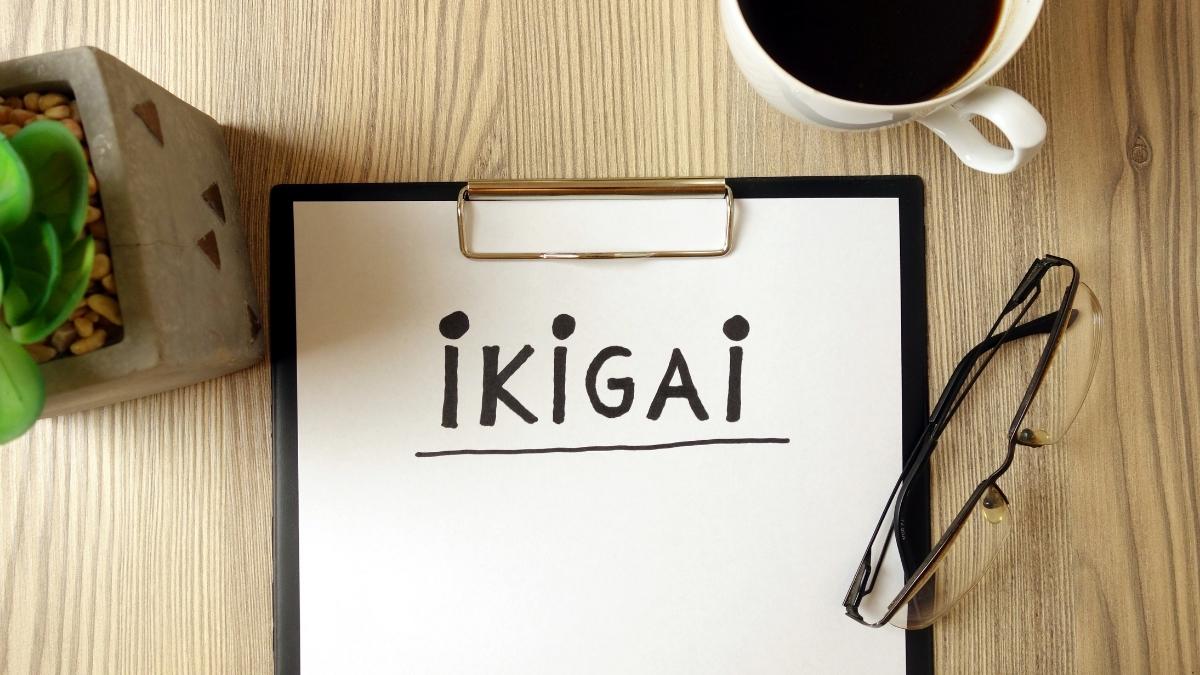
Okinawans call it Ikigai — “why I wake up in the morning.” Nicoyans call it plan de vida — “a reason to live.” These are not just nice phrases. Research shows that knowing your purpose can add up to 7 extra years to your life.
A study published in Psychological Science found that people with strong purpose live 7 to 8 years longer on average than those without it. That effect is as large as quitting smoking.
A 2024 Bloomberg American Health Initiative report also found that Nicoya’s residents have a 20% lower risk of dying from cardiovascular disease compared to the global average. Purpose is not a cultural luxury. It is a health strategy that works across completely different countries and lifestyles.
Tips:
- Research Ikigai — draw the four overlapping circles and see where your answers meet
- Watch Dan Buettner’s Blue Zones documentary on Netflix for real-life examples
- Ask yourself: “What is my reason to wake up tomorrow morning?”
Point Three: What Purpose Actually Does Inside Your Body

Purpose is not just a mindset shift. It changes your biology. And the research proves it.
People with higher purpose scores show reduced epigenetic aging. This means their cells age more slowly. Scientists can literally measure this with biological testing. Purpose shows up in your DNA.
Research also links purpose to lower inflammation in the body. Chronic inflammation is linked to heart disease, cancer, diabetes, and Alzheimer’s. When you have clear direction in life, your body produces fewer inflammatory chemicals.
Purpose also protects your brain. Studies show that people with higher purpose scores perform better on memory tests, verbal skills, and executive function. A UC Davis study tracked more than 13,000 adults for 15 years and found that purpose helps guard against dementia.
And when stress hits, purposeful people recover faster. Their cortisol levels drop quicker. They bounce back from hard experiences instead of staying stuck in them.
Your sense of purpose is not separate from your physical health. It is directly connected to it — at the cellular level.
Tips:
- Get a basic inflammation blood panel (CRP test) from your doctor as a health baseline
- Start a simple mindfulness habit — even 5 minutes daily lowers cortisol over time
- Use mentally stimulating activities like reading or learning a skill to protect your brain
Point Four: The Purpose Deficit — Why So Many People Feel Empty

Here is the honest truth. Most people in modern life are busy, but they are not fulfilled. And there is a difference.
We live in a world built for distraction. Scrolling, notifications, overwork, and buying things fill our time without filling our lives. Pleasure is easy to find. Purpose is harder. Pleasure fades fast. Purpose builds over time.
Many people lose their sense of purpose after big life changes. Retirement. Divorce. Children leaving home. Job loss. These transitions knock people off their path, and most of them never find a new one.
Doctors often treat this as depression. But it is a meaning crisis, and treating it with medication alone does not fix the root problem.
Research from Johns Hopkins Bloomberg School of Public Health shows that more than 20% of Americans experience a psychiatric disorder in their lifetime. But what about the other 80%? They may not be sick, but many are not truly thriving either.
Social media makes this worse. Getting likes and followers feels like purpose. It is not. It gives you a short rush but no real direction.
Tips:
- Identify if a recent life change may have quietly removed a key source of meaning
- Limit social media to 30 minutes daily — replace that time with one purposeful activity
- Ask yourself honestly: “Am I busy or am I fulfilled?”
Point Five: How to Discover Your Own Purpose — A Practical Framework

Purpose does not arrive in one big dramatic moment. It shows up in small clues scattered across your life. You just have to look for them.
Start with three questions. What am I genuinely good at? What does the world actually need? What would I do even if no one paid me? The place where your answers overlap is your starting point. It does not need to be perfect. It just needs to be real.
The Ikigai framework is useful here. It uses four overlapping circles: passion, mission, vocation, and profession. Your purpose sits at the center where all four meet. You do not need to fill every circle on day one. Start with what you know.
Values are your foundation. Before you can find your purpose, you need to know what matters most to you. Write down your top five values. Be honest. Not what sounds good. What actually drives your decisions?
Three journaling prompts that work: “When did I last lose track of time?” “What makes me genuinely angry about the state of the world?” “What do I want people to remember about me?”
Tips:
- Take the free VIA Character Strengths test at viacharacter.org — it takes 15 minutes
- Do the obituary exercise: write the words you want said about you, then work backwards
- Try a 15-minute morning reflection for one week — just write freely, no editing
Point Six: Embed Purpose Into Daily Life — No Life Overhaul Required

You do not need to quit your job, sell your house, or move to another country. Purpose can be built inside the life you already have. Small, consistent actions matter more than dramatic changes.
The problem most people have is this: they write a purpose statement once, feel good about it, and then do nothing. A statement without daily practice changes nothing. You need to express your purpose in small ways every single day.
Three actions anyone can start this week: volunteer for one hour doing something meaningful, mentor one person who is behind you on a path you have walked, or start a small project that solves a problem you personally care about.
Purpose in your current work is also possible. You do not have to love your job. But you can find meaning inside it. A teacher who sees their role as shaping the next generation is healthier than one who sees it as just a paycheck. The job is the same. The meaning is different.
Build what researchers call a “purpose portfolio.” Have two or three sources of meaning across your life — work, family, community. If one falls away, the others hold you up.
Tips:
- Stack purpose onto an existing habit — reflect on your why during your morning coffee
- Set one SMART purpose goal this month: specific, measurable, and achievable
- Join one community — online or local — built around something you genuinely care about
Point Seven: Purpose and Relationships — The Social Multiplier Effect

Purpose and relationships work together. When you have clear direction in life, you attract people who share your values. And strong relationships are their own separate health benefit. Together, the two multiply each other.
A study in the journal Brain, Behavior and Immunity found that strong social ties can literally slow down the biological aging process. This is not just about feeling good. It is measurable in your cells.
In Okinawa, people build what they call a “moai” — a small group of lifelong friends who share values and support each other. This circle is not just social. It is a health tool. People with a strong moai outlive those without one.
In many Blue Zone communities, grandparents live with their families and care for grandchildren. Research shows that grandparents who stay involved in caregiving live longer than those who do not. The caregiving role gives them purpose. The purpose extends their life.
The U.S. Surgeon General has classified social isolation as a public health epidemic. The health risk is equal to smoking 15 cigarettes a day. Purpose connects you to people. Connection keeps you alive.
Tips:
- Tell one trusted person about your purpose this week — saying it out loud makes it real
- Schedule one recurring social activity with people who share your values
- Consider a volunteer role that puts you in contact with a regular group of people
Point Eight: Start Today — Your 7-Day Purpose Activation Plan
You have the research. You have the tools. Now you need a first move. Here is a simple 7-day plan.
7 Days to Purpose
Core Values
Write your top 5 values. Do not overthink it. Focus strictly on what truly matters to you right now.
Self-Assessment
Take the free Greater Good Purpose Quiz and the VIA Strengths Survey to establish a personal baseline.
Energy Audit
List everything you did in the past 3 days. Carefully mark each specific item as either draining or fueling.
The Statement
Write your purpose statement in one sentence: “My purpose is to [action] [who you serve] so that [impact].”
Tangible Action
Find one concrete way to express that purpose this week. Volunteer, mentor someone, or start a small project.
Share Your Vision
Tell exactly one person your purpose statement. Explain clearly why it matters to you.
Strict Commitment
Schedule your first recurring purpose practice in your calendar as a real, unmovable appointment.
Research is clear: purpose buffers against mortality risk at every age. It is never too early or too late to begin. The benefits are not reserved for the young or the retired. They belong to anyone who decides to start.
Tips:
- Read Designing Your Life by Bill Burnett and Dave Evans — it is practical and written for real people
- Use the Life Purpose App to set purpose-based goals and track your progress
- Return to your purpose statement every 90 days and update it as you grow
Lastly,
The research is not debatable anymore. Purpose adds years to your life, lowers inflammation, slows aging, and protects your brain.

You do not need a perfect plan. You need a first step.
Pick one action from Point Eight and do it today. Not next week. Today.
Your purpose in life and your health are more connected than you think.