

After age 30, adults lose roughly 3 to 8 percent of their muscle mass each decade, and the pace tends to pick up after 60. That is how a chair becomes a struggle and a small stumble becomes a fall.
Here is the twist. Experts in geriatric medicine and nutrition say how you spread protein across the day may help protect the muscle you have.
Many of us get it backwards. We go light on protein at breakfast, grab carbs at lunch, and eat one giant protein meal at dinner. Your muscles notice, and your legs feel it.
This article explains the protein timing trick behind the expert advice, why aging muscle needs it, what the research truly supports, and where it is still unproven. You will also get a simple way to start with your very next meal.
The Protein Timing Trick, Explained in Plain English
The trick is simple. Instead of saving most of your protein for dinner, you spread it across your meals so that each meal delivers about 25 to 30 grams.
That target comes from an international study group of physicians and nutrition scientists formed to review protein needs with aging.
Its 2013 position paper concluded that older people need more protein per meal than younger adults to get the same muscle building response.
Expert groups also stress pairing protein with regular physical activity. Food alone will not rebuild muscle that you never use.

The trick has three moving parts:
- Eat real protein at breakfast, not just at dinner.
- Aim for 25 to 30 grams at each main meal.
- Keep your daily total in a range that fits your body size.
Why Aging Muscle Ignores a Small Dose of Protein
Your muscles are always in a tug of war. Muscle protein synthesis builds new tissue, and muscle protein breakdown clears it away.
Protein from food tips the balance toward building. With age, that signal gets weaker.
Researchers call this anabolic resistance. It means older muscle responds less to the same dose of protein than younger muscle does.
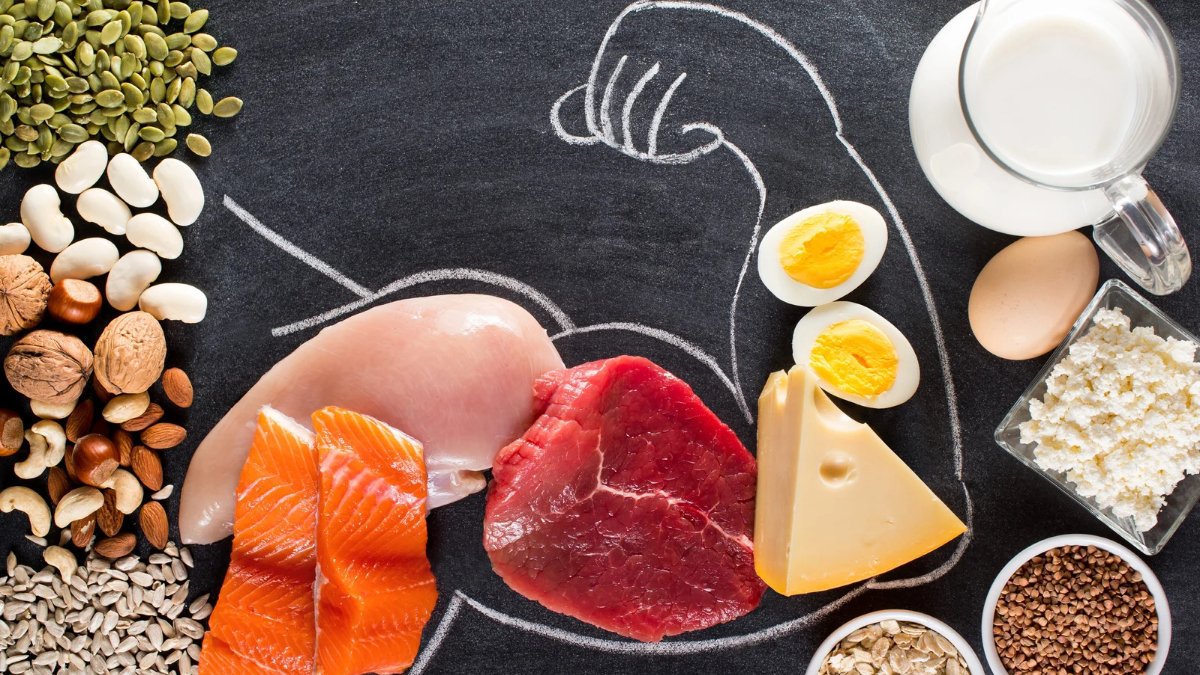
A key trigger is leucine, an amino acid that switches on the muscle building machinery inside your cells. Younger adults often respond well to roughly 20 grams of protein at a meal.
Older adults tend to need more. Studies point to about 2.5 to 2.8 grams of leucine per meal, which is roughly what 25 to 30 grams of quality protein provides.
Now picture a typical breakfast. Toast and coffee deliver only a few grams of protein, so your muscles likely miss an early building signal.
Here is a sample day with the same total protein, eaten two different ways:
Skewed vs. Even Spread Protein Intake
Comparing identical 85g daily protein totals: Uneven distribution vs. muscle-stimulating even spread.
🔴 Skewed Intake Pattern
Daily Total: 85 g
Meals Hitting 25-30g Target: 1 Meal
🟢 Even Spread Pattern
Daily Total: 85 g
Meals Hitting 25-30g Target: 3 Meals
Same daily total, very different pattern. You are not eating more. You are moving protein to where your muscles can use it.
What the Research Really Shows (and What It Does Not)
Most articles on this topic stop at the good news. Here is the fuller picture.
Where the evidence is encouraging
The McGill study. Researchers at McGill University tracked older adults over time and compared how they spread their protein. Those who ate it evenly across three meals kept more muscle strength than those who saved most of it for dinner.
The even eaters averaged about 20 grams per meal for women and 30 grams for men.
The breakfast link. A study of 219 adults aged 65 and older found that protein eaten at breakfast was more strongly linked to muscle mass than protein eaten at lunch or dinner.

The lopsided plate. A study comparing young, middle aged, and older adults found uneven protein intake in every age group. Older adults were more likely to eat a lower quality protein, such as bread, at lunch, and the authors suggested more protein at breakfast and lunch could help limit age related muscle loss.
Where the evidence is still thin
Many of these studies are observational, so they show a link, not proof. People who eat protein evenly may also exercise more or eat better overall.
A 2023 randomized trial in older adults found that an even pattern improved whole body protein balance compared with a skewed pattern. It did not find a difference in muscle protein synthesis rates.
A review of randomized trials found that protein supplements raised lean body mass in older adults regardless of when they were taken. Timing did not change the results.
A 2024 review in Frontiers in Nutrition put it plainly. The short term benefits of more protein at the first meal are clear, but the long term effect on muscle mass in aging adults remains speculative.
The fair takeaway is this. Total daily protein and regular strength exercise are the foundation, and an even spread is a sensible way to get more out of both.
How Much Protein Per Day Do You Actually Need?
The standard recommended daily allowance is 0.8 grams per kilogram of body weight, or about 0.36 grams per pound. That same expert group considers it too low for most older adults.
It recommends at least 1.0 to 1.2 grams per kilogram per day for healthy older adults. People with acute or chronic illness may need 1.2 to 1.5 grams per kilogram.
Protein needs vary with kidney function, medications, and overall health, so confirm your own target with your doctor before you change how you eat.
The group defined older adults as people over 65, so if you are younger, your doctor can help you decide how closely to follow it.
Here is the math for a 170 pound adult, who weighs about 77 kilograms. At 1.0 to 1.2 grams per kilogram, that works out to roughly 77 to 93 grams a day.
Split across three meals, that lands right around 25 to 30 grams each. That is the number behind the trick.
How to Build an Even Protein Day Without Eating More Food
Start by moving protein, not adding it. Take a little from dinner and shift it to breakfast.
Breakfast is the usual gap, so fix that first. Eggs, plain Greek yogurt, and cottage cheese all do the job quickly.
Plant sources such as lentils, tofu, and soy work too. They usually contain less leucine per gram, so portions often need to be a bit larger to reach the same trigger.
Here is what a 25 to 30 gram plate can look like:
Daily Protein Distribution Protocol
Optimal meal-by-meal protein breakdown to maximize muscle protein synthesis throughout the day.
Breakfast
3 eggs paired with 1/2 cup low-fat cottage cheese.
Lunch
3 oz cooked chicken breast served over salad with 1/4 cup chickpeas.
Dinner
5 oz baked salmon served alongside roasted mixed vegetables.
Evening Snack
1 cup low-fat cottage cheese or plain authentic Greek yogurt.
Treat the snack as optional. Count it toward your daily total instead of stacking it on top.
Try This Today: The Even Spread Habit
- Swap a carb only breakfast for a protein first one, such as eggs, Greek yogurt, or cottage cheese.
- Check the protein line on food labels and aim for 25 to 30 grams per meal.
- If dinner is your biggest meal, move a few ounces of protein to lunch.
- Add resistance exercise (bands, weights, or bodyweight moves) at least two days a week.
- Jot down your protein at each meal for one week to see your real pattern.
Three Questions Everyone Asks Next

Does a protein snack before bed help?
It might, but the proof is early. In a trial of 48 older men with an average age of 72, a 40 gram casein dose before sleep led to more protein being built into muscle overnight than a 20 gram dose.
In a smaller trial of men around age 71, doing resistance exercise earlier that evening made overnight muscle protein synthesis 31 percent higher after a 40 gram casein drink.
A systematic review found the evidence for lasting gains in muscle mass or strength in older adults is still too limited to call it proven.
Do I need protein within 30 minutes of a workout?
The idea of a narrow anabolic window has not held up well. A meta analysis of randomized trials found that protein supplements helped older adults gain lean mass regardless of timing.
A protein rich meal within a couple of hours of training is a fine habit. It just does not need to be a race.
Can I just drink a protein shake?
A shake can fill a gap, especially at breakfast when you are short on time. Whole foods bring other nutrients along with the protein, so use shakes as a bridge, not the whole plan.
Red Flags: When to Call Your Doctor First
Stop and get medical guidance if any of these apply to you:
- You have kidney disease or were told to limit protein. Do not raise your intake without your doctor’s approval.
- You are losing weight or muscle without trying. Unexplained loss deserves a medical workup.
- You have frequent falls or new trouble with stairs and chairs. Ask about a strength and balance evaluation.
- You notice sudden weakness on one side of the body. That is an emergency, so call emergency services right away.
The Bottom Line
The protein timing trick is not magic. It is a practical shift: three meals, each with about 25 to 30 grams of protein, starting at breakfast.

The lab evidence on how aging muscle responds is strong, and the long term proof is still growing. Pair the habit with strength exercise, and you give your muscles the best chance to keep up with you.