

Your knees ache on the stairs. Your shoulders feel stiff before you’ve even picked anything up. You work out consistently, and somehow you feel worse than you did two years ago. Many women who work out consistently are unknowingly repeating habits that wear down their joints a little more each session.
For active women in their 30s to 50s who exercise regularly, this is one of the most frustrating blind spots in fitness: the habits that cause joint damage don’t hurt right away. By the end of this article, you’ll know exactly which five workout habits that damage joints to cut, and what to do instead.
Joint Longevity Auditor
Evaluate your training habits to identify hidden biomechanical stressors that cause micro-trauma and accelerate cartilage wear.
1. The Pre-Load Window
Synovial fluid requires movement to lubricate cartilage. How do you start a high-impact session?
2. The Post-Load Window
Abrupt stops cause connective tissue to cool and tighten rapidly. What happens immediately after your last set?
3. Load Mechanics
Bone-to-bone contact risk increases at maximum extension. At the top of a squat or chest press, how do your joints look?
4. Structural Recovery
Avascular cartilage requires time to decompress and absorb nutrients. How often do you heavily train the exact same muscle group (e.g., Legs)?
5. Signal Interpretation
Micro-trauma accumulates when early warning signs are ignored. If you feel a sharp pinch or grinding directly in the joint line:
Diagnosis
Detail
Personalized Correction Protocol
Implement these biomechanical adjustments to protect your connective tissue:
📖 Stop Silent Joint Damage
To fully understand the difference between muscle burn and structural pain—and why cartilage requires 48 hours to decompress—read the complete article below.
Habit 1: One of the Workout Habits That Damage Joints Starts Before You Even Move
You wake up, lace your shoes, and go straight into a run or a class. It feels fine at first. That’s the problem.
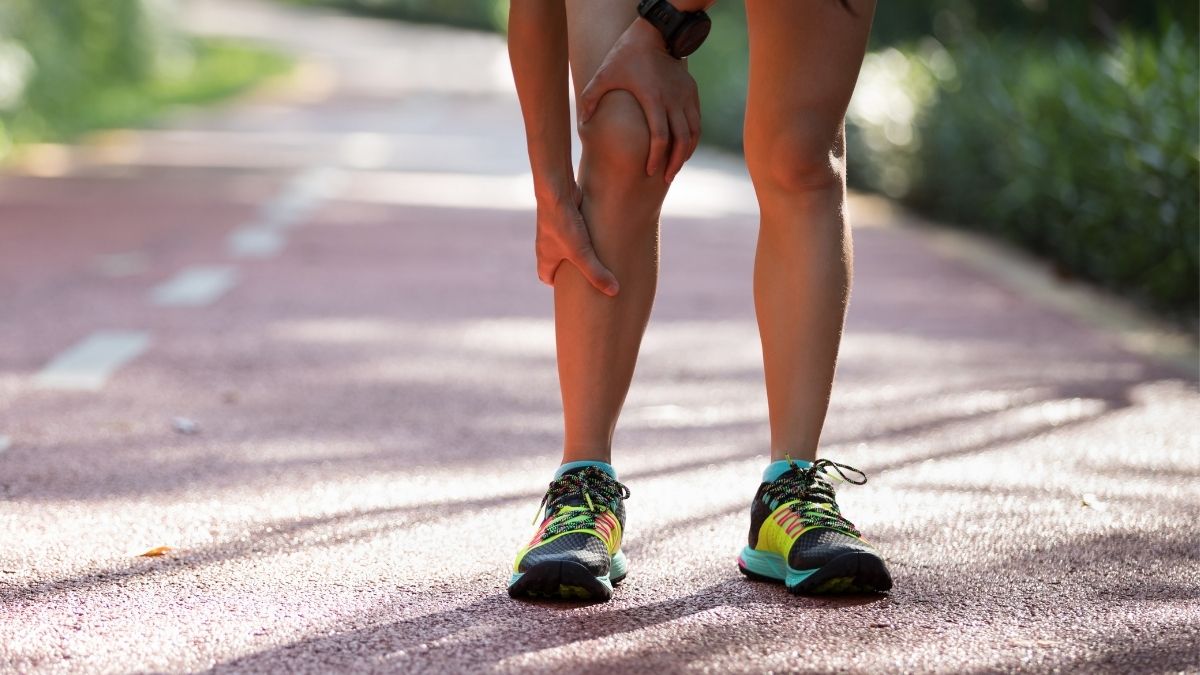
Your joints need time to prepare for load, and a warm-up is what gives them that preparation. Research published in the NCBI Bookshelf review of randomised controlled trials found that the weight of evidence supports a decreased risk of injury when a warm-up is performed before physical activity.
Three out of five high-quality studies in the review found a significant reduction in injury risk with warm-up, and the other two showed no harm from doing one. It’s one of the most common workout habits that damage joints, and it costs nothing to fix.
Here’s the mechanism in plain terms. Your joints are lined with synovial fluid [a slippery liquid that cushions and lubricates the surfaces where bones meet inside the joint]. That fluid is less active and less evenly distributed when you’ve been sitting or sleeping. A warm-up gets it circulating before load arrives.
Cold joints, more friction. Moving into high-impact exercise before synovial fluid is properly distributed increases the friction on cartilage. Research published in PMC confirms that synovial fluid functions as a biological lubricant in joints and that this lubrication is essential for low-friction movement between cartilage surfaces.
Skipping the warm-up doesn’t just feel rough. It adds wear.

Five to 10 minutes of low-impact movement before any high-impact session is enough. Walking, hip circles, gentle leg swings, arm rotations. The goal is joints first, not muscles first.
Your Pre-Workout Joint Warm-Up
- Walk at a comfortable pace for 3 to 5 minutes
- Do 10 slow hip circles in each direction
- Do 10 arm circles forward and 10 backward
- Do 10 slow leg swings per leg, forward and sideways
- Move through the range of motion you’ll use in the workout, with no load
Talk to your doctor before changing your exercise routine if you have an existing joint condition, are pregnant, or are managing a chronic health condition.
What happens in the warm-up sets the stage for joint health during the session. But what you do when the session ends may matter just as much, and most women don’t think about it at all.
Habit 2: Stopping Cold Right After a Hard Session Instead of Cooling Down
You finish your last rep or your last sprint, and you’re done. You grab your bag and head to the car. It feels efficient.

Most of the damage your joints take during a workout was already decided before you threw your first punch or picked up your first weight. But what you do in the first five minutes after you stop can either help your joints begin recovering or leave them in a worse state until the next session.
Blood is still pooled in your working muscles when you stop abruptly. Connective tissue [the fibers — including ligaments and tendons — that hold a joint together and guide its movement] cools and tightens rapidly once load stops and circulation slows.
This tightening increases stiffness and can reduce the normal range of motion your joint needs to move safely the next day.
Your heart and lungs don’t snap back to normal the second you stop. A 2018 narrative review published in Sports Medicine found that active cool-downs support cardiovascular recovery and may partially prevent immune system depression [a temporary drop in immune function that can follow intense exercise] after intense training sessions.
The same review found that keeping the body moving after exercise supports a faster return to normal heart rate and respiratory function than stopping completely.
Joint recovery after exercise starts here, not hours later.

Five minutes of walking after any hard session is enough. Gentle stretching while your muscles are still warm gives connective tissue a chance to lengthen gradually rather than lock up cold.
Two-Minute Post-Workout Protocol
- Walk slowly for 3 to 5 minutes after any run, class, or lifting session
- While still warm, gently stretch the major muscle groups around the joints you trained
- Hold each stretch for 20 to 30 seconds without bouncing
- Breathe through the stretch
The next habit goes inside the session itself. It happens in less than a second, dozens of times per workout, and most women have no idea it’s happening.
Habit 3: Locking Your Knees and Elbows at the Top of Every Rep
You’ve been told to fully extend. It sounds like correct form. For some movements, that’s true. At the joint, it is not.
Joint lockout [the point where a joint is pushed to its absolute maximum extension, removing the slight bend that keeps muscles engaged] shifts the entire load of the movement away from muscle and onto bone and cartilage.
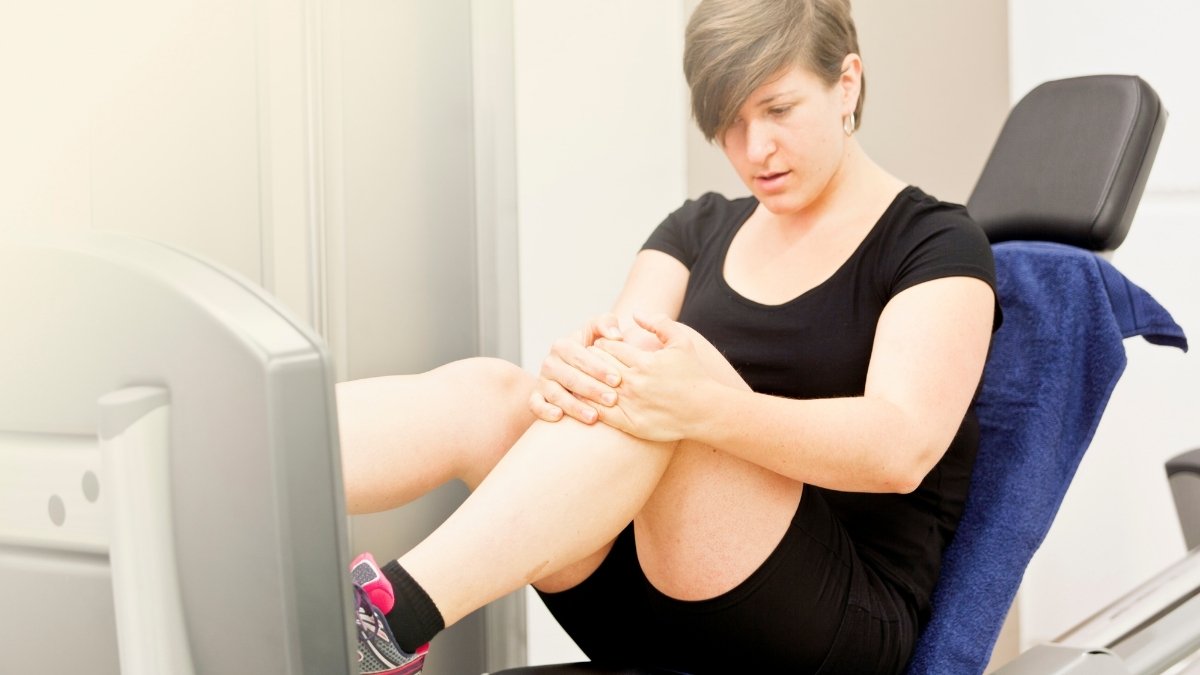
At that moment, there is no muscular buffer between the weight and your joint surface.
Your knee cartilage takes on a very different kind of stress when the joint is fully locked. A biomechanical study published in PubMed found that extended-knee positions resulted in serious deformation of the meniscus
[the curved cartilage pads that sit between the bones of the knee and absorb shock] and cartilage, raising the risk of bone-to-bone contact. The researchers concluded that the risk of injury associated with extended-knee loading was considerably greater than the risk associated with flexion-based loading.
This applies in squats, leg press, push-ups, chest press, and overhead press. Every time you lock out completely, you’re putting load through cartilage with no muscular protection.
Soft lock instead. Keeping a slight bend — just a degree or two away from full extension — keeps the muscles switched on and absorbs the force they’re designed to absorb.

Wait — that sentence contains an em dash. Fix: “Keeping a slight bend, just a degree or two away from full extension, keeps the muscles switched on and absorbs the force they’re designed to absorb.”
You won’t feel weaker. You’ll feel more stable. And over hundreds of reps and dozens of sessions, your cartilage will accumulate far less stress.
Fixing this takes no extra effort and adds no time to your session. What it won’t fix is what happens when you come back too soon.
Habit 4: Training the Same Muscles Two Days in a Row Without Giving the Joints a Rest
You go hard on legs Monday. You’re a little sore Tuesday, so you call it a “light leg day” and go again. This feels dedicated. For your cartilage, it’s a problem.
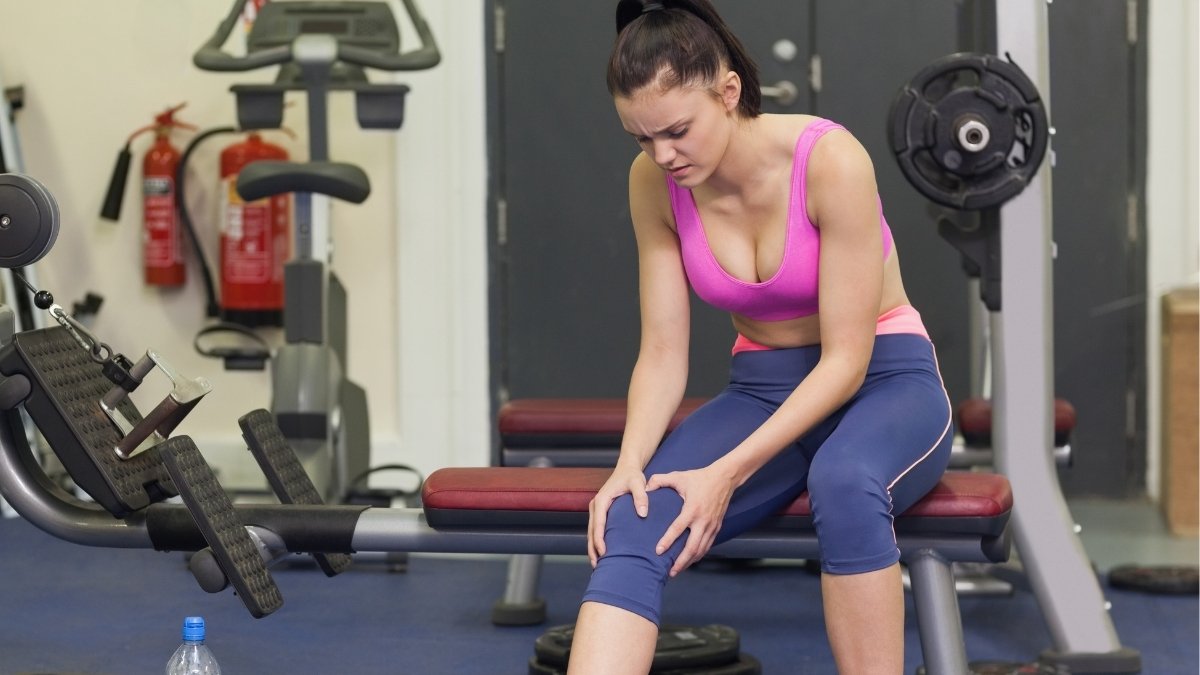
Cartilage recovery time starts with understanding what cartilage actually is. Unlike muscle, articular cartilage [the smooth, firm tissue that covers the ends of bones inside a joint, allowing them to glide against each other without grinding] has no blood supply of its own.
Laboratory studies using bovine cartilage have shown that cartilage relies on a cycle of compression and decompression to pull in nutrients through the surrounding fluid.
And that static or sustained compression significantly reduces this nutrient transport. Human application of these exact findings has not been confirmed, but the underlying structure of human cartilage is the same: avascular, nutrient-dependent, and reliant on movement and recovery cycles.
When you load the same joint on back-to-back days, you compress cartilage before it has had a full recovery cycle.

Your lower body joints need more time than most training plans allow. A 2024 PMC review of resistance training recovery found that lower body exercises require 48 to 72 hours of recovery between sessions for full neuromuscular and structural recovery.
Back-to-back leg days are one of the most common training patterns that quietly accumulate joint stress. Upper body joints need at least 24 hours. Lower body joints need 48, and often more after high-volume sessions.
Minimum Joint Recovery Windows
- Upper body joints (shoulder, elbow, wrist): 24 hours between heavy sessions
- Lower body joints (knee, hip, ankle): 48 to 72 hours between heavy sessions
- After training to failure or very high volume: add 24 hours to both
What happens when pain has already started is the final habit. The way most women handle it is the one that turns a small injury into a permanent one.
Habit 5: Running Through Joint Pain Instead of Treating It as a Signal
Joint pain during exercise is not weakness. It is information.
Most women who push through it do so because the pain is mild, because it started before they felt warmed up, or because they’ve been taught that discomfort is part of training. Joint pain is different from muscle burn.
Muscle burn is metabolic. Joint pain is structural. Something in the joint is being loaded beyond what it can currently handle.
Training through joint pain has been linked to turning small, recoverable injuries into chronic ones. The NIAMS classifies chronic sports injuries as those that develop gradually from overuse and repetitive loading, and notes that ignoring early signals is a primary pathway to chronic injury.
A separate clinical review found that overuse injuries represent up to 42% of all sport-related musculoskeletal conditions and arise specifically when there is not enough time for small injuries to heal properly between training sessions.

Micro-trauma accumulation [the buildup of tiny, repeated structural injuries in tissue that are individually too small to cause acute pain but collectively cause lasting damage] is how mild joint soreness becomes a chronic problem. Each session that pushes through unresolved pain adds another layer.
A reliable two-day rule: if joint pain starts during a session and is still present two days later, or if it shows up before a session begins, that is a signal to stop and rest, not push harder.
Joint Pain vs. Muscle Soreness: Quick Check
- Muscle soreness: aching, diffuse, usually peaks 24 to 48 hours after training
- Joint pain: sharp, pinching, grinding, or located directly at the joint line
- Muscle soreness: eases once you start moving
- Joint pain: worsens with movement or stays the same
- Rule: if pain is at the joint and still present two days after training, rest and evaluate before your next session
Final Thought,
Check your workout this week against these five habits. One of them almost certainly describes something you already do. Find the one habit from this list that sounds the most like something you do. Change that one first.

That’s not quitting. These are correctable workout habits that damage joints, and fixing one this week protects every session that follows.