Just Do These 6 Things Once a Week, and You Won’t Even Recognize Your Body in 30 Days

You do not need to work out every single day to change your body. You do not need a perfect diet or a six-day gym schedule either.
Most people go all-in on Monday. By Wednesday, they are burned out. By Friday, they have quit. And next Monday, they start the same cycle again. Same body. Same frustration.
Here is the truth: your body does not need daily perfection. It needs six specific actions done consistently, once a week. That is it.
This guide gives you exactly those six things. Each one is simple, free, and backed by real science. Do them once a week for 30 days, and you will feel, look, and move differently. No extreme dieting. No daily willpower battles. Just six weekly habits that actually work.
Transform Your
Body & Fitness
This article is structured into 8 points—read them one by one to discover six simple weekly habits that can transform your body and overall fitness in just 30 days.
Why Six Weekly Habits Beat Seven Daily Rules Every Time

Most fitness plans fail because they ask too much, too fast. You try to do something every day, miss one day, feel like a failure, and stop completely. That pattern is the real problem — not your motivation.
Science calls it the “minimum effective dose.” Exercise physiologist Dr. David Behm of Memorial University of Newfoundland found that for beginners, training even once a week can produce real strength gains in the first three months. You do not need more — you need consistency.
Research also shows it takes four to five weeks of consistent effort before a new habit feels automatic. Thirty days puts you right at the edge of that window. That is why this plan works.
When you do the same action on the same day every week, your brain stops fighting it. It becomes default. And when something becomes default, you stop relying on motivation to do it.
Six actions. Once a week each. Same day every time.
3 Helpful Tips:
- Pick one fixed day for each habit and write it in your calendar
- Do not skip two weeks in a row — missing once is normal, missing twice breaks the habit
- Set a phone reminder the night before each weekly action
Point One — Do One Full-Body Strength Training Session Per Week
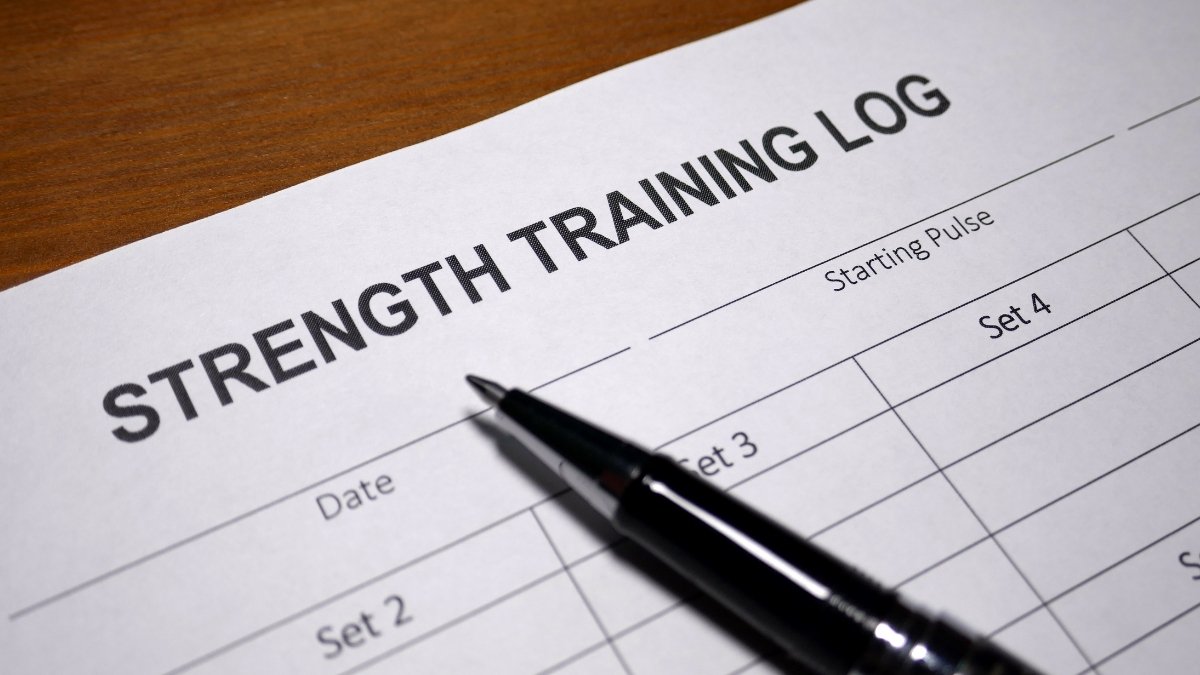
You do not need to lift weights five days a week to get results. Research cited by NPR shows that people who trained just once a week got 30% to 50% stronger — with most of those gains happening in the first year. One session. Real results.
The key is what you do in that session. Focus on compound movements. These are exercises that work multiple muscles at once — squats, push-ups, reverse lunges, glute bridges, and plank holds. A 45-minute session covering all of these hits your entire body.
Dr. Stuart Phillips of McMaster University explains it simply: the first set of any exercise gives you the biggest return. Like twisting a wet towel — most of the water comes out on the first twist. One session done well beats five sloppy ones.
Each week, try to add one or two reps to each exercise. That is progressive overload. Week 1: 3 sets of 8. Week 4: 3 sets of 12. Same moves, more reps, stronger body.
3 Helpful Tips:
- Pick a fixed day — protect it like a doctor’s appointment
- Slow down the lowering part of each rep for better muscle growth
- No gym needed — squats, push-ups, and lunges at home are enough to start
Point Two — Meal Prep Your Entire Week in One Session on Sunday
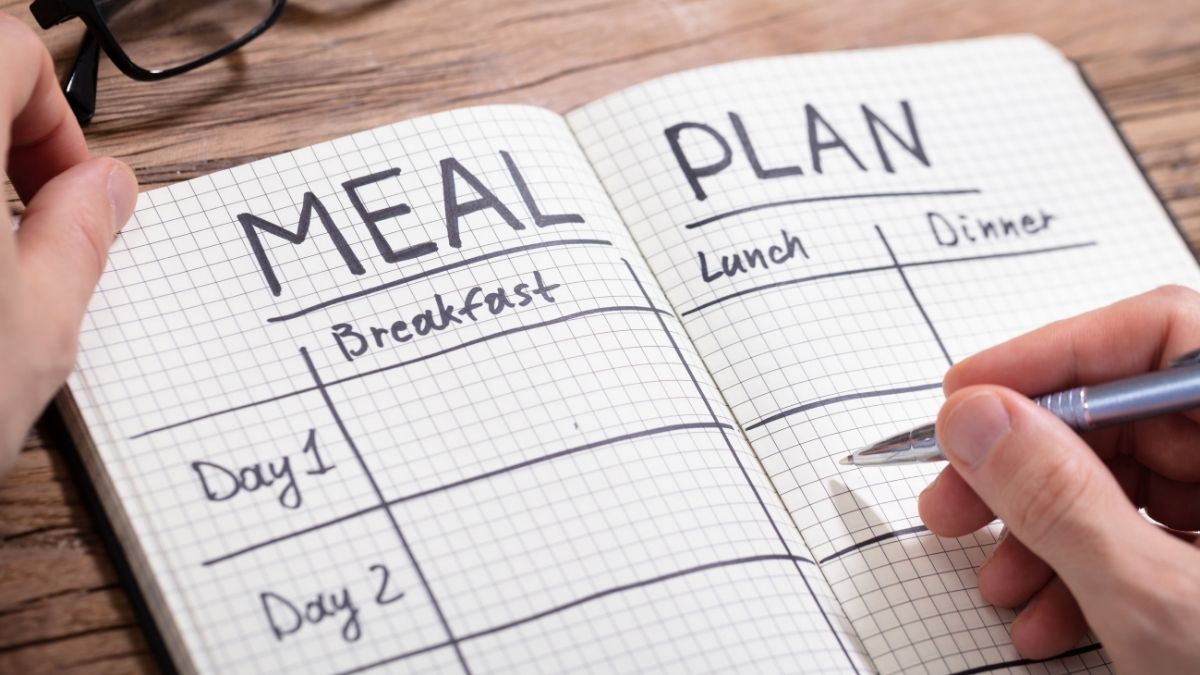
Picture this: it is 7 PM on a Tuesday. You are tired. You are hungry. There is nothing ready to eat. So you order takeout. That one moment kills more diets than anything else.
Sunday meal prep removes that moment completely. You cook once, and your food is ready for the whole week. Studies show that people who plan their meals eat healthier, eat more variety, and are less likely to be overweight.
Here is the simple formula. Cook one protein — chicken breast, eggs, or canned fish. Cook one carb — rice or sweet potatoes. Roast two vegetables — broccoli and spinach work great. Total time: 75 minutes. That covers most of your meals from Monday to Friday.
Protein is the most important part. Aim for 0.8 to 1 gram per pound of bodyweight. Research published in the American Journal of Clinical Nutrition found that high-protein diets boost metabolism by 80 to 100 extra calories per day.
3 Helpful Tips:
- Use free apps like MyFitnessPal or Cronometer to track protein roughly
- Cook in bulk — one pot of rice and one tray of chicken covers 4 to 5 days
- Budget picks: eggs, canned tuna, Greek yogurt, oats, and chicken thighs cost very little
Point Three — Do One Active Recovery Session Per Week
Rest days do not mean lying on the couch doing nothing. That actually slows recovery. Active recovery — light movement at low intensity — keeps blood moving, clears waste from muscles, and helps your body repair faster.
Your body gets stronger after the workout, not during it. But only if you help it recover. A 30 to 45 minute brisk walk, a gentle yoga session, or light cycling on a mid-week day is all you need.
Walking alone has real benefits for fat loss. Post-meal walks lower blood sugar spikes and improve how your body uses insulin. The CDC recommends 150 minutes of moderate activity per week — two 45-minute walks already covers most of that.
Pick a day that is 2 to 3 days away from your strength session. If you train Saturday, do your recovery session Tuesday or Wednesday. That spacing gives your muscles time to rebuild before the next workout.
Free YouTube channels — Sydney Cummings Houdini, Heather Robertson, and MoveWithNicole — all have free recovery and mobility sessions. No equipment needed.
3 Helpful Tips:
- A 30-minute walk after dinner counts as active recovery and helps digestion
- Focus on hips, shoulders, and lower back — these areas get the most tight
- Set a step goal of 5,000 to 7,000 steps on your recovery day
Point Four — Do a Weekly Sleep Audit and Set a Consistent Bedtime

This is the one habit most people completely ignore. And it may be the most powerful one on this list.
A University of Chicago study found that people on a calorie-restricted diet lost 55% less fat and 60% more lean muscle when they were sleep-deprived. Read that again. Poor sleep literally switches your body from burning fat to burning muscle. That is the opposite of what you want.
Sleep is when your body actually rebuilds. UC Berkeley researchers found that during deep non-REM sleep, the brain releases growth hormone — the chemical responsible for building muscle, burning fat, and repairing tissue. A 2025 study in the journal Maturitas confirmed that poor sleep quality significantly reduces skeletal muscle mass over time.
Your weekly action takes five minutes. Every Sunday, check your average sleep from last week — your phone tracks this automatically. Then set a bedtime for the coming week and do not negotiate with it.
Aim for 7 to 8 hours. Keep your room cool — around 65 to 68°F. Avoid caffeine after 2 PM.
3 Helpful Tips:
- Set your phone to grayscale mode after 9 PM to reduce screen stimulation
- Use the same wake-up time every day — weekends included
- A cool, dark room speeds up how fast you fall into deep sleep
Point Five — Do One Focused Grocery Shop With a Written List

You cannot build the body you want with food you do not have at home. If your fridge has chips and no protein, your body will reflect that — no matter how much willpower you think you have.
A weekly grocery trip with a written list is a commitment device. It forces you to decide what you will eat before you are hungry. And when healthy food is already in your fridge, you will eat it by default.
The strategy is simple. Shop the outer edges of the store — that is where the real food lives. Fresh produce, eggs, meat, and dairy are all on the perimeter. The center aisles are mostly processed and packaged food. Avoid them as much as possible.
Build your list from your Sunday meal prep plan. Buy exactly what you need to cook. Add healthy snack backups: Greek yogurt, mixed nuts, hummus, and fruit.
A sample weekly grocery list for one person: 1 kg chicken breast, 12 eggs, 4 cups Greek yogurt, oats, sweet potatoes, broccoli, spinach, 4 cans of tuna, olive oil, and daily fruit. That is clean eating for fat loss without spending a fortune.
3 Helpful Tips:
- Order groceries online with a saved list to remove impulse buying completely
- Never shop hungry — it leads to buying food that does not match your plan
- Frozen vegetables are just as nutritious as fresh ones and cost much less
Point Six — Do a Weekly Progress Check-In Every Sunday Morning
Progress that is not measured is progress that is guessed. And guessing leads to giving up. A 10-minute check-in every Sunday morning gives you real data — and real data keeps you going when motivation drops.
Studies show that people who consistently track their fitness metrics are 3 to 5 times more likely to reach their goals compared to those who do not. Tracking creates feedback. Feedback creates adjustments. Adjustments create results.
Here is what to track each week. First, your average bodyweight — use three morning readings during the week and average them. Second, one body measurement — your waist and hips at minimum.
Third, one progress photo — same pose, same lighting, same time of day every week. Fourth, one performance marker — how many push-ups can you do? How long can you hold a plank?
The scale alone will mislead you. If you are building muscle and losing fat at the same time, the number might barely change. But your photos and measurements will show real change.
End each check-in with one small decision: what will you do differently next week?
3 Helpful Tips:
- Use the free app Strong to log workouts and see your strength progress week by week
- Take progress photos in the same outfit, same lighting — side view shows the most change
- Do not judge a whole week by one bad day — look at the full 7-day picture
What Happens to Your Body After 30 Days of Doing All Six

Let’s be honest about what 30 days will and will not do. You will not get a six-pack in 30 days. But you will change — more than you expect.
Weeks one and two are about neural adaptation. Your muscles are learning to fire correctly. You will feel stronger before you look it. That is normal and real progress.
Weeks three and four are when visible changes begin. Your clothes fit differently. Your energy is more consistent. Your sleep is deeper. You crave junk food less.
Structured 30-day program participants average about 5 pounds of fat loss and 1.5 pounds of muscle gain in their first month — when they follow both nutrition and training consistently.
The internal changes often hit first. Better sleep, steadier energy, and less brain fog show up before the mirror catches up. Pay attention to those signs. They are proof the system is working.
Thirty days is not the finish line. It is the foundation. The habits you build this month are what turn a short challenge into a permanent lifestyle.
3 Helpful Tips:
- Do not compare your week one to someone else’s week twelve — compare only to your own last week
- Write down how you feel at the start of day one — you will want that reference at day 30
- After 30 days, add one small upgrade — more reps, better sleep, or one extra protein source
Conclusion:

Six once-a-week actions — strength training, meal prep, active recovery, a sleep audit, a focused grocery shop, and a weekly check-in — can change your body in 30 days. No extreme effort needed. Just consistency.
Pick the one habit you are missing most right now. Start there this Sunday. That single step is how every real transformation begins.