The Hidden Hormone That Controls Your Aging Speed — And How to Optimize It by Tomorrow

Your doctor checks your cholesterol. Maybe your blood pressure. Sometimes your testosterone. But almost no doctor tests the one hormone that decides how fast every cell in your body ages.
You feel tired more often. Your muscle is disappearing. Your belly fat is growing. And someone told you: “That is just aging.” But it is not just aging. There is a real biological reason behind it.
That reason has a name. It is called IGF-1. It controls your aging speed more than almost any other hormone in your body. And most people have never heard of it.
In this article, you will learn exactly what IGF-1 is, why it drops as you age, and what you can do — starting tonight — to bring it back to a healthy level. No prescriptions. No injections. Just practical steps that work.
IGF-1
In this article, you will learn exactly what it is, why it drops as you age, and how to optimize it.
Point One: What IGF-1 Is and Why No One Is Talking About It
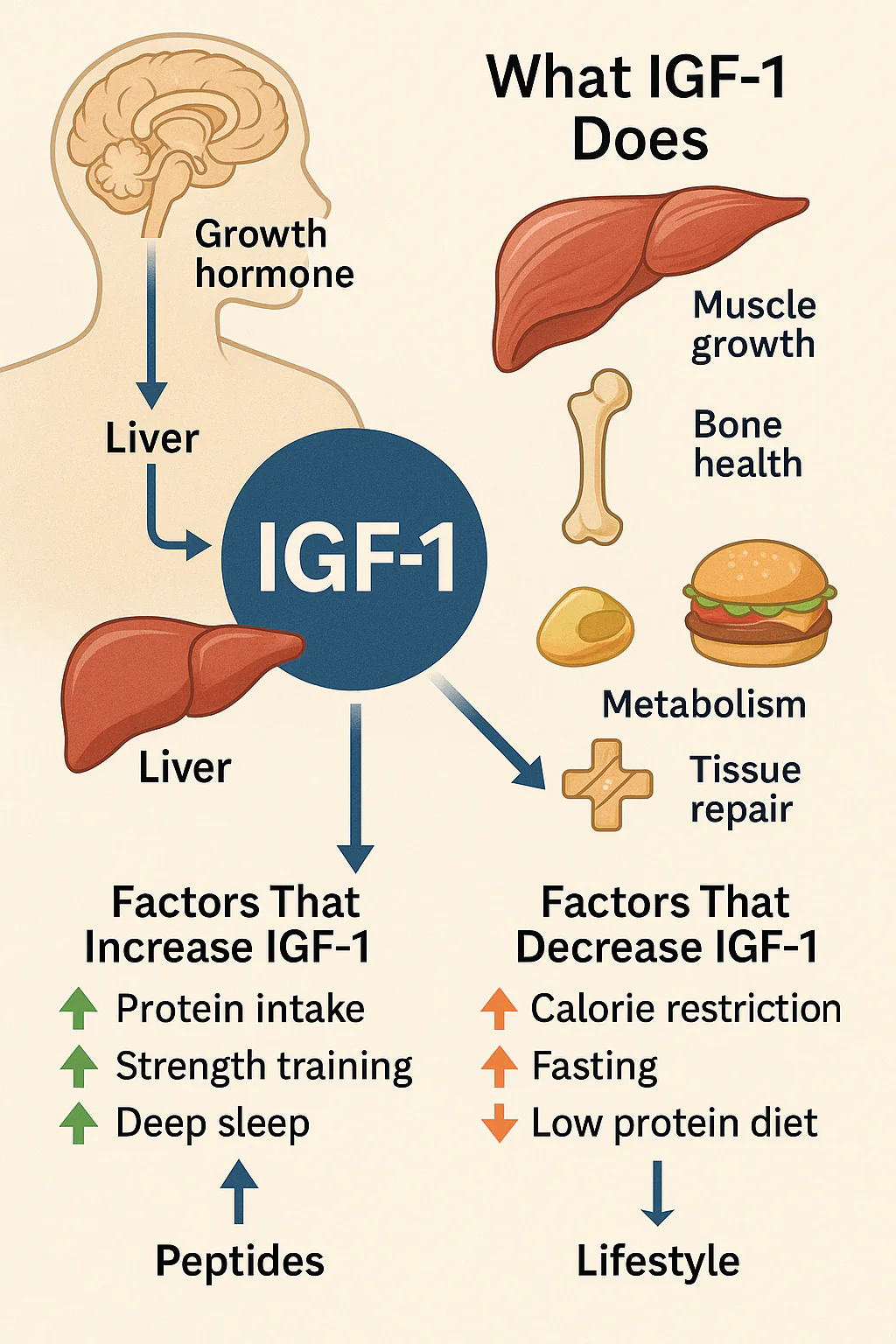
You have heard of testosterone. You have heard of cortisol. But there is a hormone made by your pituitary gland and liver together that affects how old your cells actually behave.
It is called IGF-1 — Insulin-like Growth Factor 1. Your pituitary gland sends a signal using growth hormone (GH). Your liver receives that signal and produces IGF-1. Think of GH as the text message. IGF-1 is what actually gets the work done.
IGF-1 repairs your muscles, rebuilds your bones, protects your brain cells, and burns fat. It does all of this at the cellular level, quietly, every single day.
Here is the important part. GH spikes and crashes throughout the day. IGF-1 stays stable for hours. That makes it the best single marker for your entire hormonal aging status. One morning blood test tells you what your body is doing every day.
The optimal range for most adults is 120 to 200 ng/mL. Most doctors never check it. And that is a problem.
Quick Tips:
- Ask your doctor to add IGF-1 to your next blood panel — it is often under $70
- IGF-1 is also called Somatomedin C on lab reports
- The test works best as a fasting morning draw
Point Two: The Silent Decline — What Somatopause Is Doing to You Right Now
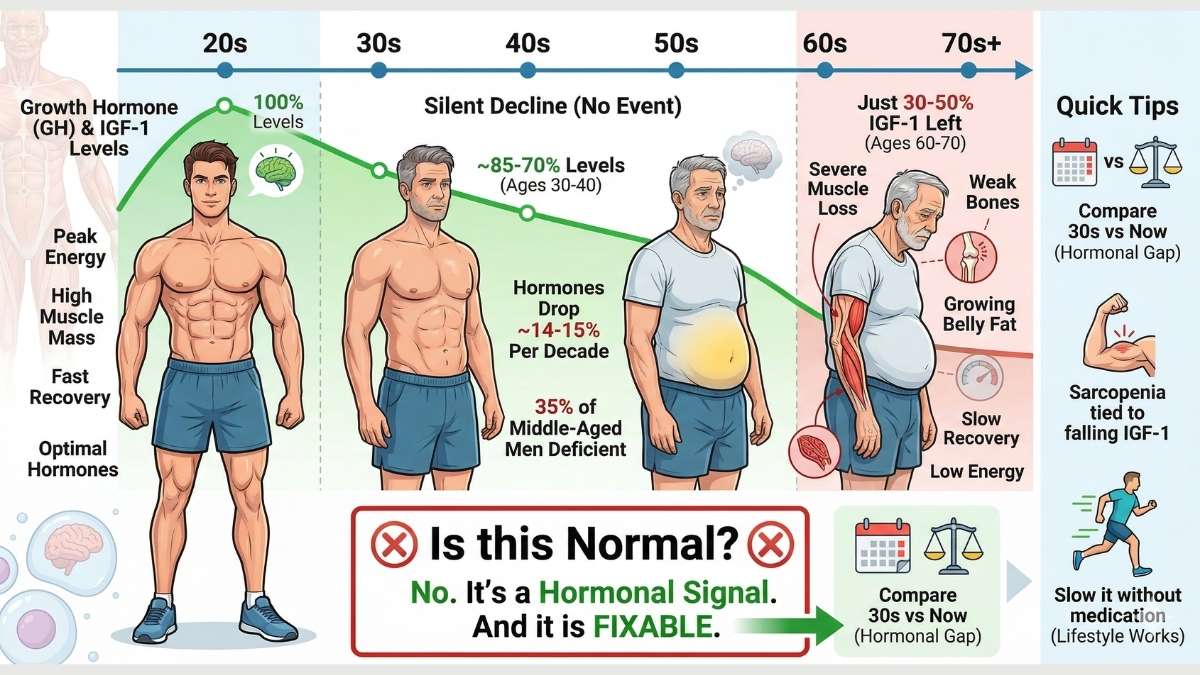
Somatopause does not announce itself. There is no event. No date. It just quietly starts in your late twenties and keeps going.
It is the clinical name for the slow decline of your GH and IGF-1 as you age. Unlike menopause, which happens fast, somatopause creeps up over decades. That is exactly why most people miss it.
The numbers are clear. Growth hormone drops by about 14 to 15 percent every decade. By the time you are 60 to 70 years old, your IGF-1 may be just 30 to 50 percent of what it was in your twenties. Research also found that 35 percent of middle-aged men are GH deficient — and most do not know it.
The symptoms are fatigue, brain fog, muscle loss, growing belly fat, weak bones, slow recovery, and low energy. Most people are told this is normal. It is not normal. It is a hormonal signal. And it is fixable.
The good news: somatopause is not a one-way door.
Quick Tips:
- Compare how you felt at 30 to now — that gap may be IGF-1, not just aging
- Sarcopenia (muscle loss after 40) is directly tied to falling IGF-1
- You can slow somatopause without medication — lifestyle changes work
Point Three: The Sleep–IGF-1 Connection That Changes Everything Tonight

You can do something right now — tonight — that directly supports the hormone driving your biological age. It costs nothing. It just takes intention.
The biggest GH pulse your body produces in a 24-hour period happens during deep, slow-wave sleep. Specifically, it fires in your first 90-minute sleep cycle. If that cycle is broken, shallow, or cut short, the GH pulse does not happen. IGF-1 production drops as a result.
Research confirms that sleep restriction reduces both GH and IGF-1 levels. Even five nights of six-hour sleep can meaningfully blunt your hormonal recovery. This is not a theory. It is measurable.
What hurts deep sleep: alcohol, eating late, screens before bed, and irregular sleep times. Each one disrupts the stage where GH pulses fire.
What helps: a cool bedroom (65–68°F or 18–20°C), no screens 60 minutes before bed, no food within 2–3 hours of sleep, and a consistent wake time every single day.
Sleep sets the hormonal foundation. Everything else builds on it.
Quick Tips:
- Set a fixed wake time — even on weekends — to protect your sleep cycle
- Keep your bedroom cool; body temperature drop triggers deep sleep
- Remove alcohol for one week and notice the difference in how rested you feel
Point Four: The Protein Paradox — Eating for IGF-1 Without Raising Cancer Risk
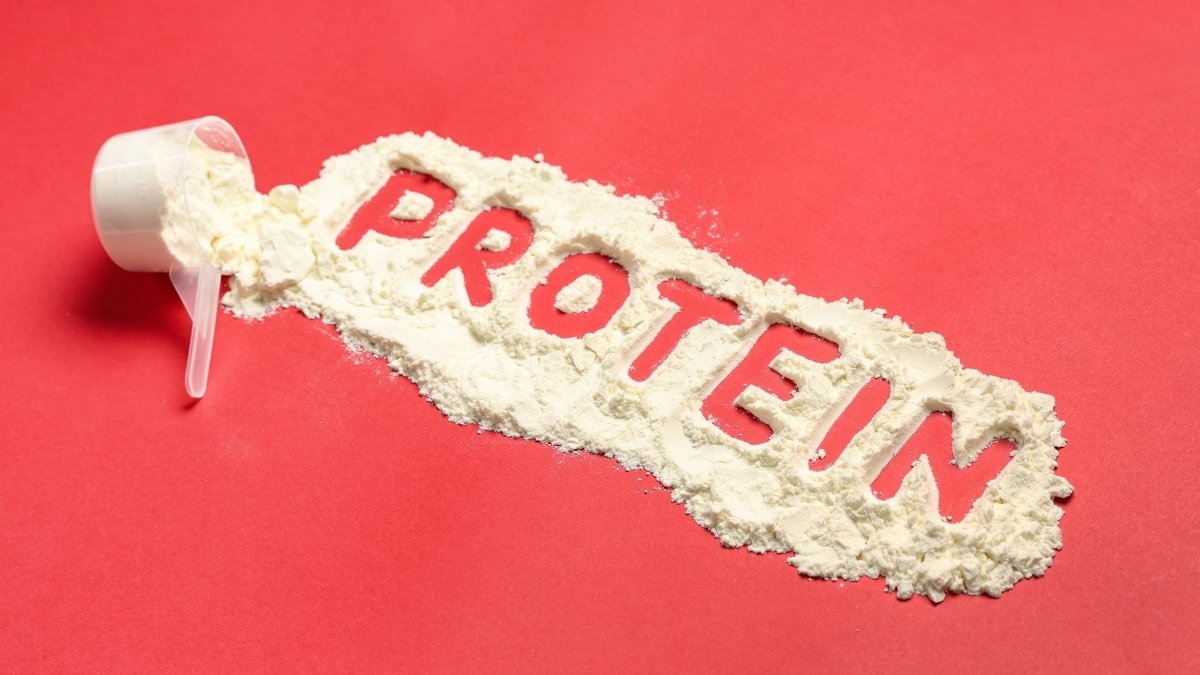
Here is where IGF-1 gets complicated. And where most health articles get it wrong. More protein is not always better.
When protein drops too low — below 0.5g per kilogram of bodyweight per day — IGF-1 production falls fast. Your body does not have the raw material to build and repair. That is bad.
But eating too much protein in midlife pushes IGF-1 too high. Research found that adults aged 50 to 65 on high-protein diets had a 75 percent higher overall death rate and four times more cancer deaths over 18 years. Each rise of 10 ng/mL in IGF-1 added 9 percent more cancer risk in that group.
The target is balance. For adults under 65, aim for 0.7 to 1.0g of protein per kilogram of bodyweight. Use whole food sources — fish, legumes, lean meat, eggs. After age 65, slightly higher protein helps prevent frailty.
Also: zinc directly supports IGF-1 production. A zinc-poor diet reduced IGF-1 by 28 percent in just 14 days in research trials.
Quick Tips:
- Add zinc-rich foods daily: pumpkin seeds, shellfish, grass-fed beef
- After 65, increase protein to protect muscle — the risk math changes
- Avoid processed meats; they raise IGF-1 past the safe range
Point Five: Exercise as a Precision Tool for IGF-1 Regulation

You cannot out-supplement a sedentary lifestyle when it comes to IGF-1. Exercise is not optional. It is the mechanism.
Not all exercise affects IGF-1 equally. Resistance training — squats, deadlifts, presses, rows — is the most powerful way to stimulate GH release and raise IGF-1. High-intensity interval training (HIIT) helps too, but heavy compound lifting leads for direct hormonal impact.
Research shows that combined sprint and resistance training can reverse the age-related differences in growth hormones. In practical terms: consistent strength training slows somatopause.
Here is something most people do not know. When you train a muscle, that muscle produces its own local IGF-1 — called Mechano Growth Factor (MGF). This happens even when your blood test does not change. It repairs and builds that specific tissue. This is why training each muscle group consistently matters more as you age.
But overtraining kills it. Too much training raises cortisol, which suppresses GH and IGF-1 directly. Rest is part of the protocol.
Quick Tips:
- Do 3 to 4 compound resistance sessions per week as a baseline
- Give each muscle group at least 48 hours of rest before training it again
- Add 1 to 2 HIIT sessions per week — keep them under 25 minutes
Point Six: Stress, Cortisol, and the Hidden Brake on Your Aging Clock

You can sleep well, eat right, and train consistently — and still suppress your IGF-1. If chronic stress is running in the background, it cancels almost everything else.
Here is what happens. Cortisol and IGF-1 are biological opposites. When cortisol stays high — from work pressure, poor sleep, overtraining, or anxiety — your liver develops something called GH resistance. It stops responding to growth hormone signals properly. IGF-1 drops, even if your GH output is normal.
Research confirms that pro-inflammatory signals impair IGF-1 bioactivity and create IGF resistance directly. Chronic stress is one of the fastest ways to suppress your own hormonal system.
Alcohol makes it worse. It raises cortisol, increases brain inflammation, and directly inhibits IGF-1. Even moderate regular drinking blunts the hormonal benefits of everything else you do.
Systemic inflammation — from processed food, gut issues, and stress — also lowers IGF-1 receptor sensitivity. Anti-inflammatory habits are IGF-1 habits. They are the same thing.
Once you lower stress and inflammation, you remove the brake.
Quick Tips:
- Do 10 to 20 minutes of slow breathing or meditation daily — it measurably lowers cortisol
- Cut alcohol for one week and recheck how your sleep and energy shift
- Replace one ultra-processed meal per day with a whole food option
Point Seven: How to Test Your IGF-1 and Understand What Your Number Means
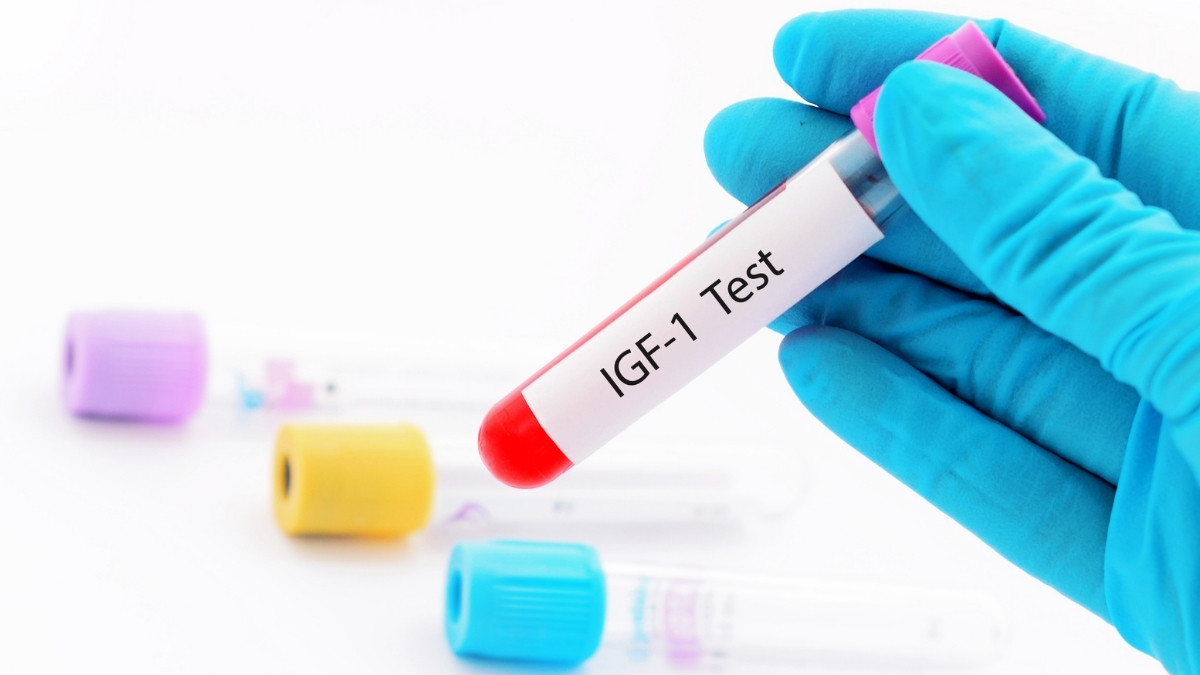
You do not need a specialist to find out where your IGF-1 stands. A simple, affordable blood test gives you a number most doctors never look at — but longevity researchers consider essential.
The test is called an IGF-1 serum test or Somatomedin C test. It is a fasting morning blood draw. In the US, labs like Walk-In Lab, Ulta Lab Tests, and LabCorp offer it for $40 to $70 without a referral.
Here is how to read your result. The functional medicine optimal range is 120 to 200 ng/mL. Below 100 ng/mL is associated with muscle loss, frailty, and cognitive decline. Above 250 to 300 ng/mL increases the risk of prostate, breast, and colorectal cancers.
One number is not enough. Track it over time. The trend matters more than a single snapshot.
If you are below 80 ng/mL with symptoms, talk to a doctor about your pituitary function. If you are above 300 ng/mL consistently, that also needs evaluation.
Quick Tips:
- Test in the morning, fasted, after a rest day — not after heavy training
- Run IGF-1 alongside fasting insulin, glucose, and Vitamin D for context
- Retest every 90 days to track your progress from lifestyle changes
Point Eight: Your 7-Day IGF-1 Optimization Starter Protocol (Actionable in 2026)

Everything in this article only matters if you actually do something with it. Here is exactly how to start — not in theory, but in the next seven days.
This is a behavioral reset across all four IGF-1 levers: sleep, food, exercise, and stress. GH pulse improvements begin within 48 to 72 hours of consistent changes.
The 7-Day
Hormonal Blueprint
A precise, structured protocol designed to reset your biology. Follow this 7-day cycle to optimize sleep, build muscle, and completely restore your hormonal rhythm.
Sleep & Rhythm
- Set a fixed bedtime and wake time.
- Drop room temperature.
- No screens 60 minutes before bed.
- No food within 2–3 hours of sleep.
- No alcohol this week.
Nutrient Loading
- Hit protein target: 0.7 to 1.0g per kg of bodyweight.
- Cut ultra-processed food and sugar completely.
- Add pumpkin seeds, shellfish, or beef for Zinc.
- Add 15–20 minutes of sun or fatty fish for Vitamin D3.
Physical Stimulus
- Execute two focused resistance sessions.
- Day 5: Upper body focus.
- Day 6: Lower body focus.
- Use challenging loads and compound movements only.
Active Consolidation
- Engage in full physical rest.
- Breathe slowly for 10–20 minutes.
- Go outside and spend time in nature.
- Review the week and plan ahead.
IGF-1 is not a magic fix. But it is one of the clearest biological signals your body sends about how well it is aging. Listen to it.
Quick Tips:
- Write down your starting energy, sleep quality, and muscle soreness on Day 1 — compare on Day 7
- Stick to the same wake time all week, even on weekends, to protect your sleep architecture
- Retest your IGF-1 after 90 days of this protocol to measure real biological change
Conclusion:

Your IGF-1 level is a measurable window into your real biological age. It declines predictably, but it responds strongly to the right habits — sleep, balanced protein,
Resistance training, and managed stress. Optimizing IGF-1 naturally is one of the most evidence-backed steps you can take to control your aging speed in 2026. Start tonight.