

You have not lifted anything heavier than a grocery bag in years, and the idea of “exercise” feels like it was written for someone else’s body. Meanwhile, the muscle keeps disappearing quietly in the background, and one day a set of stairs or a low chair suddenly feels like a real problem.
Here is what nobody tells you. Aging muscle does not need years to start responding. It starts responding on day one, and the changes begin long before you see anything different in the mirror.
Before making any changes based on this article, talk to your doctor, especially if you are currently taking medication or have a diagnosed condition.
Why Aging Muscle Bounces Back Faster Than You Expect
Muscle loss with age is real and it is well documented. Adults who stay physically inactive can lose up to five percent of their muscle mass per decade starting around age thirty, and this decline tends to become much more noticeable by the time someone reaches sixty. Strength disappears even faster than muscle size does.

By age seventy five, strength is typically being lost at a rate of two and a half to four percent per year, which outpaces the loss of actual muscle mass. How men can maintain muscle after age 55 – Mayo Clinic Press +2
Here is the part that matters for someone starting from zero. The first changes your body makes when you begin resistance exercise are not really muscular at all, they are neurological.
In the earliest weeks of training, the brain simply gets better at recruiting the motor units you already have with each contraction, which is why strength can improve before any muscle fiber has actually grown. The visible, physical rebuilding of muscle tissue tends to start a few weeks in, once the nervous system has already laid the groundwork. clinicaltrials
That is the honest answer to “starting day one.” Day one is when the adaptation begins, even if day one does not feel like much.
Foundation Strength Protocol
5 essential movements to rebuild stability and functional power.
Chair Squat (Sit to Stand)
1 set • 5-8 repsRebuilds the exact movement pattern used to safely stand up from a seated position.
Wall Push Up
1 set • 6-10 repsBuilds vital pushing strength without requiring floor work or putting strain on the joints.
Standing Band Row
1 set • 8-12 repsEffectively counters slouched posture and strengthens the essential pulling muscles of the back.
Bodyweight Glute Bridge
1 set • 8-12 repsRestores the power of hip extension, which is crucial for walking and climbing stairs efficiently.
Standing Calf Raise
1 set • 10-15 repsDirectly strengthens the lower leg and ankle muscles that are responsible for preventing trips and stumbles.
Only about one in ten adults over fifty five currently do any resistance exercise on a weekly basis, and fewer than eight percent meet the amounts that are actually recommended. That means most people reading this are starting from the same place. Here are the five movements worth starting with. ScienceDirect
1. The Chair Squat, or Sit to Stand
This is simply the act of standing up from a chair and sitting back down, done with intention instead of momentum. It sounds too simple to matter, which is exactly why most people skip it and go straight to something harder that they cannot sustain.
Physiologically, the chair squat works the same muscle groups as a traditional squat, including the quadriceps, hamstrings, glutes, and core, but the chair removes the balance demand that scares off so many beginners.
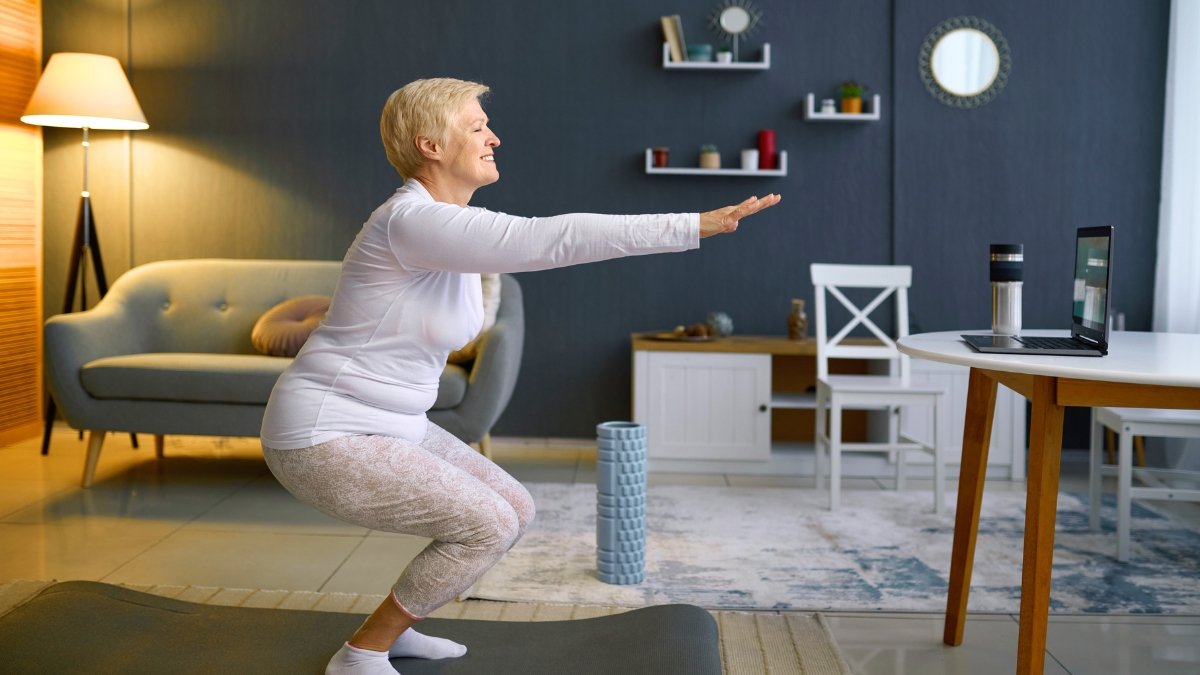
It is also one of the most researched starting points for people who have been sedentary for a long time. One study on frail older adults found meaningful strength gains in the knee muscles after just four weeks of this exercise done three times a week, using nothing but a chair. Elliot HospitalScienceDirect
To start, sit at the front of a sturdy chair with feet flat on the floor. Stand up without using your hands if you can, then lower back down with control instead of dropping. Begin with five to eight repetitions and rest as needed between them.
2. The Wall Push Up, for Upper Body That Has Gone Quiet
A traditional floor push up asks a lot of a body that has not trained in years, including wrist flexibility, shoulder stability, and core control all at once. The wall push up strips that away and leaves the part that actually matters, which is pushing strength.
This movement targets the chest, shoulders, arms, and upper back, and it mirrors real life more than people realize. It reflects the same pushing pattern used to open a heavy door, push yourself up from a chair,
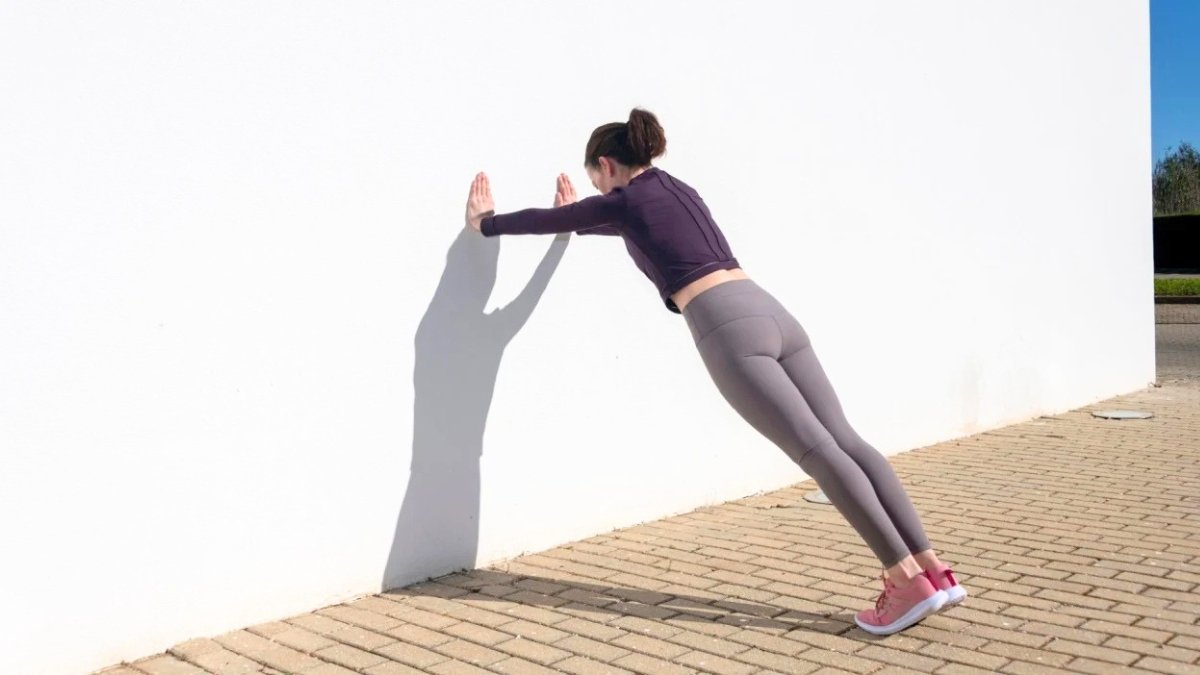
or catch yourself if you stumble, which is exactly the kind of strength that protects independence as the years go on. PfizerMelioGuide
Stand an arm’s length from a wall, place both palms flat at shoulder height, and lean in until your elbows bend, then push back to start. Begin with six to ten repetitions, moving slowly enough that you could stop at any point in the movement.
Everyone’s body responds differently, so check with your doctor before trying this if you have an existing condition or take medication.
3. The Standing Resistance Band Row, for the Posture Nobody Talks About
Years of sitting and inactivity do not just weaken the legs, they pull the shoulders forward and round the upper back. The row is the direct counter to that pattern, and it is one of the most overlooked exercises in this age group.
Banded rows work the lats, the middle and lower traps, and the rhomboids, the muscles responsible for postural support through the back, chest, and shoulders. Strengthening them does more than improve how you stand.
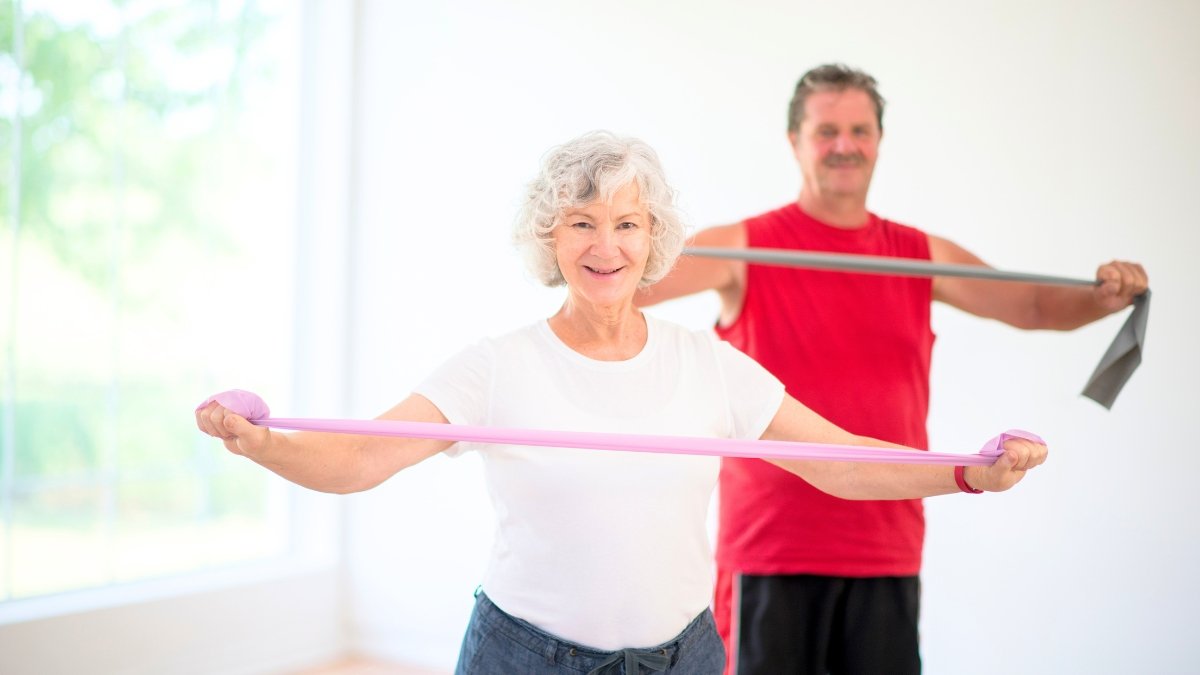
It makes everyday pulling tasks, like opening a drawer or carrying a bag, noticeably easier. Fit&Well
Step on the center of a light resistance band with feet shoulder width apart, hold an end in each hand, and pull your elbows straight back while squeezing your shoulder blades together. Return slowly. Start with eight to twelve repetitions.
Week by Week: What Is Actually Happening Inside the Muscle
The Physiology of Progress
How your body adapts to resistance training over 16 weeks.
The nervous system rapidly adapts, recruiting existing motor units more efficiently.
Exercises feel slightly less awkward and more stable, but you aren’t noticeably stronger yet.
Neural adaptation continues to deepen, and intramuscular coordination improves significantly.
The first measurable strength gains begin to show up in your reps and resistance.
Actual structural changes occur. Muscle fibers begin increasing in physical size (hypertrophy).
Movements feel noticeably easier, and you experience significantly less premature fatigue.
Continued muscle fiber growth is paired with highly improved movement efficiency and tendon strength.
Everyday mobility tasks (like walking, climbing stairs, and balancing) drastically improve.
This timeline is drawn from research on previously inactive adults between fifty five and seventy five. In one such study, upper and lower body strength improved significantly after just four weeks of training, while improvements in functional mobility took the full sixteen weeks to show up. Strength comes first. Everyday ease of movement follows a bit later, but it does follow. PubMed Central
4. The Glute Bridge, for the Hip Strength Behind Every Step
Every time you climb a stair, get out of a car, or push yourself up off a low couch, your glutes and hamstrings are doing more of the work than people give them credit for. When those muscles weaken from disuse, the lower back often tries to compensate, which is part of why so many people develop back discomfort as they age.
The glute bridge trains hip extension directly. Strengthening the glutes and the muscles around the hip through this kind of movement supports everyday actions like walking,
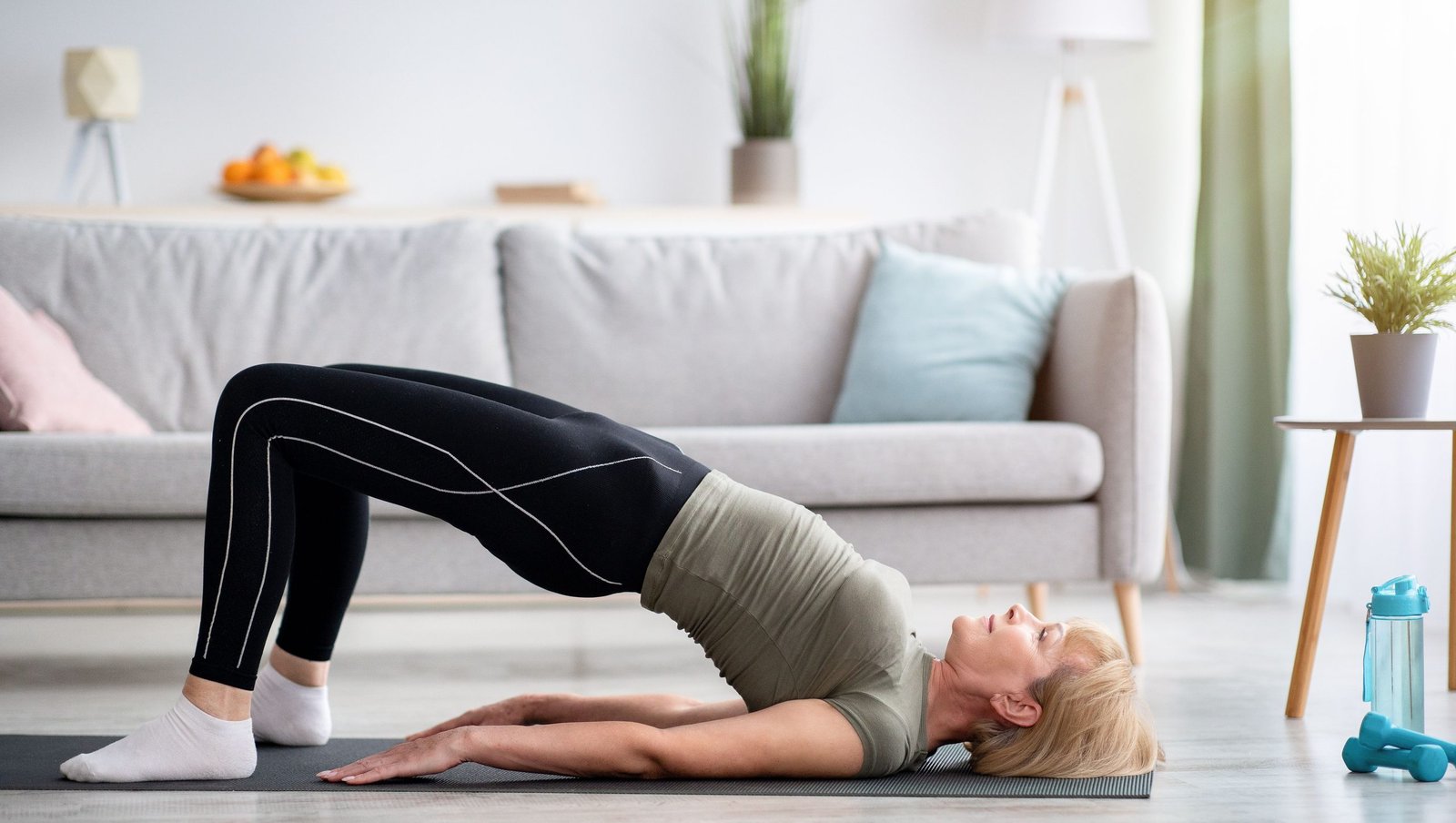
climbing stairs, and maintaining balance. It is done lying down, which removes any standing balance concern entirely. Hinge Health
Lie on your back with knees bent and feet flat on the floor, hip width apart. Press through your heels to lift your hips off the floor, squeeze your glutes at the top, then lower slowly. Begin with eight to twelve repetitions.
5. The Standing Calf Raise, the Small Muscle With a Big Job
Calf strength rarely gets attention in beginner routines, but it plays an outsized role in one thing every older adult cares about, and that is not falling. Weak calves change the way you walk and reduce your ability to catch yourself if you trip.
Stronger calves are linked to better balance, reduced fall risk, improved mobility, and better circulation in the lower legs. An eight week study of calf raise training in older men found improvements in how quickly the calf muscles could generate force, a factor directly tied to catching a stumble before it becomes a fall.
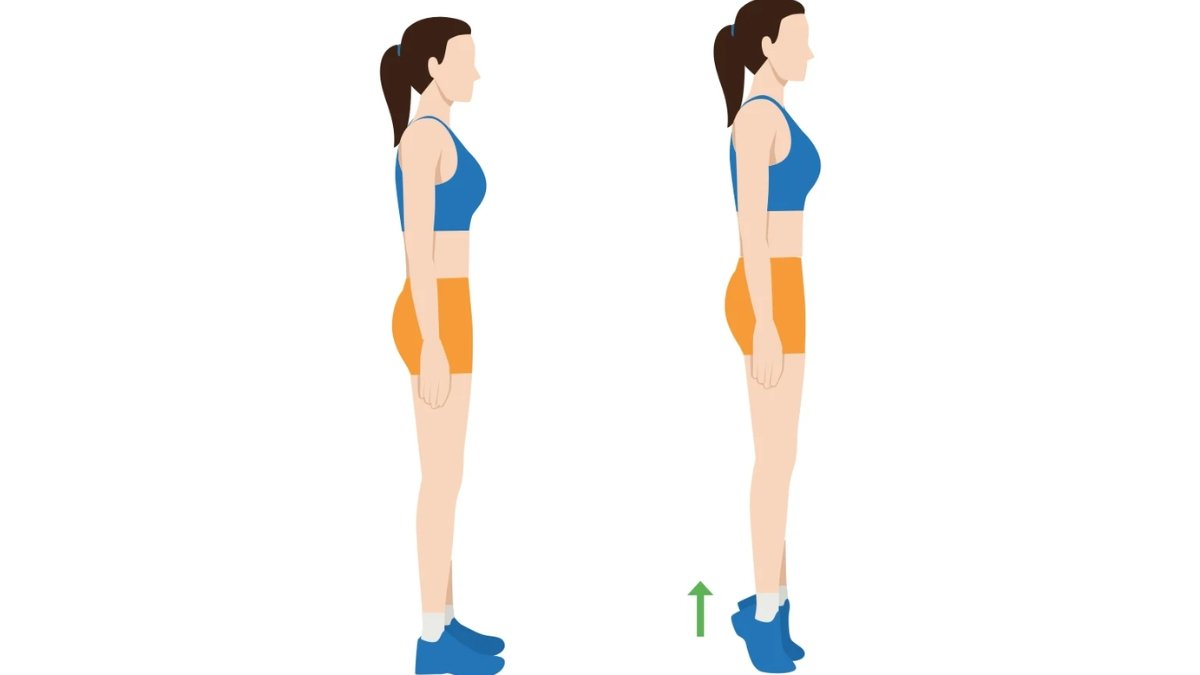
Stand behind a sturdy chair, holding the back for balance if needed. Rise up onto the balls of your feet as high as comfortable, hold for a second, then lower slowly. Start with ten to fifteen repetitions.
Try This Today
- Pick two of the five exercises above and do one set of each, nothing more
- Set a timer for five minutes total, that is genuinely enough on day one
- Move slowly on the way down in every exercise, that is where much of the strength is built
- Do this again in two days, not tomorrow, muscle needs recovery time between sessions
- Write down your reps so you can see the number climb over the coming weeks
When to Stop and Call a Doctor
- Chest pain, tightness, or pressure during or after exercise
- Sudden dizziness, lightheadedness, or shortness of breath that does not ease with rest
- Joint pain that is sharp, sudden, or does not improve within a day or two
- Swelling, numbness, or a noticeable change in balance that appears after starting a routine
| Do This | Instead of This |
|---|---|
| Start with bodyweight and one set | Jumping straight into weights or multiple sets |
| Rest a full day between sessions early on | Training the same muscles every single day |
| Progress reps before adding resistance | Adding a heavier band or weight too soon |
| Track how a movement feels week to week | Comparing your day one to someone else’s month three |
| Get medical clearance if you have a heart or joint condition | Assuming “just bodyweight” means no risk |

How long until you actually feel stronger?
Based on the research above, most previously inactive adults notice measurable strength improvements within about four weeks, with visible, functional changes such as easier stairs and steadier balance often taking closer to sixteen weeks. The nervous system leads first, the muscle tissue follows.
Does diet matter for rebuilding aging muscle?
It matters more than most people assume. Research on aging and muscle protein synthesis has found that older adults typically need around twenty five to thirty grams of high quality protein in a single sitting to fully trigger the process that builds muscle, compared to a smaller amount for younger adults. This is sometimes called anabolic resistance, and it is one reason a small breakfast with little protein can work against a new exercise routine. PubMed Central
What is the most common mistake beginners make?
Doing too much on day one and then being too sore or discouraged to return on day three. Two or three short sessions a week, done consistently, outperform one exhausting session followed by two weeks off.
Who should check with a doctor before starting?
Anyone with a heart condition, uncontrolled blood pressure, a recent joint replacement, or any diagnosis their doctor is actively monitoring should get clearance first. For most healthy but deconditioned adults, these five bodyweight movements are considered a reasonable and gentle starting point, but a quick conversation with a doctor is still worth having.
The Real Takeaway
Aging muscle is not gone, it is dormant. Even significant, age related muscle loss can often be slowed or partly reversed with the right combination of exercise and nutrition, and that process does not require a gym membership or years of preparation. It requires a chair, a wall, and roughly five minutes on day one.