Do These 5 Longevity-Boosting Strength Exercises Over 50 To Add 10 Healthy Years Instantly (Start Now)
You are over 50. Your muscles are getting smaller. Your balance is getting worse. And nobody told you it did not have to be this way.
Most people think this is just aging. It is not. It is inactivity.
Science proved in 2024 and 2025 that strength training is the closest thing to a fountain of youth that exists. Not pills. Not expensive supplements. Just lifting things, consistently, twice a week.
This article gives you five specific exercises. Each one is simple. Each one is backed by real research. And each one can be done at home with dumbbells or even no equipment at all.
Read this once. Then go do one exercise today.
Point One — Why Your Muscles Are Shrinking and Why That Is Dangerous
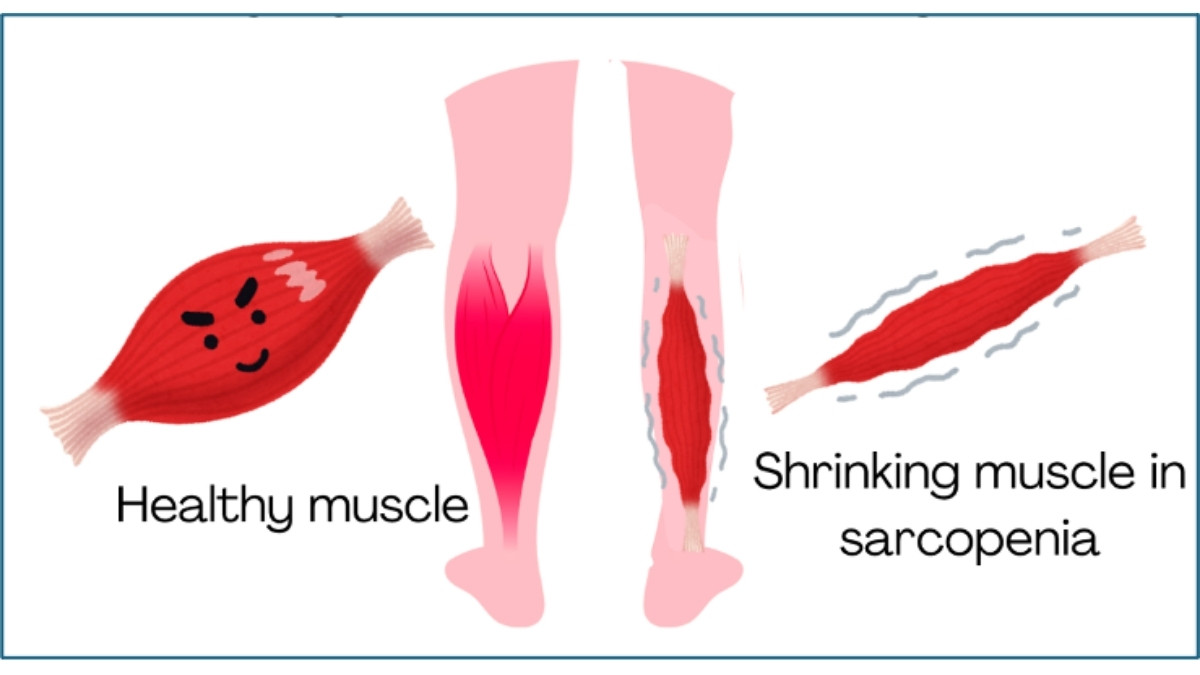
Your body starts losing muscle in your 30s. After 50, the loss speeds up fast.
This is called sarcopenia. It affects more than 45 percent of older adults in the US. And most people never know it is happening until they fall, lose strength, or can no longer do simple daily tasks on their own.
Here is what matters. Weak muscles are not just uncomfortable. They are dangerous. Falls are the top cause of death among older adults in the US.
But here is the good news. A review of 16 global studies found that just 30 to 60 minutes of strength training per week raised life expectancy by 10 to 17 percent. You do not need hours in a gym. You need a plan and the right moves.
Dr. Gabrielle Lyon, author of Forever Strong, calls muscle “the organ of longevity.” That is not hype. That is biology.
You can fight this. You can win. And it starts with five exercises.
3 Tips to Remember:
- Muscle loss is preventable — but only if you act
- You only need two sessions per week to see results
- Starting late is fine — not starting at all is the only real mistake
Point Two — Goblet Squat: The Best Leg Exercise for People Over 50
Every time you stand up from a chair, you are doing a squat. If that movement feels hard, your legs are telling you something important.
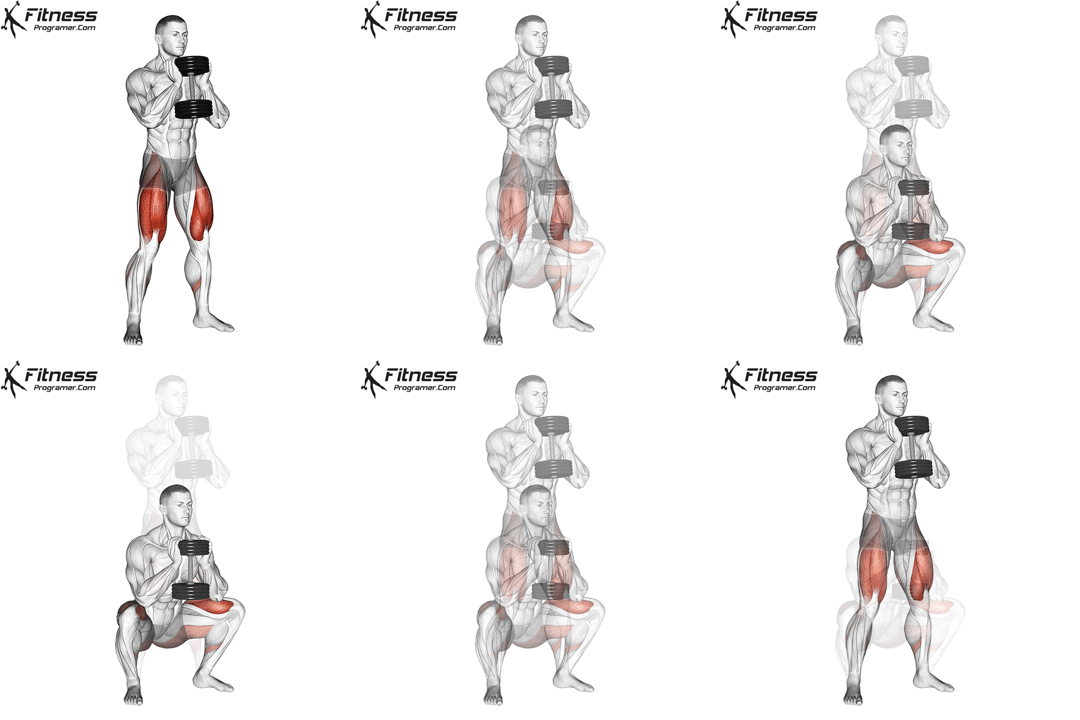
The Goblet Squat fixes that. It builds your quads, glutes, and hamstrings. It keeps your torso upright, which protects your lower back. And it is far gentler on aging knees than a traditional barbell squat.
Longevity researchers use a test called the five-times-sit-to-stand. It measures how fast you can sit and stand five times without help. Slower times predict higher death risk. The Goblet Squat trains this exact movement.
Research published in the Biology journal found that 90 minutes of weekly training, including squats, lowered biological age by up to four years.
How to do it: Hold a dumbbell against your chest. Feet slightly wider than shoulders. Lower your hips toward the floor. Keep your chest tall. Push through your heels to stand.
Do 3 sets of 8 to 12 reps. Rest 90 seconds between sets.
3 Tips to Remember:
- Sit and stand from a chair 10 times today to test your starting point
- If balance is a problem, hold a door frame for support at first
- Add weight only when you can do 12 reps with good form
Point Three — Romanian Deadlift: Save Your Back Before It Gives Out
Most people over 50 have a weak posterior chain. That means weak hamstrings, weak glutes, and a vulnerable lower back.
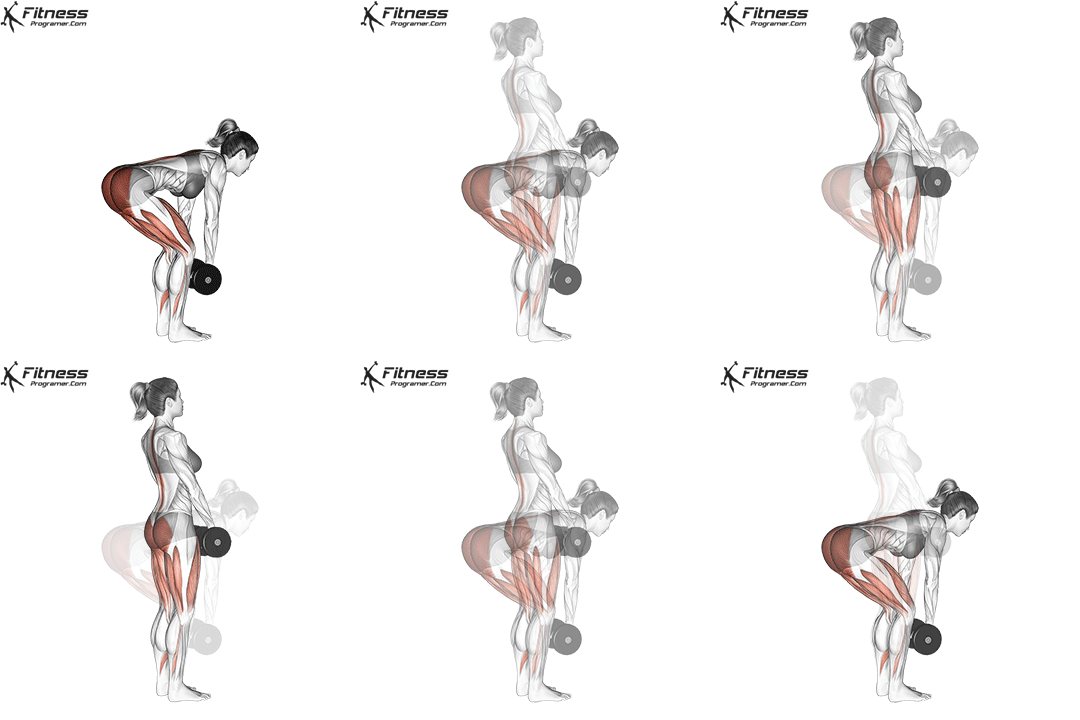
The Romanian Deadlift (RDL) fixes this directly. It strengthens all three at once. And it teaches you the most important movement pattern for everyday life — the hip hinge. Every time you pick something up from the floor, you need this movement. Without it, your back takes all the stress.
The RDL is safer than a conventional deadlift because you control how far you go. You stop when your hamstrings stretch. No forcing. No pain.
A physical therapist recommends the RDL as the best starting point for building a stronger back and easing pain from sitting too long.
How to do it: Hold dumbbells in front of your thighs. Push your hips backward. Keep your back flat. Lower until you feel a stretch in your hamstrings. Stand back up by driving hips forward.
Do 3 sets of 6 to 10 reps. Rest 90 seconds.
3 Tips to Remember:
- Practice the hip hinge by standing near a wall and pushing hips back to touch it
- Start light — a broomstick works fine while you learn the movement
- Focus on the stretch in your hamstrings, not how low you go
Point Four — Farmer’s Carry: The Simplest Exercise That Predicts How Long You Live
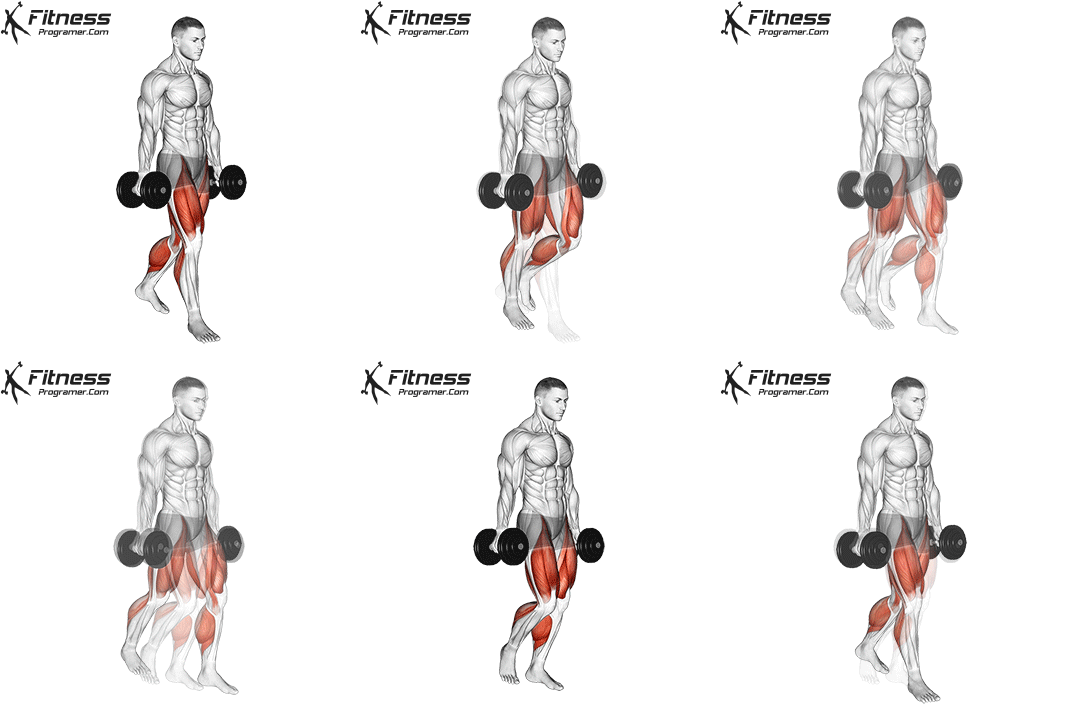
Pick up something heavy. Walk with it. That is the whole exercise.
It sounds too simple. But the science behind it is not simple at all.
A 2024 Nature study of nearly 10,000 people found that weak grip strength directly predicts early death. Grip is not just about your hands. It reflects the health of your whole neuromuscular system, your heart, and your ability to stay physically capable as you age.
The Farmer’s Carry builds grip strength faster than almost any other exercise. It also trains your core, posture, balance, and shoulder stability — all at the same time.
It also translates directly to real life. Carrying groceries. Lifting luggage. Picking up grandchildren. Every single one of those tasks gets easier.
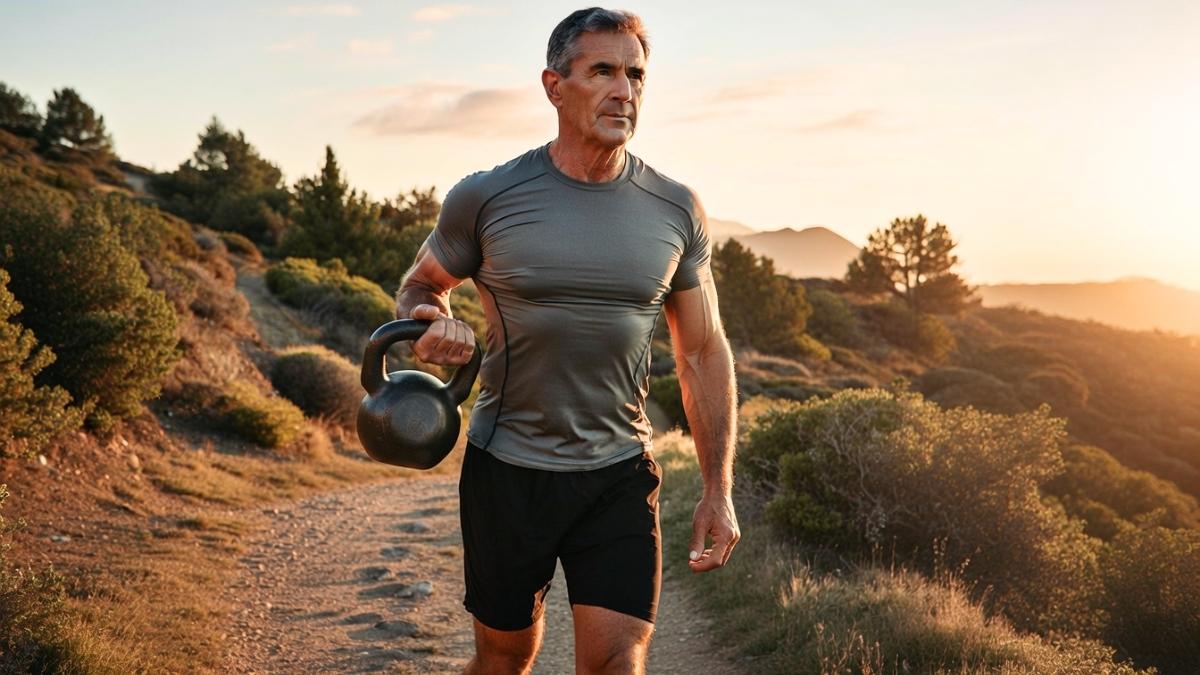
How to do it: Hold a dumbbell in each hand. Stand tall. Walk 20 to 40 yards without leaning or slouching. Core tight. Shoulders back.
Do 3 to 4 rounds. Rest 60 seconds between rounds.
3 Tips to Remember:
- Use grocery bags filled with cans if you do not have weights yet
- Keep your shoulders from shrugging — stay tall the whole walk
- If one side feels weaker, do single-arm carries to fix the imbalance
Point Five — Bent-Over Row: Fix Your Posture Before It Gets Permanently Worse
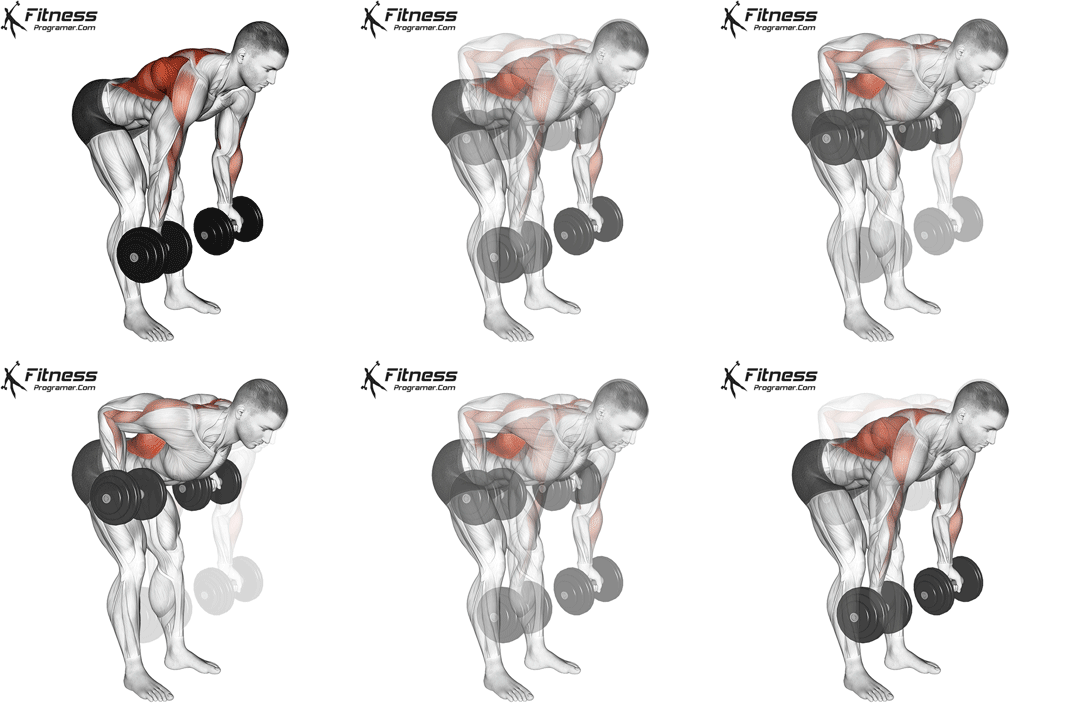
Decades of sitting, driving, and looking at screens push your shoulders forward. Over time, your upper back weakens. Your neck hurts. Your posture worsens.
This is not just about looks. Rounded posture puts stress on your spine, limits your breathing, and increases fall risk.
The Bent-Over Row is the direct fix. It targets the muscles of your upper and mid back — the ones responsible for pulling your shoulders into the right position. It also trains your body to catch itself. That pull-back strength is exactly what you use to stop a stumble before it becomes a fall.
Strong back muscles reduce neck stiffness and shoulder pain. They also support better breathing and spinal health long term.
How to do it: Hold dumbbells. Hinge at your hips, back flat. Pull both elbows back toward your hips. Squeeze your shoulder blades together at the top. Lower slowly.
Do 3 sets of 10 to 12 reps. Rest 60 to 90 seconds.
3 Tips to Remember:
- Use a chair for single-arm rows if balance is a challenge
- Squeeze your shoulder blades together at the top of every rep
- Slow down the lowering phase — that is where real strength is built
Point Six — Push-Up: The One Exercise That Builds Strength From Every Angle
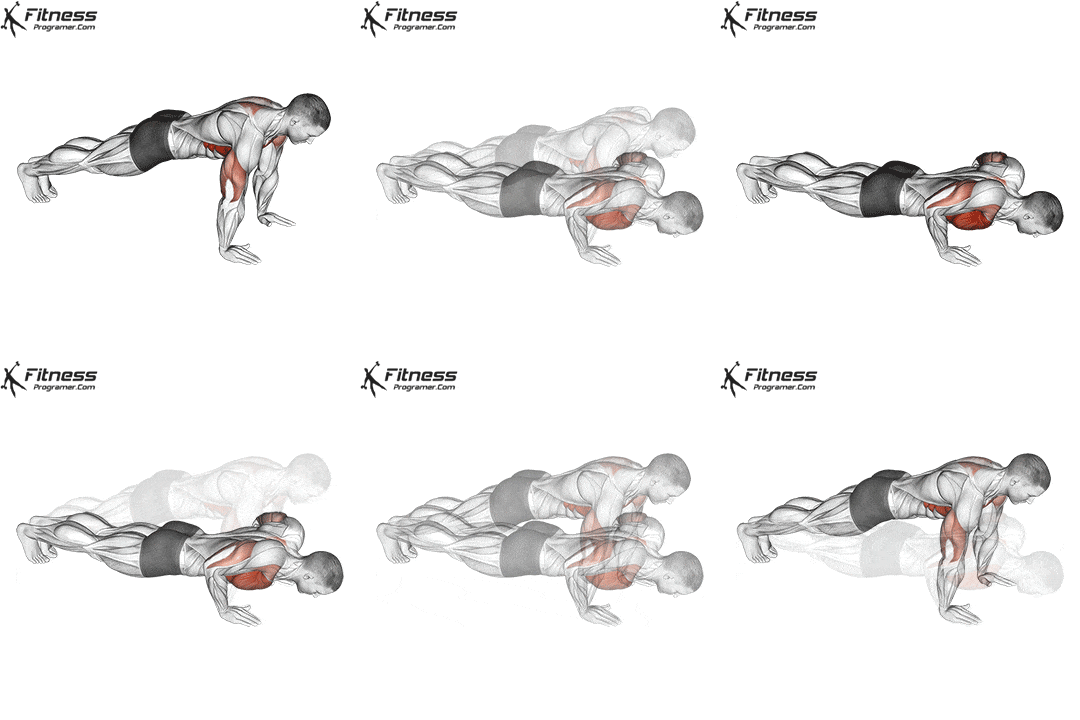
The push-up is one of the most useful exercises ever created. It trains your chest, shoulders, and arms. It forces your core to stay tight. It builds the strength you need to brace your body during a fall.
Most people over 50 stop doing push-ups because they feel too hard. The fix is simple — start easier.
There is a version of the push-up that every person can do today. You just need to find your level.
Dr. Peter Attia has said that age-related strength loss is mostly caused by inactivity, not biology — and that it can be reversed with consistent training. The push-up is proof of that principle.
Level 1 — Wall Push-Up: Stand and push away from a wall. Level 2 — Incline Push-Up: Hands on a counter or step. Level 3 — Floor Push-Up: Standard technique, body rigid. Level 4 — Tempo Push-Up: Lower slowly over 3 to 4 seconds.
Do 3 sets of 8 to 15 reps at your level.
3 Tips to Remember:
- Start at the wall — there is no shame in it, and it works
- Move to the next level only when 15 reps feel easy
- Keep your body rigid like a plank — no sagging hips
Point Seven — How to Turn These 5 Exercises Into a Weekly Routine That Works
Two sessions per week is all you need to start. The American College of Sports Medicine says strength training twice weekly, covering all major muscle groups, is the minimum for real results.
These five exercises cover every group your body needs.
Each session takes 25 to 35 minutes.
Every two weeks, make one thing harder. More weight. More yards. One harder push-up level. That is progressive overload — the reason your body keeps improving.
Also eat enough protein. A 2024 study confirmed that protein and resistance training together produce the best results for muscle preservation after 50. Aim for 0.7 to 1 gram per pound of body weight daily.
3 Tips to Remember:
- Write both sessions into your calendar like medical appointments
- Do not skip rest days — muscle grows during recovery, not during training
- Add only one new challenge at a time to avoid injury
Point Eight — What You Can Realistically Expect After 30, 60, and 90 Days
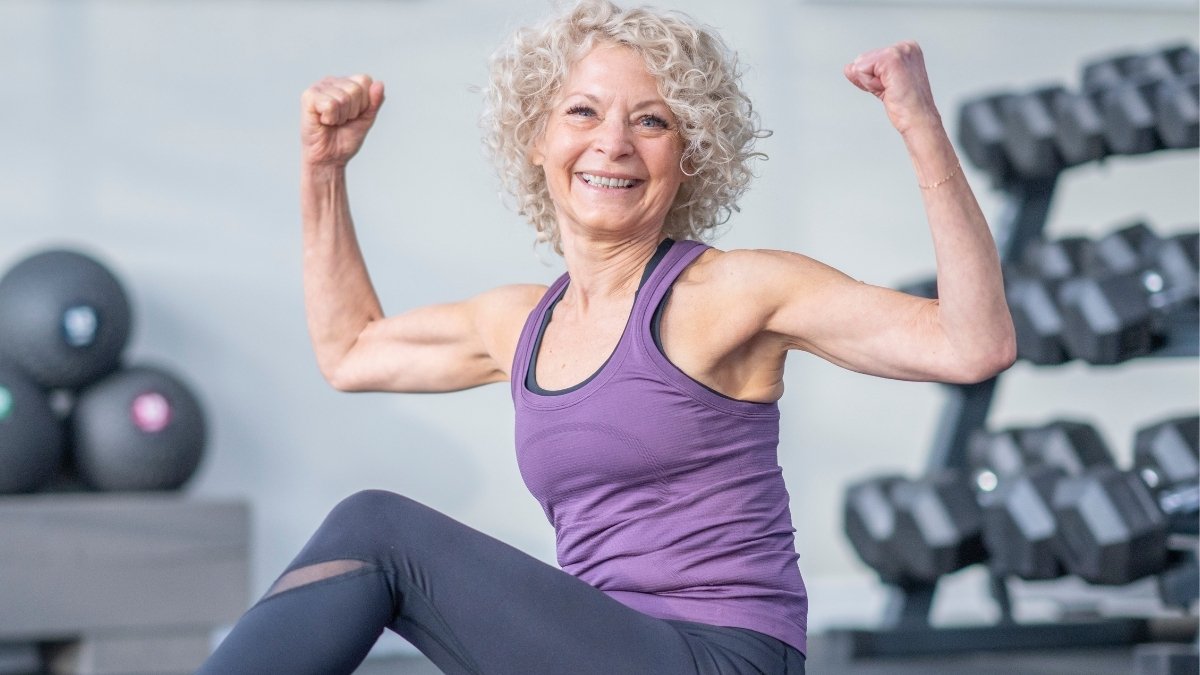
People want to know if this will actually work. Yes, it will. Here is what the research shows and what you will likely feel.
A 2025 study found older adults gain 0.5 to 8.5 percent in maximal strength per session of resistance training. Progress comes fast at the start — often faster than people expect.
A 1990 study in the New England Journal of Medicine showed that nursing home residents with an average age of 87 gained real strength through resistance training. If they could do it, you can too.
Women get an even bigger longevity boost from strength training than men, according to NPR’s 2024 health reporting.
3 Tips to Remember:
- Track how the exercises feel each week — small improvements are real progress
- Do not compare yourself to others — compare yourself to last month’s version of you
- Missing one session is fine — missing two weeks in a row is where habits break
Conclusion:

You now have five exercises, a weekly schedule, and the science behind all of it. Goblet Squat. Romanian Deadlift. Farmer’s Carry. Bent-Over Row. Push-Up.
Pick one. Do it today. Two sessions per week. Thirty minutes each.
That is the whole plan. The only thing left is to start.