
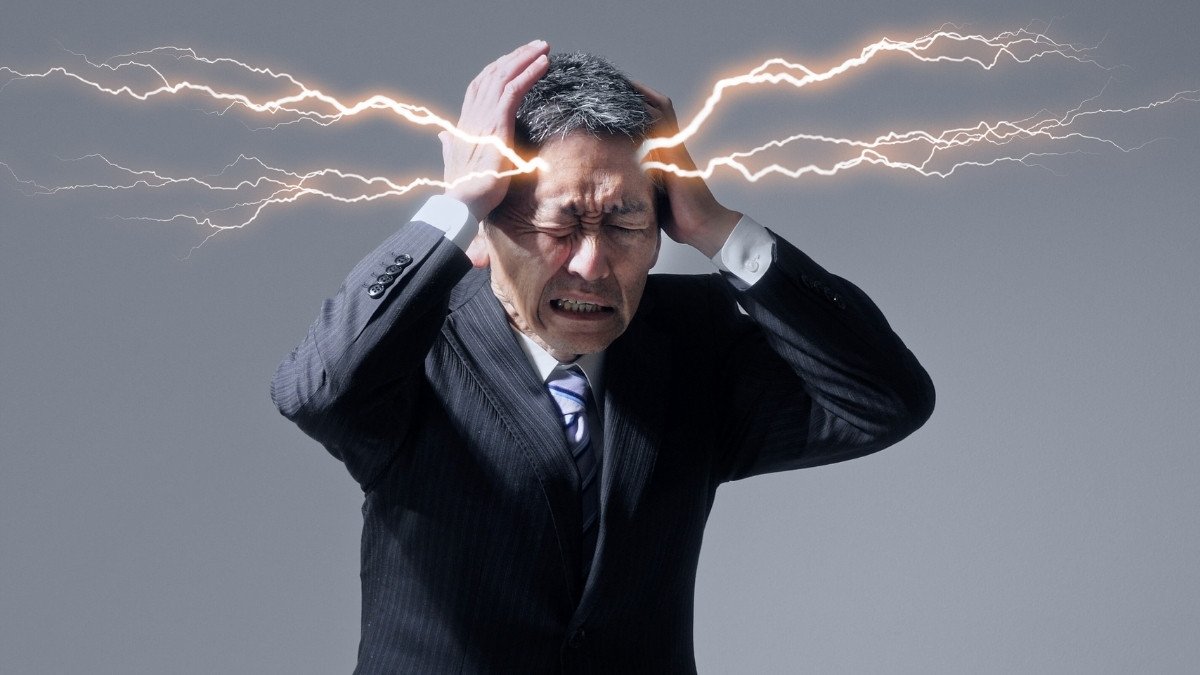
A headache that comes out of nowhere and feels unlike anything before it is not something to sleep off. Neither is sudden numbness on one side of the face, or words that suddenly stop making sense mid sentence. These moments get explained away constantly, blamed on stress, dehydration, a bad night’s sleep, and that delay is exactly what makes a brain hemorrhage so dangerous.
Every minute that passes without treatment, more brain tissue is affected, and the damage from a bleed inside the skull can shift from reversible to permanent in the time it takes to decide whether it is “worth” calling for help. There is a short, specific list of warning signs that doctors say gets missed constantly, and knowing them ahead of time is what actually changes the outcome.
Before making any changes based on this article, talk to your doctor, especially if you are currently taking blood thinners or have a diagnosed condition affecting your blood vessels or blood pressure.
What Is Actually Happening Inside the Skull
A brain hemorrhage happens when a blood vessel inside the skull ruptures and blood leaks into or around brain tissue. Unlike a more common ischemic stroke, where a blood vessel gets blocked, a hemorrhagic event is about a vessel breaking open.
That distinction matters because blood pooling inside a closed space, the skull, creates pressure. That pressure is what damages surrounding brain cells, on top of the brain tissue losing its normal blood supply in the area around the bleed.
Doctors generally group these bleeds into a few types. An intracerebral hemorrhage happens when a vessel bleeds directly into brain tissue, often linked to long term high blood pressure.

A subarachnoid hemorrhage happens when blood pools in the space between the brain and the tissue covering it, frequently caused by a ruptured aneurysm, a weak, bulging spot in a blood vessel wall.
There are also bleeds caused by head trauma, called subdural or epidural hematomas, where blood collects between the skull and the brain’s protective layers.
Older adults are more vulnerable to these even after what looks like a minor fall, partly because brain tissue naturally shrinks with age, stretching the small veins that connect it to the skull.
The Signs That Get Brushed Off the Most
The American Stroke Association and groups like the National Institute of Neurological Disorders and Stroke point to a consistent pattern: the signs of a brain hemorrhage are sudden. Not gradual, not building over days. Sudden is the keyword.
A sudden, severe headache unlike any headache before it is one of the most cited warning signs, sometimes described by patients as feeling like being hit in the head. Neurologists often call this a thunderclap headache, and it is one of the clearest signals of a subarachnoid hemorrhage in particular.
Sudden weakness or numbness on one side of the body, whether it is the face, an arm, or a leg, is another major sign. It often shows up as one side of the face drooping, or one arm suddenly feeling heavy or hard to lift.
Trouble speaking or understanding speech can appear out of nowhere too. Words might come out slurred, or a person might struggle to follow a simple sentence they would normally understand instantly.
Sudden vision changes, including blurred vision, double vision, or loss of vision in one eye, are frequently overlooked because they can feel temporary or strange rather than alarming. Loss of balance, sudden dizziness,
or trouble walking that appears with no clear cause rounds out the most commonly reported signs, sometimes alongside nausea or vomiting that shows up at the same time as the headache.
The 60 Second Check That Could Change the Outcome
Emergency physicians commonly teach a simple self check called the FAST test, originally built around ischemic stroke recognition but still useful as a fast screening tool for any sudden neurological change, hemorrhagic included.
Face: ask the person to smile. Does one side of the face droop or feel numb.
Arms: ask them to raise both arms. Does one arm drift downward or feel weak.
Speech: ask them to repeat a simple sentence. Does the speech sound slurred or strange.
Time: if any of these are present, the time to act is now, not after a nap or a wait and see approach.

Everyone’s situation is different, so this check is a starting point for concern, not a diagnosis. Call emergency services rather than trying to confirm the cause yourself.
Neurological Warning Signs
Brain bleeds and strokes are absolute medical emergencies. Do not wait to see if these sudden symptoms improve—every minute counts.
Sudden, severe “worst ever” headache
Possible subarachnoid hemorrhage.
One-sided face drooping or numbness
Possible bleed affecting one hemisphere.
Slurred speech or sudden confusion
Bleed affecting speech or language centers.
Sudden vision loss or double vision
Bleed affecting optical visual pathways.
Sudden loss of balance or coordination
Bleed affecting the cerebellum or brainstem.
Why This Gets Missed So Often
A big part of the problem is that hemorrhagic stroke makes up a smaller share of overall strokes, roughly 13 percent according to stroke researchers, yet it accounts for a disproportionately high share of stroke related deaths. It is less common, so it is less top of mind, which means people are slower to connect the dots.
There is also a tendency to assume a bad headache is “just” a migraine, tension, or dehydration, especially in someone who has had headaches before. The difference researchers point to again and again is suddenness and severity.
A headache that reaches full intensity within seconds, rather than building gradually, is the detail worth paying attention to.
Time matters enormously here. Brain tissue is remarkably sensitive to interrupted blood flow and rising pressure, and the general research on stroke care describes roughly 1.9 million neurons lost for every minute treatment is delayed.
That number was built around ischemic stroke specifically, but it captures the same underlying truth for a bleed: minutes are not a neutral unit of time in this situation.
Try This Today: Lowering the Odds Before It Ever Happens
The Daily Habit That Actually Works
- Get blood pressure checked regularly, since uncontrolled high blood pressure is the single biggest modifiable risk factor for hemorrhagic stroke.
- Ask a doctor about any blood thinning medication and whether the current dose still matches current health status.
- Limit heavy alcohol intake, which is associated with weakened blood vessel walls over time.
- Avoid smoking, which contributes to blood vessel damage throughout the body, including in the brain.
- Know personal and family history around aneurysms or vascular malformations, since some hemorrhage causes are structural rather than lifestyle driven.
Managing blood pressure and medication timing should always be done with a doctor’s guidance rather than adjusted independently, particularly for anyone already on prescribed treatment.
Who Faces the Highest Risk
Age is one of the clearest risk factors, since blood vessels naturally lose some elasticity over time and conditions like cerebral amyloid angiopathy, a buildup of protein in small brain vessels, become more common in older adults. Long term high blood pressure remains the leading cause tied to intracerebral hemorrhage specifically.

People on blood thinning medications, whether for a heart condition, a prior clot, or another reason, carry elevated risk, since these medications work by making it harder for blood to clot, which also makes it harder to stop a bleed once it starts. Head trauma, even a fall that seems minor, raises risk further in older adults for the same reason.
The Risk Modifiability Matrix
Understanding which vascular risk factors you can actively control, which require careful medical management, and which are an unavoidable part of aging.
Long-term High Blood Pressure
Why it matters: Persistently high pressure mechanically weakens and damages the delicate vessel walls over the course of years.
Heavy Alcohol Use
Why it matters: Excessive alcohol consumption is directly associated with systemic inflammation and vessel wall weakening.
Blood Thinning Medication
Why it matters: Reduces the blood’s essential ability to clot, making any internal bleeding significantly more severe.
Vascular Malformation
Why it matters: An aneurysm represents a physical, structural weak point in a vessel that is highly prone to rupturing under stress.
Older Age
Why it matters: Natural, unavoidable physiological changes occur in vessel integrity and surrounding brain tissue as time progresses.
Common Questions Worth Asking

How is a brain hemorrhage different from a regular stroke?
Most strokes are ischemic, caused by a blockage. A hemorrhage is caused by a rupture, so treatment approaches differ significantly, which is part of why fast, accurate emergency evaluation matters so much.
Can someone recover from a brain hemorrhage?
Recovery varies widely depending on the size and location of the bleed and how quickly treatment began. Many people do recover meaningful function, particularly with prompt care and rehabilitation.
Is a sudden headache always a hemorrhage?
No. Most sudden headaches are not caused by a bleed. But a headache that reaches severe intensity within seconds, especially one described as the worst of someone’s life, is treated as an emergency until proven otherwise for good reason.
Red Flags That Mean Call Emergency Services Now
- A sudden, severe headache unlike any prior headache, especially one that peaks within seconds
- Sudden weakness, numbness, or drooping on one side of the face or body
- Sudden confusion, slurred speech, or trouble understanding others
- Sudden vision loss, double vision, loss of balance, or a seizure with no known cause
The Bottom Line
The signs of a brain hemorrhage are rarely subtle once they are known, but they are easy to explain away in the moment. Sudden and severe is the pattern worth remembering: a headache that hits like nothing before it, a face or arm that suddenly stops cooperating, words that stop coming out right. None of these are symptoms to monitor overnight.