At 75, I’m Stronger Than I Was at 45—Here’s What I Did Differently (Age Defying Strength)

When Joan MacDonald’s doctor told her at age 70 to increase her blood pressure medication again, she made a different choice. She started lifting weights instead. Five years later, she’s a fitness influencer with over 1 million followers.
Most people believe strength decline after 50 is inevitable. They think building muscle after 70 is impossible. Research from 2024 proves them wrong. Resistance training can reverse the changes in muscle fibers associated with aging, even if you don’t start until after age 70.
Here’s what you’ll learn. Why you can build muscle at 75. The exact training protocol that works for older adults. Nutrition strategies that matter most. Real success stories from people 70 to 93 years old. And how to avoid common mistakes that stop progress.
Real People Who Got Stronger After 70

You think you’re too old to start. Let me show you people who prove that wrong.
Joan MacDonald was 70 when her doctor told her to increase her blood pressure medication again. She started lifting weights instead. Eight years later at 78, she’s off her meds completely, lost 42 pounds, and has over a million followers watching her fitness transformation.
Mona Noyes is 86. She started training at 85 just to get off the toilet by herself. After one year of strength training, she can stand up without assistance. That’s independence.
Richard Morgan is 93 and a four-time world champion in indoor rowing. He has the cardiovascular fitness of a healthy 30 to 40-year-old.
Celia Duff lifted the heaviest weight of her entire life at age 70. Not at 30. Not at 50. At 70.
James P. Owen saw a video of himself at 70, hunched over and frail. He started with daily walks, then added weight lifting. He transformed his posture, strength, and energy.
These aren’t genetic freaks. They’re regular people who followed proven programs and stayed consistent. Their bodies responded exactly like the research said they would.
The Training Protocol That Works
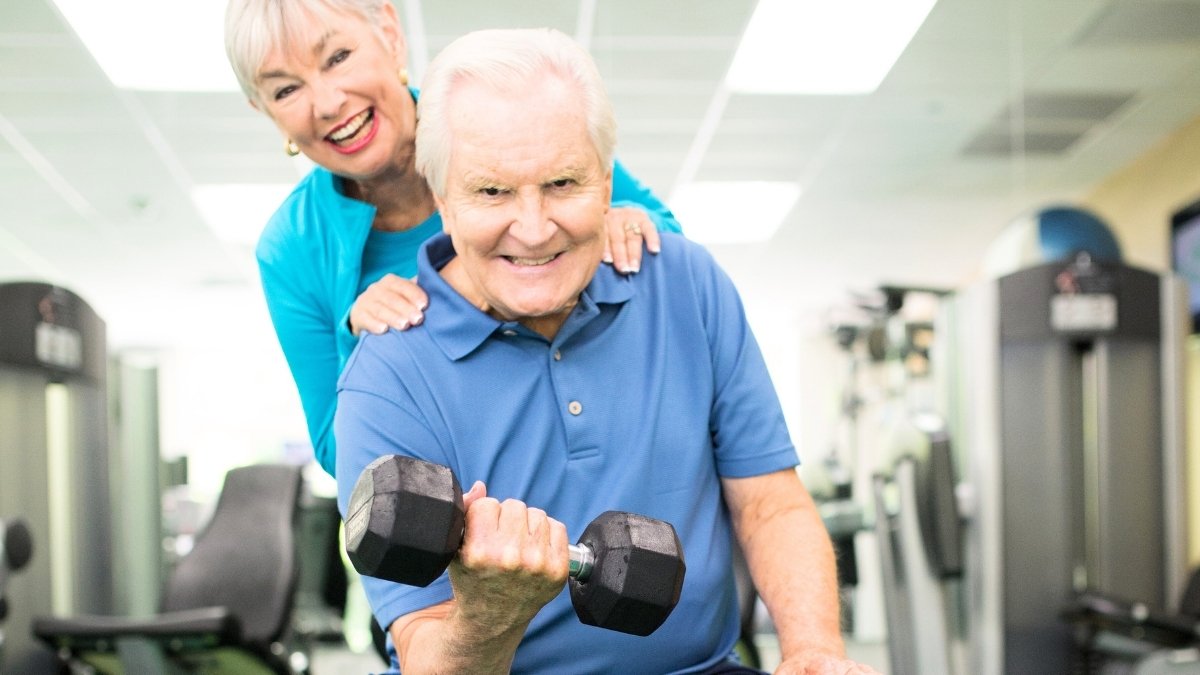
You need a plan that works for your body right now. Here’s what research shows works best.
Train two to three times per week with at least 48 hours between sessions. Your muscles grow during rest, not during the workout.
Lift heavy weights. Heavy for you, not for someone else. Heavy weights recruit more muscle fibers from the first rep, creating more muscle growth and strength gains.
Volume matters. Research found older adults who doubled their sets from three to six boosted muscle protein synthesis by over 100%.
Focus on compound movements: squats, leg press, bench press, rows, overhead press, and push-ups. Machines and free weights both work equally well. If you have balance concerns, machines are safer and just as effective.
Here’s a proven protocol: do warm-up sets first, then four sets of four reps at your maximum weight. Rest three to four minutes between sets. Older adults need that recovery time.
Start with four to six exercises per workout. Do them from largest muscle groups to smallest. When you can complete all four sets of four reps, increase the weight by five pounds next session.
Track your weights every session. Write everything down. This is progressive overload in action.
Nutrition: The Missing Piece

You can train perfectly and still not build muscle. The missing piece is usually protein.
Up to 71% of older adults don’t eat enough protein. Without it, your muscles can’t repair and grow no matter how well you train.
Experts recommend 1.2 to 1.6 grams of protein per kilogram of body weight daily. If you weigh 150 pounds (68 kilograms), you need 82 to 109 grams of protein every day.
Protein timing matters too. Consume 35 to 40 grams of protein per meal for best muscle protein synthesis. Michelle MacDonald recommends five meals daily, each with protein.
A 2025 study found elderly women with sarcopenia who ate 1.2 grams per kilogram gained significant muscle mass. Women eating only 0.8 grams didn’t improve.
What does 35 to 40 grams look like? Six ounces of chicken breast, one cup of Greek yogurt with two scoops of protein powder, or eight ounces of salmon.
Why do older adults struggle? Taste buds change with age. Medications make it worse. Protein foods taste bland.
Fix this with more seasoning, marinades, and different cooking methods. Eat five smaller meals instead of three big ones.
Calculate your needs today. Track your protein for one week. Most people are shocked at how little they actually eat.
Recovery and Sleep: The Strength Builders

Sleep builds muscle. The workout just creates the signal.
Research found resistance training beats all other exercises for improving sleep in older adults with insomnia. Better than walking. Better than stretching.
Here’s why this matters. Sleep is when your body repairs muscle fibers. No sleep means no recovery means no muscle growth.
A study compared men sleeping 5.5 hours to men sleeping 8.5 hours. Same training, same diet, different sleep. The sleep-deprived men lost more muscle.
Michelle MacDonald emphasizes eight hours of quality sleep for hormonal balance and brain function.
High-intensity physical activity reduces nighttime wakefulness. You fall asleep faster and get more deep sleep. But don’t train within three hours of bedtime. Exercise raises body temperature and adrenaline.
Take rest days between training sessions. Light walking or gentle stretching on rest days speeds recovery without interfering with muscle growth.
Sleep quality improves with consistent times. Go to bed and wake up at the same time every day. Even weekends.
Keep your bedroom cool (60-67 degrees), dark, and quiet. Avoid screens for an hour before bed. The blue light tricks your brain.
Your muscles grow while you sleep. Make sleep a priority just like training.
Start Smart
Common Mistakes to Avoid

Mistake 1: Not eating enough protein. Track your intake for one week. Most people eat half what they need. Fix it: Eat 35 to 40 grams per meal spread throughout the day.
Mistake 2: Training too often. Your muscles need 48 hours between workouts to recover and grow. Fix it: Train two to three times per week. Use other days for walking, stretching, or complete rest.
Mistake 3: Avoiding heavy weights. Light weights don’t challenge your muscles enough. Fix it: Use weights that make the last rep of each set challenging. Heavy is relative to your strength.
Mistake 4: Poor form. You add weight before you’re ready. Your form breaks down. This causes injuries. Fix it: Film yourself or work with a trainer. Perfect every rep before adding weight.
Mistake 5: Giving up too soon. Muscle building takes months, not weeks. Fix it: Commit to 12 weeks minimum. Track progress. Small improvements add up.
Mistake 6: Doing sit-ups and crunches. Harvard Health warns these are dangerous for older adults. They pull on your neck and can cause injuries. Fix it: Do planks, dead bugs, bird dogs, and standing core exercises instead.
The Mental and Brain Benefits

Your brain changes when you lift weights. These changes might matter even more than physical strength.
Recent research shows resistance training improves cognition, brain structure, and neurological resilience. Better thinking, physical brain growth, and protection against decline.
A 2024 meta-analysis found strength training so effective for mild to moderate depression that doctors can consider it a core treatment alongside therapy and antidepressants.
Why does this work? Exercise releases mood-boosting neurochemicals. But resistance training specifically builds confidence through measurable progress. You lift heavier each week. This fights the helplessness that feeds depression.
Resistance training slows cognitive function loss in adults with mild cognitive impairment. It doesn’t cure it, but it slows it down.
Moderate to vigorous physical activity gives immediate cognitive boosts. Better memory right after your workout. Improved problem-solving. Faster mental processing.
Brain imaging shows increased cortical thickness in the hippocampus and prefrontal cortex. These areas control memory and decision-making. They shrink with normal aging. Resistance training makes them grow instead.
When you train your muscles, you train your brain. When you build physical strength, you build mental resilience. The research proves it.
Your Stronger Self Is Waiting

Science proves muscle building works at any age. Older adults gain almost as much muscle as young people when they train properly.
Real people are doing this right now. Joan MacDonald at 78. Mona Noyes at 86. Richard Morgan at 93. They followed the proven system and stayed consistent.
Here’s what you need: resistance training two to three times per week, 1.2 to 1.6 grams of protein per kilogram body weight daily, and eight hours of quality sleep. That’s the complete formula.
Start with proper form and increase gradually. Learn movements correctly in weeks one to four. Add weight slowly in weeks five to eight. Build your routine in weeks nine to twelve.

As 86-year-old Mona Noyes says: “It’s never too late to begin to get fitter, to build your strength.” She started at 85.
Schedule a doctor’s appointment this week. Find a qualified trainer who works with older adults. Order proper athletic shoes. Calculate your daily protein needs.
Your stronger self is waiting. The best time to start was yesterday. The second-best time is today.
Your body is ready to respond. Are you ready to challenge it?



![Researchers Reveal the Best Time of Day to Move for Health [You're Probably Doing It Wrong]](https://savvyhipster.com/wp-content/uploads/Add-a-heading-2025-12-15T165903.370-768x432.jpg)