
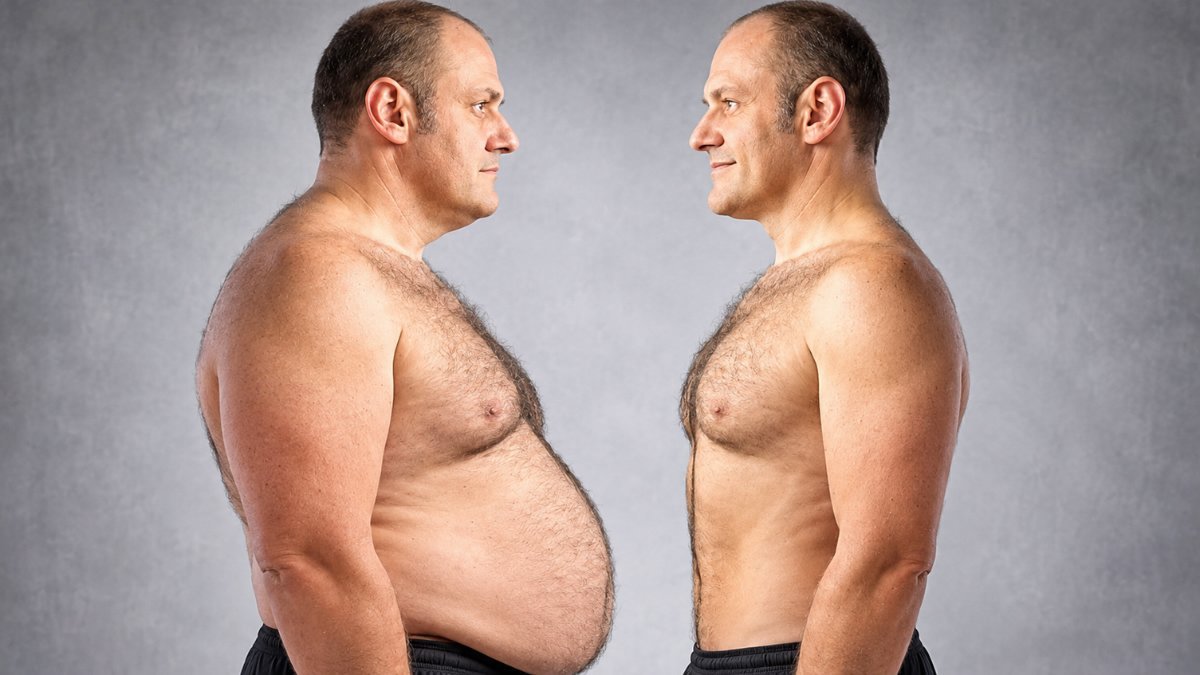
Your waistline keeps creeping out, and the scale barely moves. That is how visceral belly fat tends to announce itself. This is not the pinchable layer under your skin.
It sits deep inside your abdomen, wrapped around your liver, pancreas, and intestines, where it sends out inflammatory signals that push up blood pressure and blood sugar.
Ignore it, and the damage builds quietly for years, often until a lab result looks wrong. Many people at a normal weight still carry too much of it.
Here is the good news: Harvard Health Publishing and Harvard T.H. Chan School of Public Health researchers have studied how to shrink it, and some of their findings will surprise you.
Below are 15 ways to lose it, each tied to real research and one specific action you can start this week. One of them is probably the opposite of what you have been doing.
Before changing your diet or exercise routine based on this article, talk with your doctor, especially if you take medication or have a diagnosed condition.
Proven, Early, and Unknown
Proven: exercise and calorie reduction shrink visceral fat in adults with overweight or obesity, in randomized trials that used scans. Early: sleep, fiber, stress, and alcohol findings are mostly observational or small.
Unknown: how much any single habit helps over many years, and whether results differ by sex, age, or starting weight.
The 15 Ways to Lose Visceral Belly Fat
Some of these come straight from Harvard Health Publishing and Harvard T.H. Chan School researchers. Others come from independent studies that point the same way. Each one includes a specific action.
1. Measure your waist, not just the scale
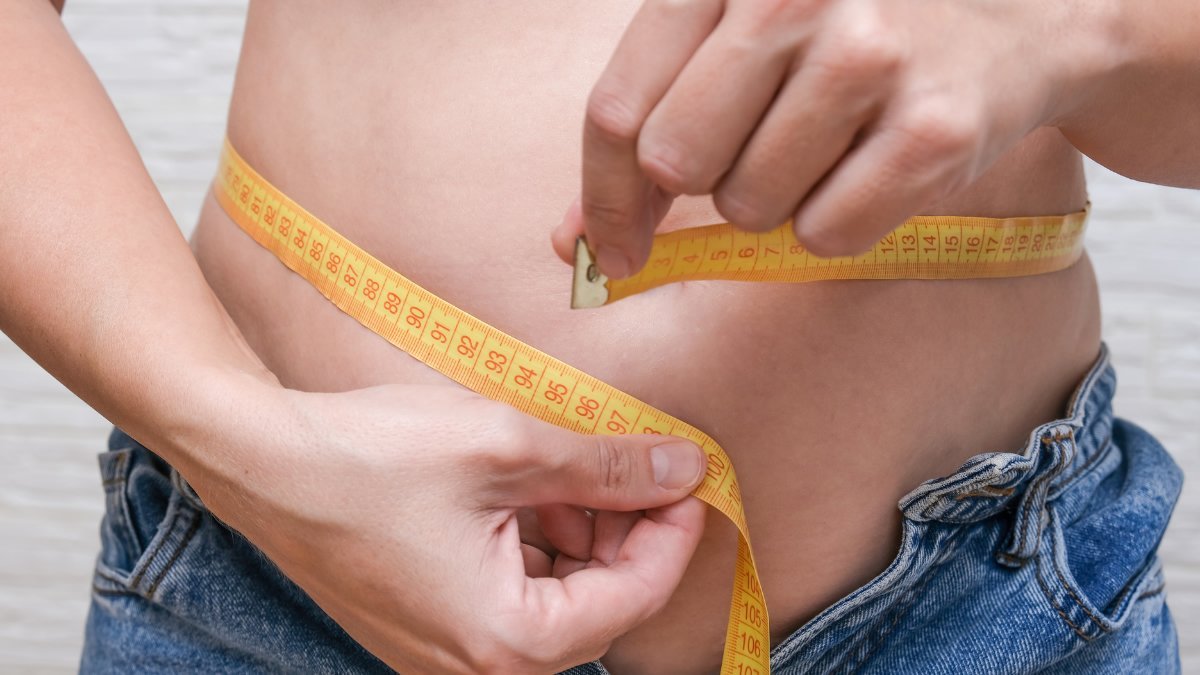
Weight alone hides what is happening deep in your abdomen. Harvard Health Publishing says the waistline is one of the simplest ways to track visceral fat, and it can shrink even when the scale does not budge.
Harvard’s measuring advice is to place the tape at navel level, not at the narrowest part of your torso. Do not suck in your stomach or pull the tape tight.
Cutoffs differ by source. One Harvard Health Q&A flags more than 32 inches for women and 38 inches for men, while another Harvard Health article says men at 40 inches or more almost always carry excess visceral fat.
Harvard Health also notes that only about one third of the weight people lose comes from visceral fat. Measure every two weeks at the same time of day, and write the number down.
Here is how common measurement methods compare.
Visceral Fat Measurement Methods
Comparing clinical accuracy, measurement effort, and practical use cases for assessing abdominal adiposity.
Good estimate
Free, one minute
Weak for visceral fat
Quick
Related, little extra value
Two measurements
Most accurate
Costly, rarely covered
2. Lift weights two or three times a week

Harvard Health Publishing recommends resistance training two to three times per week to help reduce visceral fat. Muscle matters because losing it slows calorie burn, and Harvard Health says most men lose about 30 percent of their muscle over a lifetime, starting after age 30.
A 2015 prospective cohort study in Obesity, led by Harvard T.H. Chan School of Public Health researchers, followed about 10,500 healthy men aged 40 and older for 12 years. Men who added 20 minutes a day of weight training gained 0.67 cm less around the waist, compared with 0.33 cm less for the same time spent on moderate to vigorous aerobic activity.
The study included only men and measured waist size, not scans of visceral fat. Start with squats, rows, and presses using a weight you can lift about 8 to 12 times.
3. Add cardio that really raises your heart rate
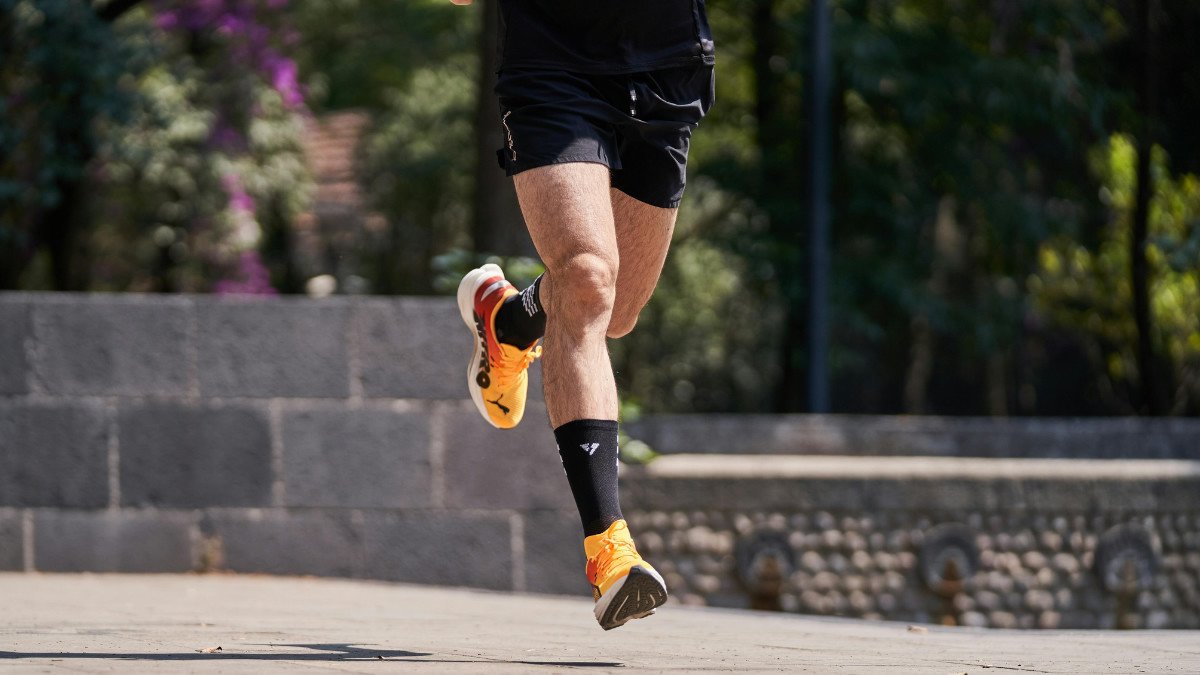
Harvard Health says the type of aerobic exercise matters less than the effort. Running, swimming, cycling, and brisk walking all work, and Dr. Caroline Apovian of Brigham and Women’s Hospital advises keeping your heart pumping harder for most of the workout.
Harvard Health also reports that exercise can shrink visceral fat even when body weight stays the same. Combining aerobic and resistance training taps stored visceral fat better than either one alone.
Skip the sit ups. Spot exercises tighten abdominal muscles, but Harvard Health explains they do not pull fat from the visceral area. Try a daily brisk walk where you can talk but not sing.
4. Try interval training once or twice a week

Interval training alternates hard efforts with easy recovery. A 2018 meta analysis in Sports Medicine found that high intensity interval training significantly reduced total, abdominal, and visceral fat mass in adults.
A 2024 umbrella review in Sports Medicine reported that interval training reduced visceral fat compared with no exercise. It also trimmed body fat percentage slightly more than steady moderate training, especially in people with overweight or obesity, in programs lasting at least 12 weeks, and in sessions with under 15 minutes of hard effort.
Not every review agrees that intervals beat steady cardio for visceral fat, so treat them as an option, not a requirement. Try 30 seconds hard and 90 seconds easy on a bike for 10 minutes, and check with your doctor first if you have heart or joint problems.
5. Break up long stretches of sitting
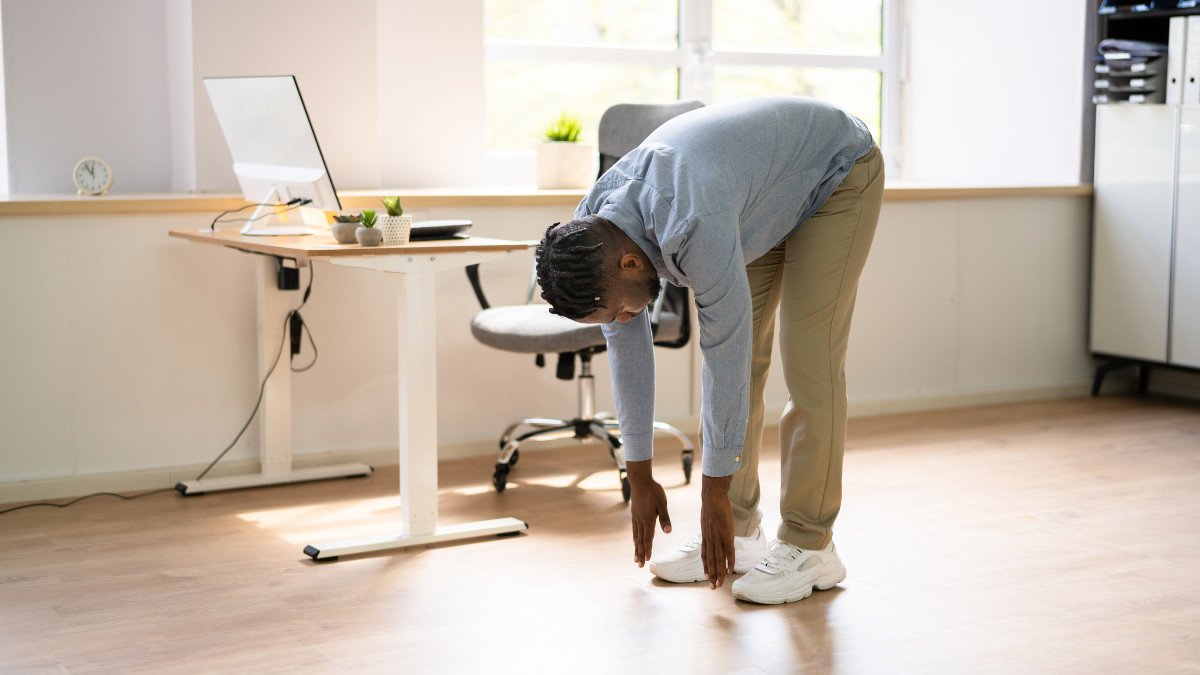
Sitting less sounds too simple to matter, and the research is mixed in a useful way. A 2021 study in Medicine and Science in Sports and Exercise, using a Dutch cohort aged 45 to 65, linked swapping sitting time for moderate to vigorous activity, but not light activity, to less visceral and liver fat.
A 2022 cross sectional study in Scientific Reports of 758 Japanese adults found that shifting 30 minutes of sitting into light activity was linked to lower visceral fat. Both studies are observational, so they show links, not proof.
In the Harvard cohort from item 2, each extra 20 minutes a day of TV watching was linked to a slightly larger waist gain. Set a timer to stand and walk for a few minutes every hour.
6. Cut back on sugary drinks

Liquid sugar may be the easiest source of visceral fat to remove. A 2016 prospective cohort study in Circulation followed 1,003 Framingham Heart Study adults, with CT scans about six years apart. Higher sugar sweetened beverage intake was linked to a bigger increase in visceral fat, even after adjusting for weight change.
That pattern was not seen for diet soda in the same study.
The Harvard T.H. Chan School Nutrition Source adds that people do not feel as full after sugary drinks as after solid food, and they tend not to eat less to make up for it. Swap one sugary drink a day for water, sparkling water, or unsweetened tea, then work down from there.
7. Swap refined grains for whole grains
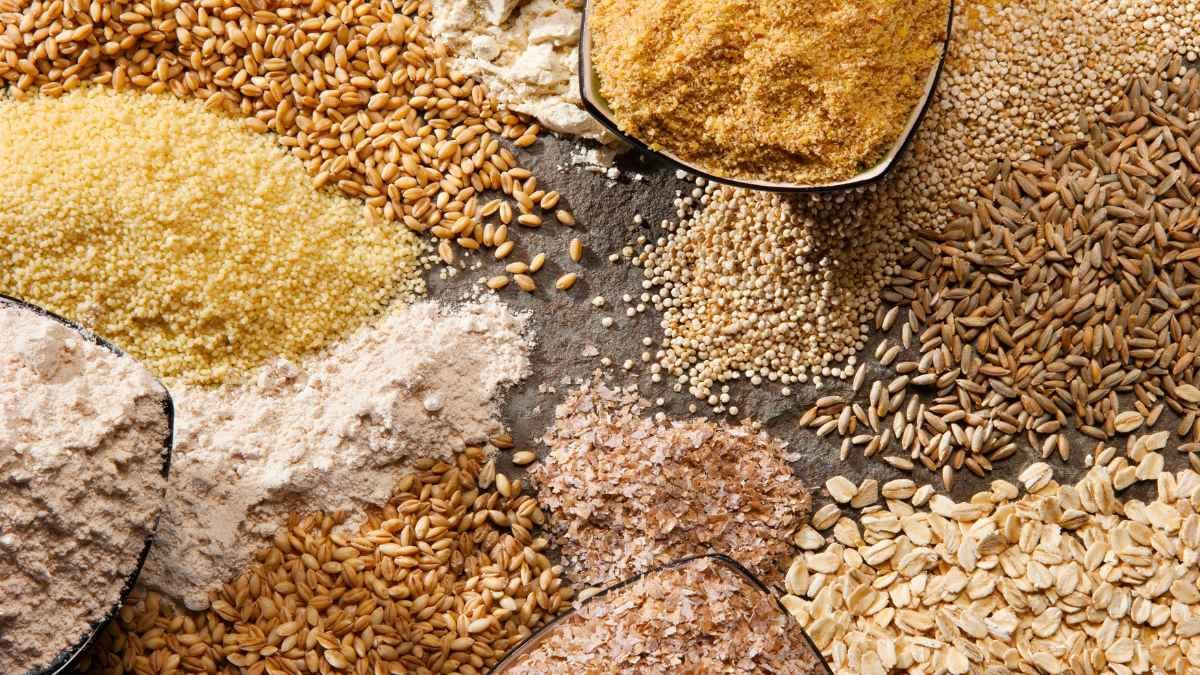
A 2010 cross sectional analysis in The American Journal of Clinical Nutrition studied 2,834 Framingham Heart Study participants aged 32 to 83. People in the highest whole grain group averaged about 1,563 cubic centimeters of visceral fat, compared with 1,883 in the lowest group.
Refined grains showed the reverse pattern, at 1,928 in the highest group and 1,727 in the lowest. The lead researcher said the benefit seemed to fade when people still ate four or more refined servings a day, which suggests substitution beats simple addition.
Because the study was cross sectional, it cannot prove cause. Choose oats, brown rice, and 100 percent whole wheat bread in place of the white versions.
8. Eat more soluble fiber
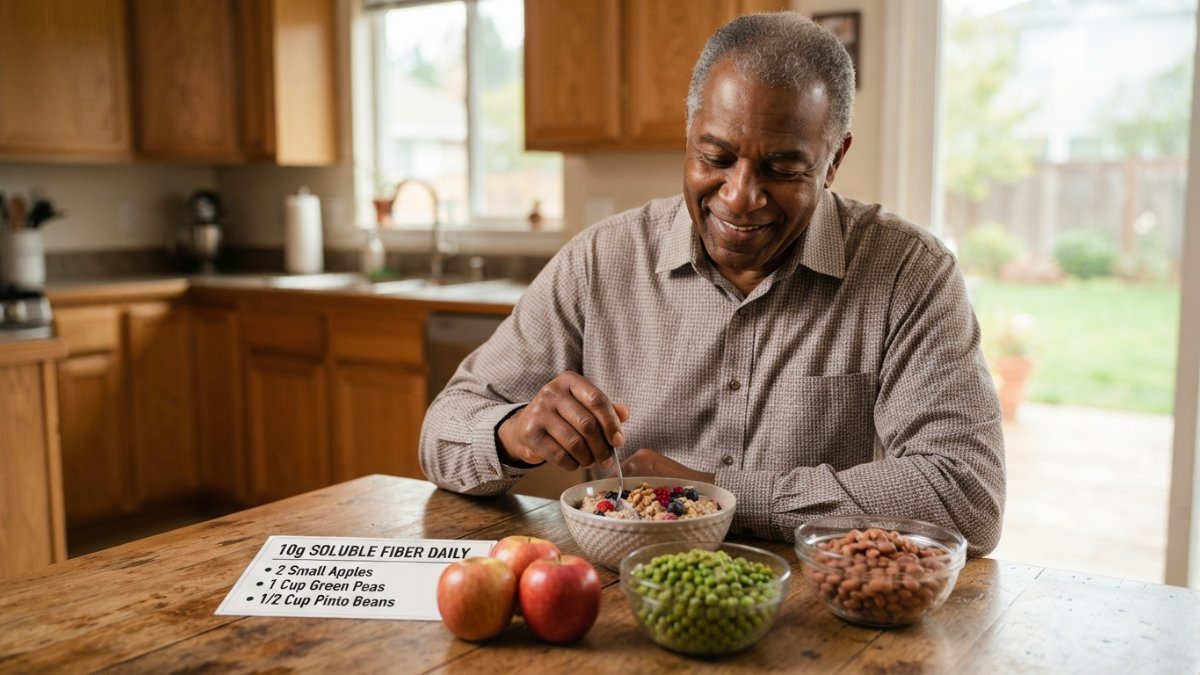
Soluble fiber dissolves in water and forms a gel in your gut, and it is plentiful in oats, beans, apples, and barley. A 2011 prospective cohort study in Obesity followed 1,114 Black and Hispanic American adults, with CT scans five years apart. Each extra 10 grams of soluble fiber per day was linked to 3.7 percent slower visceral fat gain, with no such link for fat under the skin.
Slower gain is not the same as loss, and the authors said how fiber works remains unclear. In the same study, regular moderate activity was linked to 7.4 percent slower accumulation.
Ten grams equals roughly two small apples, a cup of green peas, and half a cup of pinto beans. Add a bowl of oatmeal or a half cup of beans to your daily menu.
9. Eat a polyphenol rich Mediterranean style diet
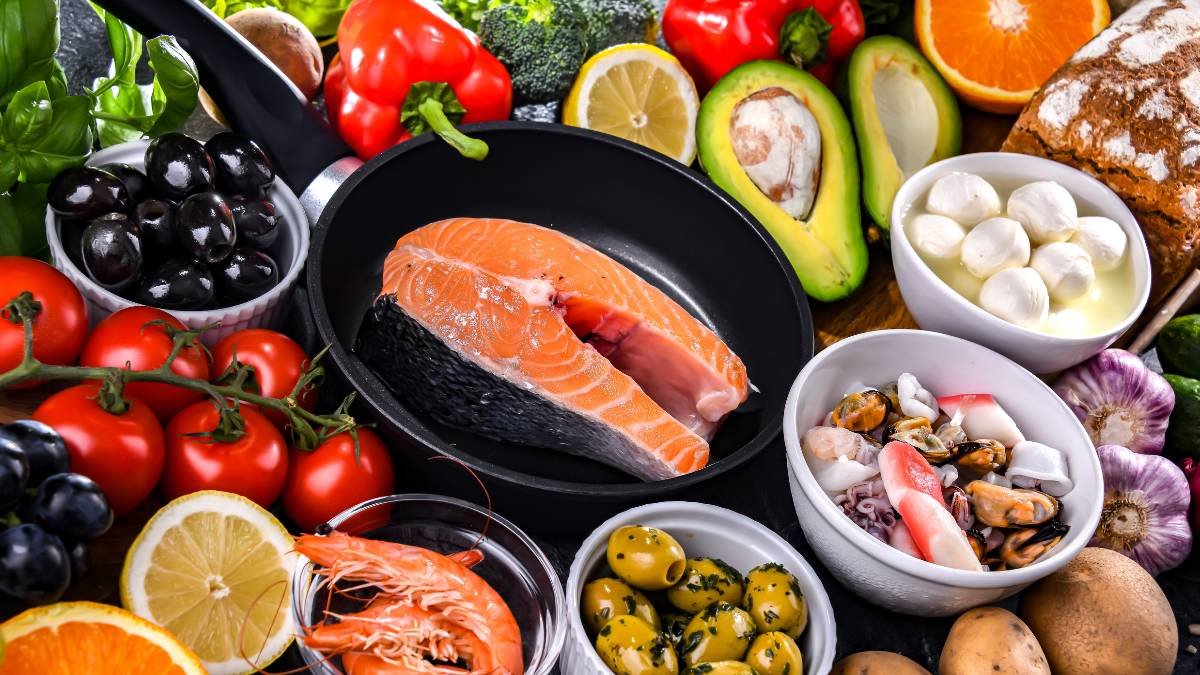
Polyphenols are plant compounds found in tea, nuts, and colorful produce. A 2022 randomized trial in BMC Medicine, with coauthors from the Harvard T.H. Chan School of Public Health, assigned 294 adults to three diets for 18 months and tracked visceral fat with MRI.
The green Mediterranean group cut visceral fat by 14.1 percent, versus 6.0 percent on a standard Mediterranean diet and 4.2 percent on basic healthy eating guidelines. Weight loss was similar between the two Mediterranean groups.
Both Mediterranean groups ate walnuts. The green version added three to four cups of green tea daily, a duckweed shake called Mankai, and less red meat. Participants averaged 51 years old and 88 percent were men, so results may differ for women.
10. Trim calories moderately and protect your muscle
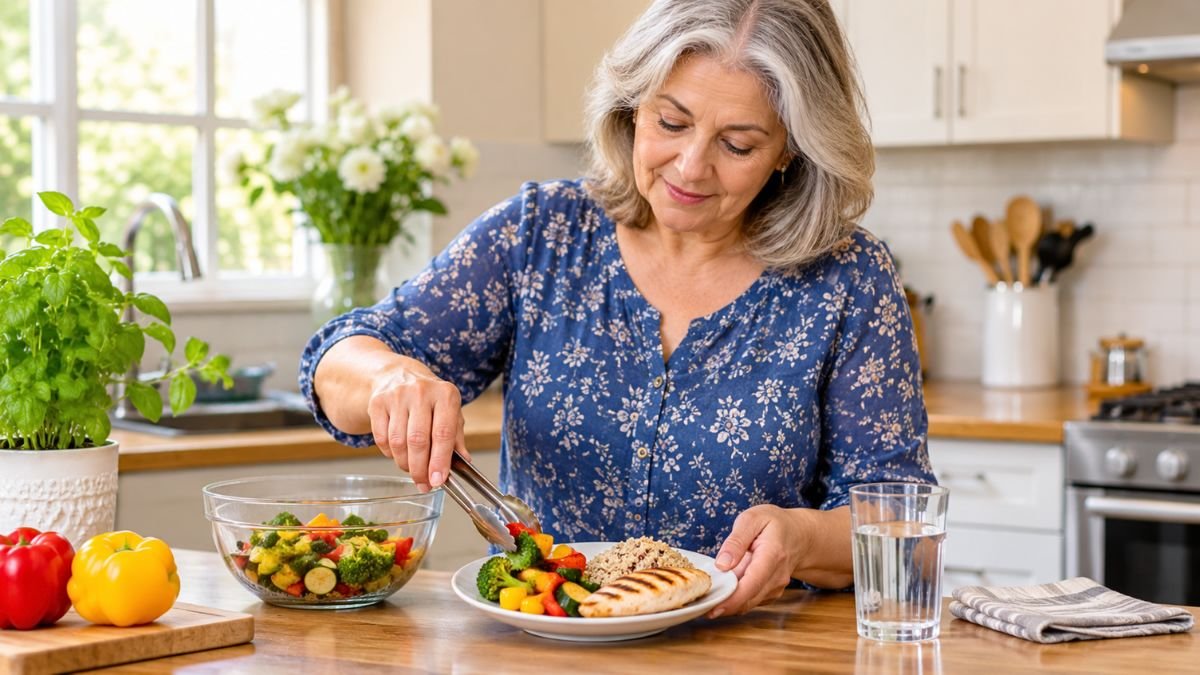
Harvard Health Publishing notes that, across a review of 40 trials, people on calorie restricted diets lost more visceral fat than people who were not. A 2025 meta analysis in the Journal of the International Society of Sports Nutrition found that exercise and calorie restriction programs lasting more than 12 weeks both reduced visceral fat in adults with overweight or obesity.
Cutting calories alone has a catch. Dr. Apovian says in Harvard Health that about 25 percent of any weight loss is muscle, which slows calorie burn.
Harvard Health notes the standard protein recommendation is 0.8 gram per kilogram of body weight, or about 0.36 gram per pound. Spread protein across your meals, and talk with your doctor before raising it if you have kidney disease.
11. Consider a shorter eating window
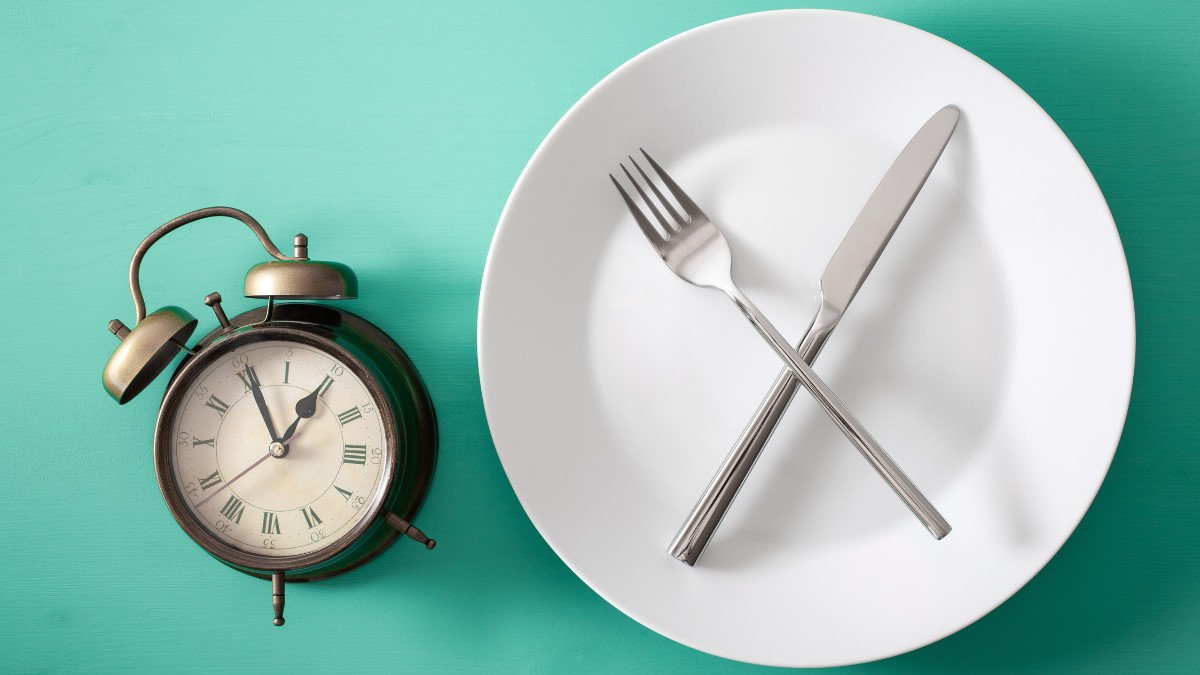
Time restricted eating means eating only within a set window of the day. A 2022 meta analysis in the Journal of Clinical Endocrinology and Metabolism pooled 17 randomized trials with 899 participants and found modest drops in body weight (about 1.6 kilograms) and fat mass (about 1.5 kilograms).
A 2023 meta analysis in the European Journal of Clinical Nutrition found that, when paired with calorie restriction, eating earlier in the day produced more weight and fat loss than later or broader windows.
These reviews tracked weight and total fat, not visceral fat itself, so the effect on belly fat is still unclear. If you try it, move your window earlier, such as 8 a.m. to 6 p.m. Talk with your doctor first if you have diabetes or take glucose lowering medicine, and skip it if you are pregnant or have a history of disordered eating.
12. Protect your sleep

Harvard Health Publishing notes that in younger adults, sleeping very little has been tied to extra visceral fat. Sleeping far more than average has been linked to gains too.
A 2022 randomized crossover trial in the Journal of the American College of Cardiology tested this directly in 12 healthy adults without obesity. After 14 days of a four hour sleep opportunity, total abdominal fat rose, including visceral fat, but it did not rise during nine hour sleep. Weight changed little, so the scale would have missed it.
The study was small and short, and a few nights of catch up sleep did not reverse the visceral fat gain. Aim for a steady seven to eight hours with a consistent bedtime.
13. Turn down chronic stress
Researchers say cortisol, a stress hormone, tends to steer fat toward the middle of the body. A 2000 study in Psychosomatic Medicine, from Yale researchers, found that lean women with more central fat kept releasing more cortisol each time a lab stress test was repeated. The design was cross sectional, so it cannot show which came first.
A 2014 case control study in Psychoneuroendocrinology compared 33 postmenopausal caregivers under chronic stress with 28 lower stress women. Only among the stressed women, eating more sugary, fatty foods was tied to more abdominal fat, insulin resistance, and oxidative stress.
Neither study shows that stress relief shrinks visceral fat, but both give you reason to protect your downtime. Pick one daily stress valve you will actually use, such as a ten minute walk or slow breathing before bed.
14. Drink less alcohol
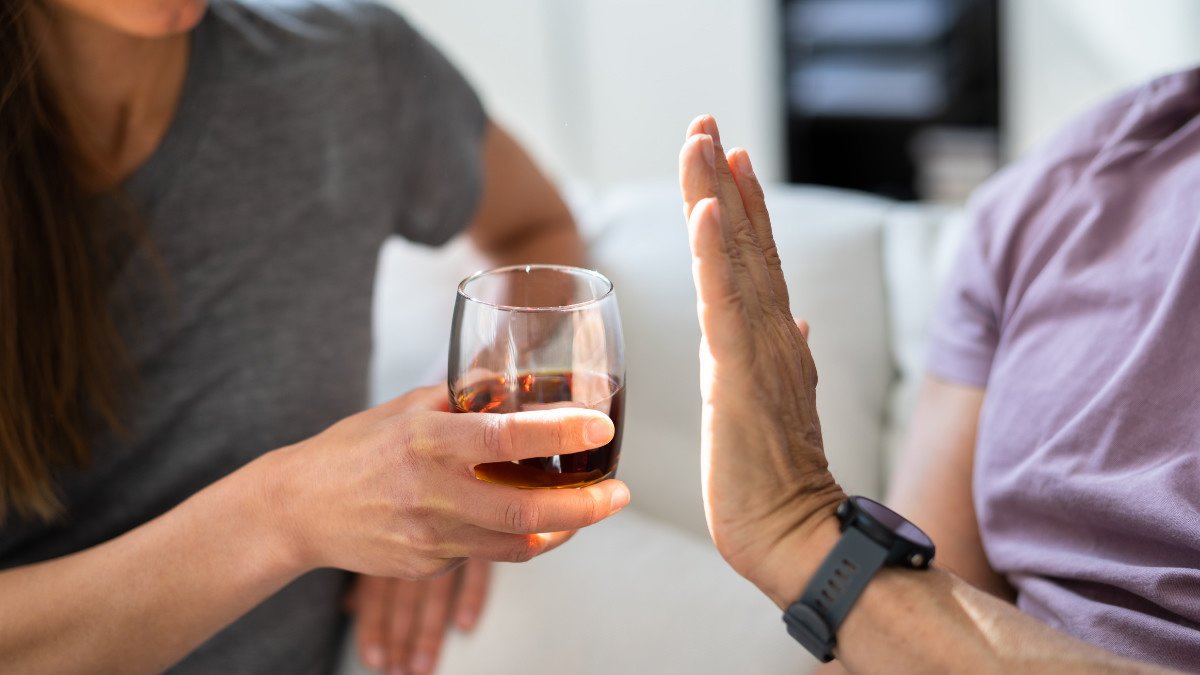
The classic beer belly turns out to have some science behind it. A 2019 cross sectional study in the Journal of Epidemiology scanned 1,094 Japanese men aged 40 to 79 with CT. More weekly alcohol was linked to more visceral fat and a higher ratio of visceral to subcutaneous fat, even after adjusting for BMI.
A 2012 study in Annals of Nutrition and Metabolism of 951 Korean men found a similar link with visceral fat. Light to moderate drinking showed no protective effect on fat tissue.
Both studies involved men and cannot prove cause. Try two or three alcohol free days a week and see how your waist responds.
15. Cut back on ultra processed snacks and trans fats
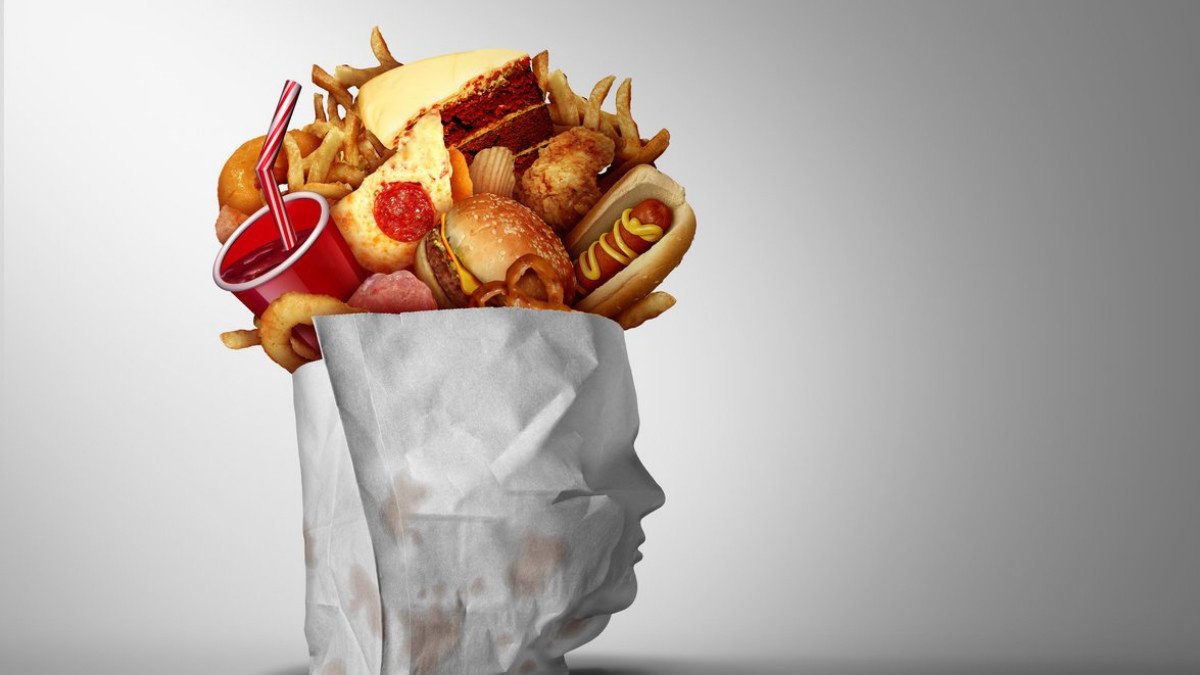
A 2026 cross sectional study in JAMA Network Open of 8,783 middle aged adults in Canada linked higher ultra processed food intake to more body fat and more visceral fat on MRI. The authors noted that longer studies are needed to establish timing.
Trans fats may add a separate push. A 2007 animal study in Obesity fed 42 monkeys diets with either trans fat or monounsaturated fat for six years. The trans fat group deposited more fat inside the abdomen even without extra calories, though animal results do not always carry over to people.
Check labels for partially hydrogenated oils. Keep packaged snacks, pastries, and fried fast food occasional.
Easy Swaps That Support Your Waistline
These simple trades put several of the ideas above into practice.
Smart Daily Food & Drink Swaps
Simple, sustainable dietary substitutions to cut added sugars, boost fiber, and improve satiety.
Regular soda
Sparkling water with lemon
White bread
100 percent whole wheat
Chips
Walnuts or fruit
Packaged pastries
Plain oatmeal with berries
Evening drinks
Herbal tea
Try This Today
- Measure your waist at navel level and write the number down.
- Swap one sugary drink for water or unsweetened tea.
- Walk for 10 minutes after your biggest meal.
- Set a bedtime alarm that protects seven to eight hours of sleep.
- Put your next two strength sessions on your calendar.
When to See a Doctor
Call your doctor promptly if you notice any of these:
- A waist that grows quickly without changes in diet or activity
- Belly swelling with pain, shortness of breath, or swollen legs
- Extreme thirst, frequent urination, or unexplained fatigue
- Chest pain, dizziness, or fainting during exercise
The Bottom Line on Visceral Belly Fat,
Start with the moves that have the strongest evidence: strength training, regular cardio, and a modest calorie deficit that protects muscle. Then stack on food swaps, better sleep, less alcohol, and stress control.
It is worth the effort. A 2026 observational follow up in Circulation of two randomized diet and exercise trials tracked 366 people for 5 and 10 years. Each 10 percent drop in visceral fat during the trials was linked to a 28 percent lower risk of type 2 diabetes later, and some of the waist and fat loss lasted even after weight returned.
This article is for informational purposes only and does not replace professional medical advice, diagnosis, or treatment. Please consult your doctor or another qualified healthcare provider before changing your diet, exercise habits, or medications, particularly if you live with an existing health condition.