

Your legs feel weaker on the stairs than they did five years ago. Getting out of a low chair now takes a push from your hands.
That is not just “getting older.” It is muscle loss, and it starts earlier and moves faster than most people expect. Adults lose roughly 3% to 8% of their muscle mass per decade after 30, and the pace picks up after 60.
Strength drops even faster than size. Wait too long, and carrying groceries, climbing steps, or catching yourself on a stumble all start to feel risky.
Here is the part most people never hear. The CDC and Mayo Clinic point to the same fix, and these 8 exercises need almost no equipment to start.
Muscle loss is not a verdict, and the research on reversing it is surprisingly encouraging. No gym membership or heavy machines needed, and benefits have been shown well into the 80s.
Why Your Strength Fades Faster Than Your Muscle
Most people picture muscle loss as simple shrinking. That is only half the story.
Researchers who study aging describe two things happening at once. The fast twitch fibers that power quick, forceful moves become less common, and the nerve connections that switch muscle fibers on can drop out. Older bodies are slow to rewire them.
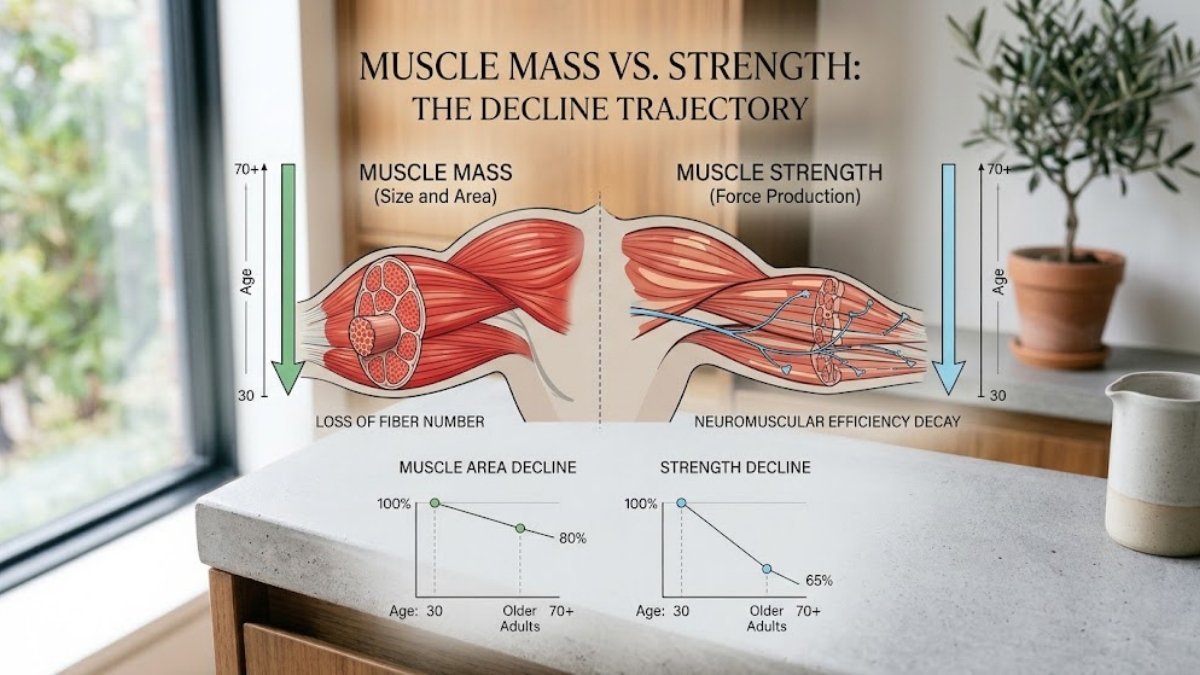
The result is that strength falls faster than size. Two studies of men, rounded to the nearest whole number, show the gap clearly.
Average drop per decade in men
Muscle Mass & Grip Strength Decline by Decade
Tracking progressive loss of lean muscle mass and neuromuscular grip strength across advancing age tiers.
About 1% loss
About 4% loss
About 4% loss
About 9% loss
About 7% loss
About 12% loss
In every decade, strength falls faster than size. That gap is also why muscle loss feels sudden. You will not notice a 4% change in muscle, but you will notice a jar lid that will not budge.
It matters well beyond the kitchen. The Office on Women’s Health notes that sarcopenia (the medical term for age related muscle loss) can make standing from a chair, opening jars, and carrying groceries harder, and can slow your walking.
Published research also describes grip strength as a powerful predictor of disability and mortality in older adults. Strength, not size, is what keeps you independent.
Is There Really a Point of No Return?
The headline says permanent, so here is the honest version. Researchers have not found an age when muscles stop responding to training. But every year of waiting costs strength you then have to rebuild.
Mayo Clinic notes that sarcopenia begins around age 25 but becomes much more noticeable after 65. A study it cites found that adults aged 70 to 80 made similar strength gains from a 12 week weight lifting program as adults aged 20 to 30.

A trial published in the New England Journal of Medicine in 1994 went further. It put 100 long term care residents, averaging 87 years old, through high intensity resistance training for the hips and knees. Leg strength rose by an average of 113%, and walking speed and stair climbing improved too.
A 2022 analysis in the British Journal of Sports Medicine pooled 16 studies. It linked 30 to 60 minutes a week of muscle strengthening to a 10% to 20% lower risk of death from any cause, cardiovascular disease, and total cancer.
None of this is a guarantee. It is a strong, well tested reason to start now instead of later.
Check Where You Stand in 30 Seconds
The CDC’s STEADI program uses a simple chair test to screen for weakness and fall risk. Anyone over 50 can use it as a personal baseline.
Sit in a sturdy chair about 17 inches high with your feet flat and your arms crossed over your chest. Stand all the way up and sit back down as many times as you can in 30 seconds. If you have to use your hands, the score is zero.

For men, below average means fewer than 14 stands at ages 60 to 64 and fewer than 12 at ages 65 to 74. For women, it means fewer than 12 at 60 to 64, fewer than 11 at 65 to 69, and fewer than 10 at 70 to 74.
Write your number down. You will test again in four weeks.
The 8 Exercises That Fight Muscle Loss After 50
The CDC recommends that adults 65 and older do muscle strengthening at least 2 days a week, working hard enough that another repetition would be impossible without help. One set is 8 to 12 repetitions, and 2 or 3 sets give more benefit. Mayo Clinic adds that you should leave at least 48 hours between sessions that train the same muscles.
Each move below covers a large muscle group, needs little or no gear, and can be made easier or harder. Start with one set, then build.
These numbers are general starting points. Everyone’s body responds differently, so check with your doctor before trying them if you have an existing condition or take medication.
1. Sit to Stand
This is the chair test turned into a workout. It trains your quadriceps and glutes, the biggest muscles in your legs, which lift you out of chairs, cars, and bathtubs.

Sit near the front edge of a sturdy chair, stand fully, then lower yourself for a slow count of three, aiming for 8 to 12 reps. Slowing the way down keeps muscle under tension longer, so the move gets harder without added weight.
2. Incline Push Up
Your chest, shoulders, and triceps are the muscles that push you up off the floor or out of bed, and they fade too. The incline push up lets you start at any level, which is why beginner programs commonly begin at a wall.
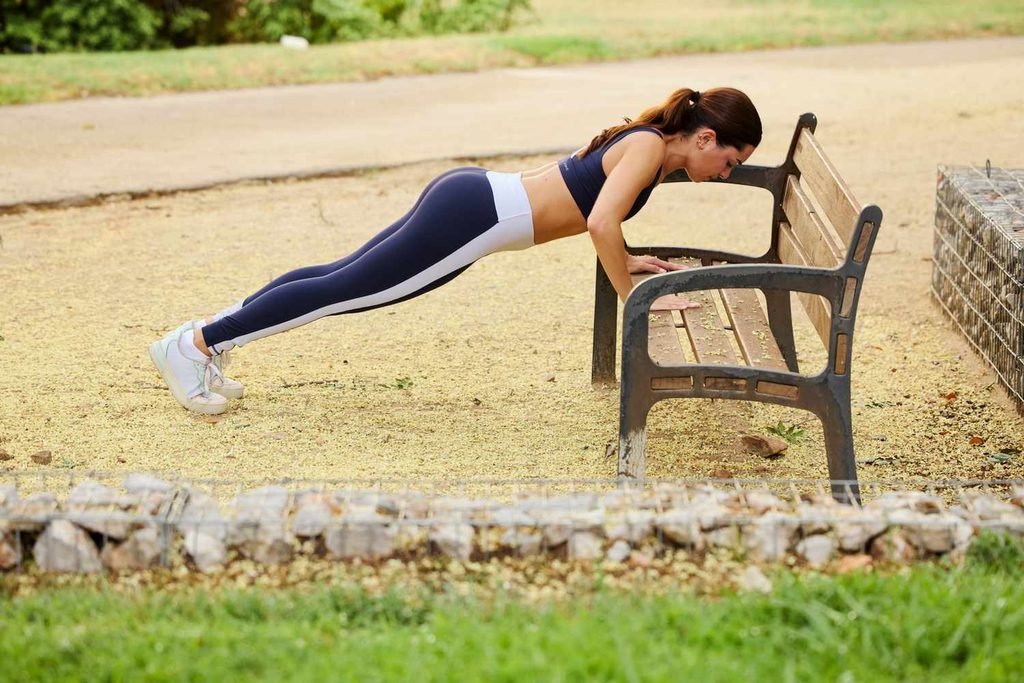
Stand an arm’s length from a wall with your hands at shoulder height and bend your elbows until your nose nearly touches it. Do 8 to 12 reps, then move to a kitchen counter and eventually a sturdy table, since a lower angle puts more body weight on your arms.
3. Glute Bridge
Your glutes drive every step and every stair, and when they weaken, more of the load shifts to your knees and lower back. The glute bridge trains them lying down, which makes it one of the safest starting points if you feel unsteady on your feet.
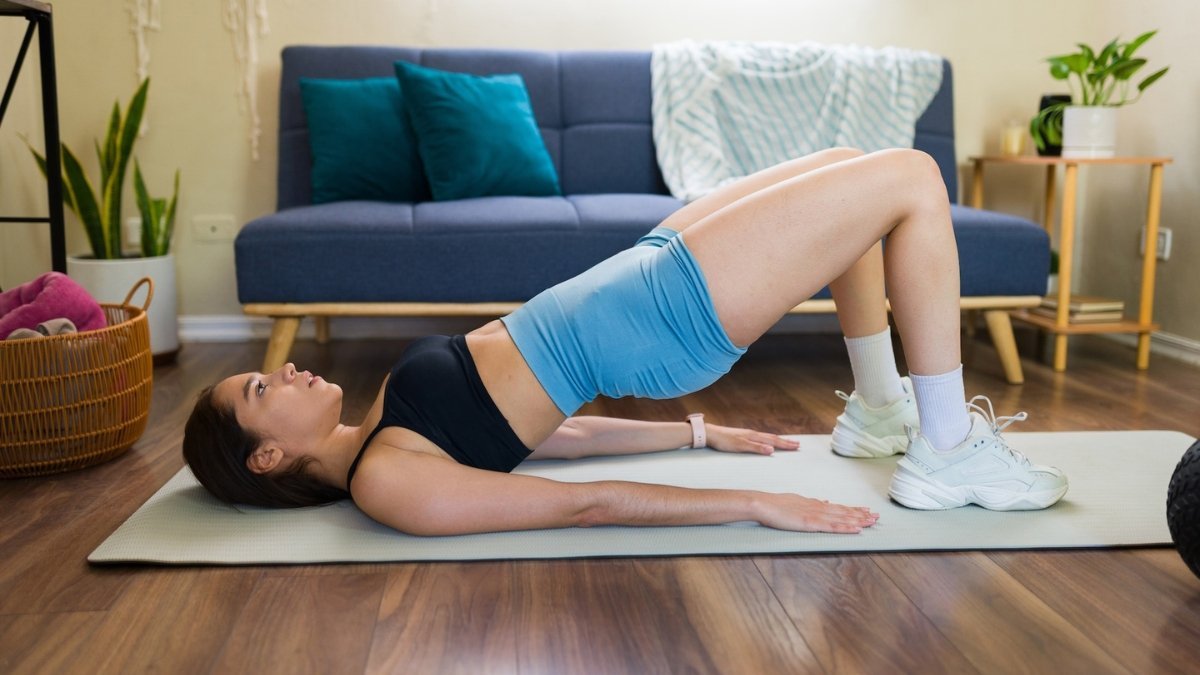
Lie on your back with your knees bent, press through your heels to lift your hips, and squeeze for two seconds at the top. Do 10 to 12 reps, and once it feels easy, try one leg at a time.
4. Seated Band Row
The muscles between your shoulder blades hold your posture, and they weaken quietly if you spend hours at a screen or behind a wheel. The band row trains your upper back and biceps, and the CDC lists resistance bands among its examples of strengthening activities.
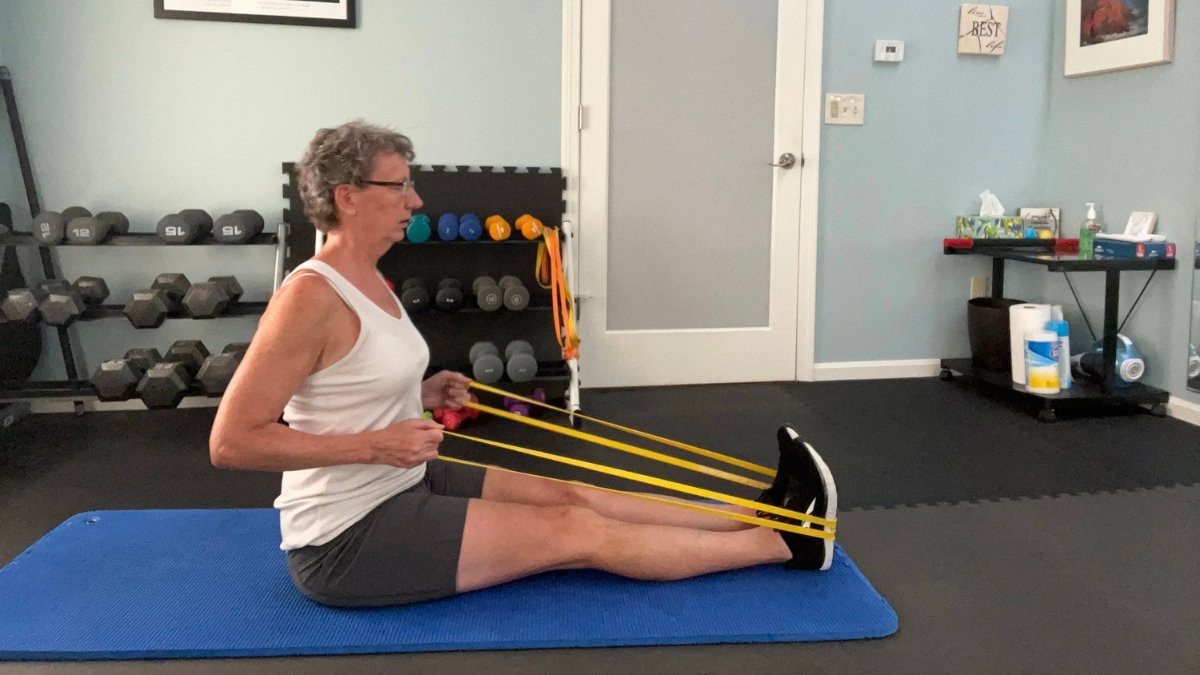
Sit tall with a band looped around your feet, pull your elbows back, and squeeze your shoulder blades together for one second, then repeat for 10 to 12 reps. Move to a thicker band or a slower return when it gets easy.
5. Step Up
Climbing stairs is single leg work, and step ups train it directly. Working one leg at a time challenges the stabilizing muscles around your hip and ankle, which builds the balance the CDC says adults 65 and older need each week to help prevent falls.
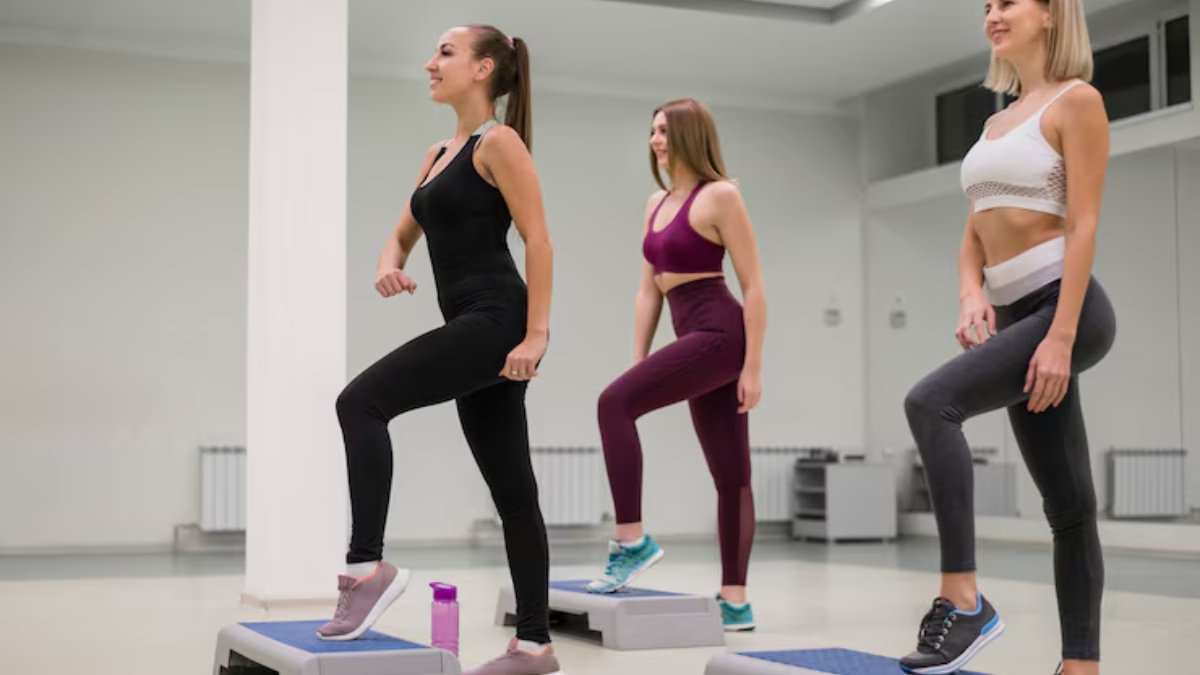
Use a step about 4 to 8 inches high with a rail or wall nearby, then step up with one foot, bring the other up, and lower down slowly for 8 to 10 reps per leg. Raise the step height gradually or hold light dumbbells to progress.
6. Farmer’s Carry
Grip strength is one of the quickest readouts of overall strength, and the farmer’s carry builds it while also training your forearms, upper back, and core. Carrying weight while you walk teaches your body to stay tall and braced, which is exactly what a loaded grocery bag demands.
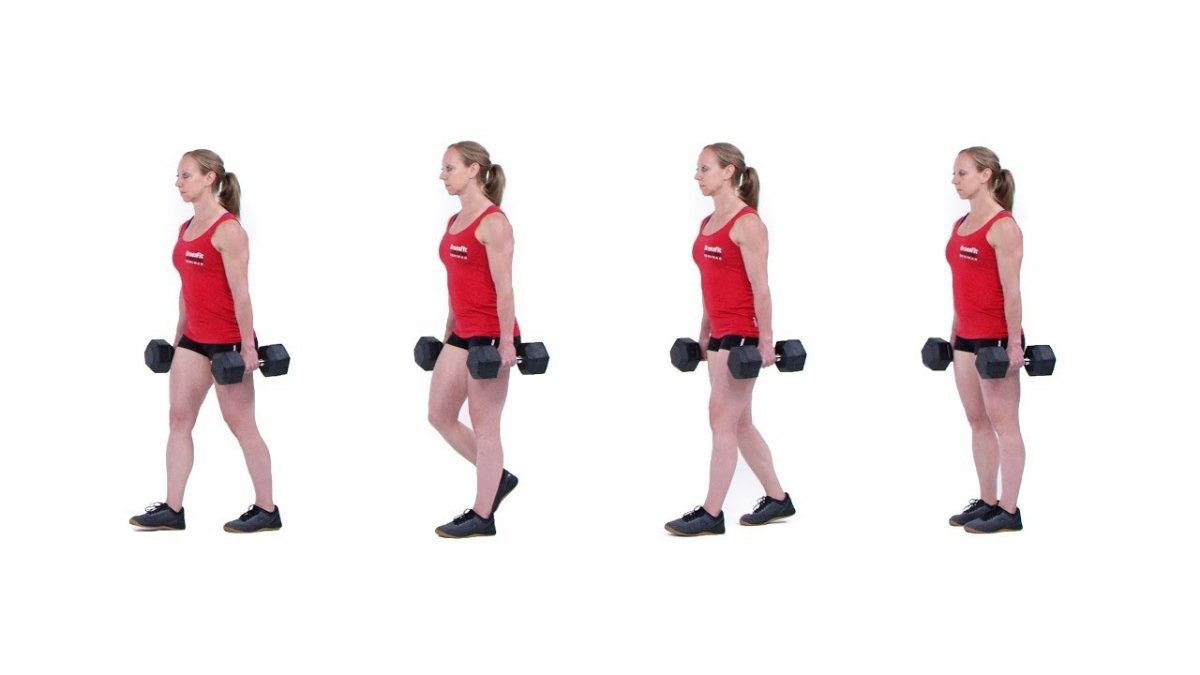
Hold a dumbbell, kettlebell, or loaded grocery bag in each hand and walk 20 to 30 steps with your shoulders back, for 3 rounds with rests between. Pick a weight that feels hard by the final steps but does not make you lean to one side.
7. Hip Hinge
The hip hinge is the safest way to pick anything up off the floor, and it trains your hamstrings, glutes, and the muscles along your spine. Strengthening this chain helps you bend without rounding your back.
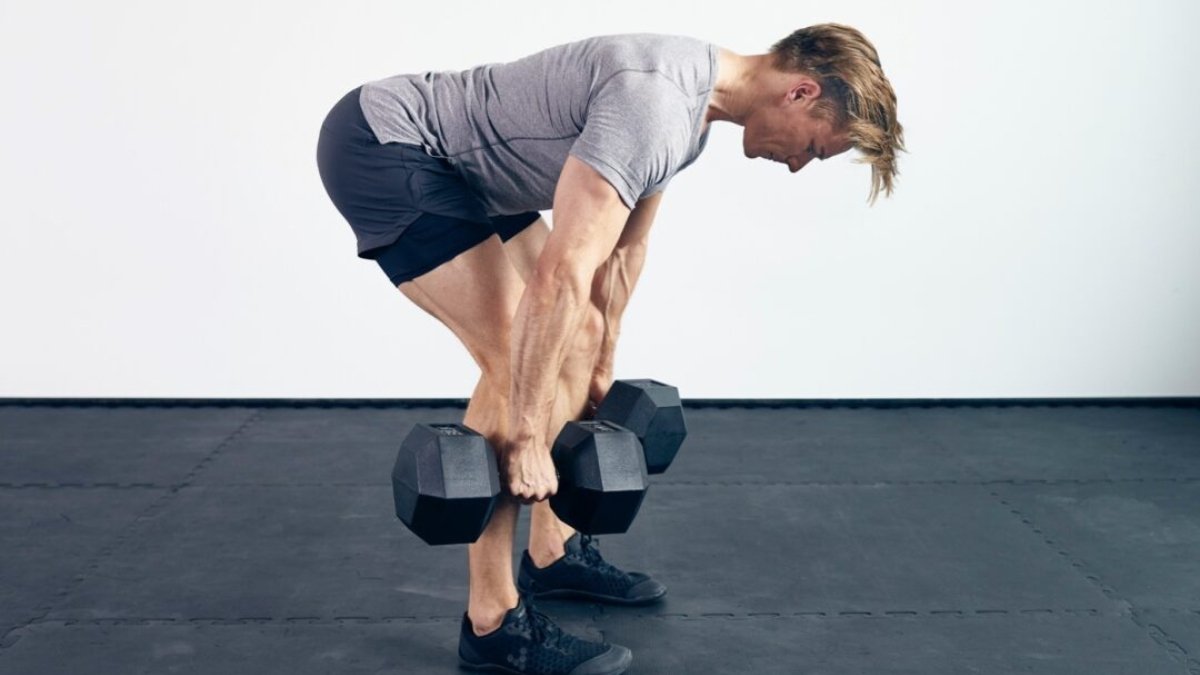
Holding light dumbbells in front of your thighs, push your hips back with soft knees until you feel a stretch behind your legs, then stand tall for 8 to 10 reps with a flat back. Start with a very light weight or none at all, and let your form lead the load.
8. Standing Calf Raise
Your calves provide the push off power in every step, and when they weaken, your stride shortens and your balance suffers. Strong calves and ankles also help you recover when you trip or stumble.
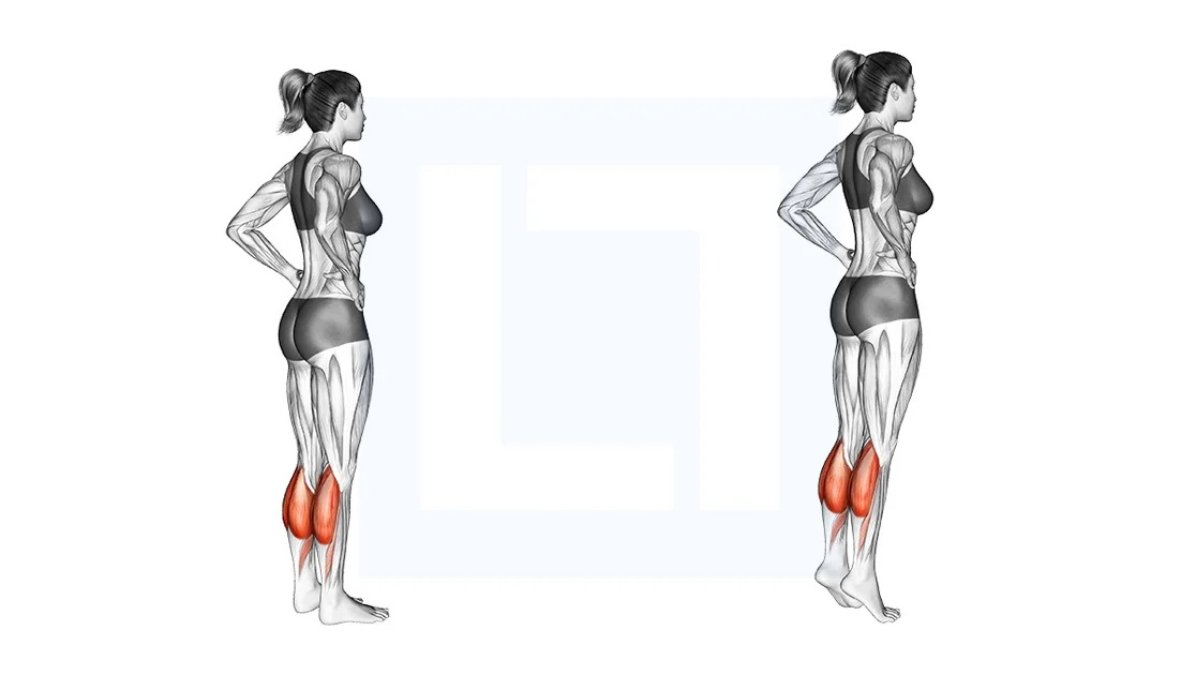
Stand holding a counter, rise onto your toes for a count of two, and lower for a count of three. Do 10 to 15 reps, then try one foot at a time when two feels easy.
How to Fit All 8 Into Your Week
Mayo Clinic calls 3 sessions a week an excellent goal, and the CDC sets 2 as the minimum. This split keeps every session short and gives each muscle group at least 48 hours to recover.
A simple 3 day plan
3-Day Functional Strength Schedule
Targeted resistance movements structured for lower body, upper body/grip, and posterior chain stability.
🎯 Focus: Legs
🎯 Upper Body & Grip
🎯 Hips & Back
Two days still meets the CDC minimum. Do Monday and Wednesday, and add Friday’s two moves to the end of Wednesday’s session.
Some exercise guidance suggests 10 to 30 minutes of focused resistance work is enough to see results. When a move gets easy, add a rep, slow down the lowering phase, or use a heavier band or weight.
Early strength gains often come from your nervous system getting better at using the muscle you already have. Retest the chair stand at four weeks, and expect bigger changes by the 12 week mark that Mayo Clinic’s cited study used.
Feed the Muscle You Are Training
Exercise sends the signal, but muscle needs raw material to answer it. Some guidance for older adults who strength train suggests 1.2 to 1.6 grams of protein per kilogram of body weight each day, spread across meals.
For a 150 pound person, that works out to roughly 80 to 110 grams a day.
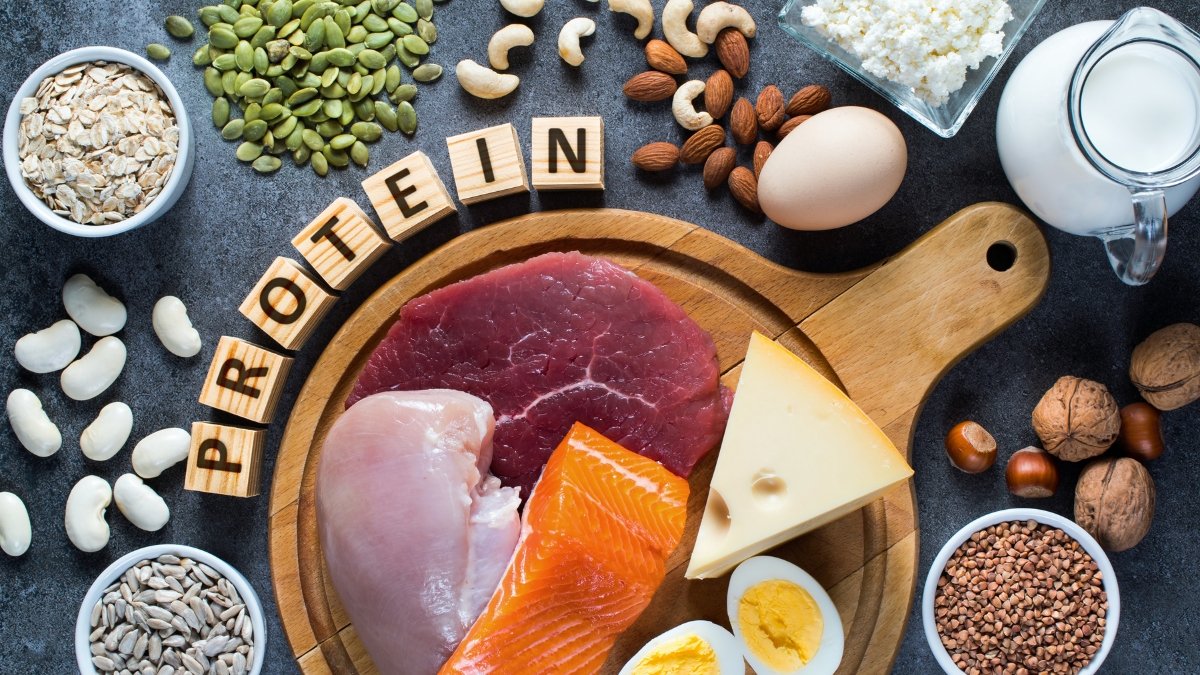
The Office on Women’s Health suggests about 30 grams per meal, and a single chicken breast has about 40.
Sleep matters too, with 7 to 9 hours a night commonly recommended for recovery. If you have kidney disease or any condition that limits protein, get your doctor’s number first.
Try This Today: The 10 Minute Strength Starter
- Take the 30 second chair stand test and write down your score.
- Do one set of sit to stands and wall push ups before your next meal.
- Add about 30 grams of protein to your next meal, such as a chicken breast or eggs with Greek yogurt.
- Leave a resistance band next to your coffee maker or TV remote so the habit has a visual cue.
- Put your 3 strength days on the calendar right now.
When to Stop and Call Your Doctor
Stop exercising and get medical advice if you notice any of these:
- Chest pain, pressure, dizziness, or unusual shortness of breath during exercise. Call emergency services if it is severe.
- Sudden weakness on one side of the body, a drooping face, or trouble speaking. Call emergency services right away.
- Sharp joint pain, swelling, or soreness that lasts more than a few days, which is different from normal muscle fatigue.
- A rapid, unexplained drop in strength or weight, or repeated falls.
The Bottom Line
Muscle loss is common, but it is far from a done deal. The CDC, Mayo Clinic, and decades of trials point to the same habit: train your major muscle groups at least twice a week, rest between sessions, and keep nudging the effort up.
Start with the 3 moves that feel easiest today, then add the rest over the next few weeks. The sooner you begin, the less you have to win back.