
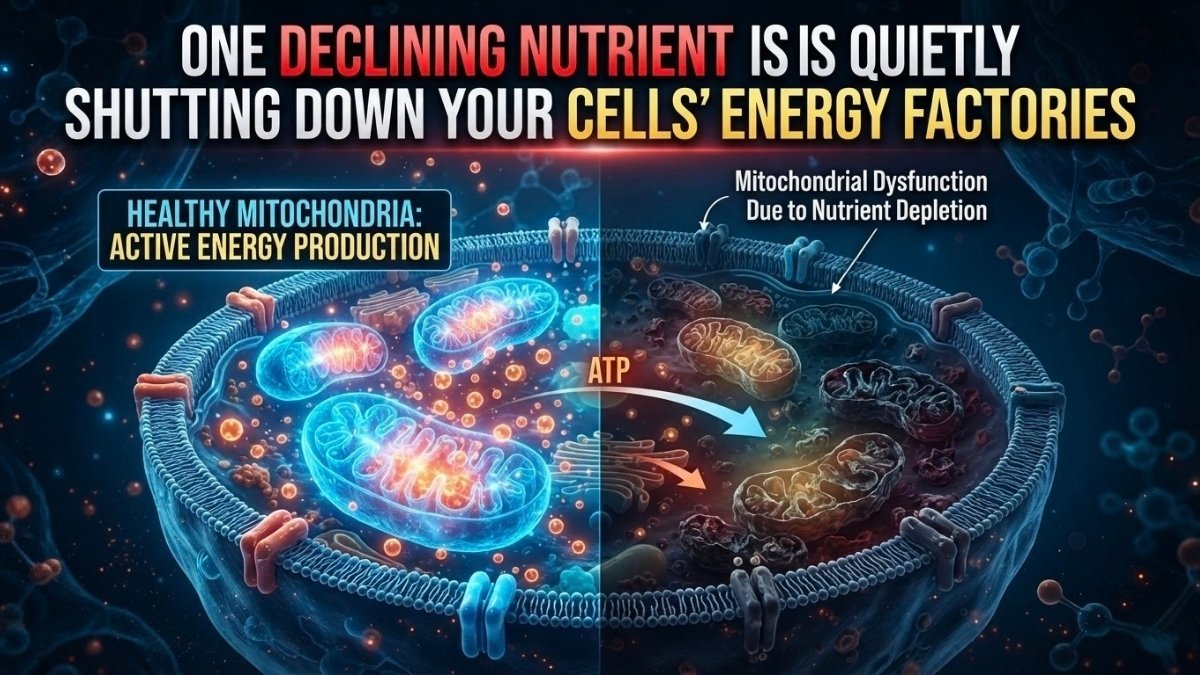
You feel tired in a way that sleep doesn’t fix. Not dramatic, just a low hum of fatigue that’s become the new normal.
Ignore it long enough and it doesn’t stay small. It creeps into your workouts, your stamina on stairs, your patience by four in the afternoon, until “getting older” becomes the excuse for something that may have an actual, fixable cause.
There’s a specific compound behind a lot of this, and most people over 50 have never heard its name, let alone know their body is running low on it.
Before making any changes based on this article, talk to your doctor, especially if you are currently taking medication or have a diagnosed condition.
What This Nutrient Actually Does Inside Your Cells’ Energy Factories
The compound is coenzyme Q10, usually shortened to CoQ10. It isn’t a vitamin. Your body makes its own supply, mostly inside the mitochondria, the tiny structures inside almost every cell that convert food and oxygen into usable energy.
Mitochondria are often called the cell’s energy factories, and CoQ10 is one of the key parts on the assembly line. It sits inside the electron transport chain, the multi step process mitochondria use to produce adenosine triphosphate, or ATP, which is the actual energy currency your muscles, brain, and heart run on.
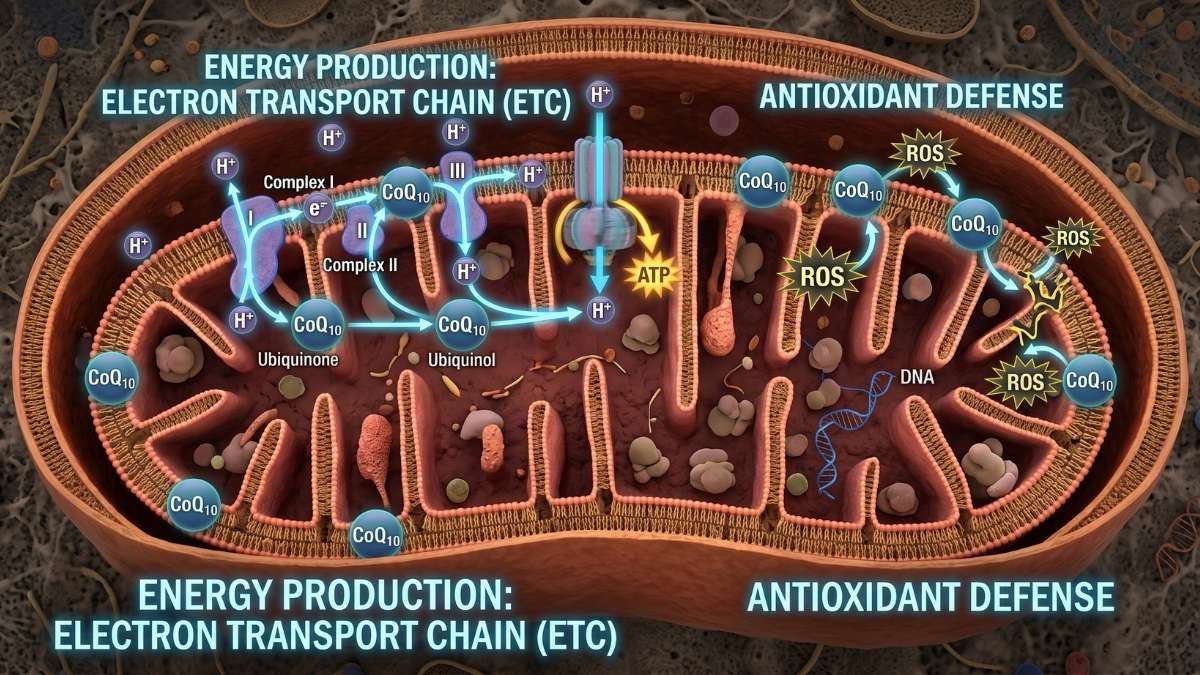
Without enough CoQ10 in the right place, that chain doesn’t move electrons as efficiently. Less efficient electron flow means less ATP produced per cell. Multiply that across trillions of cells, especially in energy hungry tissue like the heart and skeletal muscle, and the result is exactly what it sounds like: less available energy, system wide.
CoQ10 also does a second job. In its active form, called ubiquinol, it works as an antioxidant, neutralizing some of the cellular damage that builds up over decades. That dual role, energy production and antioxidant defense, is part of why researchers have connected low CoQ10 to a long list of age related conditions, including heart failure, chronic kidney disease, and certain neurodegenerative diseases.
Why Levels Start Dropping Decades Before You Notice
Here’s the part almost nobody tells you. CoQ10 production doesn’t wait until your sixties to slow down. Research on CoQ10 tissue levels shows the decline can begin around age 25, gradually falling to roughly half of its original level by around age 65.

That’s a forty year slide most people never feel coming, because the drop is gradual enough to disguise itself as normal aging rather than a specific, identifiable shortfall.
A 2018 study using human skin tissue samples found a measurable age related drop in mitochondrial respiration and ATP output, and when researchers added back the active form of CoQ10 to those tissue samples, mitochondrial performance improved. That’s one of the more direct pieces of evidence tying declining CoQ10 to declining cellular energy output as we age.
The CoQ10 Depletion Timeline
How the body’s natural levels of Coenzyme Q10—essential for cellular energy—gradually decline with age and medical interventions.
Mid 20s
Natural bodily production hits its peak and begins a very slow, steady decline over the coming years.
40s to 50s
Tissue levels become noticeably lower than in young adulthood, and overall cellular energy capacity is visibly affected.
Around Age 65
Natural systemic levels can fall to roughly half of the original amounts your body produced in your youth.
On Statin Therapy
Regardless of age, levels can drop an additional 20% to 40% within just a few weeks of starting cholesterol medication.
The Common Prescription That Speeds Up The Decline
If you take a statin for cholesterol, this next part matters even more.
Statins work by blocking an enzyme called HMG CoA reductase, which sits early in a pathway your body uses to make cholesterol. That same pathway also happens to produce CoQ10. Block one, and you partially block the other.
Multiple studies have found that statin therapy can lower circulating CoQ10 levels by roughly 20 to 40 percent within weeks of starting treatment. Some researchers believe that drop contributes to the muscle aches and fatigue a portion of statin users experience, though the evidence on that specific link is genuinely mixed and not every expert agrees it’s the cause.

None of this means statins are bad or that anyone should stop taking one. Statins reduce cardiovascular risk in a way that’s well documented. It simply means people on long term statin therapy are one of the groups most likely to be running a real CoQ10 shortfall on top of the normal age related decline.
Everyone’s body responds differently, so check with your doctor before trying this if you have an existing condition or take medication.
How To Actually Rebuild Your Supply
There are two practical paths here: food and supplementation, and most people end up needing both.
Dietary intake alone rarely closes the gap. Most people get somewhere between 3 and 10 milligrams of CoQ10 daily from food, while research studies on supplementation typically use doses in the 100 to 300 milligram range to meaningfully raise blood levels. That’s a significant gap between what a normal diet supplies and what’s been studied for measurable effect.
Food still matters, though, both for the CoQ10 itself and for the other nutrients that support mitochondrial health alongside it. Organ meats top the list by a wide margin, followed by fatty fish, then smaller amounts from nuts, seeds, and certain oils.
Dietary Sources of CoQ10
A breakdown of the most concentrated whole-food sources of CoQ10, highlighting how difficult it is to reach therapeutic doses through diet alone.
Beef Heart
3 oz CookedSardines
One CanMackerel or Herring
3 ozBeef Liver
3 ozWalnuts or Peanuts
1 ozFor supplementation, CoQ10 comes in two forms: ubiquinone, the standard oxidized form, and ubiquinol, the already active, reduced form. Some research suggests ubiquinol may absorb better in older adults, though both forms have supporting evidence and either can raise blood levels when taken consistently.
One small surgical study found that 300 milligrams of CoQ10 taken before a procedure raised blood levels roughly fourfold and measurably improved mitochondrial efficiency, which gives a sense of how responsive the body can be once supply actually increases.
Try This Today: Small Steps That Support Mitochondrial Energy
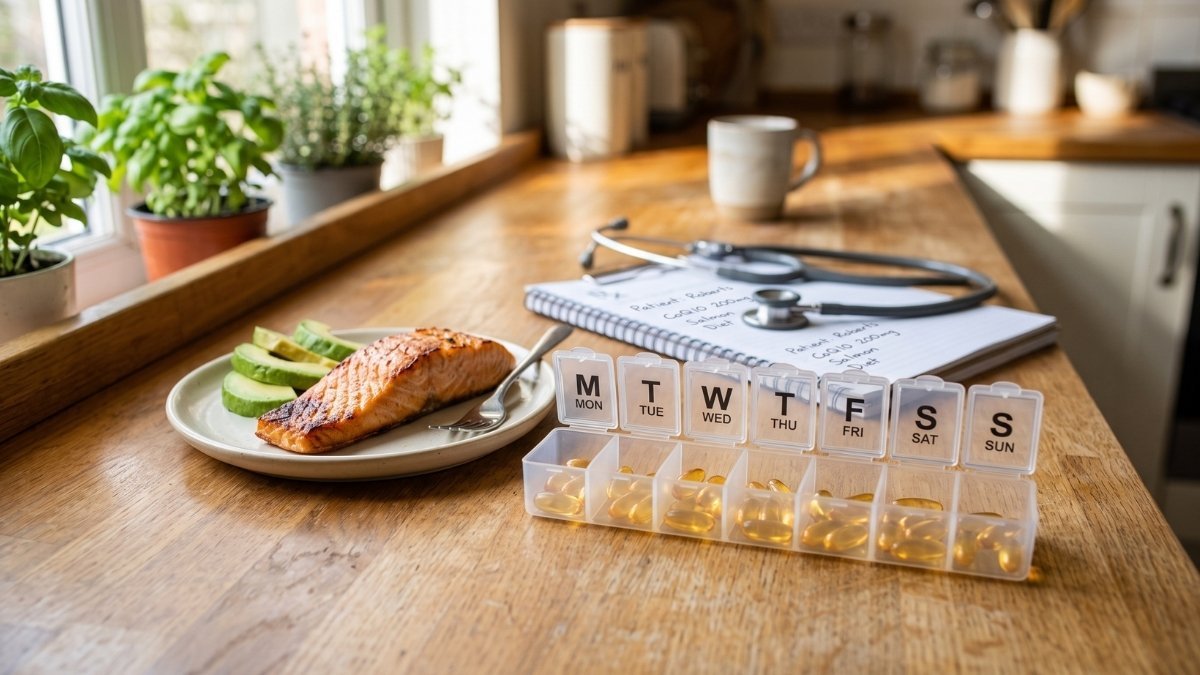
- Add one CoQ10 rich food, like sardines or beef liver, into your week if you don't already eat it
- If you're on a statin, ask your doctor at your next visit whether CoQ10 supplementation makes sense for you specifically
- Choose ubiquinol if you're over 60 and considering a supplement, since it may absorb more easily
- Take CoQ10 supplements with a meal that contains some fat, since it's fat soluble and absorbs better that way
- Give any supplement at least four to eight weeks before judging whether it's making a difference
When Low Energy Is Something More Than CoQ10
Fatigue has a lot of possible causes, and CoQ10 decline is only one of them. Don't assume every tired day is a nutrient problem.
Talk to your doctor promptly if fatigue comes with any of the following:
- Shortness of breath with mild activity, or swelling in the legs or ankles
- Chest tightness, pressure, or pain, even if it comes and goes
- Unexplained weight loss alongside the fatigue
- Fatigue severe enough to interfere with daily tasks for more than two weeks straight
These can point to heart, thyroid, or other conditions that need direct medical evaluation, not a supplement aisle.
Common Questions

How long before I'd actually feel a difference?
Most research trials measure blood levels and mitochondrial markers over four to twelve weeks. Ubiquinol tends to raise blood concentrations faster than the standard ubiquinone form, but felt, subjective energy changes tend to lag behind the blood work.
What's the most common mistake people make?
Taking it on an empty stomach. CoQ10 is fat soluble, so without any dietary fat present, very little of it actually gets absorbed.
Who should be cautious or avoid it?
Anyone on warfarin or other blood thinners should talk to a doctor first, since CoQ10 can interfere with how those medications work. People with a diagnosed heart condition should also check in before starting any new supplement.
Does taking more mean faster results?
Not necessarily. Studies showing benefit generally use consistent daily dosing in the 100 to 300 milligram range, not occasional high doses. Consistency over time appears to matter more than the size of any single dose.
Bottom Line,
Low energy that doesn't respond to sleep, movement, or stress management isn't always something to just accept. For a meaningful portion of people past 50, a big part of the story is happening inside the mitochondria themselves, in a supply chain most people never knew existed until it started running short.