
For most of history, 120 has been the number most people quietly accepted as the outer limit of human lifespan, no matter how well a body is cared for.
That assumption has shaped everything from retirement planning to how doctors talk about aging, because if 120 truly was the wall, there was only so much point in pushing past it. New research puts a very different number on that wall, and it comes with an explanation for why almost nobody gets anywhere close to it.
The real limit may sit far higher than assumed, and the reason has almost nothing to do with wrinkles or a slowing metabolism.
Before going further, it helps to know this: what follows is a mathematical model, not a medical breakthrough available today. Talk to your doctor before making any changes to your health routine based on a headline like this one.
The Number That Just Rewrote The Aging Rulebook
A team of researchers at the Skolkovo Institute of Science and Technology in Russia, working with the AI research institute AIRI, built a multistage mathematical model of human aging and published their findings in the journal npj Aging, part of the Nature Portfolio family. The work was funded by a grant from the Russian Science Foundation. skoltech
Their approach started with a hypothetical, fully non aging person, someone whose risk of dying never increases with age. Under that scenario, the model put median lifespan at roughly 1,759 years.
That figure is not meant to be realistic. It is a baseline, a way of asking “what if aging itself were switched off completely.” nih
Then the researchers added just one thing back into the model: somatic mutations, the random DNA changes that build up inside the body’s cells over a lifetime. Every other cause of aging stayed switched off. The median lifespan immediately collapsed from that theoretical 1,759 years down to about 156 years. nihskoltech
Why 156, And Not 120, Or A Thousand
The drop comes down to two organs that cannot replace their own damaged cells: the brain and the heart. One of the researchers behind the paper, Evgeniy Efimov, has explained that neurons and cardiomyocytes, the heart’s muscle cells, turned out to be the main limiting factor once every other aging process was accounted for. mymodernmet
Neurons and cardiomyocytes are largely formed early in life and stick around for decades without dividing again. Other tissues, like the liver and skin, constantly swap out old or damaged cells for new ones, which dilutes the effect of accumulated DNA damage and lets those organs keep functioning almost indefinitely in the model.
Brain and heart tissue never gets that reset. Damage just piles up in the same cells, year after year. mymodernmet

When the team combined models for several critical organs together rather than isolating just one, the predicted median lifespan landed somewhere between 146 and 194 years.
Using the same modeling approach, they also calculated a theoretical maximum lifespan of roughly 210 to 557 years, though that upper end assumes an extremely favorable combination of biological factors that real bodies are unlikely to hit. nihHealthline
Everyone’s biology is different, and this model describes population level averages under close to ideal conditions. It is not a personal prediction, and it is not medical advice about how long any one person can expect to live.
The longest confirmed human lifespan on record belongs to Jeanne Calment, a French woman who died in 1997 at 122 years old. No one has gotten close since, which is part of why so many scientists assumed 120ish was near a hard biological wall.
This new model suggests that number was never the true ceiling. It is simply where real humans run out of other things first, long before somatic mutations alone would stop them. Healthline
Other researchers have pushed back on the idea of any fixed ceiling at all, arguing that a previously proposed 125 year limit relied on flawed statistical methods and that the real edge of human survival has been quietly climbing for years.
This new figure does not settle that argument. What it adds is a first attempt to explain a ceiling using the actual biology of specific organs, rather than population statistics alone. nih
From A Theoretical Body To A Real One
The Limits of Human Lifespan
Exploring the theoretical ceilings of longevity based on biological modeling and historical data.
Fully non-aging body (theoretical)
The risk of death never rises with age.
Somatic mutations only
Assumes everything else is reversed, but brain and heart cells cannot be replaced.
Multiple organs modeled
Combines the aging effects across the brain, heart, and more.
Longest confirmed human life
Achieved by Jeanne Calment, with zero biological intervention.
Why Some Body Parts Age Faster Than Others
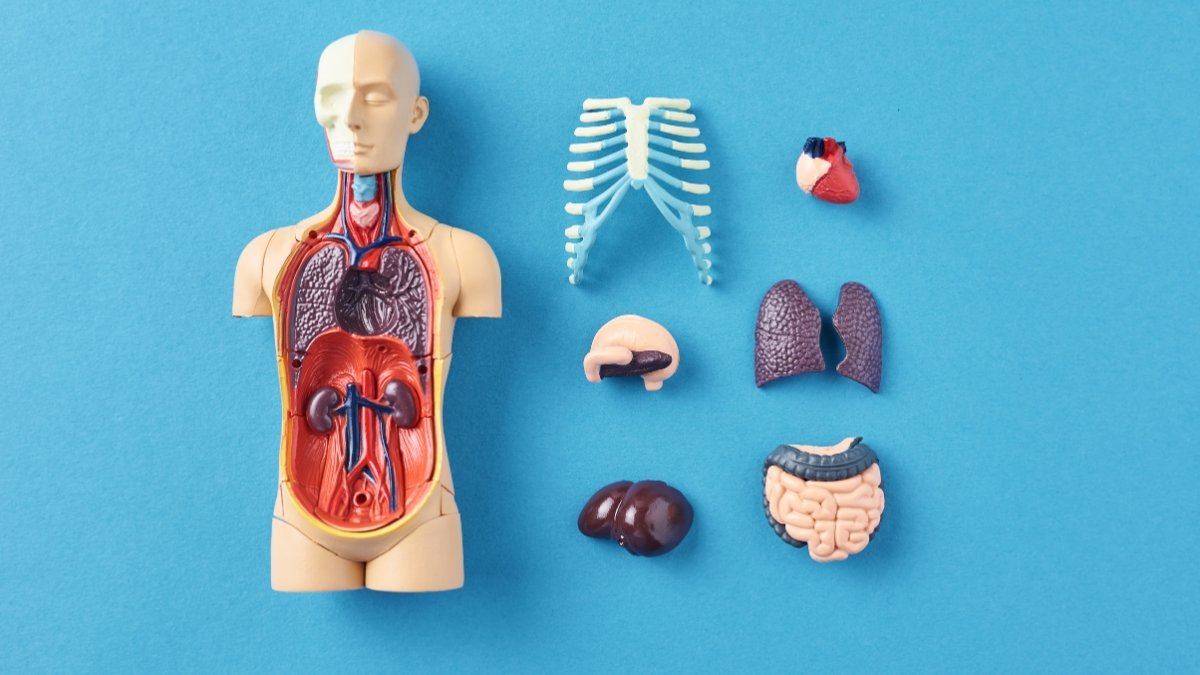
Not every organ ages at the same pace, and this study is one of the clearest illustrations of why. Tissues that can regenerate themselves have a built in advantage that tissues locked in place simply do not.
Cellular Turnover by Tissue
Why some parts of our body constantly refresh themselves, while vital organs accumulate a lifetime of damage.
Liver & Skin
Highly resilient. Damaged cells get swapped out regularly, maintaining function and resisting long-term degradation.
Neurons (Brain)
Highly vulnerable. Biological damage builds up in the exact same cells for decades without replacement.
Cardiomyocytes
The engine of the body. The same heart muscle cells keep working over a lifetime without significant replacement.
Blood & Gut Lining
Experiences a similar protective effect as the liver and skin, constantly generating fresh, undamaged cells.
What It Would Actually Take To Get There
The researchers concluded that no existing anti aging strategy can get around this particular barrier unless scientists find a way to directly repair or prevent genomic damage itself.
That is a much harder problem than the other hallmarks of aging that labs are actively working on today, things like cellular senescence, mitochondrial decline, or shortened telomeres, all of which already have experimental therapies in progress. Wion

The study’s authors were careful to note that their work is based on computational modeling rather than experimental evidence, and they do not expect anyone alive today to approach these numbers. This is a ceiling drawn on a whiteboard, not a target anyone can currently aim for. International Business Times
Try This Today: Small Habits That Support The Two Organs That Matter Most

Nobody can rewrite their own DNA repair systems yet. What every reader can do is reduce unnecessary strain on the exact tissues this research points to.
The Daily Habit That Actually Works
- Move most days of the week. Regular activity supports blood flow to the brain and keeps heart muscle strong, the two tissues flagged as the real bottleneck in this study.
- Cut down on avoidable DNA stress. Skipping cigarettes, limiting excess sun exposure, and keeping alcohol moderate all reduce the kind of cellular damage this research is built around.
- Protect consistent sleep. Deep sleep is when the brain does much of its own cellular cleanup and repair work.
- Eat with more color on the plate. Diets built around vegetables, fruit, and healthy fats are reliably linked to lower oxidative stress in the body.
- Keep blood pressure and blood sugar in a healthy range. Both place extra long term strain on heart muscle cells that never get replaced.
Individual results vary, and anyone managing a diagnosed condition or taking medication should check with a doctor before changing diet, exercise, or supplement routines.
The Questions This Kind Of Headline Always Raises

Could someone alive today actually reach 156? No. The number describes a scenario where every other cause of aging has already been solved, which no current therapy can do.
Is 156 a hard law of physics? Not exactly. It is the output of one mathematical model built on today’s understanding of somatic mutations. Future research could adjust that number in either direction.
Does this replace the old idea of 120 as the limit? Not quite. 120 was always closer to an observation, the age nobody had managed to beat, while 156 is a theoretical ceiling calculated from the biology of specific organs.
Should this actually change daily habits? In one sense, yes. Regardless of the exact number, protecting the brain and heart, the two tissues this study points to, remains one of the most evidence backed things anyone can do for a longer healthy stretch of life.
The Bottom Line,
This is not a story about living to 156. It is a story about why the body’s two least replaceable organs, the brain and the heart, quietly set the real terms of how long a person can last. The number itself is theoretical.

The mechanism behind it, cells that cannot regenerate slowly accumulating damage they can never fully clear, is very real, and it is a big part of why habits that protect those two organs specifically tend to show up again and again in longevity research.