
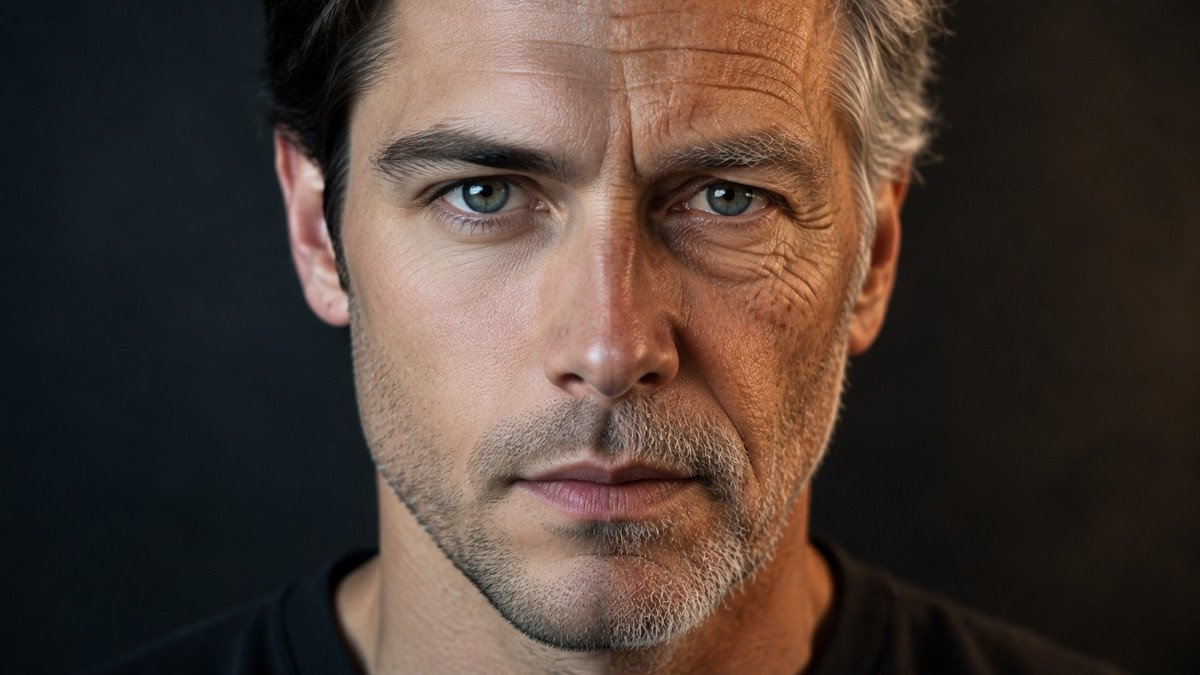
You probably think of aging as a slow, steady slide. A little more each year, like a candle burning down at the same pace. New research says that picture is wrong.
A newly published scientific review lays out a two stage model of aging, and the twist is unsettling. Much of the disruption that eventually turns into disease does not happen gradually in old age. It happens decades earlier, then sits quietly in the body until later life stops containing it.
By the time you notice symptoms in your 60s or 70s, the real work already happened without your knowledge, long before you had any reason to suspect it. EurekAlert!
Before making any changes based on this article, talk to your doctor, especially if you are currently taking medication or have a diagnosed condition.
What The Two Stages Of Aging Actually Are
David Gems and Alexander Carver of University College London, along with Yuan Zhao of Queen Mary University of London, published this framework in the journal Aging-US at the end of December 2025. It is not a single experiment on a group of volunteers.
It is a review that pulls together decades of evolutionary biology, lab research, and human disease data into one unified model, and that distinction matters for how much weight to give it. EurekAlert!
The model describes two separate stages. In the first stage, which can start in childhood, the body experiences disruptions such as infections, physical injuries, or genetic mutations.

The body usually contains or represses this damage rather than fully clearing it, so it sits dormant in tissue without causing symptoms. EurekAlert!Aging-us
The second stage begins later in life, when normal genetic activity that once served a purpose starts working against the body instead. This shift weakens the systems that had been keeping stage one’s damage contained, and that is when dormant problems turn into visible disease. EurekAlert!
Put plainly: stage one plants the seed. Stage two is when the seed is finally allowed to grow.
Why Most Of The Damage Happens First
Here is the part that reframes everything. The researchers are careful to note that this model does not dismiss the idea that molecular damage builds up over time. They argue that continuous damage accumulation is a real but relatively minor piece of the picture compared to this contain and release pattern. EurekAlert!

That means the origin of a lot of what shows up as disease in your 60s and 70s traces back to something that happened years or decades earlier. An old infection. A joint injury from your 30s. A mutation you inherited or picked up along the way. Stage two is not manufacturing brand new problems out of nothing. It is mostly a failure of the containment system that had been quietly managing older damage.
Life-Cycle Dormancy Timeline
Chronic conditions evolve across a lifespan, starting with uncontained damage that resurfaces later.
Earlier Life Pathways
Childhood to MidlifeInitial infection, physical injury, or gene mutation occurs during early decades. The body focuses on containing damage rather than fully erasing it.
Later Life Activation
Later DecadesNormal gene activity shifts and begins working against the body. Containment weakens, dormant damage resurfaces system-wide.
Hidden Gel Phenomenon
ContainmentThe body effectively يحتوي, contains or represses the original insult, keeping it dormant and hidden from detection.
Virus Reactivation Example
ExampleThe Examples That Make This Click
The researchers point to conditions like shingles, osteoarthritis, and certain cancers as examples of this pattern playing out in real people. ScienceDaily
Shingles is the clearest one. Almost everyone who had chickenpox as a child is carrying the dormant virus right now, contained by their immune system. In shingles, the virus that causes chickenpox remains dormant in nerve cells after childhood infection and can reactivate decades later once immune control weakens. The infection happened in stage one. The outbreak is stage two. Aging-us
Osteoarthritis follows a similar logic. It is more common in people who experienced a joint injury earlier in life, even when that joint seemed to fully heal at the time. Age related changes to cartilage later on can allow that old structural damage to resurface as pain and stiffness.

Head trauma tells the same story on a larger scale. A Taiwanese study following roughly one million people between 2005 and 2009 found more than 28,000 cases of mild traumatic brain injury, and that early trauma has been tied to a higher risk of dementia decades later. People in professions with heavy head trauma exposure, including boxers, football players, and soldiers, carry a higher risk of chronic brain conditions much later in life. PubMed CentralPubMed Central
Everyone’s body responds differently, so check with your doctor before making changes based on any single study, especially if you have an existing condition or take medication.
Not The Same As The “Bursts At 44 And 60” Study
If you’ve seen headlines about aging happening in sudden bursts around age 44 and again around 60, that is a different piece of research, and it’s worth knowing the two are not the same finding. That 2024 Stanford study tracked thousands of molecules and microbes in the same group of people over time and found that most of them shift in sharp,

non gradual jumps rather than a steady climb, with the biggest shifts clustering around age 44 and age 60. Stanford University
This newer two stage model is asking a different question. It is not about when molecules shift the fastest. It is about why aging turns into disease at all, and its answer is that the groundwork gets laid far earlier than most people assume.
Try This Today
The habit shift that actually matches this research:
- Treat infections completely, don’t stop antibiotics or rest early just because symptoms fade.
- Give injuries real recovery time instead of pushing through pain until it quiets down.
- Keep up with the screenings appropriate for your age, since some of stage one’s damage is only catchable early.
- Prioritize consistent sleep, since immune surveillance (the system doing the containing) leans heavily on it.
- Limit unnecessary exposure to things that damage DNA directly, like unprotected sun exposure and tobacco smoke.
When To Check In With A Doctor

A few signs are worth a call rather than a wait and see approach, especially if you’re over 50.
- A rash with burning or tingling pain, particularly if you had chickenpox as a child.
- Joint pain or swelling that reappears years after an old injury, especially if it changes your gait.
- Unexplained fatigue paired with night sweats or weight loss, which can sometimes point to a reactivated infection.
- Any new or changing mole, lump, or unexplained bleeding.
None of these automatically means something serious is happening. They are simply the kind of “stage two” signals this research would predict, and they’re worth a professional look rather than guessing.
A Few Questions Worth Answering

Does this mean there’s nothing I can do about aging now?
No. The model actually argues the opposite. If a meaningful share of later life disease traces back to earlier, containable damage, then managing infections, injuries, and known risk exposures throughout life matters more than people assumed, not less.
How is this different from the old “wear and tear” idea of aging?
The old model treats aging as continuous damage building up in real time. This model treats a lot of the real damage as something that already happened, sitting dormant, waiting on a later shift in the body’s own genetic activity to let it surface.
Does this apply to everyone the same way?
The review draws on both human disease data and lab research in simpler organisms, and the authors are upfront that this is a general framework, not a prediction for any one individual’s timeline. Genetics, environment, and health history all shape how and when it plays out. PubMed Central
What does this actually change for someone in their 50s or 60s right now?
It reframes where to put your attention. Instead of only reacting to symptoms as they appear, it makes a case for treating your immune system and your history of injuries and infections as things actively worth managing, since they may be more connected to what happens later than most people think.
The Old View Versus The New Model
The Aging Paradigm Shift
How the scientific understanding of aging has moved from a continuous mechanical breakdown to a biological containment model.
How Aging Happens
Biological damage builds up gradually and continuously over the entire lifespan.
Damage largely happens early in life, is contained, and then resurfaces later.
Origin of the Root Cause
Assumed to build and accumulate evenly throughout your entire life.
Concentrated heavily in an earlier, largely finished stage of development.
What Later Life Represents
This is the period where the actual damage to the body is taking place.
This is the period where containment of old damage breaks down.
What It Means For Prevention
Focus strictly on damage control, symptom management, and slowing decline once you are older.
Focus drastically shifts earlier, toward infection care and injury recovery specifically in youth and midlife.
The Bottom Line
Aging is not one long, even slope. According to this newer framework, a surprising amount of what eventually becomes disease was already set in motion years before it ever became visible. Stage one does the damage. Stage two just stops hiding it.

That doesn’t mean your later years are locked in by choices you can’t undo. It means the small things, treating an infection fully, letting an injury actually heal, staying current on screenings, carry more long term weight than they get credit for.
Aging happens in two stages, not one gradual slide, and most damage occurs in the first. Here’s what that means for you after 50.