
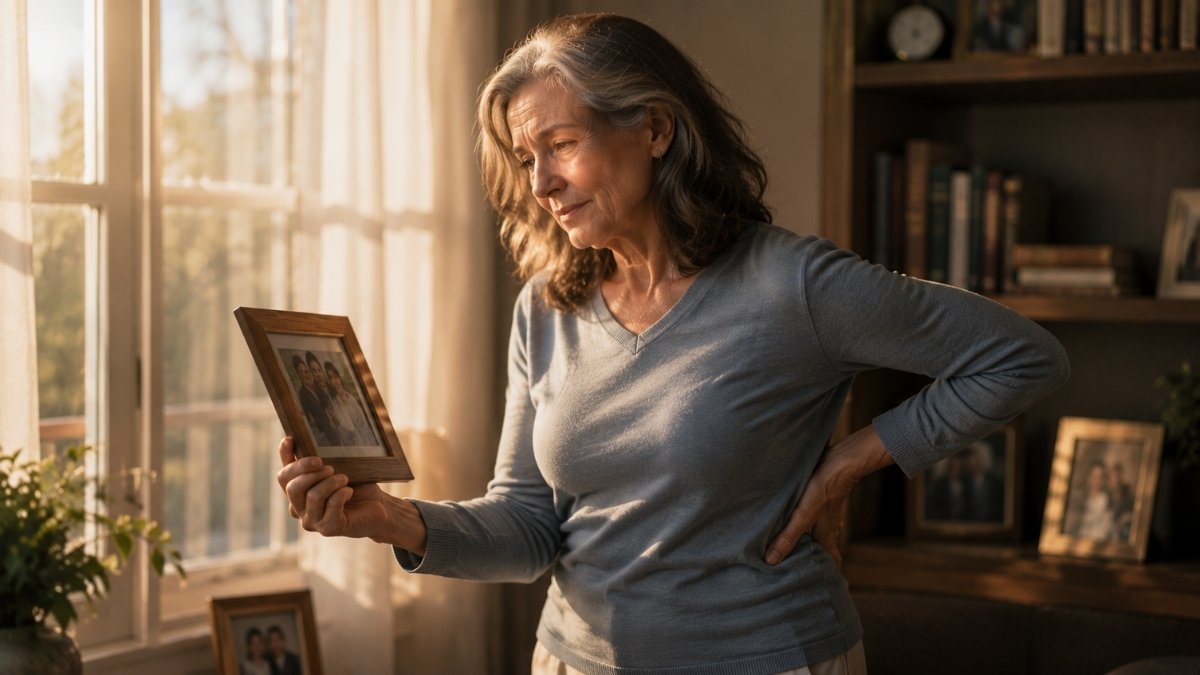
Carol watched her mother’s spine curve a little more every winter, until the woman who used to stand five foot six was closer to five foot two. At 58, Carol got her own bone density scan back, and the number on the page looked uncomfortably familiar.
She had spent decades assuming this was simply what happened to the women in her family, a slow motion inheritance with no vote of her own.
That is the story most people believe about osteoporosis. It is also not the full story, and what Carol found out next changed how she thought about the whole thing.
Before making any changes based on this article, talk to your doctor, especially if you are currently taking medication or have a diagnosed condition.
What Carol Assumed About Family History
Carol’s mother had a hip fracture at 71. Her grandmother had one too. In Carol’s mind, osteoporosis was written into her genes the same way eye color or height was, fixed at birth and simply waiting to show up on schedule.
There is real science behind that fear. Researchers estimate that genetics accounts for somewhere between half and 85 percent of the variation in bone density between people. Women with a family history of hip fracture, particularly on their mother’s side, are about twice as likely to experience one themselves, according to the American Academy of Orthopaedic Surgeons.
Scientists have identified more than 30 genes tied to bone density, and a large 2018 genetic screen out of Stanford flagged nearly 900 regions of the genome connected to low bone mineral density.
None of that is fabricated, and none of it should be dismissed. But heritability is not the same thing as destiny, and that distinction is where Carol’s assumptions started to unravel.
The Study That Changed How Carol Saw Her Risk
A genetic epidemiology study published in the journal Genetics in Medicine followed daughters and sisters of women with osteoporosis to calculate their actual empiric risk. The result: daughters had roughly a 33 percent chance of developing osteoporosis themselves, and sisters had about 19 percent.
Read that again. If osteoporosis were simply inherited the way a gene for eye color is passed down, those numbers would be close to 100 percent.
They are not. Most daughters of mothers with osteoporosis do not develop it.
What genetics actually does is set your starting point. It influences your peak bone mass in your twenties and how sensitive your skeleton is to bone loss later on. What happens after that depends heavily on things you have far more control over than Carol ever realized.
Osteoporosis genetic risk is real, but it behaves more like a loaded set of odds than a locked in outcome.
Bone Health · Nature vs. What You Control
Your Genes Set the Starting Line, Not the Finish
Some things about your bones were decided before you were born — but plenty is still up to you.
Everyone’s body responds differently, so check with your doctor before trying this if you have an existing condition or take medication.
What Actually Determines Whether Family History Becomes Your Story
The years right around menopause matter more than almost any other window. Estrogen protects bone, and when levels drop, women can lose bone mass rapidly for up to ten years afterward. That is the exact stretch Carol was standing in at 58.
Inside that window, a handful of daily factors do most of the heavy lifting.
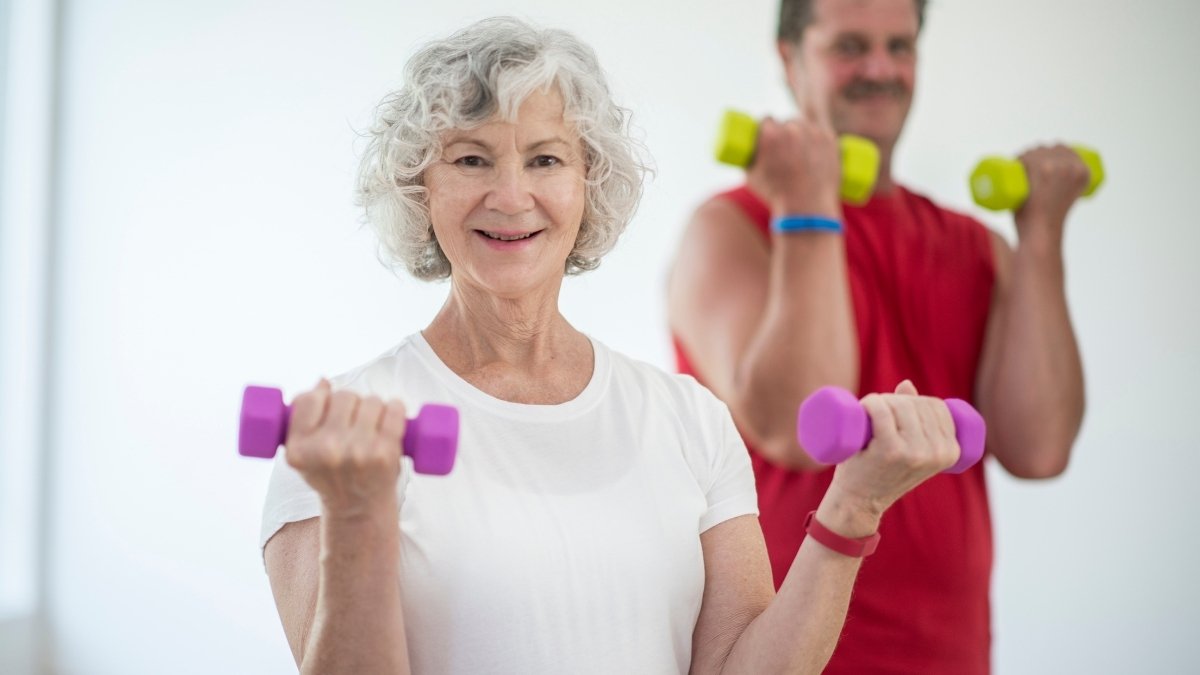
Weight bearing exercise forces bone to remodel and rebuild itself in response to stress. Walking, stair climbing, dancing, and resistance training all count, and research shows this kind of movement helps maintain or even increase bone density at the spine and hip in postmenopausal women.
Smoking works against all of that. It inhibits the cells responsible for building new bone, which makes it an independent risk factor on its own, separate from genetics entirely.
Calcium and vitamin D give the body the raw material it needs. Adults over 50 are generally advised to aim for around 1,200 milligrams of calcium daily and 800 to 1,000 international units of vitamin D, from food, sunlight, or supplements combined.
Alcohol in excess and very low body weight both interfere with the bone remodeling cycle, while carrying a moderate, healthy body weight can actually offer some protection.
Bone Density Protocol
Essential daily habits to build and protect your skeletal strength.
Weight Bearing Cardio
Most days, 30 minsWalking, stairs, or dancing stimulates new bone formation through mechanical stress.
Resistance Training
2-3x weeklyBuilds the critical muscle mass that structurally supports and protects your bones.
Calcium Rich Intake
Daily, across mealsFood or supplements supply the direct raw minerals your body uses to build bone.
Vitamin D Source
DailyObtained from sun, food, or supplements. It acts as the key to help your body absorb calcium.
Balance & Stability Work
2-3x weeklyPractices like Tai Chi or Yoga drastically reduce fall risk, effectively preventing fractures.
Limit Alcohol & Don’t Smoke
OngoingEliminating these toxins directly protects the cells responsible for building new bone matrix.
Getting Her Own Numbers: What the Scan Actually Showed
Carol asked her doctor for a bone density scan earlier than the standard screening age of 65, since a mother’s fracture history is one of the accepted reasons to test sooner. The test, called a DEXA scan, is quick, painless, and measures mineral content in the hip and spine.
The result comes back as something called a T score, and this is where a lot of people, Carol included, get scared by a number they do not fully understand.
| T Score Result | What It Means |
|---|---|
| Negative 1.0 or higher | Normal bone density |
| Between negative 1.0 and negative 2.5 | Osteopenia, meaning low bone mass, not yet osteoporosis |
| Negative 2.5 or lower | Osteoporosis |
Carol’s result landed in the osteopenia range. Not nothing, but not the fixed sentence she had spent years dreading either, and importantly, still a stage where lifestyle changes have real room to work before things progress further.
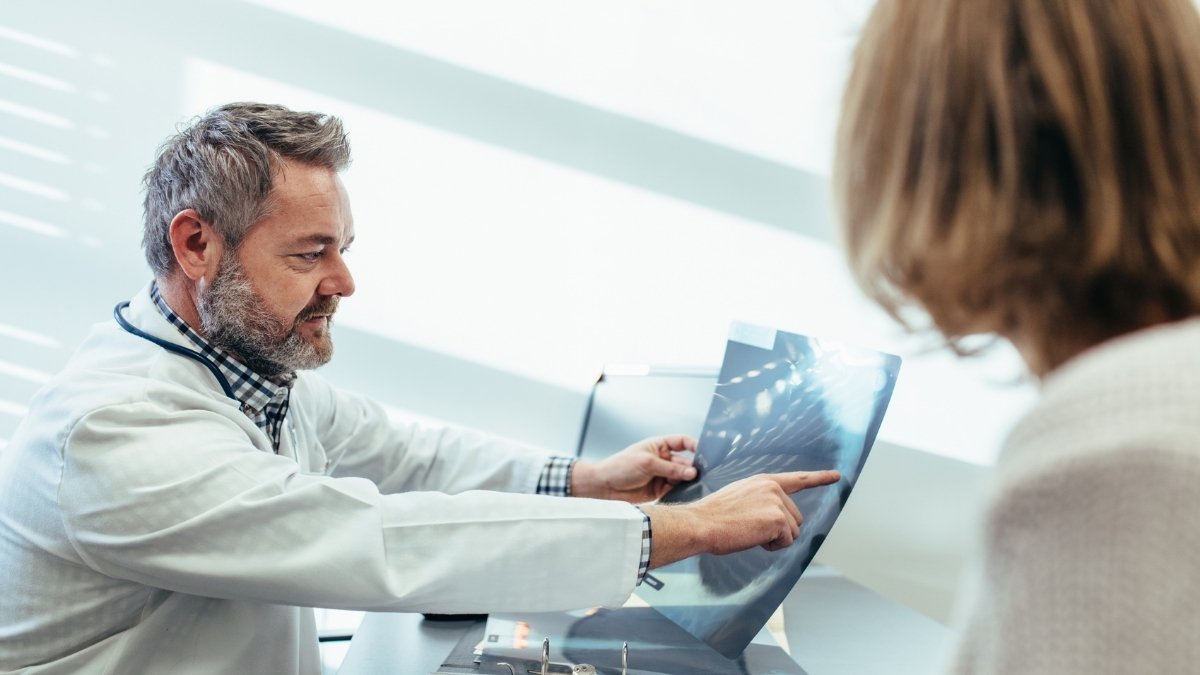
Doctors also sometimes calculate a FRAX score alongside the scan, which estimates a person’s ten year probability of a major fracture based on both bone density and personal risk factors. It is one more reason a scan should always be interpreted with a doctor rather than compared against someone else’s results online.
Try This Today
- Ask your doctor if you qualify for an earlier bone density scan based on family history
- Add one weight bearing walk or set of stairs into your day this week
- Check whether your current calcium and vitamin D intake meets the 1,200 milligram and 800 to 1,000 IU targets for adults over 50
- Swap one seated stretch session for a short resistance band routine
- Write down your mother’s or grandmother’s fracture history to bring to your next appointment
Signs Your Bones Might Already Be Asking for Help
A few warning signs are worth calling a doctor about rather than waiting on:
- A noticeable loss of height over a year or two
- A new stooped or forward leaning posture
- Sudden back pain with no clear injury, which can signal a small spinal compression fracture
- A fracture from a minor fall or bump, sometimes called a fragility fracture, which some doctors consider an automatic osteoporosis diagnosis regardless of what a scan shows
Questions Carol Had Along the Way
Is 58 too late to make any of this matter? No. Bone remodels throughout life, and weight bearing exercise and adequate calcium and vitamin D continue to influence density well past menopause.
Does this mean medication is never needed? Not necessarily. Lifestyle changes support bone health, but for osteopenia that progresses or for a confirmed osteoporosis diagnosis, a doctor may still recommend medication alongside these habits.
How long before a scan would show a difference? Bone density changes slowly, and doctors typically wait one to two years before repeating a DEXA scan to see whether an intervention is working.
Should you get tested if your mother had osteoporosis, even without symptoms? Osteoporosis is often called a silent disease because it produces no obvious symptoms until a fracture happens, which is exactly why family history alone is grounds to ask about earlier screening.
The Story Carol Tells Now
Carol still has her mother’s history. She still carries whatever genetic risk came with it. What changed is how she talks about it, less like a countdown she inherited and more like a starting position she gets to respond to.
Genetics loads part of the equation. The rest, the walking, the strength training, the calcium, the conversations with her doctor, is still hers to write.