
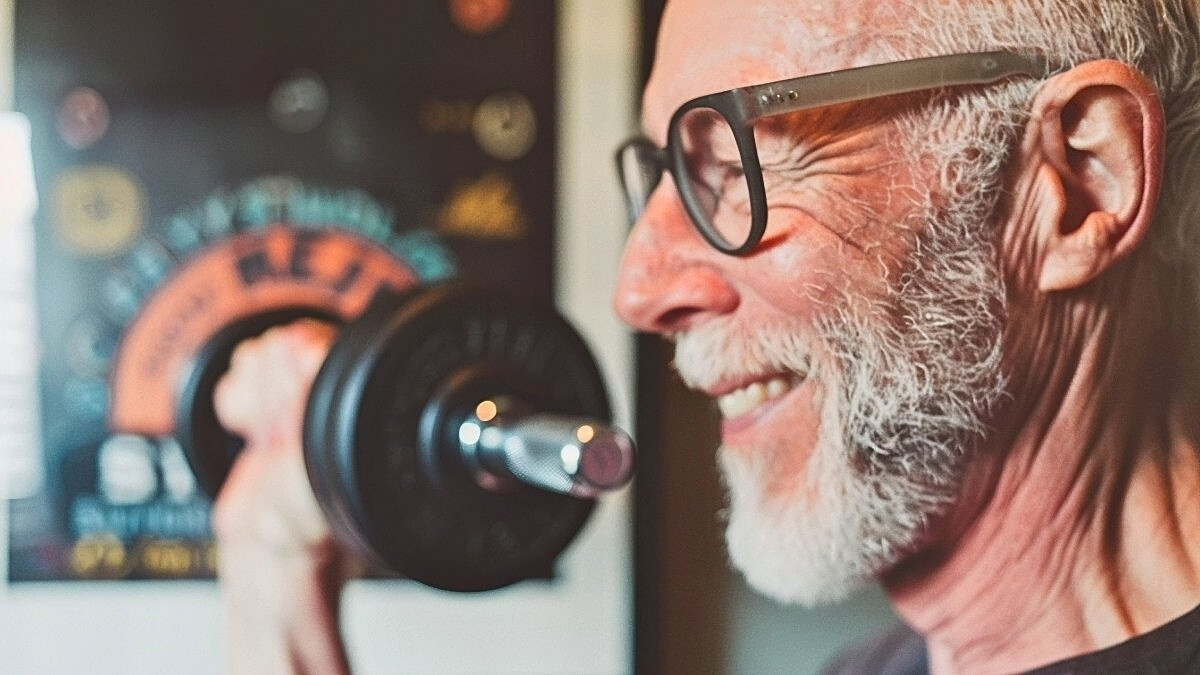
At 43, Mike stood in front of his bathroom mirror and didn’t recognize the soft, rounded figure staring back. When did his six-pack become a keg?
You’re not lazy. You’re busy. Between work, kids, and life, your body quietly transformed. Your midsection got soft. Your muscle definition disappeared. You feel tired all the time. Meanwhile, your testosterone drops 2-3% every year.
You’re losing 1-2% of muscle mass annually after 50. And every fitness influencer promises miracles with 2-hour daily workouts you don’t have time for.
This article shows you the science-backed protocol that reverses biological aging. You only need four compound movements. Twenty minutes. Three times weekly.
System Rewire
DAD BOD
ROCKED
This article is structured into 8 points—read them one by one to understand how a simple 4-move daily protocol can rewire aging and transform your physique.
Research from 2025-2026 proves this rebuilds muscle, boosts testosterone naturally, and turns back your metabolic clock.
1. Why Your Body Changed (And It’s Not Your Fault)

Your testosterone started dropping after age 30. You lose 2-3% every year. That means you went from around 600 ng/dL to potentially under 300 ng/dL by 60.
After 50, you lose 1-2% of muscle mass yearly. By your 70s, you’ve lost 25-30% of total muscle. Your strength drops 30-40% compared to your 20s. Nearly 50% of people aged 80+ have sarcopenia (severe muscle loss).
Here’s the worst part. Less muscle means lower metabolism. Your body burns 2-4% fewer calories per decade. This creates a nasty cycle: less muscle leads to lower testosterone, which causes more fat storage, giving you less energy, making you less active, causing more muscle loss.
The typical dad bod sits at 20-28% body fat. For men 60-79, healthy range is 13-24%. You’re not alone. Only 24-30% of adults meet strength training guidelines.
But you can fix this.
2. Why 20 Minutes Works Better Than 2 Hours

A 2025 study tracked nearly 15,000 people for seven years. They trained just 20 minutes per week. Results? They gained 30-50% more strength.
Another study tested single-set training. People did one set, 2-3 times weekly. They gained 12.09 kg of strength in 8-12 weeks. One set. That’s it.
Here’s the truth: your first few sets produce 80% of your muscle gains. Additional sets add almost nothing. More volume doesn’t mean more results. It means more recovery time you don’t have.
Resistance training alone reduces your death risk by 21%. Combined with walking or cardio? It drops by 40%.
Time is the #1 reason people don’t lift weights. You don’t need two hours. You need consistency with the right movements. Older adults actually benefit from less training because you need more recovery time between sessions.
The minimal effective dose isn’t about doing less. It’s about doing exactly enough.
3. The Only 4 Movements You Need
Forget bicep curls and fancy machines. You need compound movements that work multiple muscle groups at once.
Squat (or variation):
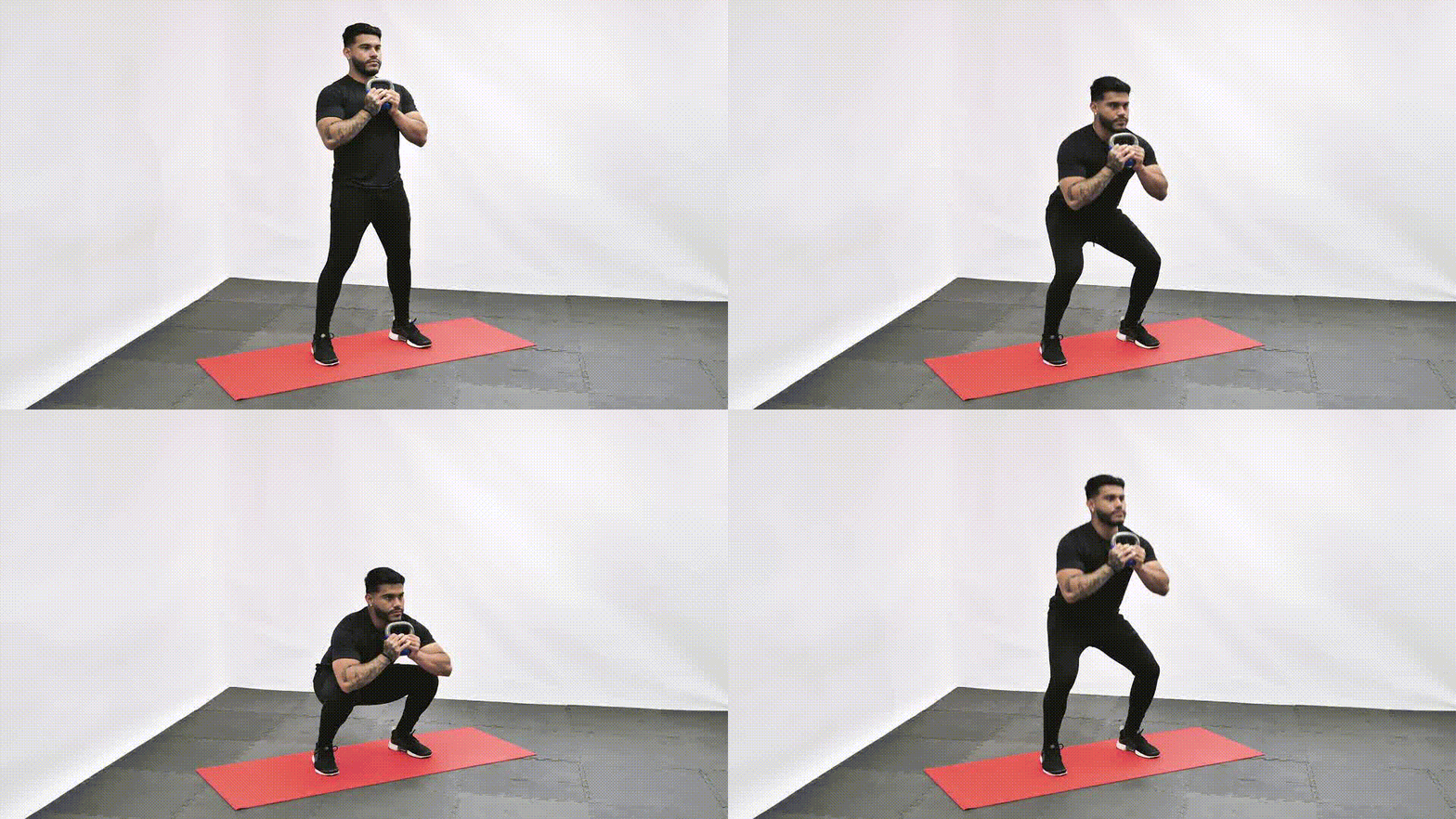
Works your legs, core, and back. This is how you stand up from a chair. Start with goblet squats holding a dumbbell. Progress to barbell squats.
Deadlift (or variation):
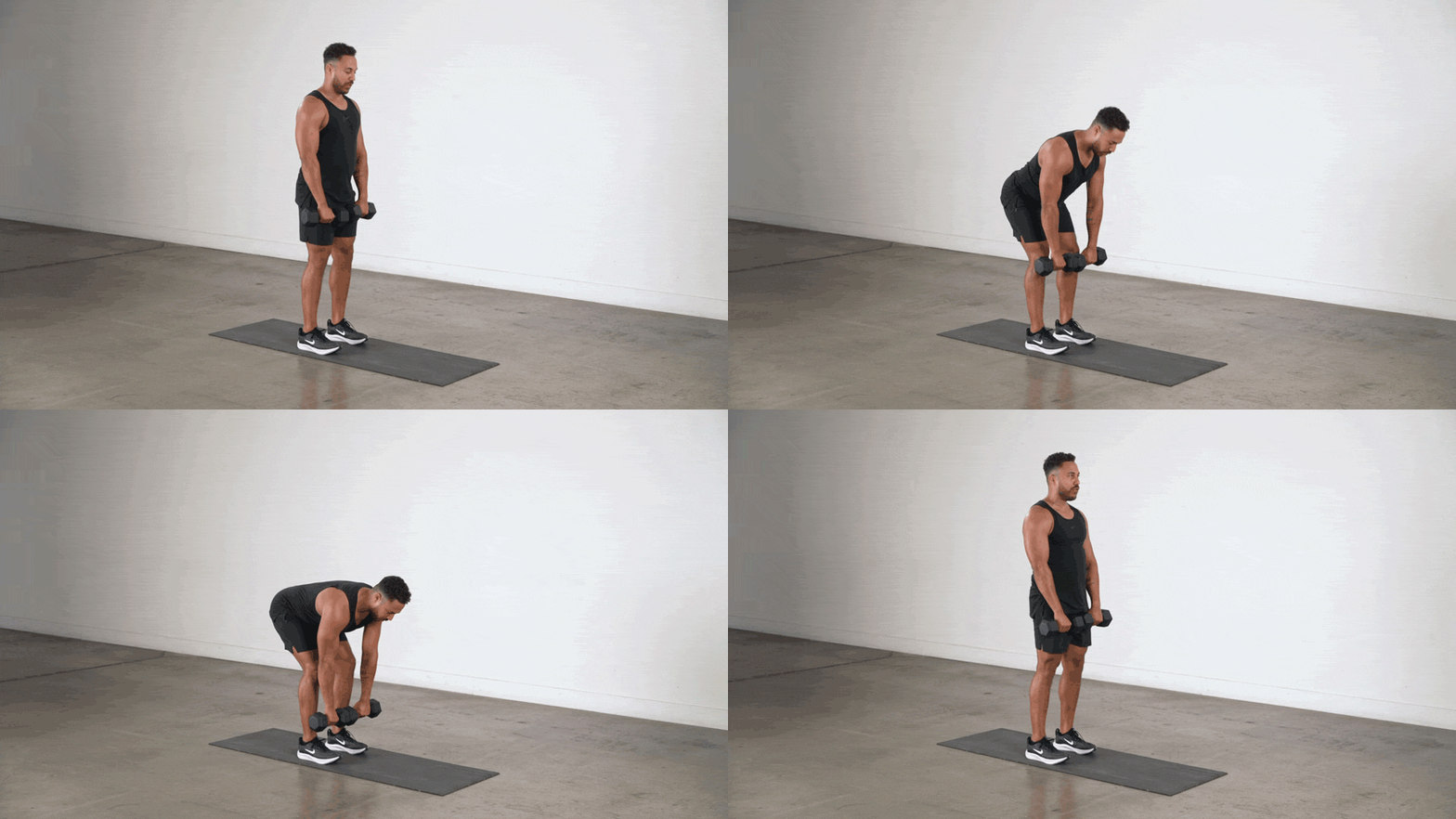
Hits your entire backside and teaches you to pick things up safely. Begin with dumbbell deadlifts. Move to trap bar or barbell when ready.
Press (bench or overhead):
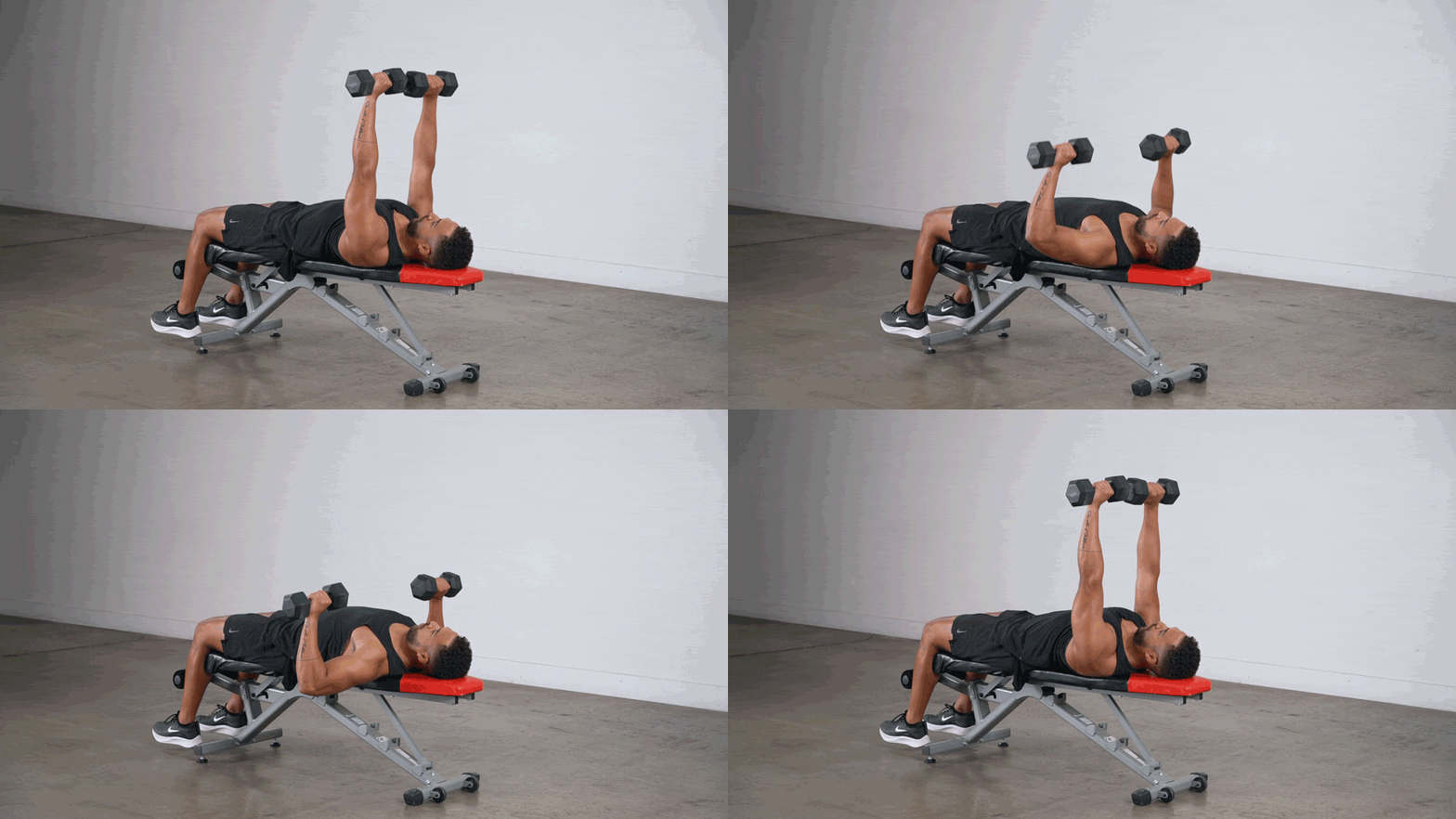
Builds your chest, shoulders, and triceps. Any pushing movement. Use dumbbells, barbells, or even resistance bands.
Pull (row or pullup):
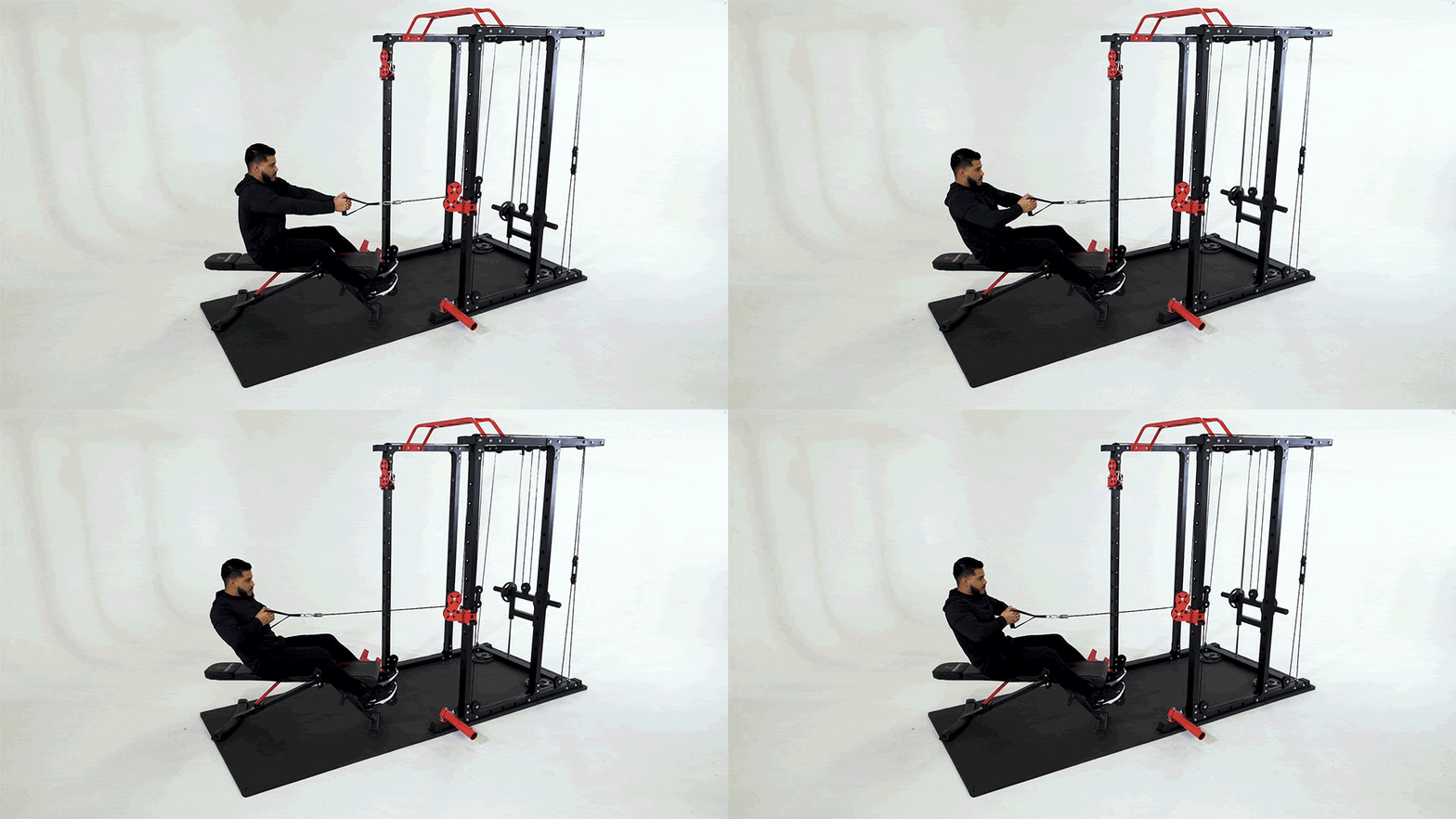
Strengthens your back, biceps, and grip. All pulling movements count. Do bent-over rows, cable rows, or assisted pullups.
These movements trigger hormonal responses that build muscle. They teach your body fundamental human patterns. Sue started at 74 with chair squats. Ralph competes in powerlifting at 79.
Pick variations that match your current fitness level. Progress comes from gradually adding weight, not from doing more exercises.
4. Your Exact 20-Minute Weekly Schedule
Weekly Protocol
Day 1: Squat + Press (push focus)
Day 2: Deadlift + Pull (pull focus)
Day 3: Squat + Deadlift or rotate all four
5. The Protein Strategy That Builds Muscle

You need more protein as you age. Aim for 0.45-0.55 grams per pound of bodyweight daily. A 180-pound man needs about 80-100 grams.
Spread it across 3-4 meals. Each meal should have 20-35 grams of protein. Your muscles can only process so much at once. Loading up at dinner doesn’t work as well as spacing it out.
Protein Guide
Focus on leucine-rich foods. Dairy, lean meats, fish, and legumes trigger muscle protein synthesis. That’s the process that actually builds muscle.
Supplements that help: Whey protein activates the mTORC1 pathway (your muscle-building switch). Creatine improves strength by 15-20% in older adults—take 5 grams daily. Vitamin D deficiency kills muscle strength; most older adults don’t get enough.
Follow a Mediterranean-style diet. Research shows it reduces sarcopenia risk and improves muscle function. Think: fish, olive oil, vegetables, whole grains, and moderate dairy.
Protein builds muscle. Resistance training tells your body where to put it.
6. How to Boost Testosterone Naturally

Your muscles need 48-72 hours to recover between training the same muscle groups. More rest means better gains.
Sleep 7-9 hours nightly. Your body releases growth hormone during deep sleep. Testosterone peaks during REM sleep. Skip sleep, and you’re sabotaging your results.
Manage stress. Chronic high cortisol (stress hormone) breaks down muscle tissue. Take walks. Meditate. Find hobbies that relax you.
Natural testosterone boosters: Resistance training itself raises testosterone by 15-25%. Adequate sleep keeps levels high. Reducing body fat helps because excess fat converts testosterone into estrogen. Lower stress protects your hormones.
If you have serious symptoms—zero sex drive, extreme fatigue, depression, severe muscle loss—get your levels checked. Testosterone under 300 ng/dL is clinical hypogonadism. That needs medical help.
For most men, proper training, sleep, nutrition, and stress management will optimize your natural testosterone. Your body knows how to produce it. You just need to remove the barriers.
7. How to Track Real Progress
Your bathroom scale lies. Weight doesn’t tell the whole story.
Better metrics to track: Strength increases (how much weight you lift). Body measurements (waist, chest, arms, thighs). Performance tests (how fast you walk, climb stairs, or stand from a chair). Daily energy and function. Body composition scans (DEXA or bioimpedance scale).
Expect noticeable strength gains in 8-12 weeks. Visible physique changes take 12-16 weeks. This isn’t fast. But it’s permanent if you stay consistent.
The best program is the one you actually do. Consistency beats intensity every single time.
Hit a plateau? Take a deload week (reduce weight by 40-50%). Change exercise variations. Check your nutrition. Your body adapts, so sometimes you need to shake things up.
Find a training partner or join a gym community. Accountability makes you show up on days you don’t feel like it. Online groups work too. Share your progress. Celebrate small wins.
Take photos every month. You won’t notice daily changes. But monthly comparisons will shock you.
8. The 7 Mistakes That Kill Your Progress

Doing too much too soon: Your ego wants to lift heavy immediately. Your joints and tendons need time to adapt. Start lighter than you think you should.
Bad form: Injuries increase with age. Perfect form matters more than heavy weight. Learn proper technique before adding serious load.
Skipping warm-ups: Cold muscles tear easily. Always warm up. Always.
Switching programs constantly: Changing routines every few weeks prevents your body from adapting. Stick with one program for at least 12 weeks.
Not eating enough protein: You can’t build muscle without building blocks. Hit your protein target daily.
Ignoring joint pain: Sharp pain is your body screaming “stop.” Listen. Modify exercises. Use joint-friendly variations.
Comparing yourself to your 20-year-old self: You’re not 20. You don’t recover like you’re 20. Set age-appropriate goals. Celebrate what your body can do now.
Finally,
The dad bod isn’t permanent. Science proves 20 minutes, 3 days weekly, using four compound movements rebuilds muscle and boosts testosterone. Add adequate protein and recovery.

Men 40-70+ achieve real transformations. Start tomorrow. Pick your four movements. Commit to consistency. Reclaim the strong, energetic body you deserve. Your future self will thank you.