

Margaret couldn’t recognize her daughter anymore. After 40 years together, her daughter’s face meant nothing. This moment breaks families apart.
Fifty-five million people live with Alzheimer’s disease right now. The worst part? Watching your mom or dad forget who you are. They can remember yesterday’s lunch but not your name. Scientists couldn’t explain why this happened. Until now.
Researchers at the University of Virginia found the answer. They discovered the exact brain structure that breaks down and steals recognition of loved ones. Better yet, drugs already exist that might stop this from happening.
You’ll learn what causes this memory loss, why it affects people before objects, and when treatments might reach humans. This isn’t about false hope. It’s about real science that could change everything.
Memory Defense Protocol
The Discovery That Changes Everything

Dr. Harald Sontheimer and his team found something big in October 2025. They identified tiny structures called perineuronal nets that protect your social memories. These nets wrap around brain cells like protective mesh.
When Alzheimer’s destroys these nets, people lose the ability to recognize faces. The breakdown happens in a brain region called the CA2 area of your hippocampus. This is where your brain stores who people are.
Here’s what makes this different. These nets break down completely separate from amyloid plaques. Scientists have spent 30 years focused on amyloid as the main problem. This discovery shows another path.
The numbers tell the story. Over 55 million people have Alzheimer’s worldwide. In America alone, 7.2 million people over 65 live with this disease. Without new treatments, that number hits 13.8 million by 2060.
The research team tested this on mice. The mice lost social memory but could still remember objects. That’s exactly what happens in human patients.
What Are Perineuronal Nets and Why Do They Matter?
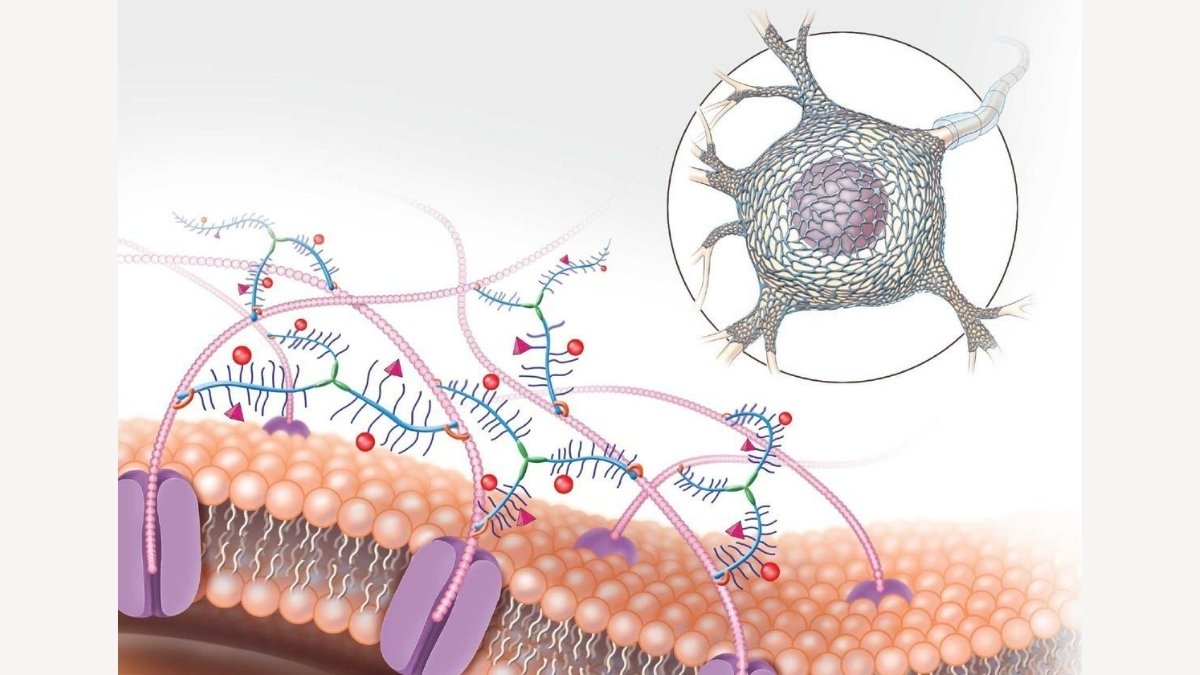
Think of perineuronal nets as scaffolding around important brain cells. Just like scaffolding holds up a building during construction, these nets support the neurons that store your memories of people.
They’re made of proteins that form a mesh-like cage. Scientists first saw them in 1898, but no one knew what they did for Alzheimer’s until now.
These nets cluster heavily in your CA2 region. That’s the part of your brain dedicated to recognizing people. When you see your sister’s face and instantly know it’s her, your CA2 is working. Those perineuronal nets keep everything stable so that memory stays clear.
But enzymes called MMPs can break down these nets. When that happens, the neurons lose their protection. Your brain can’t maintain those social memories anymore.
The research team watched this happen in mice at exactly 6 months old. The nets fell apart, and the mice stopped recognizing other mice they’d met before. The timing was perfect proof.
Why Social Memory Disappears Before Other Types

Your mom can still make coffee but doesn’t know your face. She remembers how to get to the bathroom but forgets you’re her child. This pattern confuses families.
Your brain stores different memories in different places. Social recognition lives in the CA2 region. Object memory and spatial memory use other areas. Alzheimer’s hits CA2 first, so social memory fails while other memories hang on.
Social memory is also more complex. Recognizing a person means processing their face, voice, relationship history, and emotional connection all at once. That takes more brain power than remembering a coffee cup.
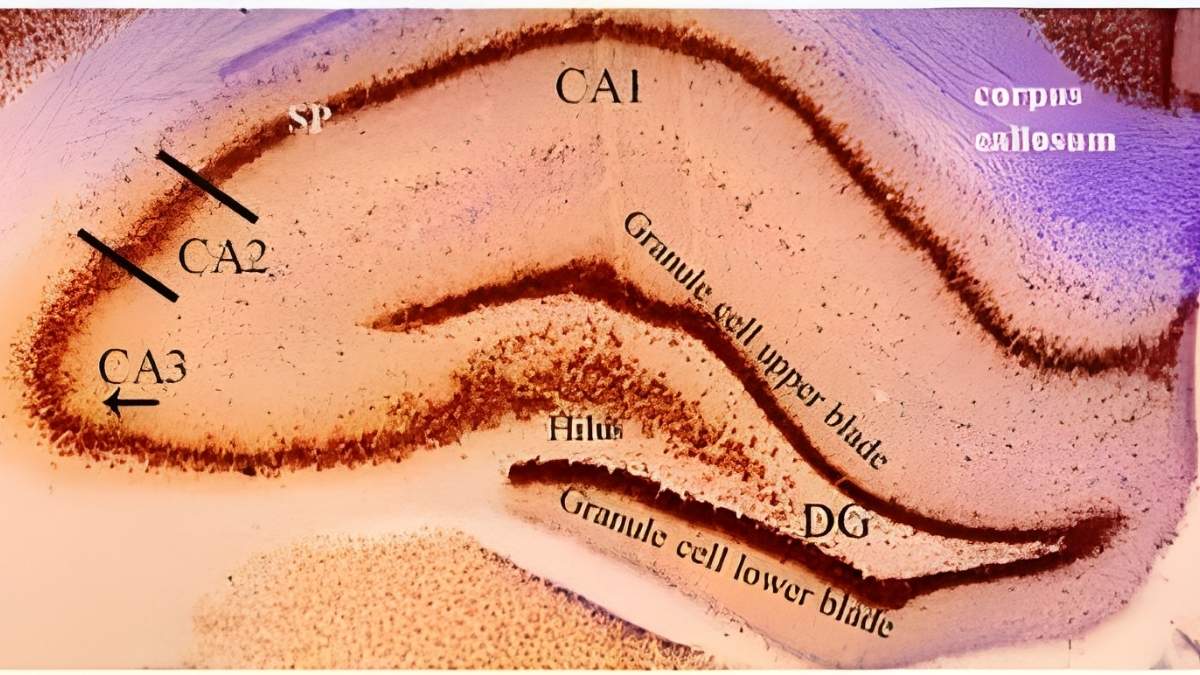
The CA2 region handles something specific: who people are and your relationship with them. It works with hormones like oxytocin and vasopressin that control social bonding. When the perineuronal nets break down here, those connections vanish.
This explains why caregivers take it so hard. You’re the most important person in their life, but that memory disappears first. It’s not random. There’s a biological reason it happens this way.
The Treatment Already Exists (It Just Needs Testing)

Here’s the good news: drugs that protect perineuronal nets already exist. The research team used something called MMP inhibitors on mice. These drugs block the enzymes that destroy the protective nets.
It worked. The mice kept their social memory when they got the treatment early.
The specific drug was GM6001, also called ilomastat. Doctors already test MMP inhibitors for cancer and arthritis. That means we know they’re relatively safe in humans. We just haven’t tested them for Alzheimer’s yet.
Now the reality check. These drugs won’t help people who already have severe memory loss. They work as prevention, not reversal. You’d need to take them before the nets break down completely.
Early MMP inhibitors caused problems in cancer trials. Patients got joint pain and muscle issues. But newer versions like GS-5745 target specific MMPs without those side effects.
The timeline? Probably 3-5 years before human trials start for Alzheimer’s. That’s faster than developing a new drug from scratch.
How This Changes Alzheimer’s Research
Dr. Sontheimer said something important: “The loss of perineuronal nets occurred completely independent of amyloid and plaque pathology.”
That challenges everything. For decades, scientists blamed amyloid plaques for Alzheimer’s. Drug companies spent billions trying to clear those plaques. Results have been disappointing. The FDA approved some anti-amyloid drugs, but they only slow decline slightly.
This research points to a different cause. Brain inflammation damages the extracellular matrix—the support structure around neurons. That happens whether plaques are there or not.
This doesn’t mean amyloid research was wrong. It means Alzheimer’s attacks the brain in multiple ways. Some patients might have more plaque problems. Others might have more inflammation and net breakdown. Both probably happen together.
The future is combination therapy. One drug might target amyloid. Another protects perineuronal nets. A third reduces inflammation. Attacking the disease from multiple angles makes sense.
UVA’s Manning Institute of Biotechnology is pushing this research forward fast. They want treatments in clinics, not just in journals.
What Families Can Do Right Now

You can’t get MMP inhibitors for Alzheimer’s yet. But you can take real action today.
First, stop testing your loved one’s memory. Don’t ask “Do you know who I am?” Just tell them. “Hi Mom, it’s Sarah, your daughter.” Give context with photos and stories.
Second, look into clinical trials. The Alzheimer’s Association runs TrialMatch to connect families with studies. Check ClinicalTrials.gov regularly. UVA might recruit for perineuronal net studies soon.
Third, focus on emotional connection beyond recognition. Your dad might not know your name, but he can still feel love through music, touch, and familiar routines. That matters.
Document family stories now while earlier memories are intact. Record voices. Save photos with detailed descriptions. Future treatments might restore some function, and you’ll want those memories ready.
Connect with support groups through the Alzheimer’s Association and National Institute on Aging. You’re not alone in this.
Conclusion:

The breakdown of perineuronal nets in your brain’s CA2 region explains why Alzheimer’s steals recognition of the people you love. MMP inhibitor drugs already exist and might prevent this heartbreak.
Human trials are years away, but hope is real. Understanding why this happens helps families cope better right now. Stay informed and connected.