

If you’re over 60, you may notice your muscles shrinking despite doing everything “right.” Stairs feel harder. Carrying groceries wears you out. Playing with grandchildren leaves you sore. And you’ve probably heard the story that building muscle after 60 is impossible—or even unsafe.
The truth is, muscle mass drops about 1% per year or 3–8% per decade, but it doesn’t have to.
This guide shows a science-backed routine using eccentric exercise, the slow lowering phase of movements. Just once-weekly eccentric training can match the gains of twice-weekly traditional workouts.
You’ll also learn how much protein you really need (1.2–1.6 g per kg, not the old 0.8 g), plus a 12-week progressive plan to safely rebuild muscle.
You’ll see real stories of people in their 70s–90s reversing sarcopenia. By the end, you’ll know exactly how building muscle after 60, strength training for seniors, and proper protein for older adults can restore strength, energy, and confidence.
12-Week Muscle Builder
The Eccentric-Focus Table for Ages 60+
| Exercise | Target | Gamified Form |
|---|
Mandatory Protein Protocol
Aim for 20-30g of protein per meal to beat anabolic resistance and repair the muscle you break down.
Practice Eccentric Form
Press and HOLD the button to simulate the slow lowering phase. Do not let go until 4 seconds are up!
Why Your Old Workout Stopped Working After 60
You’re doing everything right. Walking every day. Maybe some swimming. Light weights twice a week. But you’re still getting weaker. Here’s why.

Your muscles are shrinking at 1% per year after age 50. That’s the hard truth from the National Institute on Aging. Do the math. Ten years equals 10% less muscle. Twenty years? You’ve lost a fifth of your strength.
It gets worse. The rate speeds up. Between 30 and 60, you lose 3-8% of muscle every decade. This is called sarcopenia, and up to 30% of people over 60 have it.
But the real problem is invisible. Your body developed something called anabolic resistance. Your muscles stopped responding to normal amounts of protein and regular exercise. The same workout that built muscle at 40 barely does anything at 65. Your muscle protein synthesis—how your body builds new tissue—slowed way down.
Cardio keeps your heart healthy. But it won’t rebuild muscle. You need something stronger.

Here’s the twist. Eccentric strength—the kind you use walking downstairs—stays stronger as you age. Your body preserved this one advantage. While your lifting strength dropped, your ability to control lowering movements stayed relatively intact.
Yet most older adults avoid the exercises that would help them most. They worry about falling, so they skip resistance training. But studies on people aged 83-94 proved they could increase thigh muscle by 3.4% in just 12 weeks.
The Proof: Real Results from People Your Age
Forget theories. Let’s look at what actually happened when older adults tried eccentric training.
A 2024 study tracked 69-year-olds doing eccentric exercises just once per week. The results? They gained 13% more power, 17-36% more isometric strength, 40-50% more eccentric strength, and 9-18% thicker muscles. One workout per week.

But the most stunning research involved frail adults aged 86-96. These weren’t healthy seniors. They were frail. In just 8 weeks, they gained 10% more mid-thigh muscle and 180% more leg strength. Read that again. People in their 90s nearly tripled their leg strength in two months.
Here’s why eccentric training works so well. Your fast-twitch muscle fibers—the ones that give you power and speed—die off first with age. But they respond incredibly well to eccentric exercises. This type of training directly targets what you’re losing.
Your body also adapts fast. Scientists call this the “repeated bout effect.” The first eccentric workout might make you sore. But by the second or third session, soreness drops dramatically. 2024 studies showed minimal muscle soreness throughout entire 12-week programs.
And 2025 research proved heavy eccentric training at 80-85% of your max isn’t just safe for older adults—it’s actually better than lighter weights. Your muscles need a real challenge to grow, even at 60, 70, or 80.
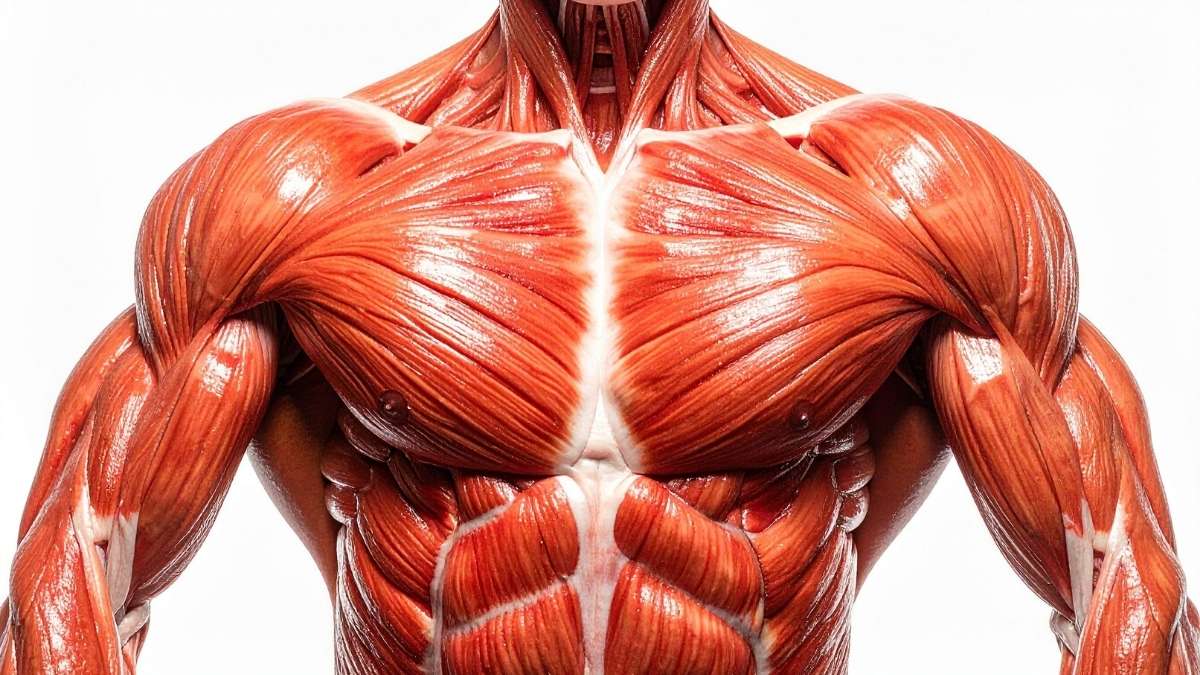
Adults in their 60s and 70s gained up to 2.4 pounds of muscle in 12 weeks with progressive resistance training. That’s pure muscle, not water weight. Plus, you only need 1-2 sessions per week instead of the typical 3-4.
This fights anabolic resistance head-on. Eccentric training triggers muscle protein synthesis more effectively than traditional exercises. It gives your muscles the strong signal they need to actually grow, despite the metabolic changes of aging.
The science is clear. Muscle hypertrophy in older adults isn’t just possible—it’s predictable when you use the right method.
Your 12-Week Plan to Rebuild Lost Muscle
Weeks 1-4: Learn the Movements
Goal: Teach your body the eccentric pattern using bodyweight only. No weights yet. Think of it as learning a new skill.
Chair Sit-Downs:
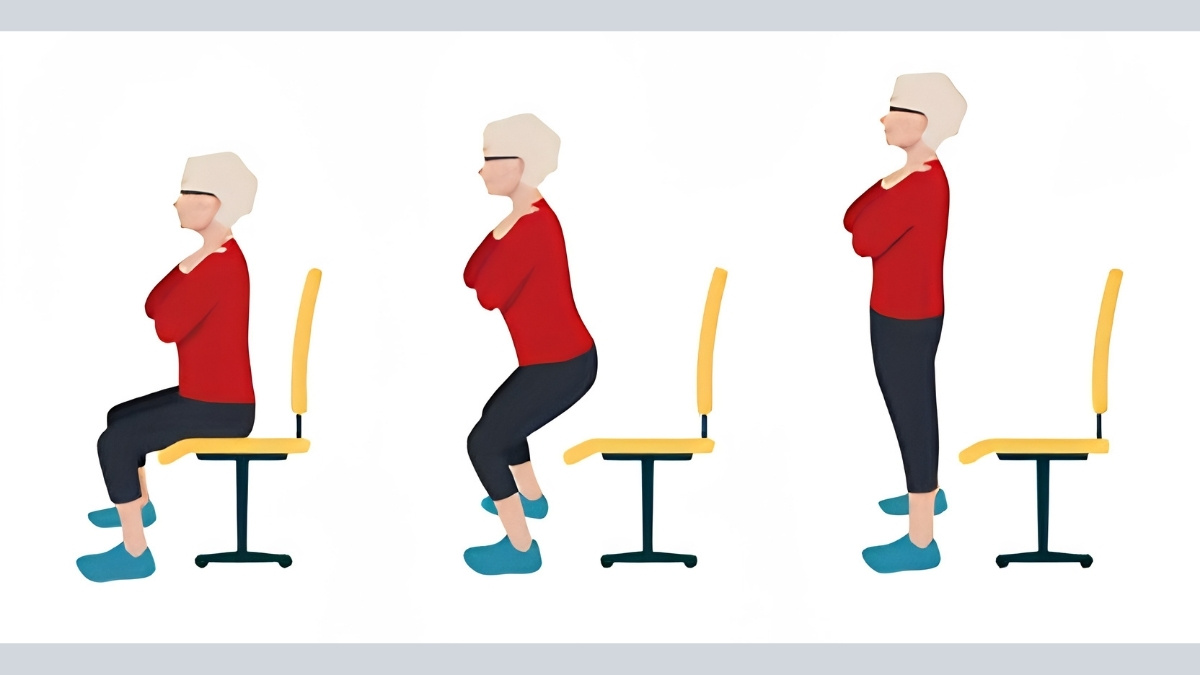
- Stand in front of a sturdy chair. Slowly lower yourself over 3-4 seconds. This slow lowering is the eccentric phase that strengthens muscles efficiently.
- Use your arms to push back up if needed. Focus on control, not speed. Do 8-10 reps.
Wall Push-Ups:

- Stand about an arm’s length from a wall and place your hands on it. Slowly lower your chest toward the wall over 3 seconds.
- Push back quickly to the starting position. The lowering phase builds strength in your chest, shoulders, and arms. Do 8-10 reps.
Assisted Step-Downs:
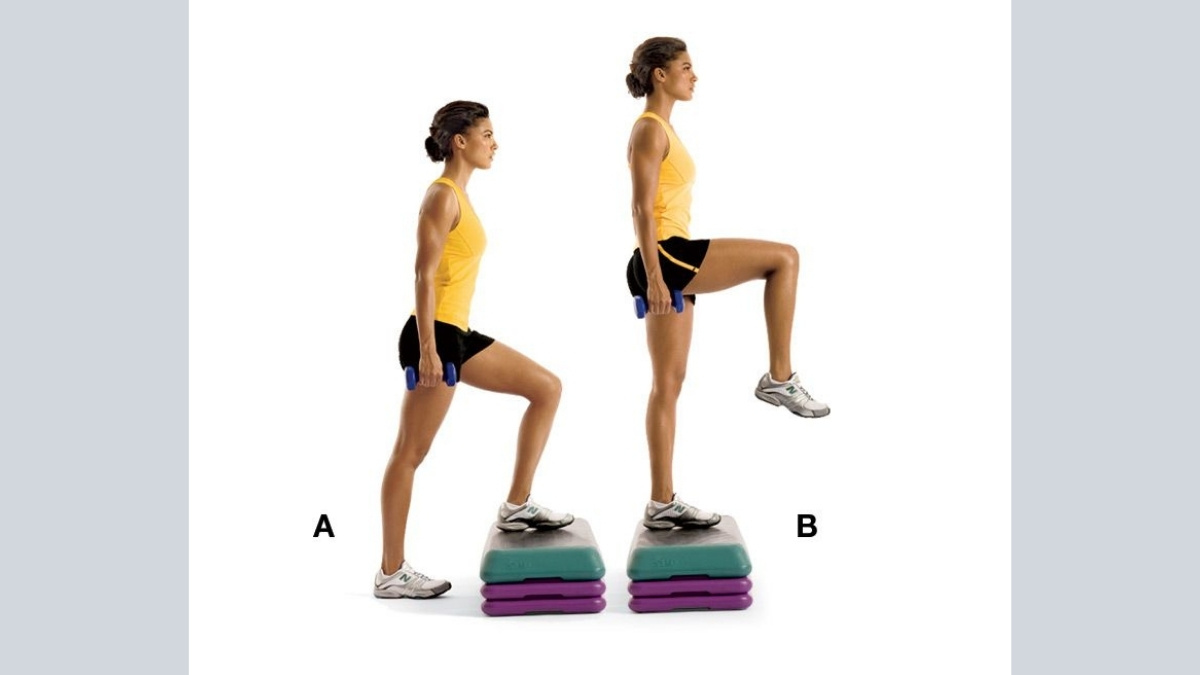
- Stand on a low step (4-6 inches). Slowly lower one foot to the floor over 3 seconds.
- Step back up and switch legs. This targets quads and glutes safely. Do 6-8 reps per leg.
Warm-Up:
Walk for 5 minutes or do arm circles and leg swings to prevent injury and prepare muscles.

Recovery: Rest at least one full day between workouts. Muscles need 48 hours to repair and grow.
Weeks 5-8: Add Weight
Goal: Begin progressive resistance with light dumbbells (3-5 lbs) or resistance bands. Increase sessions to 2 per week with 2-3 rest days in between.
Eccentric Bicep Curls:

- Lift the dumbbell with both hands, then slowly lower it with one arm over 3-4 seconds.
- Focus on controlled movement to build arm strength. Do 10 reps per arm.
Slow Squats:

- Hold light dumbbells at your sides. Lower into a squat over 4 seconds, stopping when your thighs are nearly parallel to the floor.
- Stand up normally. Avoid going too deep to prevent strain. Do 10-12 reps.
Eccentric Rows:

- Attach a resistance band to a door handle. Pull the band toward you with both hands, then slowly release one arm over 3 seconds.
- Works the back and shoulders effectively. Do 10 reps per arm.
Session Guidelines
Weeks 9-12: Build Real Strength
Goal: Increase resistance, focus on compound movements, 2-3 sessions per week.
Eccentric Lunges

- Step forward into a lunge, then slowly lower your body over 3-4 seconds.
- Works glutes, quads, and hamstrings simultaneously. 3 sets of 10-12 reps per leg.
Eccentric Overhead Press:

- Press weights overhead, then slowly lower them back down over 3-4 seconds.
- Builds shoulders, triceps, and upper back strength. 3 sets of 10-12 reps.
Eccentric Deadlifts (Light Weight):
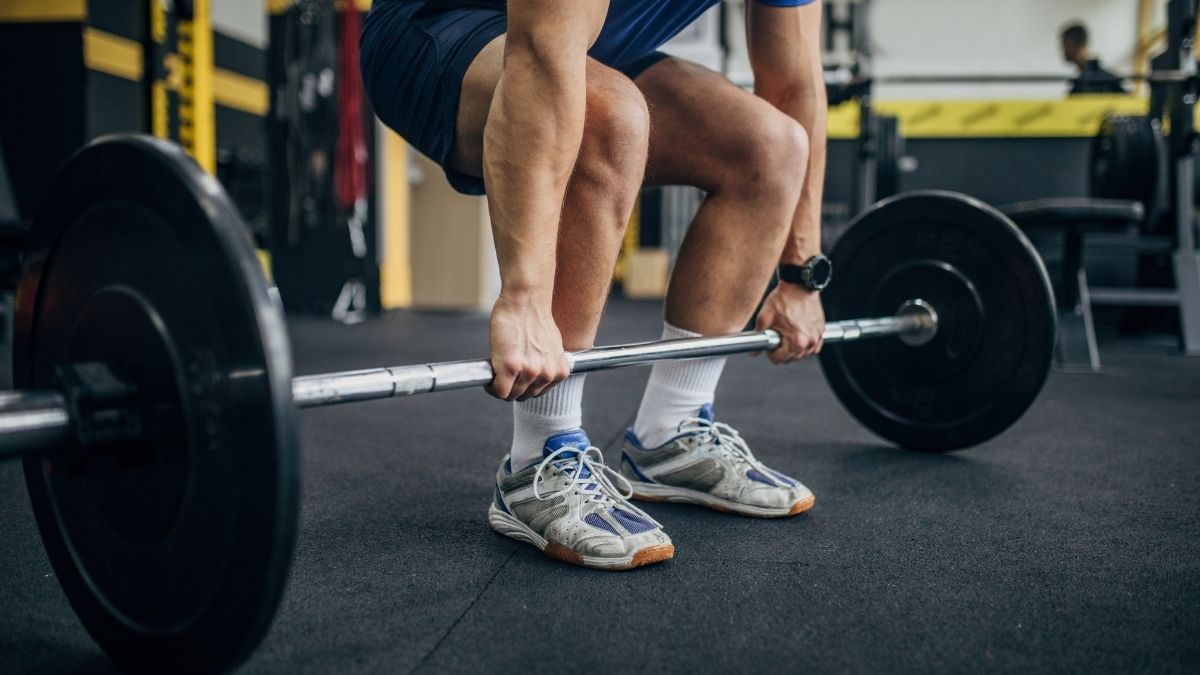
- Lift light dumbbells or kettlebells from the floor to standing, then slowly lower back down over 3-4 seconds.
- Targets hamstrings, glutes, and lower back safely. 3 sets of 10-12 reps.
Outcome by Week 12:
- Daily activities like climbing stairs become easier.
- Noticeable gains in muscle strength and size.
- Your body adapts to heavier loads safely, even at 60+ years.
The Protein Protocol That Powers Muscle Growth
Older adults face “anabolic resistance,” which means your muscles need bigger protein hits to grow. Eating 20–30 g per meal works well. Spread it through the day so your body can use it. Whey protein is easiest for your muscles to use. Lean meats, fish, eggs, Greek yogurt, beans, tofu, and lentils also work.

Use supplements if food alone isn’t enough, but lower your intake if you have kidney disease.
A 150-lb person (68 kg) aiming for 1.4 g/kg needs about 95 g protein/day.
Sample day:
• Breakfast: 6 oz Greek yogurt + berries (18 g)
• Lunch: 3 oz chicken breast (25 g)
• Snack: whey shake (20 g)
• Dinner: salmon, 4 oz (22 g)
• Beans or tofu side (10 g)
You might be making simple mistakes that slow results.

Start slow.
Doing too much too soon is a common error. Begin with 10–15 minutes of exercise. Some soreness is normal. Sharp or lingering pain is a warning. Listen to your body.
Don’t rush the lowering phase.
Many skip the eccentric part—the slow, controlled lowering of weights. Take 2–3 seconds per rep. This is where muscles actually grow stronger.
Eat enough protein.
Nearly half of adults over 51 don’t get enough. Muscles need building blocks to repair and grow. Make sure every meal has protein from eggs, Greek yogurt, chicken, fish, or beans.
Give muscles time to recover.
Training the same muscles two days in a row can lead to overuse. As you age, recovery takes longer. Wait at least 48 hours before working the same muscle group again.
Get medical clearance.
If you have health conditions, check with your doctor before starting. They can guide your program safely and prevent injuries.
Avoiding these mistakes improves strength training safety, proper exercise form, and muscle recovery. Simple changes like slowing down, spacing workouts, eating enough protein, and listening to your body make workouts safer and more effective.
Final Thoughts:
Even if you haven’t exercised in years, your body can still respond. Eccentric exercise—the slow lowering of weights—gives more strength gains with less time and stress.
Protein is non-negotiable. Aim for 1.2–1.6 g per kg of bodyweight daily. Muscles need it to repair and grow. If you stick with a plan, noticeable results often appear in 8–12 weeks.

It’s truly never too late. People in their 80s and 90s have built strength successfully.
Start small, start now. Try one 10-minute session this week: do three slow chair sit-downs, focusing on the lowering phase. Track how it feels. That simple step begins your journey to being stronger at 68 than you were at 40. Your future self will thank you.
This approach makes strength training for seniors safe, effective, and achievable. Consistency with eccentric exercise and protein keeps gains coming—and proves that age doesn’t have to limit your strength.