Every Longevity Study Highlights These 5 Powerful Exercises That Are Particularly Beneficial for Seniors
You don’t need a fancy gym. You don’t need a personal trainer. You just need to know which five exercises actually work — and why.
Most seniors get buried in conflicting fitness advice. Some of it is too intense. Some of it is built for 25-year-olds. And a lot of it has zero science behind it.
Here’s the truth. Longevity researchers across the world keep finding the same five exercises. These aren’t trends. They show up in peer-reviewed studies, large clinical trials, and decades of data on people who live long, healthy lives.
This article breaks down each exercise in plain language. You’ll learn what it does to your body, what the research actually says, and how to start today — even if you haven’t exercised in years.
This article is structured into 5 Exercises—read them one by one to discover the powerful exercises most longevity research highlights as especially beneficial for seniors.
Exercise One: Walking — The Most Studied Longevity Tool for Seniors
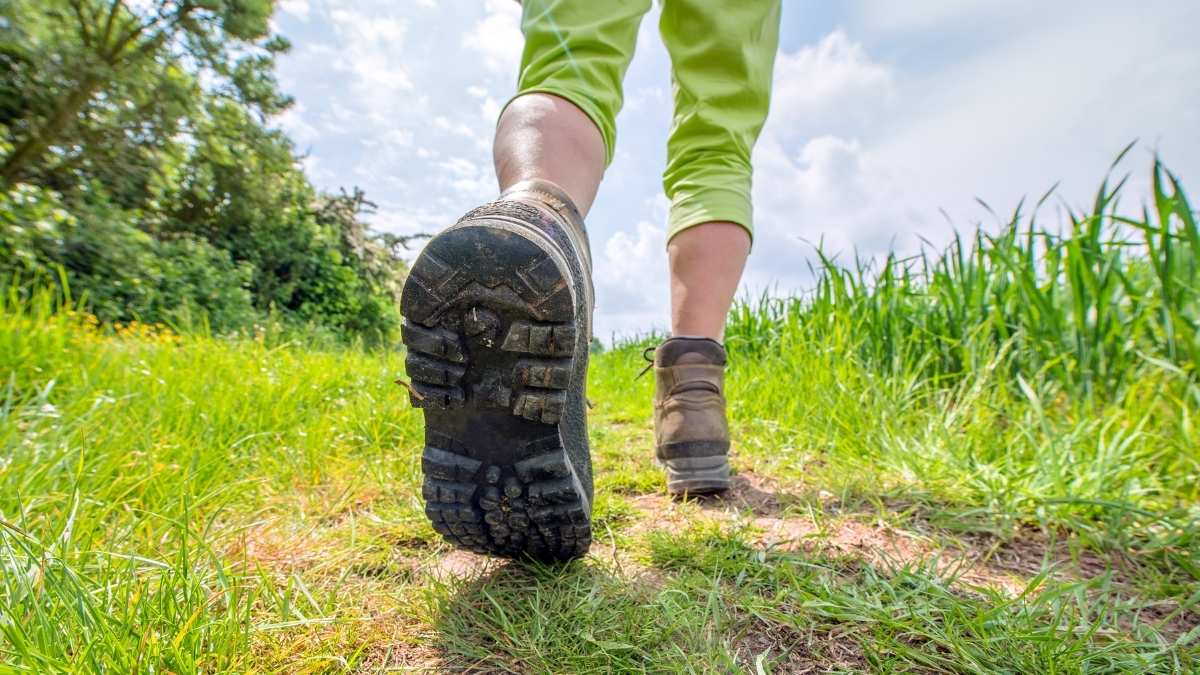
Walking is the most researched exercise for long life. Full stop.
A 2024 study — one of the largest ever done — looked at over 2 million adults across four countries. It found that just 22 minutes of moderate walking each day significantly increased lifespan. And the benefits grew even stronger after age 60.
The American Heart Association says some walkers gain up to two hours of life for every one hour they walk. That’s not a small deal.
Brisk walking matters more than slow strolling. Aim for about 100 steps per minute. That’s the pace where you can talk, but you’d rather not sing.
The CDC recommends 8,000 to 10,000 steps daily for older adults to reduce disease risk.
Walking is free. It’s easy on your joints. You can do it alone or with a friend.
Start Here: Tomorrow morning, walk for 15 minutes after breakfast. Flat surface, comfortable shoes. That’s it. Build from there.
Exercise Two: Strength Training — The Muscle-Loss Fighter Seniors Cannot Ignore
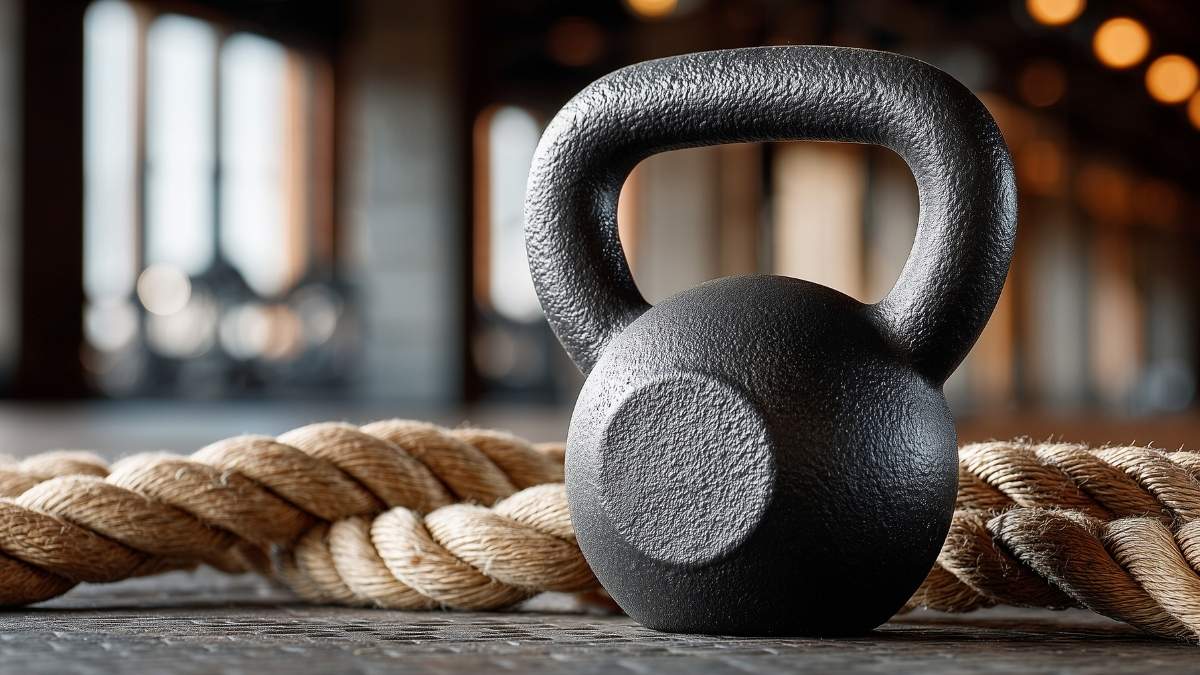
Here’s something most people don’t talk about enough. After age 60, your body loses muscle every single year. This process is called sarcopenia. And it’s directly linked to early death.
A 2024 study in the Journal of Cachexia, Sarcopenia and Muscle found that declining muscle power in adults over 60 correlates directly with higher all-cause mortality. That means weaker muscles aren’t just inconvenient — they’re dangerous.
The good news? You don’t need a gym to fix this.
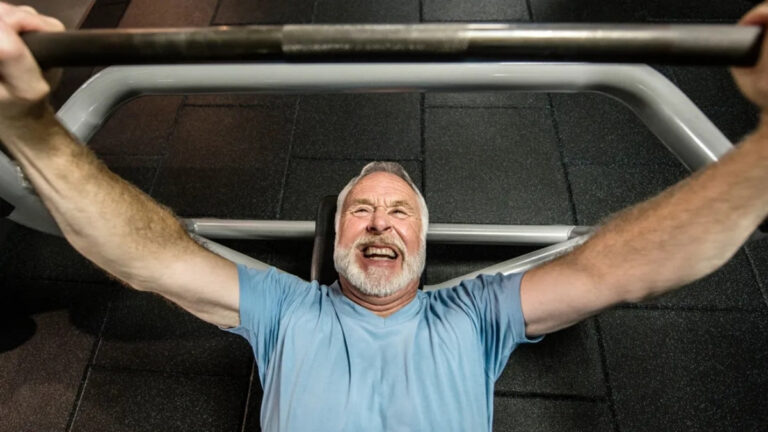
Chair squats, wall push-ups, and resistance band rows are enough to start rebuilding strength. The ICFSR 2025 Global Consensus — a panel of the world’s top aging researchers — listed strength training as the number one priority for older adults.
Two to three sessions per week is the target. Not every day. Just consistent effort.
Start Here: Try 10 chair squats and 10 wall push-ups today. Rest. Repeat tomorrow. That’s your starting point.
Exercise Three: Swimming — The Joint-Friendly Exercise That Adds Years to Your Life
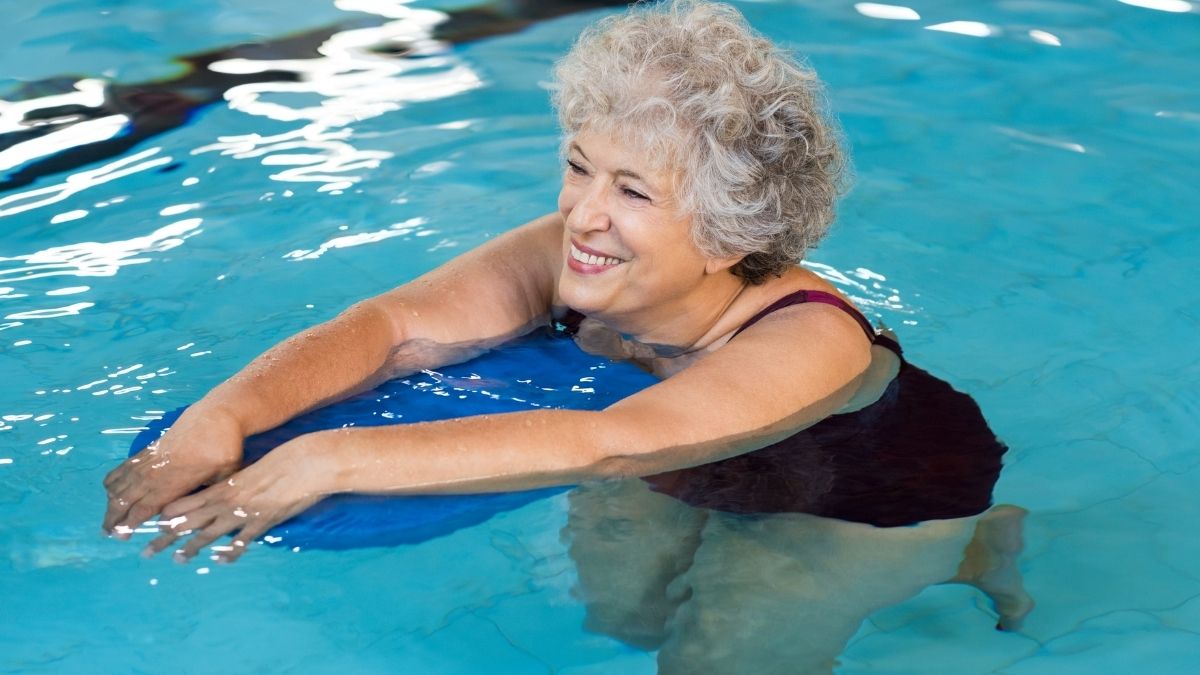
Swimming is one of the best-kept secrets in senior fitness. And the numbers back that up hard.
A study of 80,000 people found that swimmers were 41% less likely to die from heart disease or stroke. They were also 28% less likely to die early from any cause. Those are remarkable numbers.
Water supports your body weight. That means your knees, hips, and back get a break while your heart and muscles still get a real workout. It’s ideal for seniors with arthritis, osteoporosis, or joint pain.
You don’t need to be a strong swimmer. Water walking — simply walking back and forth in chest-deep water — delivers similar benefits without any swim technique required.
A five-year study of adults aged 70 to 77 found that aquatic training significantly improved strength and physical function.
Start Here: Find your nearest community pool. Call ahead and ask about senior swim hours or water aerobics classes. Many are low-cost or free.
Exercise Four: Tai Chi — The Ancient Practice That Cuts Fall Risk by Nearly Half
Falls are not a small problem for seniors. They are the leading cause of injury-related death in adults 65 and older in the United States.
Tai chi directly reduces that risk. The American Academy of Orthopaedic Surgeons estimates it can cut fall risk by up to 47%. A 2023 study confirmed it measurably improves balance and stability in older adults.
Tai chi looks like slow, flowing movement — almost like moving through water. It’s gentle. It’s low-impact. And it trains your body to stay steady and controlled.
Beyond fall prevention, tai chi supports sleep quality, reduces stress, and helps with cognitive health. A July 2025 paper in Frontiers in Aging Neuroscience identified mind-body exercise like tai chi as one of the top tools for brain function in older adults.
The CDC recommends balance training at least three times per week for adults over 65.
Start Here: Search “tai chi for seniors beginners” on YouTube. Free guided videos exist for every level.
Exercise Five: Yoga — The Flexibility and Brain Health Booster Researchers Keep Coming Back To
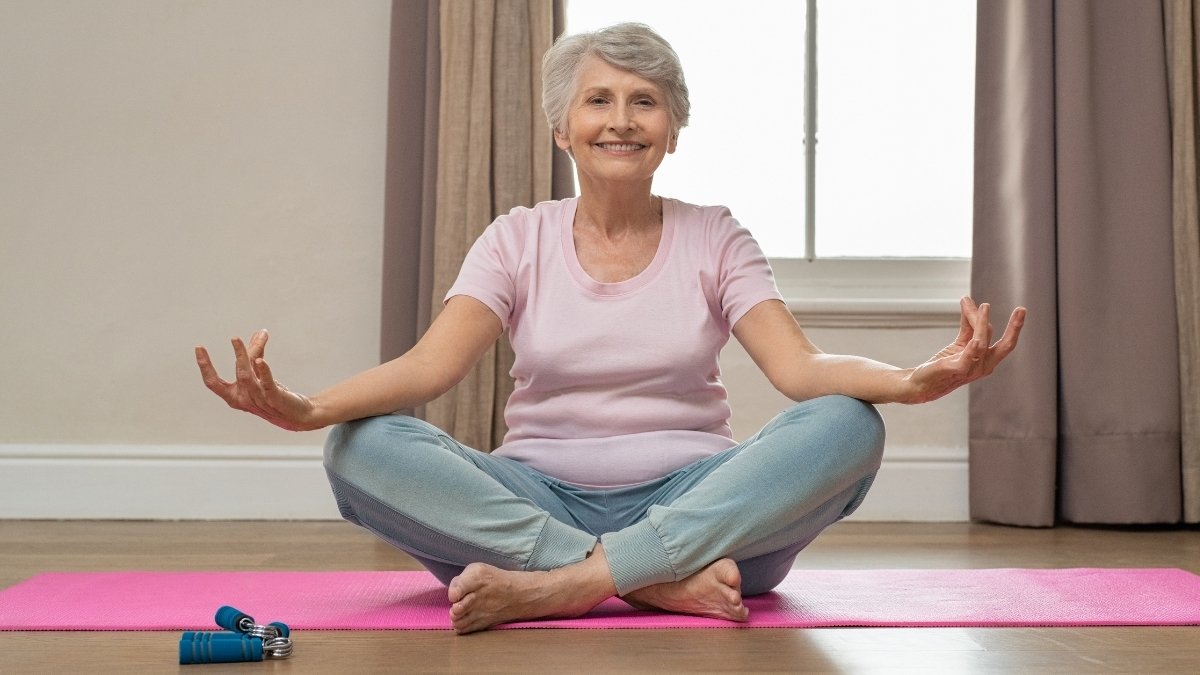
Yoga isn’t just stretching. For seniors, it’s a full-body tool for living longer and thinking more clearly.
A review of 33 studies — all focused on adults 65 and older — found that yoga increases walking speed and the ability to rise from a chair. Both of these are directly linked to longer lifespan. Researchers at Brigham and Women’s Hospital, affiliated with Harvard, led this review.
A 2025 analysis also found that gentle movement for 30 to 60 minutes has a significant positive effect on depression in older adults.
Chair yoga is the easiest entry point. You only need a sturdy chair. No floor work. No special flexibility required. It builds core strength, improves posture, and loosens stiff joints — all at once.
A systematic review of 35 clinical trials covering 25,000 participants found that mind-body exercise like yoga significantly reduces cognitive decline risk.
Start Here: Search “chair yoga for seniors” on YouTube. The channel “Yoga with Adriene” has beginner-friendly videos that require zero equipment.
How to Combine These 5 Exercises Into a Simple Weekly Routine
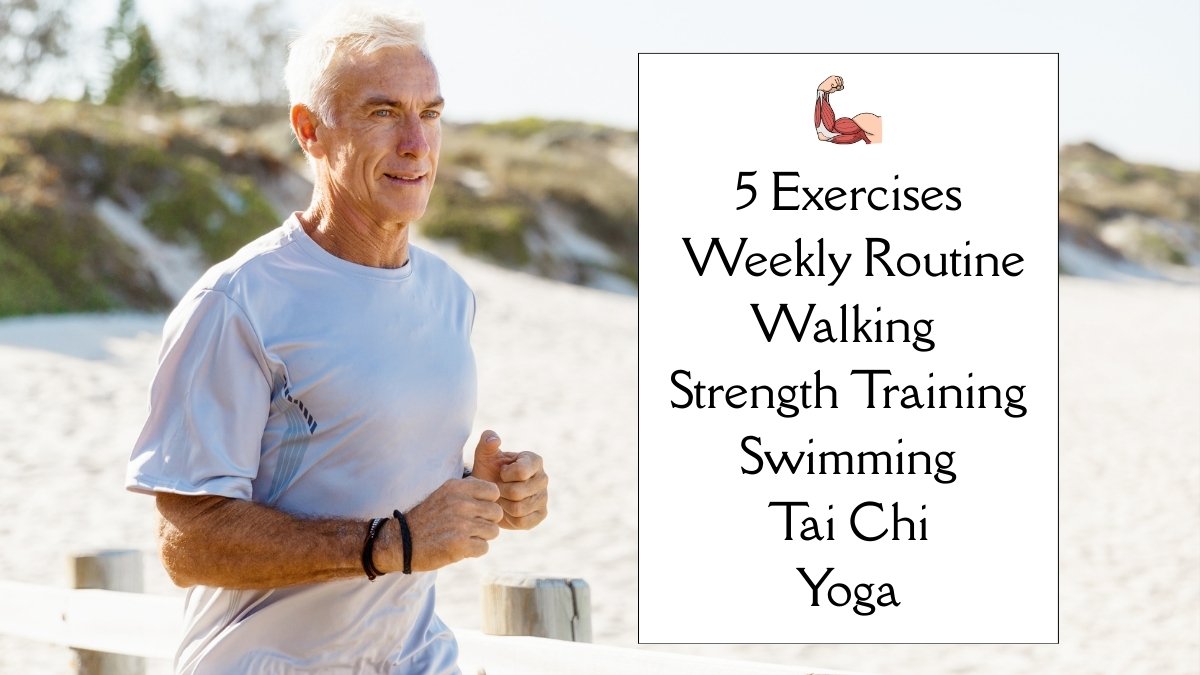
Knowing the five exercises is one thing. Actually fitting them into your week is another.
You don’t need to do all five every day. That’s not the goal. The goal is consistency over time. Research supports mixing different types of movement throughout the week — cardio, strength, and balance — for the greatest longevity benefit.
Here’s a simple way to think about it:
Walk on most days. Aim for at least five days a week, even just 15 to 20 minutes. Do strength training two to three times a week — not back to back. Give your muscles a day to recover between sessions. Add tai chi or yoga two to three times a week. These can even be done on your strength training rest days.
Swimming works as a replacement for walking on any day. It covers cardio and resistance in one session.
A Harvard BMJ Medicine study published in January 2026 — tracking over 111,000 adults for more than 30 years — found that people who combined different types of physical activity had the lowest mortality risk of all groups studied.
You don’t need a perfect plan. You need a simple one you will actually follow.
Start Here: Write down three days this week. Assign one exercise to each day. Start there.
5 Quick Tips to Make These Exercises Stick
Start with 10 minutes
Short sessions done consistently beat long sessions done occasionally.
Exercise with a friend
People who work out with others are significantly more likely to stick with it long-term.
Track your steps
A basic pedometer or free phone app keeps you honest and motivated every single day.
Drink water before you move
Even mild dehydration reduces energy, focus, and physical performance in older adults.
Rest is part of the plan
Your body rebuilds and grows stronger on rest days, not just on exercise days.
Conclusion:
Walking, strength training, swimming, tai chi, and yoga are not guesses. Every major longevity study keeps pointing back to these same five. They fit senior bodies. They work at any fitness level. Pick one today. Start small. Consistency beats intensity every time.